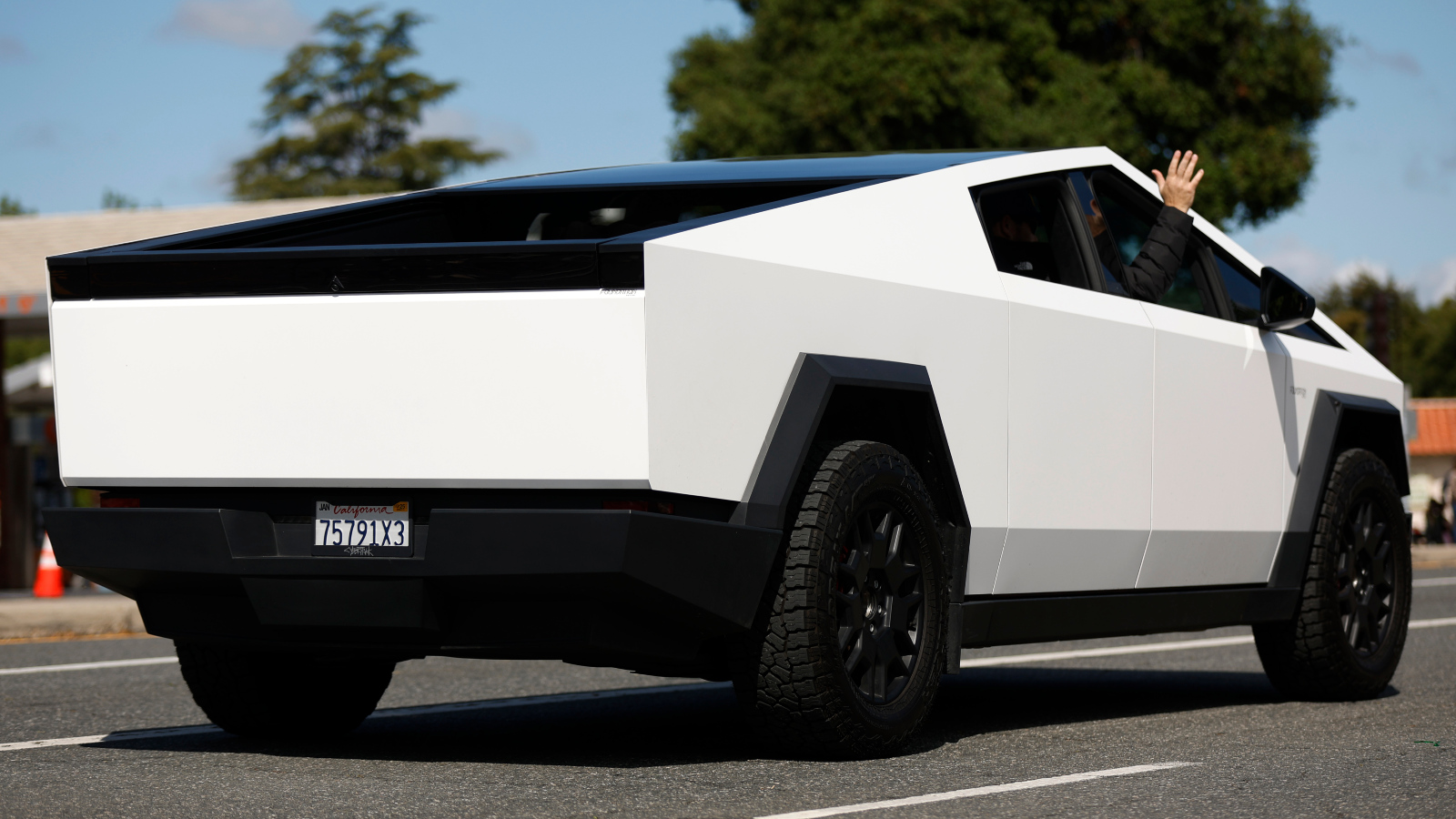
The era of the polarizing, polygonal electric truck is drawing to a swift and definitive close. Just over three years after rolling out its futuristic, stainless-steel pickup to massive public fanfare and polarizing reviews, Tesla has announced plans to wind down Cybertruck production at its Texas Gigafactory. The decision, revealed by CEO Elon Musk, marks a strategic pivot away from consumer utility vehicles and toward the company’s long-term bet on autonomous Cybercabs, which leadership hopes will fundamentally reshape urban transportation networks.
The retreat from the Cybertruck reflects a broader, more humbling reality for the American automotive industry: the initial wave of high-priced, macho electric pickup trucks has largely fallen flat. What was once envisioned as a masterstroke to convert traditional truck loyalists and break the environmentalist stereotype of the electric vehicle market has instead collided with economic reality, shifting political currents, and consumer pragmatism.
A Short and Polarizing Lifespan
From its initial announcement through its delayed rollout in late 2023, the Cybertruck established itself as one of the most culturally divisive vehicles in automotive history. Detractors frequently derided its eccentric, angular silhouette, comparing it to a high-end dumpster—a resemblance so uncanny that hungry raccoons in Minnesota were once documented chewing on a parked vehicle’s stainless-steel rear vault. Critics in progressive urban centers often labeled the vehicle a political statement on wheels, while automotive historians began listing it alongside the infamous 1957 Ford Edsel as a monumental commercial misfire.
Yet, the vehicle carved out a distinct cultural niche. It found an enthusiastic following among a specific demographic of tech enthusiasts, pop-culture figures, and professional athletes. Several prominent World Wrestling Entertainment superstars, including Seth Rollins, Becky Lynch, The Miz, and Liv Morgan, purchased the vehicle, though public sentiment among high-profile owners varied wildly, with Morgan later calling her purchase the worst investment she had ever made.
Despite the intense media spotlight, the sales figures never approached the lofty projections set by Tesla leadership. Weeks prior to the late 2023 launch, Musk informed investors that the company anticipated selling approximately 250,000 Cybertrucks annually. In reality, the vehicle never came close to those targets. Last year, Tesla managed to sell just over 20,000 units. Even as production winds down, Tesla raised the starting price for the 2026 model to $92,500, further restricting its addressable market.
The Collapsing Market for Macho EVs
Tesla’s struggles with the Cybertruck are part of a wider industry correction concerning electric pickup trucks. For years, major legacy automakers attempted to shed the clean-energy, Prius-associated image of early EVs by building large, aggressive, high-performance electric trucks designed to appeal to traditional American pickup buyers.
These efforts have faced severe headwinds. Last December, Ford Motor Company announced it was permanently discontinuing the F-150 Lightning—the all-electric version of America’s best-selling vehicle—after determining it was a persistent money-loser. Market data from Kelley Blue Book and industry trackers reveals that sales for Rivian’s electric pickup have slid downward annually since 2023. Similarly, General Motors experienced steep sales drops for the GMC Hummer EV, which earned the dubious distinction of being one of the slowest-selling pickup trucks on the market.
Industry analysts point to a fundamental mismatch between vehicle engineering and consumer finances. Full-size electric pickup trucks require exceptionally large, heavy lithium-ion batteries to deliver the payload capacity, towing range, and power demanded by truck owners. These massive battery packs drive up manufacturing costs, resulting in sticker prices that alienate budget-conscious consumers.
While a comparable gas-powered Ford F-150 starts at roughly $52,000, the F-150 Lightning commanded a much higher price tag before its discontinuation. Similarly, the GMC Hummer EV starts at an imposing $97,200. With persistent inflation and high cost-of-living concerns weighing on households, automakers discovered that aggressive advertising campaigns could not overcome prohibitive monthly loan payments.
Shifting Demographics and the Partisan EV Divide
The adoption of electric vehicles in the United States has long mirrored underlying political divides. Research from the MIT Center for Energy and Environmental Policy Research indicates that roughly half of all new EV registrations between 2012 and 2023 were concentrated within the ten percent most Democratic-leaning counties in the United States.
Automakers initially viewed electric trucks as a bridge to reach Republican-leaning and rural demographics who traditionally rejected sedans and crossovers. While electric trucks did secure a higher proportion of sales in conservative areas compared to standard passenger EVs, adoption rates still lagged far behind corporate expectations.
Compounding these regional hesitations were the personal political associations of Tesla’s leadership. Alexander Edwards, president of the automotive research consultancy Strategic Vision, notes that the Cybertruck’s declining appeal cannot be separated from Musk’s prominent involvement in federal policy initiatives such as the Department of Government Efficiency, which turned the brand into a frequent target of political discourse.
However, public attitudes are slowly shifting. Polling data from EVs for All America indicates that the proportion of self-identified Republicans who view electric vehicles as exclusively "for people who see the world differently than I do" dropped from 59 percent in November 2023 to 49 percent in November 2025. This suggests that resistance to electrification is softening, provided the products align with practical consumer needs.
The Road Ahead: Aff
ordability and Range Extension
As the chapter closes on the first generation of high-end electric trucks, the industry is already pivoting toward a new strategy centered on affordability, practicality, and diversified powertrains.
Automakers are recognizing that the future of electric utility vehicles relies on competitive pricing. Ford, for instance, has announced plans to release a new, smaller electric pickup tentatively named the Fathom, slated to start at an accessible $28,400—significantly lower than the average gas-powered pickup. Meanwhile, the discontinuation of the F-150 Lightning has created a booming secondary market; used Lightning models are currently selling rapidly at deep discounts of up to 50 percent off their original sticker prices.
External macroeconomic factors are also reshaping the automotive landscape. Persistent high gas prices, exacerbated by prolonged geopolitical conflicts in the Middle East, have driven a surge in consumer demand for fuel-efficient hybrid vehicles. Concurrently, the elimination of federal EV tax credits by the federal administration last year has forced manufacturers to rely on organic market demand rather than government incentives.
Industry experts remain optimistic about the long-term prospects of electrified hauling, provided engineering adapts to consumer realities. Dan Krassner, executive director of the American EV Jobs Alliance, suggests that the market is on the cusp of a more pragmatic second wave. Innovations such as range-extended electric trucks—which combine electric drive motors with onboard gas-powered generators to eliminate range anxiety—offer a promising middle ground for skeptical buyers who require long-distance towing capabilities.
The initial attempt to conquer the American truck market with high-priced, experimental designs proved that marketing alone cannot override fundamental economic and functional hurdles. As automakers recalibrate their strategies to prioritize reasonable price points and dependable utility, the broader transition toward sustainable transportation is far from over. Round one undoubtedly went to the traditional gas-powered truck, but round two of the electric vehicle evolution is only just beginning.