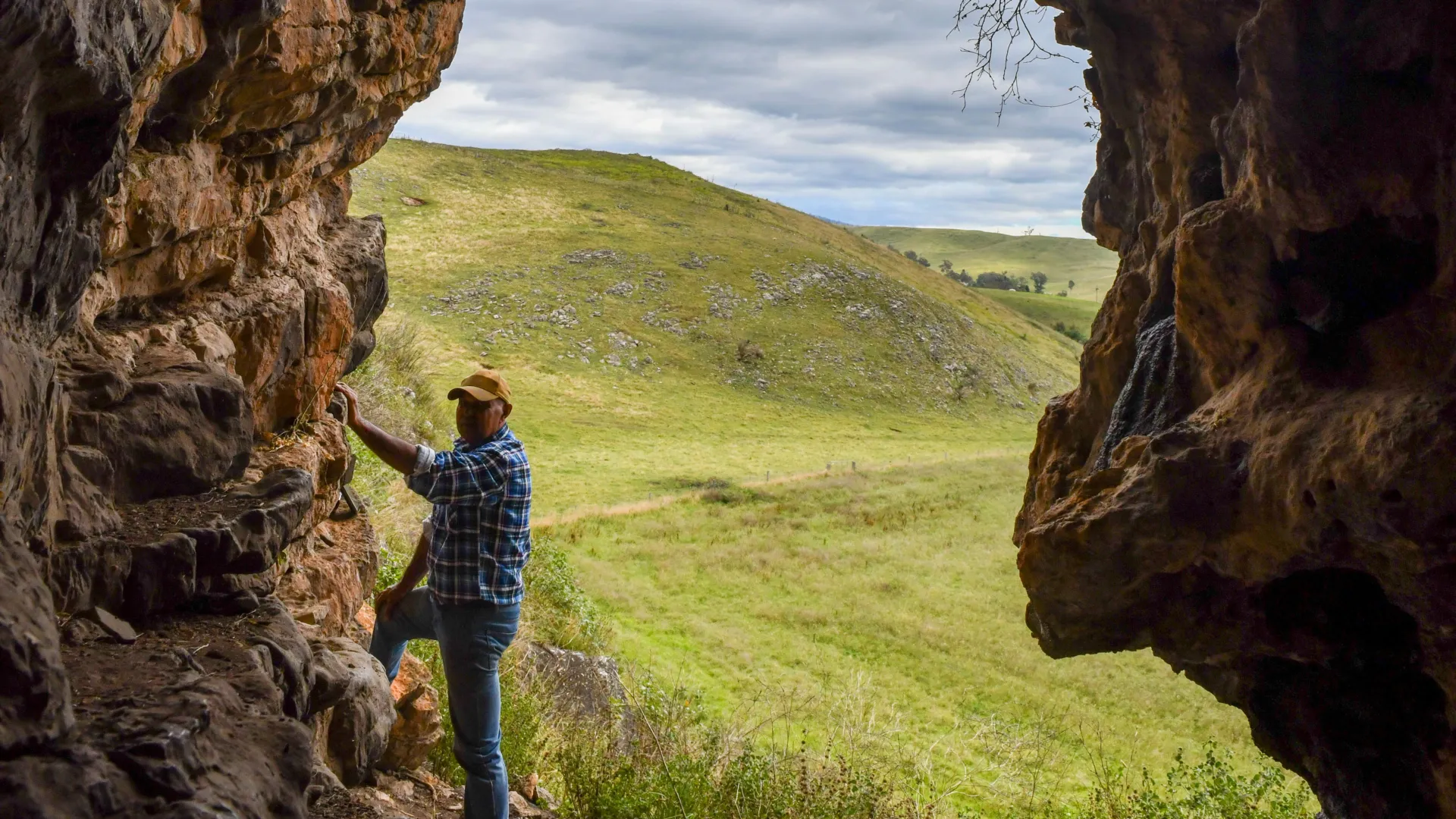
The GunaiKurnai nation, the traditional custodians of the Gippsland region and the southern Victorian Alps in Australia, have long maintained a profound cultural connection to the landscape, a connection now corroborated by extraordinary archaeological evidence found within the depths of Cloggs Cave. For generations, oral histories and 19th-century accounts have spoken of specific caves within their territory serving as epicenters for spiritual practice. These sites were described as the domains of the ‘mulla-mullung’—revered practitioners of healing, magic, and ritual. New research published in the journal Frontiers in Environmental Archaeology confirms that these traditions are not merely historical anecdotes but part of a continuous, 25,000-year-old legacy of deliberate human activity.
The Archaeological Significance of Cloggs Cave
Located in the foothills of the Victorian Alps, Cloggs Cave has emerged as a cornerstone of Australian archaeological research. The site is unique because it offers a rare, stratified record of human behavior that defies the common archaeological assumption that cave sites were primarily used for habitation. Instead, the evidence suggests that Cloggs Cave functioned as a specialized ritual space.
The recent study, led by Dr. Elle Grono of the Australian National University in collaboration with Monash University and the GunaiKurnai Land and Waters Corporation (GLaWAC), focused on microscopic plant remains known as phytoliths. These silica structures form within plant cells and are remarkably resilient, often persisting long after organic plant matter has decayed. By analyzing these microscopic remnants, researchers have been able to reconstruct the specific, intentional choices made by the GunaiKurnai ancestors thousands of years ago.
A Chronology of Ritual Activity
The excavation process, conducted in 2019 and 2020, involved meticulous sampling from deep sediment pits, some reaching depths of 2.3 meters. The results revealed a complex chronology of human interaction with the site. The most recent period of intense activity, identified through 73 distinct layers of ash, dates back to between 4,400 and 1,600 years ago.
These dates were established using a combination of optically stimulated luminescence (OSL)—which measures the time since mineral grains were last exposed to sunlight—and accelerator mass spectrometry (AMS) for radiocarbon dating. The layering of these deposits indicates that the practice of burning vegetation inside the cave was not a sporadic occurrence but a sustained cultural tradition that persisted for millennia.
Deeper within the stratigraphy, archaeologists discovered a standing stone, approximately 28 centimeters high. This artifact was found to have been intentionally positioned roughly 2,000 years ago, serving as a focal point for ritual activity. This discovery provides physical evidence of the deliberate curation of the cave environment to facilitate spiritual practices.
Microscopic Clues and Botanical Selection
One of the most striking findings of the study is the evidence of intentional botanical selection. Because Cloggs Cave is essentially a light-starved environment, no vegetation grows within its interior. Therefore, all plant matter discovered within the strata must have been introduced by external agents—either humans or fauna such as possums.
To differentiate between these, researchers focused on the state of the phytoliths. They identified that a significant portion of the samples consisted of half-burnt phytoliths embedded within ash layers. This indicates that the plant material was not merely dropped or carried in by animals, but was the result of controlled fires intentionally ignited by humans.
The composition of these plants suggests a high degree of discernment. While the surrounding landscape of the Victorian Alps supports a diverse range of riparian forests and open woodlands, the phytoliths recovered from the cave were overwhelmingly dominated by grasses—accounting for up to 97% of the total samples. The ancestors did not harvest the nearest or most abundant species; they actively sought out specific grasses, including those from the Pooideae and Panicoideae subfamilies, and transported them into the cave in their entirety, including stalks, leaves, and roots.
Insights from the GunaiKurnai Land and Waters Corporation
The research project was conducted with the full participation of the GunaiKurnai people. Representatives were involved at every stage, from the initial research design and fieldwork to the final interpretation of the findings. This collaborative model ensures that the scientific inquiry respects the cultural sovereignty of the Traditional Owners.
Professor Bruno David, a lead researcher from Monash University, highlighted the synergy between the archaeological data and the oral tradition. "The burning is consistent with GunaiKurnai traditional practices of using ash to perform magic and rituals, and also to track the footsteps of anyone coming in, including spirit-Beings," Professor David noted.
The presence of other macro-botanical evidence, such as fat-smeared, trimmed wooden sticks from Casuarina trees found in even older, deeper deposits, suggests that the site’s use was multifaceted. These sticks, likely used in specific ritual contexts, indicate that the spiritual utility of Cloggs Cave evolved over time while maintaining a consistent focus on ceremonial engagement with the metaphysical world.
Implications for Archaeological Theory
The findings at Cloggs Cave challenge the traditional "living site" paradigm often applied to cave archaeology. Historically, sites like these were scrutinized for evidence of daily subsistence, such as food remains, hearths for cooking, and refuse piles. However, the absence of typical domestic indicators, combined with the presence of ritualized burning and the curation of objects like the standing stone, suggests that Cloggs Cave functioned as a "sacred" or "liminal" space.
This shift in interpretation has broad implications for Australian archaeology. It suggests that many sites previously categorized as "camps" or "shelters" may have served much more complex, non-utilitarian roles. The persistence of these practices across 25,000 years—a timeframe that spans the late Pleistocene through to the Holocene—demonstrates a remarkable continuity of cultural knowledge. It suggests that the GunaiKurnai ancestors possessed a sophisticated, codified set of spiritual beliefs that were handed down through generations with high levels of fidelity.
Future Research and Cultural Preservation
The successful collaboration between academic institutions and the GunaiKurnai Land and Waters Corporation serves as a blueprint for future archaeological work in Australia. By integrating traditional knowledge with rigorous scientific analysis, researchers are able to provide a more comprehensive narrative of human history on the continent.
The ongoing study of the phytoliths is expected to provide further insights into the specific types of grasses used and perhaps the environmental conditions that existed when these rituals were performed. As scientists continue to process the data from the 2019 and 2020 excavations, the importance of Cloggs Cave as a repository of human history becomes increasingly clear. It stands as a testament to the longevity of the GunaiKurnai nation and their enduring stewardship of the land, providing a rare window into a spiritual world that has remained active for a significant portion of human history.
Ultimately, the Cloggs Cave research reminds the modern world that the deep history of Australia is not found in isolated artifacts, but in the sustained, intentional, and culturally significant actions of the people who have called the continent home for tens of thousands of years. The ash layers, the standing stone, and the microscopic traces of carefully selected grasses are not merely data points; they are the enduring echoes of a society that integrated its spiritual life into the very geology of the landscape.