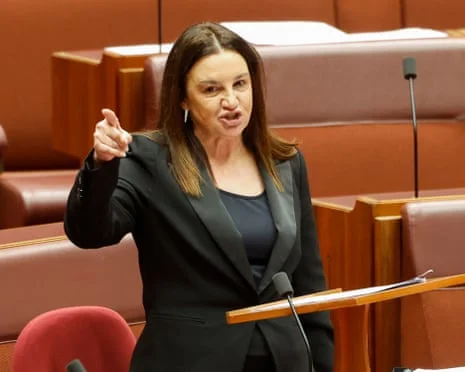
Senator Jacqui Lambie has launched a scathing and impassioned attack on One Nation leader Pauline Hanson, utilizing a late-night Senate adjournment speech to caution the Australian electorate against the perils of populist politics. Lambie’s remarks draw explicit parallels between Hanson and controversial international figures, most notably Donald Trump and Nigel Farage, arguing that the trajectory of modern populism ultimately harms working-class communities rather than empowering them.

The Tasmanian senator’s broadside follows a turbulent week in federal parliament characterized by heightened political animosity, personal attacks, and fierce debates over national identity, foreign policy, and the shifting tone of Australian democratic discourse. Lambie revealed that she has been subjected to a steady stream of online abuse following her recent defense of Liberal MP Andrew Hastie. Hastie had previously been branded a "traitor" in an animated video series published by One Nation channels, sparking a bitter feud between the minor party and the federal Coalition.
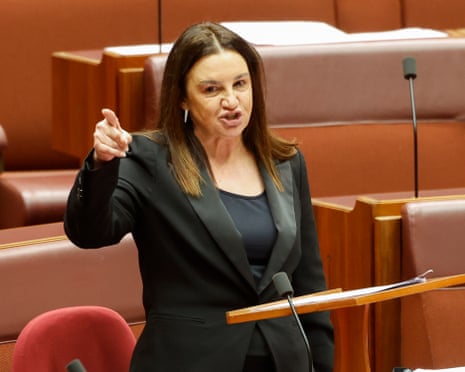
Taking to the Senate floor, Lambie dissected what she characterized as the fundamental mechanism of populist movements. She argued that such political entities rely on manufacturing outrage and directing public frustration toward fabricated scapegoats. According to Lambie, this strategy yields no genuine improvements for the working class, leaving vulnerable populations worse off while serving the self-interest of political elites.

Foreign Policy Clashes and International Comparisons
The friction between the senators intensified following foreign policy disagreements, particularly regarding military alliances and overseas conflicts. Lambie specifically targeted Hanson’s implicit alignment with Donald Trump’s foreign interventions, raising the specter of renewed Australian military entanglement in prolonged Middle Eastern conflicts. Lambie questioned the rationale of endorsing potential American "forever wars" with Iran, labeling Hanson’s stance not merely hazardous, but fundamentally delusional.
Lambie asserted that populist figures excel at projecting an image of fierce advocacy for the common citizen while privately prioritizing their own legacy and post-political security. She concluded her address with an appeal for a return to respectful, solutions-oriented policymaking that transcends traditional left-right divides and operates independently of fear-based rhetoric.
The Broader Political Landscape and US-Style Partisanship
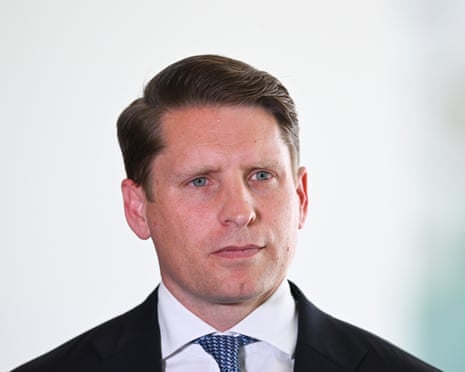
The friction surrounding One Nation’s political tactics has reverberated across Canberra, with senior Coalition figures publicly pushing back against the party’s trajectory. Andrew Hastie, addressing the media on ABC News Breakfast, lamented that the national political tone has significantly degraded, taking on a personalized, aggressive character reminiscent of United States "MAGA" (Make America Great Again) politics.
Hastie’s remarks underscore a strategic dilemma for the Liberal-National Coalition as the next federal election approaches. With One Nation aggressively targeting traditional conservative seats—typified by their campaign in Hastie’s Western Australian electorate of Canning—the Coalition faces mounting pressure to define its boundaries. When asked whether the Coalition would entertain a post-election power-sharing arrangement with One Nation, Hastie maintained that the Liberal Party must focus entirely on rebuilding its primary vote and ensuring its own political survival in an increasingly crowded three-cornered electoral contest.

Regulatory Crackdowns and Consumer Protections
Beyond parliamentary sparring, federal regulatory bodies have been actively enforcing accountability across various domestic sectors. Notably, the Australian Communications and Media Authority (Acma) levied a penalty exceeding $1 million against online wagering provider Dabble. The penalty was issued after investigations revealed systemic breaches of the federal government’s self-exclusion register, BetStop.
Acma found that Dabble had persistently transmitted promotional messaging to hundreds of gamblers who had formally opted to exclude themselves from online wagering platforms, alongside failing to promptly deactivate accounts. Regulatory authorities emphasized that consumer protection measures like BetStop are critical pillars of national harm minimisation strategies, warning that wagering providers will face severe repercussions for non-compliance.
Artificial Intelligence, Copyright, and National Security Debates
Simultaneously, Canberra is grappling with rapid technological disruption, specifically concerning artificial intelligence and copyright law. Leaked policy documents suggest the federal government is weighing an "opt-out" framework that would automatically grant AI developers access to creators’ intellectual property unless artists actively intervene to protect their work.
Independent Senator David Pocock fiercely condemned the proposal, characterizing it as an outright betrayal of Australia’s creative industries. Pocock argued that multi-billion-dollar technology corporations should be legally mandated to negotiate fair compensation models with copyright holders through collective licensing institutions, drawing comparisons to established music streaming frameworks.

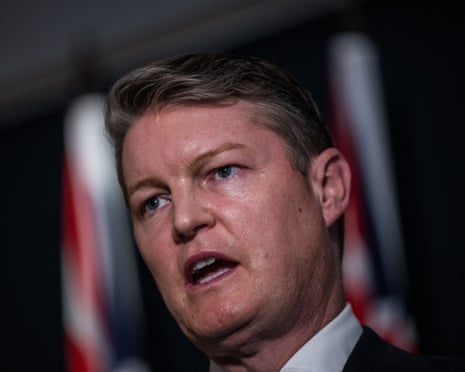
Conversely, opposition figures such as Shadow Defence Minister James Paterson have urged caution against overly restrictive domestic regulations that could isolate Australia from global technological advancements. Paterson emphasized that access to advanced frontier AI models offers substantial economic dividends and critical national security capabilities, including enhanced cyber defense and intelligence gathering. While acknowledging that intellectual property must be fairly remunerated, Paterson cautioned that protracted domestic policy debates risk causing Australia to lose out on vital foreign investment windows as global tech firms eye alternative markets like the United Kingdom, Canada, and Japan.
State-Level Policy Shifts and Legislative Battles
The intense political climate has extended to state parliaments, where significant policy reversals and social debates are unfolding. In Victoria, Premier Ben Carroll announced a major shift in Labor’s law-and-order platform, committing to introduce statewide "Jack’s Law" stop-and-search powers if reelected. The legislation, modeled on Queensland’s framework, will empower police to utilize handheld metal detectors to screen individuals for concealed knives anywhere across the state without requiring a designated declaration area. This policy pivot matches a prior commitment by the state Coalition, signaling a bipartisan hardening of legislative responses to knife crime.
Meanwhile, in New South Wales, the upper house is poised to debate a contentious private member’s bill introduced by Libertarian MP John Ruddick, which seeks to restrict late-term and specialized abortion access. One Nation’s New South Wales leader, Mike Newman, prominently participated in anti-abortion rallies outside state parliament in support of the legislation. While political analysts anticipate the conscience vote will be closely contested, legislative sources suggest that expected absences among crossbench members may leave the bill narrowly short of the numbers required to pass.
Implications for the Federal Horizon
As Australia navigates these multifaceted challenges—ranging from the rise of populist political strategies and the regulation of digital wagering to the economic integration of artificial intelligence and shifting state-level criminal justice frameworks—lawmakers face a pivotal period. The ongoing debate over political tone, institutional integrity, and technological adaptation underscores a broader national reckoning regarding the future direction of Australian governance, public safety, and democratic norms.