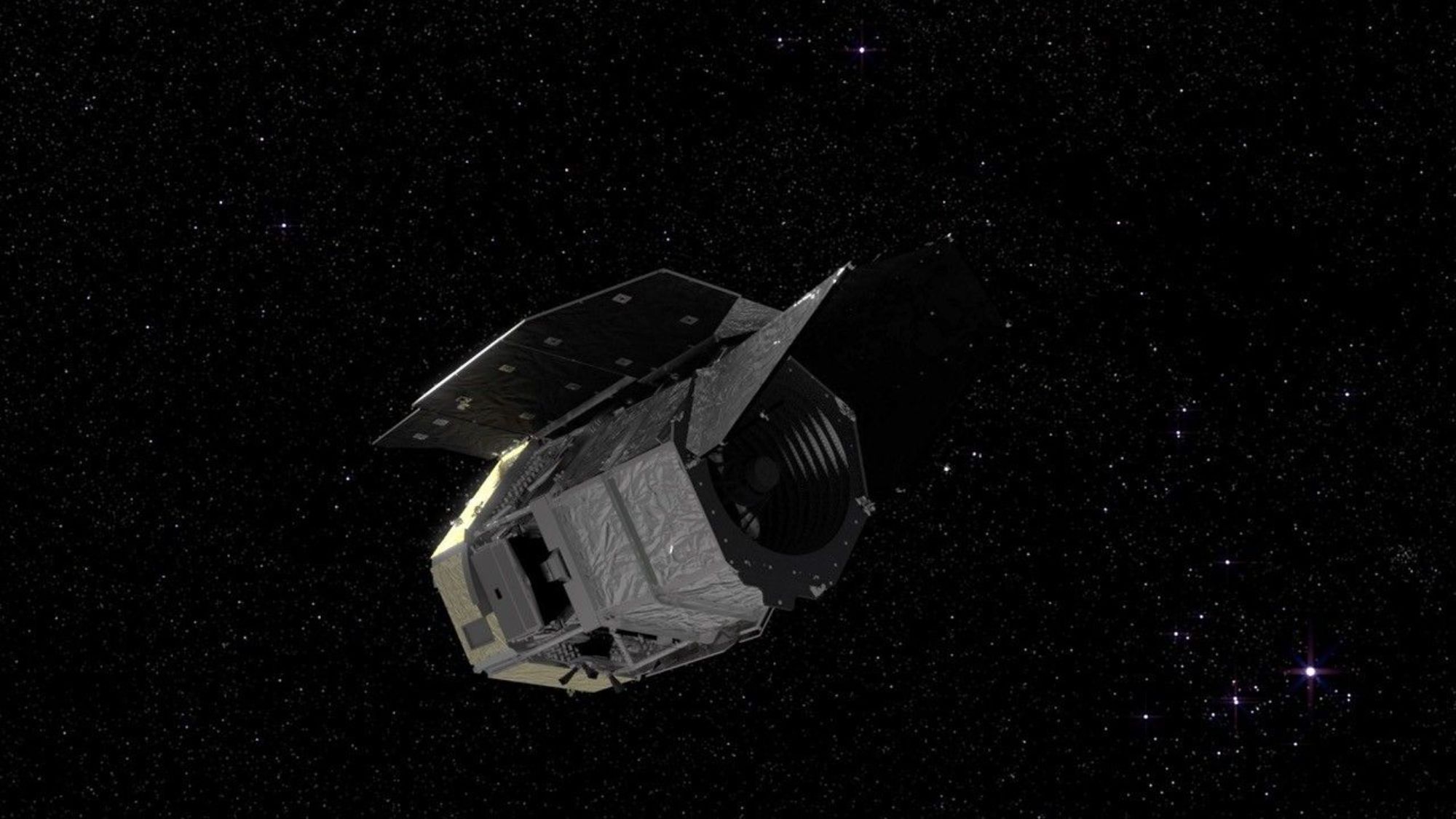
NASA’s newly launched Nancy Grace Roman Space Telescope has shattered operational expectations, with mission managers confirming that the observatory now possesses sufficient fuel to sustain scientific operations for at least 22 years. Originally engineered for a baseline 5-year primary mission with hopes of a 5-year extension—totaling a decade of potential observation—the spacecraft’s unprecedented longevity is the cumulative result of a lighter-than-expected final structural mass, a flawless liftoff provided by SpaceX, and exceptionally precise trajectory management by ground controllers.
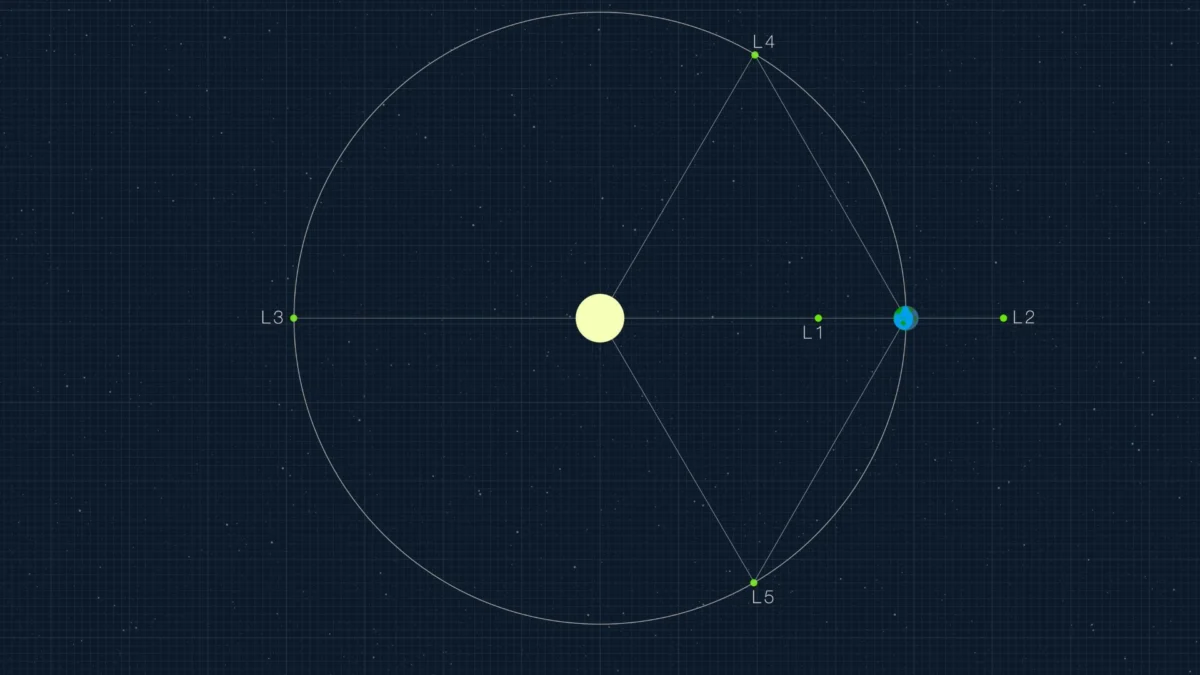
As the observatory journeys toward its permanent home at the second Lagrange point (L2), the implications of this unexpected mathematical windfall are rippling through the astronomical community. The mission, designed to unlock the mysteries of dark energy, map the distribution of matter in the cosmos, and directly image distant exoplanets, is now positioned to remain a cornerstone of space-based astrophysics well into the late 2040s.
The Journey to L2 and the Anatomy of a Surplus
The sequence of events that unlocked this 22-year horizon began long before the launch vehicle cleared the pad at Cape Canaveral Space Force Station on August 30. During the multi-year design, assembly, and testing phases of any complex spacecraft, engineers must account for fluctuating components, thermal blankets, cabling, and structural reinforcements. To prevent a catastrophic shortfall of propellant during operations, mission architects establish a maximum allowable mass budget and size the fuel tanks accordingly.
For the Roman Space Telescope, the maximum design mass was capped at 21,605 pounds (9,800 kilograms). However, through meticulous manufacturing and integration practices, the completed spacecraft tipped the scales significantly lower, coming in at 17,760 pounds (8,065 kilograms).
According to Alison Rao, who leads the Roman propulsion systems team at NASA’s Goddard Space Flight Center, this mass deficit was turned into an immediate advantage. Because the observatory was substantially lighter than the conservative budgetary projections, engineers were able to fill the propellant tanks to their absolute maximum volumetric capacity, rather than restricting the load to what was mathematically required for a standard 10-year lifespan. This initial decision instantly elevated the mission’s potential baseline to approximately 14 years.
Precision Execution: A Near-Flawless Trajectory Correction
The margin for error in interplanetary and deep-space navigation is razor-thin, yet the operational team at NASA demonstrated extraordinary precision shortly after liftoff. Within the first twenty-four hours of flight, the Roman Space Telescope executed a critical three-minute engine burn designed to set its trajectory toward the Sun-Earth L2 Lagrange point—located approximately one million miles away on the opposite side of Earth from the sun, sharing deep space with the James Webb Space Telescope.
This initial deep-space maneuver was executed with an astonishing 99 percent accuracy. Instead of consuming the anticipated 441 pounds (200 kilograms) of propellant budgeted for the departure vector, the spacecraft utilized a mere 40 pounds (18 kilograms)—less than 10 percent of the allocated resource. This extraordinary efficiency instantly preserved enough fuel to extend the anticipated mission duration by another four years, bringing the running total to 18 operational years.
Furthermore, the accuracy of this initial burn has dramatically reduced the velocity adjustments required for the subsequent insertion maneuver. The secondary course-correction burn, scheduled to guide the telescope smoothly into its stable halo orbit around L2 in early December, will now require only a fraction of the originally estimated fuel. Mission analysts calculate that this secondary savings will buy yet another four years of operational capability, pushing the theoretical maximum lifespan to 22 years, barring unforeseen hardware anomalies.
Once the spacecraft successfully achieves its operational orbit at L2, station-keeping requirements will drop significantly. The telescope will only need minor, routine thruster firings roughly once every 28 days to maintain its position relative to the gravitational equilibrium point, consuming a negligible amount of fuel over long stretches of time.
Context, Objectives, and the Legacy of Nancy Grace Roman
Named in honor of NASA’s first Chief Astronomer, often heralded as the "Mother of Hubble," the Roman Space Telescope represents a paradigm shift in wide-field infrared astronomy. While observatories like the Hubble Space Telescope and the James Webb Space Telescope excel at deep-field, high-resolution imaging of narrow cosmic targets, the Roman Space Telescope is engineered to sweep across vast expanses of the sky. Its primary instrument, a 300-megapixel Wide Field Instrument, possesses a field of view 100 times greater than that of the Hubble infrared instrument, allowing it to survey large swaths of the universe with unprecedented speed.
The mission’s core scientific objectives are twofold. First, it seeks to unravel the mysteries of dark energy—the mysterious pressure accelerating the expansion of the universe—by measuring the precise shapes of hundreds of millions of galaxies and tracking the clustering of matter over cosmic time. Second, Roman will conduct a massive statistical survey of the Milky Way using gravitational microlensing to discover thousands of new exoplanets, ranging from icy giants to rocky worlds similar to Earth.
Jamie Dunn, center director at NASA’s Goddard Space Flight Center, emphasized the profound significance of these fuel savings in an official statement released in mid-September 2026. "As a result of exquisite planning by our orbital dynamics team, brilliant execution by the operations team, and a precise launch from SpaceX, Roman has fuel for at least 22 years of potential science operations," Dunn stated.
Broader Scientific Implications and Long-Term Impact
The prospect of a 22-year operational lifespan fundamentally alters the strategic planning of the global astronomical community. Space telescopes are traditionally constrained by consumable resources—most notably cryogens used to chill instruments or propellants required for attitude control and orbital maintenance. When fuel limits are extended from a decade to over two decades, the return on investment for taxpayers and the scientific yield for researchers multiply exponentially.
With operations potentially stretching toward the year 2048, the Roman Space Telescope will not only complete its primary investigations into dark energy and exoplanet demographics but will also serve as a generational observatory. It will allow multi-decade longitudinal studies of transient astrophysical phenomena, provide a rich archival database for future generations of data scientists utilizing artificial intelligence and machine learning, and work in tandem with next-generation ground-based telescopes such as the Vera C. Rubin Observatory and the Extremely Large Telescope.
As the Roman Space Telescope continues its quiet cruise toward the L2 Lagrange point, the international scientific community watches with renewed optimism. What began as a carefully budgeted mission to map the invisible architecture of the cosmos has now transformed into an enduring legacy project, ensuring that humanity’s gaze into the deep universe will remain clear, steady, and uninterrupted for the next generation.