The landscape of American retail has undergone a significant transformation over the past decade, characterized by a shift from rigid, seasonal collections toward agile, designer-led partnerships. J.Crew, a brand long synonymous with preppy staples, has leaned into this evolution with its latest strategic endeavor: a limited-edition collaboration with the avant-garde design house Eckhaus Latta. This partnership, which culminates in a collection debuted just ahead of Eckhaus Latta’s Spring/Summer 2027 runway show at New York Fashion Week, marks a pivotal moment for J.Crew as it seeks to bridge the gap between archival nostalgia and contemporary, unconventional fashion.
The Genesis of the Partnership: A Design Evolution
The collaboration did not materialize in a vacuum. It originated from a broader initiative earlier this year, wherein J.Crew invited several niche and independent labels—including Collina Strada and Tanner Fletcher—to reinterpret the brand’s quintessential Rollneck sweater. The objective was to infuse the retailer’s established classics with the distinctive design DNA of the modern creative class.
Among the various contributions, the interpretation provided by Mike Eckhaus and Zoe Latta garnered significant traction among consumers. The response was not merely anecdotal; it prompted a robust commercial interest that signaled to J.Crew leadership that the market was ready for a deeper, more substantial exploration of the partnership. By moving from a singular product design to a comprehensive collection, the two entities have successfully scaled a micro-trend into a full-scale retail event.
Archival Inspiration and the 1990s Aesthetic
Central to the development of this collection was an extensive audit of the J.Crew archives. Designers Mike Eckhaus and Zoe Latta prioritized the brand’s 1990s catalogs, an era that arguably defined the "preppy" aesthetic for a generation. For the designers, this period was not merely a stylistic reference point but a foundational element of their own formative years.
"That period was our childhood, so our aesthetics and tastes will always be shaped by it," the designers stated in a press release. By channeling this era, the collection breathes new life into fundamental wardrobe staples, including the iconic barn jacket, rugby shirts, chinos, and pleated trousers.

This retrospective approach is particularly resonant in the current fashion climate, where "Y2K" and 1990s minimalism continue to dominate trend cycles. However, rather than simply replicating the silhouettes of the past, Eckhaus Latta has applied their hallmark experimental construction techniques to these familiar forms. The result is a series of pieces that feel simultaneously like a throwback to a simpler retail era and a forward-looking experiment in garment construction.
The Creative Vision of Olympia Gayot
Olympia Gayot, the creative director of women’s and kids at J.Crew, has been instrumental in the brand’s recent revitalization. According to Gayot, the choice of the 1990s was strategic. She posits that the decade represented a "grittier" version of the brand—a period that possessed a certain "downtown tension" that has since been polished away by subsequent branding iterations.
Gayot’s vision for the collaboration was to harness this dormant tension while preserving the inherent qualities of Eckhaus Latta. "We wanted to preserve the experimentation, individuality, and sense of community that makes Eckhaus Latta so distinctive, along with the unpretentious New York energy they bring to clothes designed for how people actually live," she remarked. This philosophy underscores a broader J.Crew strategy: to democratize high-concept design by embedding it within the reach of their broad consumer base.
Collection Composition and Price Architecture
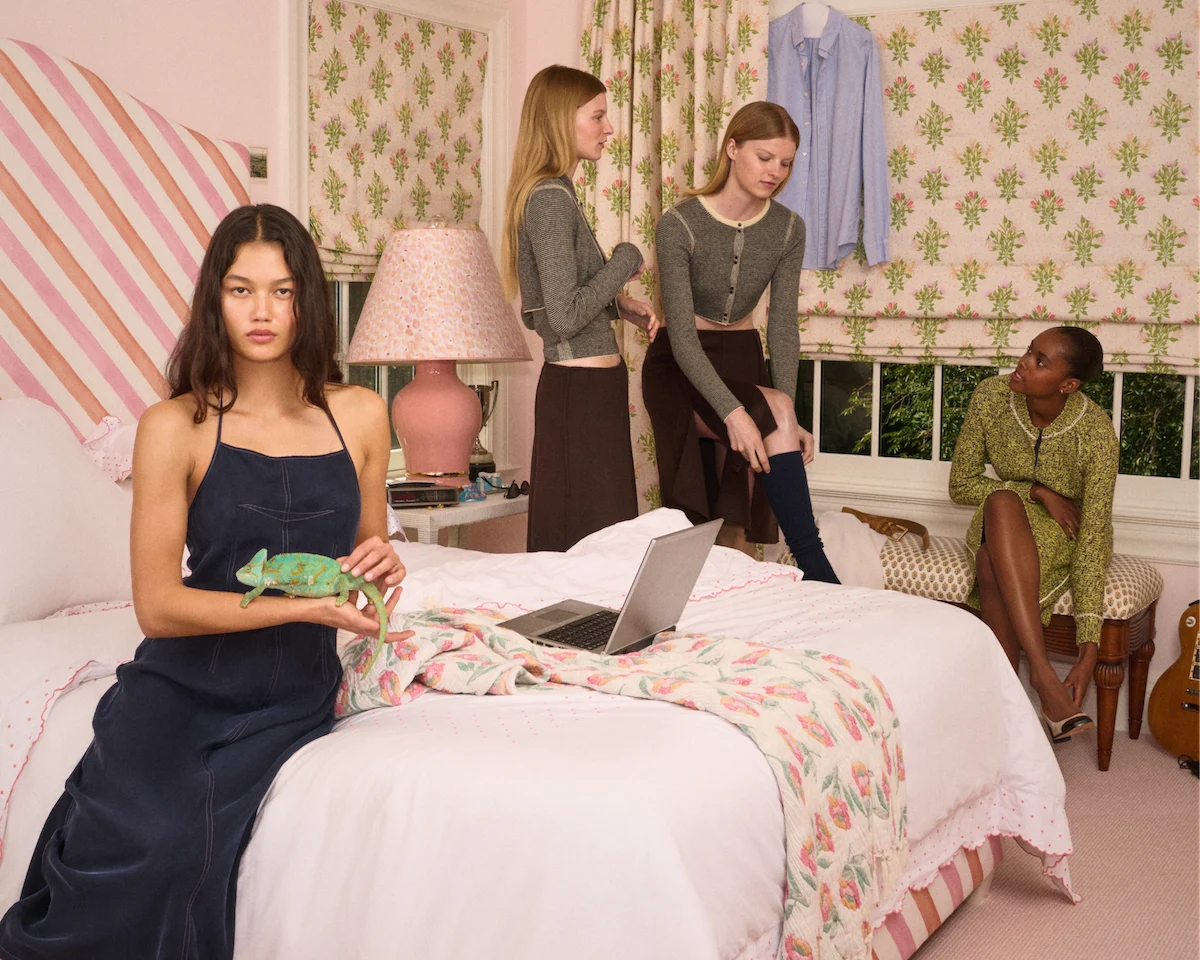
The collection is characterized by a heavy emphasis on knitwear, a category where both brands have historical strength. The pieces feature a distinct autumnal palette, utilizing rich browns, deep blues, and slate grays, punctuated by deliberate, high-contrast pops of key lime green. The integration of stripes, mock necks, and marled textures creates a cohesive visual narrative that balances commercial viability with stylistic risk.
In terms of market positioning, the collection reflects a tiered pricing structure that aims to capture a wide demographic. Prices range from $75 for accessories and lighter knits to $650 for more intricate, statement-making outerwear. This range is consistent with J.Crew’s broader pricing strategy, allowing for accessibility while maintaining a "premium" perception associated with designer collaborations.
Industry Implications and Broader Market Impact
The J.Crew and Eckhaus Latta partnership provides a case study in the efficacy of "brand juxtaposition." By pairing a legacy retailer with an avant-garde label, J.Crew is actively diversifying its customer base. For the legacy brand, the primary benefit is an infusion of "cool" and creative credibility; for the smaller label, the collaboration offers the logistical scale and distribution power of a global retail giant.

Data from the retail sector indicates that such collaborations are becoming increasingly vital for legacy brands attempting to remain relevant in a fragmented digital market. According to recent retail analytics, brands that engage in intentional, limited-edition collaborations see a significant uptick in social media engagement and web traffic compared to standard collection launches. This project serves as a barometer for how traditional retailers can successfully integrate the sensibilities of independent, "cult-status" designers into their supply chains without diluting their own brand identity.
Furthermore, the timing of the announcement—coinciding with New York Fashion Week—is a calculated marketing maneuver. By aligning with the high-fashion calendar, J.Crew elevates its own brand positioning, moving away from being perceived solely as a mall-based retailer toward being viewed as a participant in the broader fashion discourse.
The Future of Retail Collaborations
As the fashion industry continues to navigate the complexities of consumer fatigue and the demand for sustainable, long-lasting design, partnerships of this nature may become the standard rather than the exception. The success of this collaboration will likely be measured not only by immediate sell-through rates but by the long-term impact on brand perception.
For the consumer, the collaboration offers an entry point into the Eckhaus Latta aesthetic—often characterized by deconstructed silhouettes and unconventional materials—within the functional, wearable framework of J.Crew. This creates a "bridge" product that is both aspirational and practical.
As the collection arrives in stores and becomes available via the J.Crew digital portal, market analysts will be observing the reception closely. If the collaboration performs as well as initial consumer demand for the Rollneck sweater suggests, it is highly probable that J.Crew will continue to pursue similar arrangements. This move signals a permanent shift in how the brand sources its creative direction, moving from internal design teams toward a more collaborative, open-source approach that reflects the diverse, interconnected nature of modern style.
Ultimately, the J.Crew and Eckhaus Latta partnership serves as a testament to the power of archival appreciation. By looking back to the 1990s and interpreting that history through a contemporary lens, the two brands have created a collection that honors the past while acknowledging the necessity of innovation. It is a synthesis of the commercial and the conceptual, providing a template for how legacy retailers can maintain their relevance in an increasingly fast-paced and design-conscious global marketplace. Whether this collection remains a singular highlight or a catalyst for future initiatives, it remains a definitive moment in the 2027 fashion calendar.