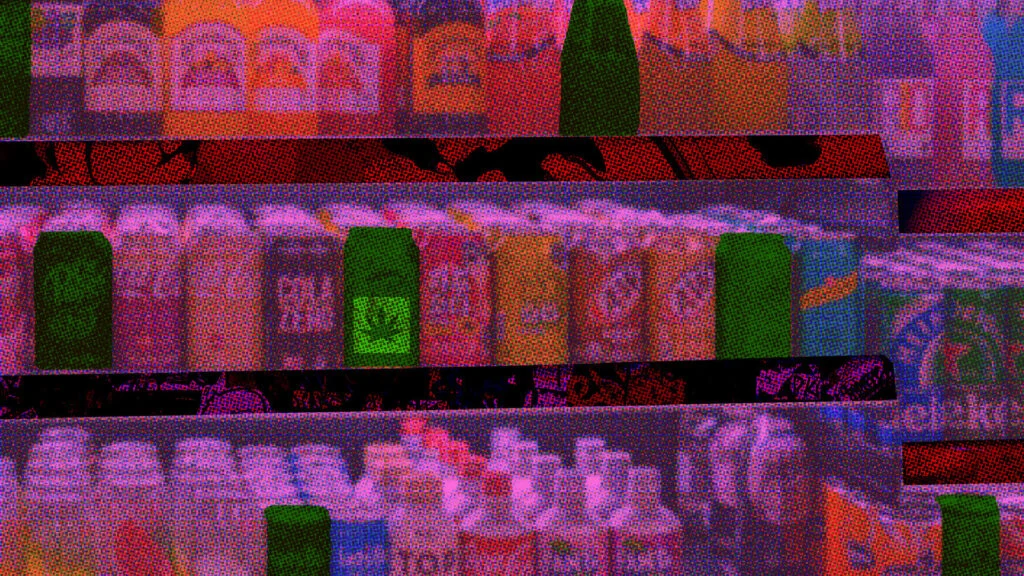
The subtle presence of cannabis beverages in the refrigerated aisles of New York City’s grocery stores, bodegas, and delis belies a rapidly expanding market and a complex regulatory landscape. These colorful cans, bearing names like Oasis, Cann, and Mighty Kind, often blend seamlessly with iced teas, probiotic sodas, and other "functional beverages," making them easily overlooked by the casual shopper. Yet, a closer examination of their labels reveals the presence of THC, the psychoactive compound in cannabis. A recent survey of ten stores in South Brooklyn found that these intoxicating drinks, some containing THC levels far exceeding state regulations, were displayed without clear warnings and sold without age verification, raising significant public health concerns, particularly for vulnerable populations.
New York State law, as outlined in regulations adopted in 2023, limits THC content in these beverages to a maximum of 1 milligram per serving. However, the investigation revealed products containing up to 100 times that amount, readily available in various retail settings, including a gourmet deli in Brooklyn Heights and a large grocery store near Prospect Park. While many beverages contained a standard dose of 5 to 10 mg of THC, potent options with 50, 60, and even 100 mg were also easily accessible. Christopher Lackner, head of the Hemp Beverage Alliance, acknowledged the widespread non-compliance, stating, "It’s not allowed, but it’s still happening."
The surge in popularity of THC drinks across the United States is closely tied to declining alcohol consumption among Americans. This trend has fueled the growth of an industry projected to reach $1.4 billion in sales by 2026, with an estimated 500 to 750 brands vying for market share. This expansion has been facilitated by a loophole in the 2018 Farm Bill, which legalized hemp-derived products. This provision has allowed companies to sell THC products derived from hemp in mainstream retail environments. While this loophole is slated to close in November, the industry remains optimistic about finding a regulatory solution. Major retailers like Target, Circle K, and Sprouts have already expanded or launched sales of these beverages, signaling a shared confidence in the market’s future. However, health professionals, researchers, and advocacy groups are sounding alarms about the potential for accidental ingestion and the risks posed to children and other vulnerable groups.
A Stark Increase in Pediatric Exposures
The ease of access to these subtly packaged THC beverages has led to a concerning rise in accidental ingestions by children. Dr. Rudy Kink, a pediatric emergency physician at Le Bonheur Children’s Hospital in Memphis, Tennessee, reports a significant increase in young patients presenting with symptoms after consuming THC products. His hospital sees an estimated four to five cases per week, involving toddlers attracted by colorful packaging and teenagers intentionally experimenting. Critically, some children have inadvertently consumed these drinks, mistaking them for regular sodas. The symptoms range from lethargy and confusion to nausea, vomiting, and in severe cases, near-coma. Parents are often bewildered by their child’s condition until toxicology tests reveal the presence of THC.
"I don’t think that teenagers quite understand the effects of THC and how it can cause some of the other problems medically, like vomiting and altered mental status," Dr. Kink commented. He advocates for clear, prominent labeling to prevent confusion.
Recent data underscores the growing concern. A 2025 survey of high school seniors indicated that 8% of females and 10% of males had consumed hemp-derived cannabis products in the past year. Similarly, a Brightfield Group survey of U.S. adults in the same year found that 14% had consumed hemp-derived THC, with users of THC drinks tending to be younger, more educated, and have higher incomes than users of other cannabis products.
Jessica Kruger, a health educator at the University of Buffalo specializing in cannabis use, points out the lack of consumer understanding regarding nutrition and cannabis labels. "People don’t know nutrition labels. They do not understand cannabis labels or milligrams," she stated. This lack of clarity exacerbates the risk of accidental consumption.
Furthermore, THC drinks not sold through state-licensed dispensaries bypass crucial safety regulations. "You don’t know if there’s contaminants, you don’t know what the ratio is" of THC to CBD, Kruger warned. The absence of regulatory oversight means manufacturers can make unsubstantiated claims about their products.
Escalating Health Risks and Poisonings
The proliferation of hemp-derived cannabis products, including THC drinks, gummies, and vapes, has been linked to a significant increase in pediatric poisonings. Matthew Rossheim, an associate professor at UNT Health Fort Worth who studies retail cannabis products, noted a "notable increase in pediatric poisonings" over the past five years.
A study published in the Journal of Addiction Medicine revealed an astonishing surge in calls to U.S. poison control centers regarding cannabis exposure in children. Between 2009 and 2024, calls for children under six years old increased by over 6,000%, and for children aged six to twelve, by more than 13,000%. Another study examining 27 children aged 14 and under with suspected hemp-derived delta-8 product exposure found that 30% required intensive care unit admission, with many experiencing low blood pressure, breathing difficulties, and requiring IV fluids.
Rossheim also highlighted a rise in emergency room visits for cannabis-induced psychosis. Research on Northern California teens has linked cannabis use to a significantly higher risk of psychotic and bipolar disorders. Diane Carlson, co-founder of the advocacy group One Chance to Grow Up, shared instances where parents believed their children were purchasing CBD, only to have them develop psychosis.

In Ohio, the director of outpatient psychiatric services at Licking Memorial Hospital reported an increase in ER visits from patients experiencing "actively psychotic" episodes due to the THC drink boom. Online forums like Reddit feature numerous accounts of accidental ingestions and related anxieties, including users mistaking THC drinks for soda, leading to interactions with prescribed medications, or worrying about failing drug screenings for employment.
Tory Spindle, an associate professor at Johns Hopkins Medicine, emphasizes that individuals unfamiliar with cannabis may perceive these drinks as harmless wellness beverages. The most severe risk, he warned, is intoxication followed by impaired driving.
Spindle’s research also suggests that THC beverages may pose unique risks compared to other edibles. His studies indicate that the effects of THC drinks can be felt within 15 to 20 minutes, peaking around 30-45 minutes, a much faster onset than traditional edibles which can take an hour or more to kick in. Furthermore, a 10 mg THC beverage appears to have a more potent effect than a 10 mg gummy. This rapid onset can impair judgment and reaction times, even for those aware they are consuming THC.
Compounding these concerns, Spindle’s research has found that cannabis products are often inaccurately labeled, with THC concentrations sometimes under- or over-estimated. Products sold outside of state-licensed dispensaries, such as many THC beverages, are more susceptible to inaccurate labeling and potential contaminants due to a lack of regulatory oversight.
The Evolving Retail Landscape and Regulatory Ambiguity
The Hemp Beverage Alliance advocates for THC beverages to be marketed, labeled, and shelved alongside other adult beverages, with mandatory age verification. Until such regulations are fully implemented, Lackner suggests that clear signage indicating the presence of THC is essential, even when drinks are shelved with non-alcoholic options. However, he notes that in many states, the industry largely operates under a "self-regulatory scheme."
State-level regulations for hemp-derived THC products are inconsistent and frequently in flux. Ohio, for example, recently banned most such products, specifically targeting THC beverages, though a temporary federal court injunction allowed some sales to resume. Alaska and Washington have shown greater success in restricting THC products outside of state-licensed dispensaries. Despite these efforts, Rossheim points out that "enforcement for these types of laws is very low."
Major retailers are navigating this complex environment. Target currently sells THC drinks in Florida, Illinois, Minnesota, and Texas. A Target spokesperson confirmed that the retailer requires identification for purchases, displays these beverages alongside other adult drinks, and uses dedicated signage, even where not legally mandated. In a Target store in Austin, Texas, THC drinks were prominently displayed with large signs indicating they were THC-infused and smaller warning labels about their contents and the illegality of driving under the influence.
In contrast, the retail environment in Brooklyn, New York, presents a starkly different picture. THC drinks were found intermingled with children’s beverages like Nesquik, with no clear indication of their intoxicating nature. In most instances observed, these drinks were stocked alongside non-alcoholic beverages rather than adult beverages. A spokesperson for the National Grocers Association encouraged retailers to adhere to all applicable laws and collaborate with regulators and suppliers to ensure proper marketing and labeling. The New York State Office of Cannabis Management did not respond to requests for comment regarding the presence of THC drinks in retail stores.
The Future of THC Beverages: Navigating Uncertainty
While concerns about accidental ingestion and public health risks are mounting, some perspectives highlight the potential benefits of THC beverages. Jessica Kruger suggests they could serve as a harm reduction alternative to alcohol, citing a study where individuals consuming one THC drink daily reduced their alcohol intake and binge drinking frequency. However, long-term health impacts remain largely unstudied due to federal restrictions on cannabis research.
The alcohol industry itself is divided. Some manufacturers are exploring the lucrative THC beverage market, while others advocate for the closure of the Farm Bill loophole, fearing competition from cannabis products. Many liquor stores and breweries, however, see THC drinks as a vital revenue stream to offset declining alcohol sales.
As the November deadline for the Farm Bill loophole’s closure approaches, the hemp beverage industry remains hopeful. Christopher Lackner notes that legislative proposals are underway to address the issue, ranging from delays to the creation of new regulatory pathways. He expressed confidence that "cooler heads will prevail." In anticipation of potential changes, some companies are diversifying by offering non-THC beverages. Nevertheless, production of THC drinks continues at high volumes, driven by strong consumer demand. The recent hemp beverage expo in Austin, Texas, with over 100 distributors in attendance, suggests a continued industry commitment and belief in the market’s viability.