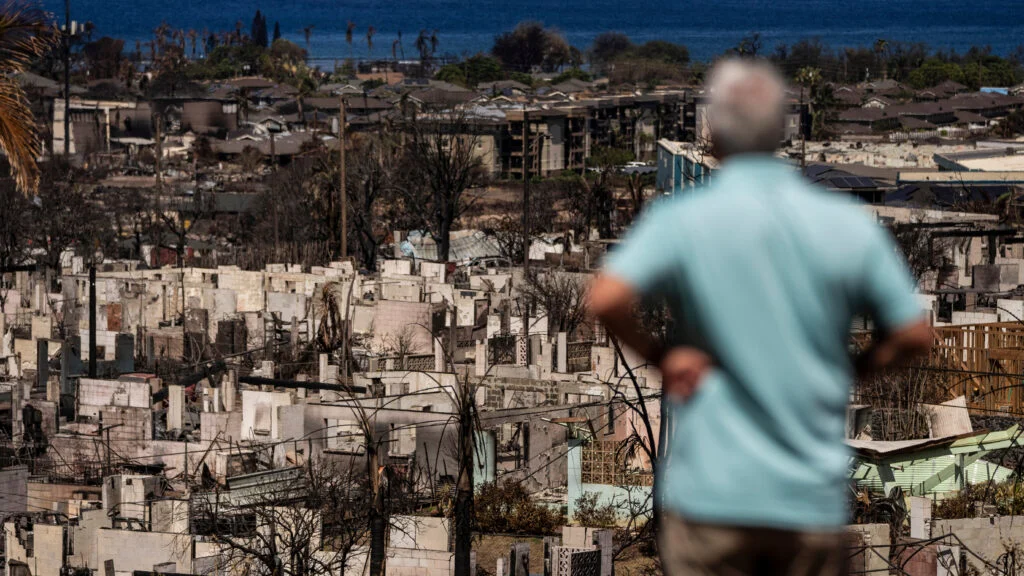
The catastrophic wildfires that leveled the historic town of Lahaina in August 2023 have left a harrowing, invisible legacy that continues to compromise the physical well-being of Maui residents long after the flames were extinguished. According to a landmark study published in the Proceedings of the National Academy of Sciences, the destruction of homes, vehicles, and complex infrastructure released a cocktail of hazardous heavy metals into the environment, resulting in sustained exposure for nearby populations. As the planet faces an era of increasingly intense wildfires, this research serves as a sobering reminder that the health impacts of climate-driven disasters extend far beyond the immediate trauma of evacuation and property loss.
A Chronology of the Disaster and Its Aftermath
The origins of this health crisis trace back to August 8, 2023, when a confluence of extreme weather conditions and infrastructure failure ignited what would become the deadliest U.S. wildfire in over a century. Driven by hurricane-force winds from Hurricane Dora passing to the south, a small brushfire in the hills above Lahaina rapidly transformed into a firestorm of unprecedented speed. By the time the flames subsided, more than 100 lives had been lost, and the town of Lahaina, a cultural and historic center, was essentially reduced to ash.
In the weeks and months that followed, while international attention focused on recovery and reconstruction, a subtler, more insidious crisis was developing. Residents who remained in or returned to the vicinity of the burn zones were subjected to a lingering environmental hazard: the pulverized remains of a modern, industrialized community. Unlike traditional forest fires, the Maui conflagration incinerated thousands of residential buildings, automobiles, and electronic devices, vaporizing synthetic materials and releasing high concentrations of toxic particulates into the atmosphere and soil.
The Maui Wildfire Exposure Study: Uncovering the Data
To quantify the extent of this exposure, researchers from the University of Hawaiʻi launched the Maui Wildfire Exposure Study (MauiWES), one of the most comprehensive post-disaster health investigations in American history. By analyzing urine samples from 1,400 adult participants, the team sought to identify the presence of heavy metals that are known to have adverse effects on human respiratory and systemic health.
The findings were alarming. Participants exhibited significantly elevated levels of antimony, manganese, barium, and arsenic compared to national biomonitoring benchmarks. Most notably, concentrations of antimony—a metalloid often found in flame retardants and electronic components—were nearly 40 times higher in Maui residents than the average U.S. population. Manganese levels were 3.8 times higher, while barium and arsenic were 2.3 and 2.2 times higher, respectively.
These chemical markers directly correlated with clinical respiratory assessments. Participants who showed the highest levels of metal exposure also displayed diminished lung function, characterized by restricted breathing capacity and difficulty with airflow—symptoms indicative of long-term obstructive or restrictive pulmonary damage. The geographic distribution of these health impacts mirrored the path of the fire, with residents in the hardest-hit zones of Lahaina, Wailuku, and Kahului showing more pronounced physiological changes compared to those in the Kula area, where the fire’s intensity and material consumption differed.
The Science of Synthetic Combustion
The composition of the ash in Lahaina was fundamentally different from the byproduct of a typical vegetation fire. When a forest burns, the resulting debris is largely organic. However, when a residential community is incinerated, the "fuel" includes polyvinyl chloride (PVC) pipes, treated wood, lead-acid batteries, solar panels, and complex circuitry.
"What we’re dealing with, especially in the aftermath of what we experienced in Lahaina, is a much more complicated mixture of these chemical exposures," explained Alika Maunakea, co-principal investigator of MauiWES and a professor at the University of Hawaiʻi at Mānoa. The incineration of these modern materials creates a "chemical signature" that, when inhaled or ingested through contaminated dust, can lead to systemic inflammation. Unlike smoke that clears in days, these heavy metals persist in the soil and household dust, creating a continuous cycle of re-exposure for those working in or living near the debris zones.

Broader Implications for Climate-Driven Disasters
The study underscores a growing scientific consensus: the climate crisis is not merely about rising temperatures or rising seas; it is about the changing nature of environmental hazards. As climate change increases the frequency and intensity of wildfires globally, the interface between wildland and urban environments—the "Wildland-Urban Interface" (WUI)—is becoming a flashpoint for toxic chemical release.
Ruben Juarez, co-principal investigator of the study and a professor of health economics, emphasized that the definition of disaster response must be expanded. "This is bigger than wildfires," Juarez noted. "These climate-related disasters can change the environment in ways that continue after the immediate emergency is over. Floods, hurricanes, fires, and other disasters can disturb soil, debris, buildings, and legacy contaminants, creating these pathways for exposure. Disaster response should not stop when visible danger is gone."
The researchers acknowledge certain limitations in their work, noting that it is difficult to isolate the wildfire as the sole source of metal exposure given Hawaiʻi’s unique geological profile, dietary habits, and historical industrial activity. However, the sheer magnitude of the concentration spikes, combined with the clear respiratory outcomes, provides strong evidence that the fire fundamentally altered the health landscape for the survivors.
Expert Perspectives on Resiliency
The medical community has taken note of these findings as a blueprint for future disaster management. Dr. Kekoa Taparra, a physician and assistant professor at the University of California, Los Angeles, who studies chronic diseases, highlighted the necessity of longitudinal health monitoring.
"This type of work echoes that climate-related disasters affect human health well beyond the immediate injuries and deaths we see during the event itself," Dr. Taparra stated. "Historic wildfires in Lahaina and even Los Angeles have highlighted how these disasters can produce longer-lasting consequences through displacement, disruption of healthcare and social networks, environmental exposures, and potentially increased mortality. As these events become more frequent and severe, understanding and measuring their full health impact will be essential to building more resilient communities and health systems."
Policy and Public Health Recommendations
The implications for public policy are significant. If, as the study suggests, the debris and soil of a burned-out town remain a health hazard for over a year and a half, then environmental remediation efforts must prioritize the stabilization and removal of toxic waste with a greater degree of urgency and precision.
Health authorities are now faced with the challenge of how to screen and treat residents who may have been exposed to these heavy metals. There is a clear need for:
- Long-term Biomonitoring: Establishing baseline health screenings for populations in high-risk zones immediately following a disaster.
- Environmental Remediation: Revisiting safety protocols for debris removal to ensure that dust mitigation strategies prevent the further dispersal of toxic ash into the surrounding neighborhoods.
- Public Health Education: Providing residents with information regarding the risks of living in or near burn sites, including the use of high-efficiency particulate air (HEPA) filtration and the importance of professional decontamination of properties.
- Resilient Infrastructure Design: Addressing the materials used in home construction and electronics to minimize the release of heavy metals during future fire events.
Conclusion: A New Standard for Disaster Recovery
The findings from the Maui Wildfire Exposure Study are a grim milestone in the study of modern disaster medicine. They illustrate that the recovery process for a community like Lahaina is not merely about clearing foundations and rebuilding structures; it is about protecting the biological integrity of the survivors.
As the scientific community continues to analyze the data, the focus is shifting toward how to integrate these findings into global disaster response frameworks. The message from the researchers is clear: the physical and economic costs of wildfire disasters are cumulative. By ignoring the invisible chemical threats left in the wake of such tragedies, societies risk trading one crisis for another—a long-term public health epidemic that may persist for years, or even decades, after the last smoke has cleared. The task ahead for policymakers, environmental scientists, and medical professionals is to ensure that future disaster responses are as comprehensive as the threats they aim to mitigate.