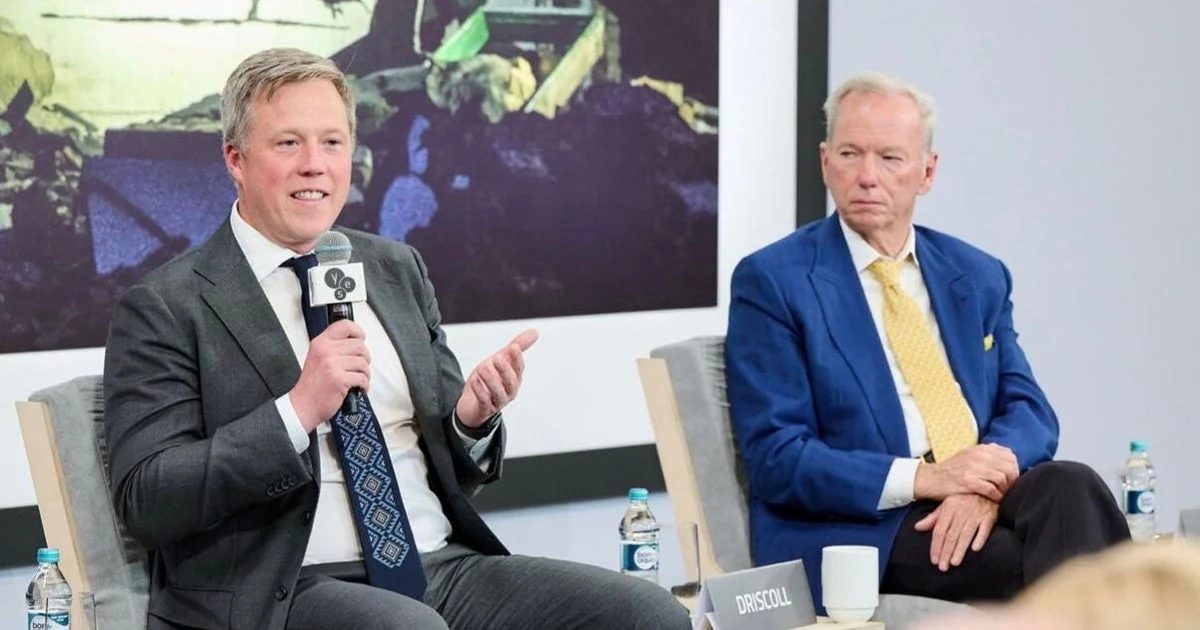
Former Secretary of the Army Dan Driscoll delivered a stark warning regarding the future of global conflict during his first public appearance since leaving the Trump administration, pointing to a critical "inflection point in warfare" and accusing the world’s leading militaries of failing to adapt at the necessary pace. Speaking at the annual Yalta European Strategy (YES) forum in Kyiv on September 12, 2026, Driscoll highlighted Ukraine’s advanced technological capabilities, specifically praising the nation’s software integration and its agile defense manufacturing sector.
Driscoll’s remarks arrive at a delicate time for Western defense policy, underscoring a growing ideological and strategic divide between traditional military procurement strategies and the rapid, software-driven iteration witnessed on the modern battlefield. His appearance alongside tech billionaire and Perennial Autonomy head Eric Schmidt brought sharply into focus the friction between legacy military establishments and private-sector technological innovation.
The Yalta European Strategy Forum: A Platform for Strategic Dialogue
The Yalta European Strategy forum, organized annually by the Victor Pinchuk Foundation, serves as a high-level gathering for international policymakers, military leaders, diplomats, and business figures to discuss Ukraine’s geopolitical trajectory and integration into Western security architectures. This year’s conference took place against the backdrop of an evolving and protracted war of attrition in Eastern Europe, as well as broader multi-theater pressures affecting Western military supplies and readiness.
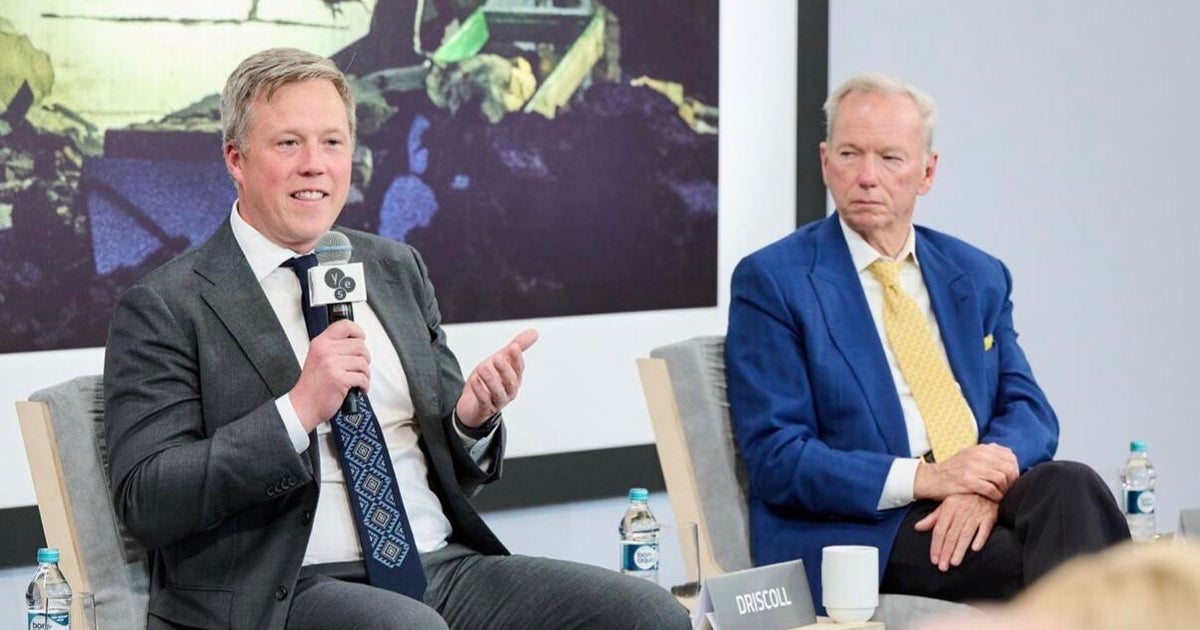
Driscoll, wearing a tie embroidered with a traditional Ukrainian pattern, shared a stage with Schmidt during a panel discussion moderated by CNN’s Fareed Zakaria. The setting provided an ideal venue for Driscoll to break his post-administration silence, allowing him to address an audience composed of Ukrainian, European, and American ministers, generals, and legislators who have spent years navigating the complexities of wartime logistics and allied support.
Praise for Ukraine’s "DELTA" and Technological Superiority
During the panel discussion, both Driscoll and Schmidt directed considerable praise toward Kyiv’s domestic wartime innovations. Chief among them was "DELTA," a sophisticated Ukrainian software platform designed to synthesize radar, sensor, and frontline troop data into a comprehensive, real-time operating picture of the battlespace.
According to Driscoll, who served 18 months as Army secretary prior to his late-August resignation, the DELTA platform surpasses any data-fusion technology currently deployed by the United States military. He argued that as Ukraine continues to scale its processing power and incorporate advanced artificial intelligence (AI) capabilities, the nation stands to gain a decisive technological edge.
"There is an amazing opportunity for your nation to outrun the Russians, and out-innovate them, and out-partner so that you can crush them," Driscoll told the audience in Kyiv.
The sentiment was reinforced by statistics highlighting the sheer scale of Ukraine’s drone production compared to Western counterparts. When moderator Fareed Zakaria noted the projected gap between the 300,000 drones the United States anticipates procuring in 2026 and the 7 million drones Ukraine aims to produce domestically, former CIA Director David Petraeus interjected from the audience to assert that Ukraine’s actual output projection is closer to 10 million units.
Chronology and Background: Driscoll’s Tenure and Sudden Departure
Dan Driscoll’s transition from the Pentagon to the private sector has been marked by significant political undercurrents. An Iraq War veteran, former venture capitalist, and long-standing associate of Vice President JD Vance—whom he met while studying at Yale Law School—Driscoll was appointed to modernize the United States Army and incorporate lessons learned from the conflict in Ukraine.
Throughout his tenure, Driscoll pursued aggressive modernization reforms. In January 2026, the Department of the Army initiated wide-ranging procurement overhauls intended to accelerate the delivery of novel weapon systems to frontline soldiers, bypassing traditional, protracted bureaucratic timelines. Driscoll also played an active role in the administration’s preliminary efforts to outline diplomatic pathways for ending the war.
However, internal friction within the defense establishment ultimately curtailed his tenure. On August 31, 2026, the White House announced Driscoll’s resignation without providing a formal explanation. Reports surfaced indicating that his departure followed persistent clashes with Defense Secretary Pete Hegseth regarding the removal of senior military officers and the trajectory of ongoing Army modernization programs.
Reflecting on his decision to step down, Driscoll indicated that he could achieve greater impact from outside the government. "My highest and best use to make the world a little bit safer at this very scary time was to do it on the outside," he remarked during the panel.
The Iran Conflict and Private-Sector Agility
The urgency of adopting commercial and non-traditional defense technologies was brought into sharp relief by concurrent security crises in the Middle East. Driscoll noted that when the United States military faced sudden threats from Iranian Shahed-type drones—including incidents where unmanned aerial vehicles approached U.S. aircraft carriers—the Pentagon discovered critical gaps in its integrated air defense inventories.
Significantly, the immediate remedy did not come from major legacy defense contractors accustomed to multi-year development cycles, but rather from Eric Schmidt’s defense firm, Perennial Autonomy. The company rapidly supplied 13,000 "Merops" interceptor drones and 10,000 "Bumblebee" reconnaissance and strike drones, platforms that had already undergone rigorous testing and operational deployment in Ukraine.
"He literally called me and I said, of course, yes," Schmidt recalled during the panel discussion, pointing to systemic failures in forward-looking defense planning. "The question is, could the government have had a multi-year plan to anticipate this?"
Driscoll emphasized that the U.S. military must learn to internalize the "scrappy, fast, iterative nature" of Ukrainian development and procurement, warning that major global powers remain structurally unsuited to the speed of modern technological evolution.
Institutional Friction and Diverging U.S. Policies
While Driscoll praised the United States’ overarching strategic commitment to Kyiv, describing the bilateral relationship as "unflinching in the desire for you to be successful," recent administrative decisions suggest a potential cooling toward specialized institutional mechanisms designed to study the conflict.
In August 2026, the U.S. Army moved to phase out a dedicated drone battalion that had been established specifically to analyze and integrate lessons learned from Ukrainian drone warfare tactics. The dismantling of the unit coincided with high-level personnel changes within the Pentagon. Two of the battalion’s most prominent advocates—former Army Chief of Staff General Randy George and the former commander of U.S. Army Europe and Africa, General Christopher Donahue—were either forced into early retirement or dismissed earlier in the year.
While Driscoll declined to comment directly on the high-profile departures of Generals George and Donahue, his overarching critique of bureaucratic inertia highlighted the challenges reformers face within the Pentagon. Observers note that while civilian leadership publicly champions innovation, institutional resistance to rapid procurement reform and the sidelining of officers experienced in modern conventional warfare could hinder the U.S. military’s ability to absorb vital lessons from the European theater.
Implications for Future Defense Architecture
Driscoll’s public remarks at the Yalta European Strategy forum underscore a broader systemic dilemma facing Western defense ministries. As state-on-state warfare increasingly relies on low-cost, mass-produced autonomous systems, artificial intelligence, and commercial software integration, traditional defense procurement models—characterized by decades-long development cycles and multi-billion-dollar single-platform contracts—face growing obsolescence.
The reliance on private-sector agile manufacturers like Perennial Autonomy to bridge immediate capability gaps during active crises demonstrates the limits of bureaucratic procurement. For Ukraine, the war has served as an unprecedented incubator for asymmetric defense technology, creating an exportable model of battlefield innovation that European and American planners can no longer afford to ignore.
As Driscoll transitions to advocacy and private-sector collaboration outside government lines, his critique serves as both a validation of Ukrainian ingenuity and a cautionary memorandum to Western defense bureaucracies that slow adaptation carries profound strategic risks.