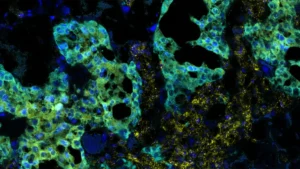
Sarcopenia and age-related muscle deterioration represent some of the most stubborn medical challenges facing modern gerontology. As individuals cross the threshold into middle age and beyond, the human body undergoes a profound and often silent physiological decline. Muscles—once resilient and capable of explosive, rapid power—begin a gradual process of degeneration. Over time, healthy muscle tissue is increasingly infiltrated by fibrous scar tissue and stubborn adipose deposits, while the specialized muscle fibers responsible for swift, powerful movements steadily atrophy. For millions of aging adults worldwide, these cellular shifts manifest as an insidious loss of physical strength, diminished mobility, and a slow erosion of daily independence.
While researchers have long understood the macroscopic symptoms of muscle aging, the microscopic drivers have remained stubbornly complex. However, a breakthrough study conducted by a team of biochemists and molecular biologists in Japan has shed brilliant new light on this cellular crisis. Led by Professor Ryuichi Tatsumi at Kyushu University’s Faculty of Agriculture, researchers have identified a specialized sulfur-based molecule capable of protecting the body’s natural muscle repair machinery. Even more remarkably, this compound appears capable of enhancing a critical biological signaling protein to levels previously thought unattainable, engineering what the research team has termed "Super HGF." Published in the peer-reviewed journal Scientific Reports, these findings offer a novel framework for therapeutic interventions against muscle wasting, opening doors to potential treatments that could redefine how humanity approaches physical aging, prolonged immobilization, and veterinary geriatric care.
Anatomy of a Failing System: How Skeletal Muscle Repairs Itself
To understand the magnitude of Professor Tatsumi’s discovery, one must examine the intricate, normally robust ecosystem of skeletal muscle regeneration. Skeletal muscles, which comprise the vast voluntary musculature attached to the skeletal system, are responsible for every conscious movement we make, from walking and lifting to maintaining posture against gravity. Throughout a lifetime, these tissues undergo continuous micro-trauma from physical exertion, exercise, and daily mechanical stress.
Fortunately, skeletal muscle possesses an extraordinary, built-in capacity for self-repair. This regenerative superpower relies heavily on a specialized population of adult stem cells known as satellite cells. Under normal, non-injured conditions, these satellite cells remain quiescent—dormant and securely positioned along the periphery of mature muscle fibers. They wait vigilantly until mechanical stimulation, exercise, or acute injury signals the urgent need for tissue rescue. Once awakened, satellite cells rapidly proliferate, differentiate, and fuse into damaged muscle fibers, orchestrating structural repair and hypertrophy.
At the very heart of this activation cascade lies a master regulatory protein called hepatocyte growth factor (HGF). Despite its historical moniker—coined when the protein was first isolated from the liver—HGF is a systemic molecular multi-tasker that plays an indispensable role throughout the body, most notably in skeletal muscle regeneration. In a healthy, youthful biological environment, HGF is safely sequestered within the extracellular matrix, the supportive structural scaffolding surrounding muscle fibers. Upon physical trauma or mechanical stretch, the extracellular matrix releases stored HGF, which rapidly diffuses to locate its specific cellular target: the c-met receptor residing on the cell membrane of dormant satellite cells.
Receptors function much like molecular locks, while signaling proteins operate as the keys. When HGF successfully docks with the c-met receptor, it triggers a profound biochemical cascade within the satellite cell, jarring it out of dormancy and compelling it to multiply and repair the surrounding muscular architecture. Unfortunately, this exquisitely calibrated signaling pathway does not remain infallible with age.
The Chemical Sabotage of Aging: Protein Nitration and Receptor Failure
As the human body ages, biochemical environments shift in ways that increasingly undermine cellular efficiency. Previous foundational investigations by Professor Tatsumi’s research group at Kyushu University revealed a hidden culprit in age-related muscle degeneration: a chemical modification process known as nitration.
Nitration occurs when reactive nitrogen species attach a nitro group ($textNO_2$) to specific amino acid residues on a protein. This unwanted chemical addition alters the physical architecture and electronic distribution of the protein molecule, frequently impairing its biological function. In the case of HGF, the Kyushu University team pinpointed two particularly vulnerable locations on the protein structure, designated as Y198 and Y250. Crucially, both of these amino acid residues lie squarely within the functional domain responsible for binding to the c-met receptor on satellite cells.
When Y198 and Y250 undergo nitration, HGF suffers a structural deformation. Much like a physical key that has been warped, corroded, or broken in half, the nitrated HGF can no longer smoothly interface with its intended c-met lock. Consequently, even as an aging body continues to manufacture and release adequate quantities of HGF in response to injury or physical therapy, the protein is rendered functionally inert by chemical sabotage. The satellite cells remain asleep, the damaged tissue goes unrepaired, and age-related muscle wasting accelerates unchecked.
"HGF is not necessarily missing as we age," Professor Tatsumi explains, contextualizing the team’s hypothesis. "Rather, it can be chemically altered after it is made. That led us to wonder whether a compound with strong antioxidant capacity might protect HGF, either by preventing nitration or by compensating for the functional loss it causes."
The Experimental Pursuit: Testing Trisulfides in the Laboratory
Driven by this hypothesis, Tatsumi and his colleagues turned their attention to a unique chemical family known as trisulfides, which are distinguished by a structural chain of three contiguous sulfur atoms. Because of this distinct atomic arrangement, trisulfides exhibit exceptional redox (reduction-oxidation) capabilities, making them powerful antioxidants capable of participating in delicate electron-transfer reactions within biological systems.
The researchers selected two prominent trisulfides with established antioxidant properties for intensive laboratory scrutiny: glutathione trisulfide (GSSSG) and lipoic acid trisulfide (LASSS). The experimental objective was two-fold: first, to determine whether these sulfur compounds could shield HGF from destructive nitration; second, to assess whether they could preserve or restore the protein’s receptor-binding efficacy.
In the initial phase of experimentation, both GSSSG and LASSS demonstrated a solid ability to suppress nitration at the vulnerable Y198 and Y250 sites on the HGF protein. However, merely preventing the chemical damage did not fully restore HGF’s binding affinity to the c-met receptor. Undeterred, the research team adjusted their experimental parameters, dramatically increasing the molar ratio of the trisulfide compounds relative to HGF from an initial 1:4000 up to a much more concentrated 1:8000.
This strategic adjustment yielded an entirely unexpected scientific breakthrough.
Serendipitous Discovery: Engineering Super HGF
At the higher concentration of 1:8000, lipoic acid trisulfide (LASSS) performed far beyond its expected antioxidant duties. Rather than simply acting as a molecular shield against nitration, LASSS actively interacted with HGF to fundamentally upgrade its biochemical properties.
When exposed to the high concentration of LASSS, the HGF protein displayed more than double—a greater than 200% increase in—its binding affinity for the c-met receptor compared to untreated control samples. In layman’s terms, the modified HGF could latch onto its target cellular receptor with vastly superior strength and stability. Furthermore, this newly treated protein demonstrated heightened resistance against future functional degradation induced by nitration, particularly at the resilient Y198 site.
Intriguingly, this profound enhancement was entirely unique to LASSS. While GSSSG had successfully reduced nitration in earlier phases, it completely failed to generate this remarkable surge in receptor-binding capability.
"This exceeded our expectations," Tatsumi remarks, reflecting on the anomalous results. "We knew trisulfides had diverse biological functions, but we never expected that simply mixing HGF with LASSS would produce such a striking effect. What this tells us is that LASSS does more than simply neutralize reactive molecules. It may interact directly with HGF and induce a subtle structural change, creating an enhanced ‘Super HGF’ form that binds c-met more strongly and resists nitration."
The research team hypothesizes that the trisulfide compound induces a subtle, highly specific conformational shift in the three-dimensional folding of the HGF molecule. Because protein functionality is inextricably tied to its physical shape, even a minute structural optimization can exponentially amplify its biochemical potency. The resulting entity—dubbed "Super HGF" by the laboratory team—represents an artificially enhanced iteration of the body’s native regenerative signaling cascade.
In Vivo Validation: Testing Protection in Living Animal Models
To move beyond isolated test-tube environments, Tatsumi’s team sought to verify whether LASSS could exert its protective and enhancing effects within living biological tissue (in vivo). To test this, the researchers utilized an established murine model involving tail-suspension techniques.
Tail suspension is a standard experimental protocol in musculoskeletal research designed to simulate the physiological toll of prolonged unloading, disuse, and microgravity. By preventing the hindlimbs from bearing weight, the technique rapidly induces muscle atrophy, oxidative stress, and the accelerated biochemical markers typically associated with prolonged bed rest and physical inactivity.
Mice that were administered LASSS prior to and during the tail-suspension regimen exhibited a statistically significant reduction in HGF nitration levels within their muscle tissues compared to untreated control subjects. This crucial finding confirmed that the compound’s protective capacity was fully operational inside a complex, living organism, successfully shielding critical repair proteins from the oxidative ravages of disuse. Notably, once again, GSSSG failed to replicate this protective outcome in the living mouse models, reinforcing the distinct pharmacological profile of LASSS.
However, the research team maintains strict scientific rigor regarding these initial animal trials. While the data conclusively demonstrates that LASSS can successfully protect HGF from nitration in vivo, the current experiments do not yet prove that the treatment automatically reverses established muscle atrophy or directly restores lost physical strength and mass. Extensive longitudinal studies utilizing aging animal models will be mandatory to definitively establish both the therapeutic efficacy and the long-term safety profile of the compound inside living biological systems.
Broader Implications and Future Therapeutic Horizons
The implications of the Kyushu University discovery extend far beyond the immediate confines of biochemical research. As global demographics shift toward an increasingly aging population, the socioeconomic and healthcare burdens associated with sarcopenia, frailty, and mobility loss are climbing exponentially.
Furthermore, muscle deterioration is by no means exclusive to the elderly. Rapid and severe muscle atrophy frequently plagues patients undergoing prolonged hospital bed rest, individuals recovering from major orthopedic or cardiovascular surgeries, astronauts subjected to long-duration spaceflight, and patients suffering from various chronic wasting diseases. When the body’s natural regenerative machinery becomes impaired or chemically short-circuited, regaining lost physical function becomes an arduous, often insurmountable challenge.
Conventional therapeutic approaches to combatting muscle loss typically focus on physical rehabilitation, dietary protein supplementation, or systemic hormone therapies, all of which yield variable results depending on the patient’s baseline health. By contrast, the strategy unveiled by Tatsumi and his colleagues targets the foundational molecular signaling pathways of tissue regeneration itself. Instead of artificially attempting to replace the body’s complex cellular machinery from the outside, this novel pharmacological approach seeks to safeguard and supercharge the biological signals already present within the organism.
If subsequent pre-clinical and clinical trials successfully validate that "Super HGF" can safely translate into enhanced muscle healing and strength retention in humans, the medical applications could be revolutionary. Clinicians might one day utilize targeted trisulfide therapies to preserve muscle mass in elderly patients undergoing elective surgeries, accelerate rehabilitation times for trauma victims, or mitigate the debilitating physical decay associated with extended periods of immobility.
Moreover, the fundamental biological mechanisms governing HGF signaling and protein nitration are broadly conserved across mammalian species. This opens an exciting frontier not only in human regenerative medicine but also in veterinary geriatrics. Aging companion animals—particularly senior dogs and cats that frequently suffer from debilitating hip dysplasia, arthritis, and age-related muscle wasting—could potentially benefit from similar therapeutic interventions, enhancing their mobility and quality of life in their golden years.
Conclusion and Next Steps
The journey from a serendipitous laboratory discovery to an approved pharmaceutical therapy is long, rigorous, and heavily regulated. The Kyushu University team emphasizes that many critical questions remain unanswered. Researchers must now focus on mapping the exact three-dimensional conformational changes induced by LASSS on HGF, determining optimal dosing windows, and conducting comprehensive toxicity and efficacy trials in aging mammalian models.
Nevertheless, the unexpected realization that a sulfur-based antioxidant compound can physically interact with a key regenerative protein to create a hyper-functional variant offers a profoundly encouraging roadmap for future research. As scientists continue to unravel the complex chemical dance of cellular aging, discoveries like "Super HGF" provide a tangible glimmer of hope. They point toward a future where growing older does not automatically necessitate the loss of physical autonomy, strength, and independence, bringing humanity one step closer to mastering the biology of aging itself.