On November 6, 1572, German astronomer Wolfgang Schulër looked up into the evening sky and witnessed a spectacle that defied the foundational principles of medieval science. Positioned in the constellation Cassiopeia, a brilliant new star had materialized, blazing with a luminosity that rivaled the planet Venus. For weeks, this stellar apparition was so intensely bright that it could be seen clearly in broad daylight. To observers of the 16th century, the appearance of an unannounced celestial body was profoundly unsettling, serving as a jarring visual contradiction to the long-held Aristotelian doctrine that the heavens were eternal, perfect, and completely immutable.
Although Schulër holds the distinction of being among the first to document the phenomenon, the event became permanently etched into scientific history through the meticulous, exhaustive studies of Danish astronomer Tycho Brahe. Brahe analyzed the star’s behavior with unprecedented precision, publishing his landmark findings in the treatise De Stella Nova (Latin for "On the New Star"). Because of his rigorous documentation, the event ultimately became universally known as Tycho’s Star, or cataloged formally centuries later as SN 1572.
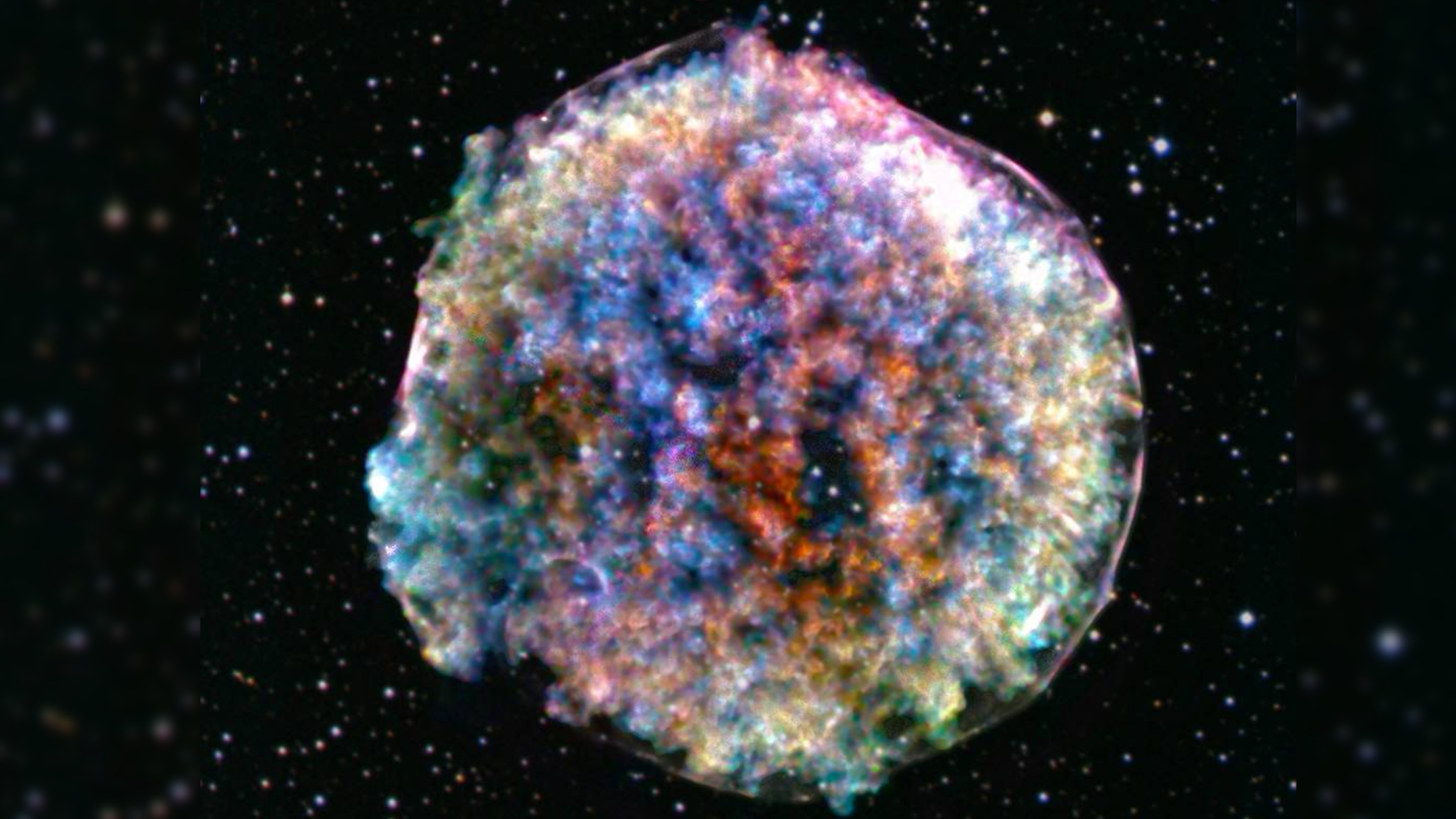
The ramifications of SN 1572 extended far beyond the realm of observational astronomy. By proving that the celestial sphere was capable of profound and violent change, the event helped dismantle the prevailing cosmological paradigms of the era, paving the way for the scientific revolution that would soon engulf Europe. Today, modern astrophysics understands Tycho’s Star not as a brand-new creation, but as the catastrophic death of an ancient white dwarf star located approximately 13,000 light-years from Earth.
Chronology and Historical Context
The unfolding of the 1572 event can be traced through the meticulous records kept by astronomers across Europe and Asia, whose observations captured the life cycle of a stellar explosion long before the term "supernova" entered the scientific lexicon.
In early November 1572, independent sightings emerged across Europe. While Wolfgang Schulër recorded his initial observations on November 6, other contemporary astronomers, including Thomas Digges in England and Cornelius Gemma in the Low Countries, also took note of the sudden stellar intruder. However, it was Tycho Brahe who elevated the observation from a passing curiosity to a rigorous scientific study. Brahe first noticed the brilliant star on November 11 while walking home from his alchemy laboratory in Herrevad Abbey, Denmark. Struck by its magnitude—which surpassed that of Jupiter and matched Venus—he immediately began measuring its exact position relative to neighboring stars in Cassiopeia.
Brahe’s primary objective was to determine whether the star was located within the Earth’s atmosphere (like a meteor or comet) or far out in the distant realm of the fixed stars. By employing precise navigational instruments to measure its parallax—the apparent shift in an object’s position against a distant background when viewed from different angles—Brahe conclusively established that the object showed no discernible parallax. This proved definitively that the "new star" lay far beyond the Moon and the planets, residing deep within the celestial sphere of the fixed stars.
The star remained visible to the naked eye in broad daylight for roughly two weeks. As winter turned to spring and summer, its brilliance slowly faded. By March 1574, after remaining visible in the night sky for an extraordinary 16 months, the star finally dipped below the threshold of human vision, leaving behind an invisible remnant that would elude detection for centuries.
Scientific Classification and Modern Understanding
For nearly four centuries, the physical nature of Tycho’s Star remained an impenetrable mystery. The concept of a supernova had not yet been conceived, and 16th-century science lacked the theoretical framework to explain how an entire star could seemingly vanish after unleashing such immense energy.
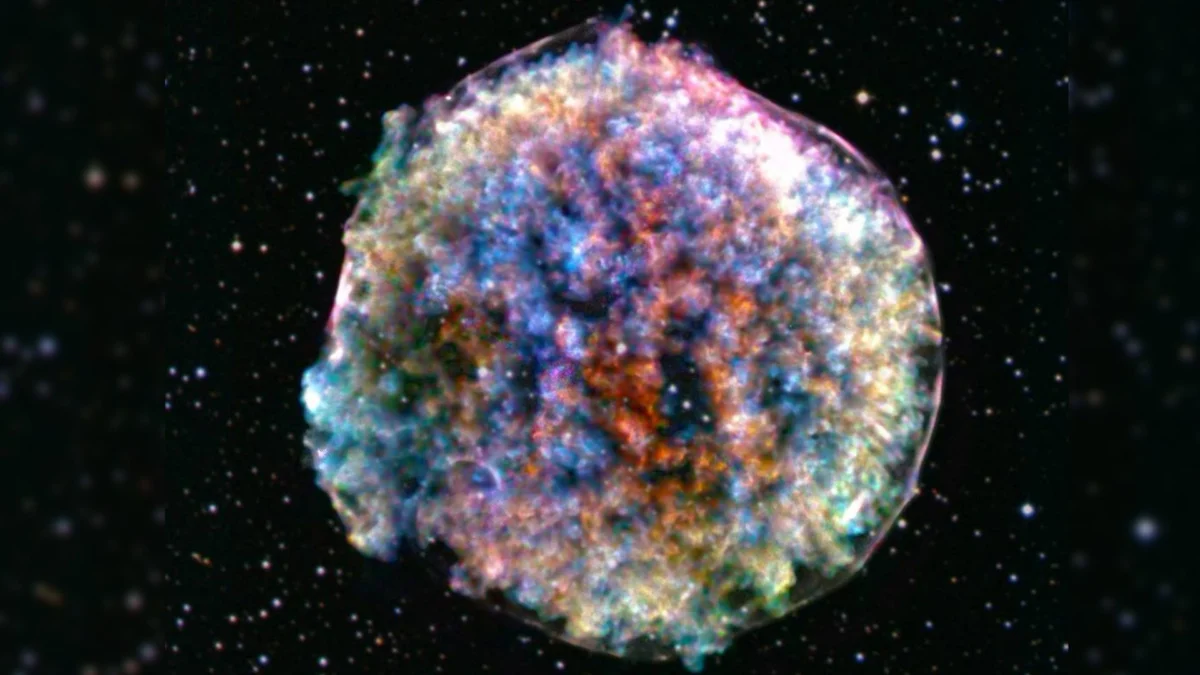
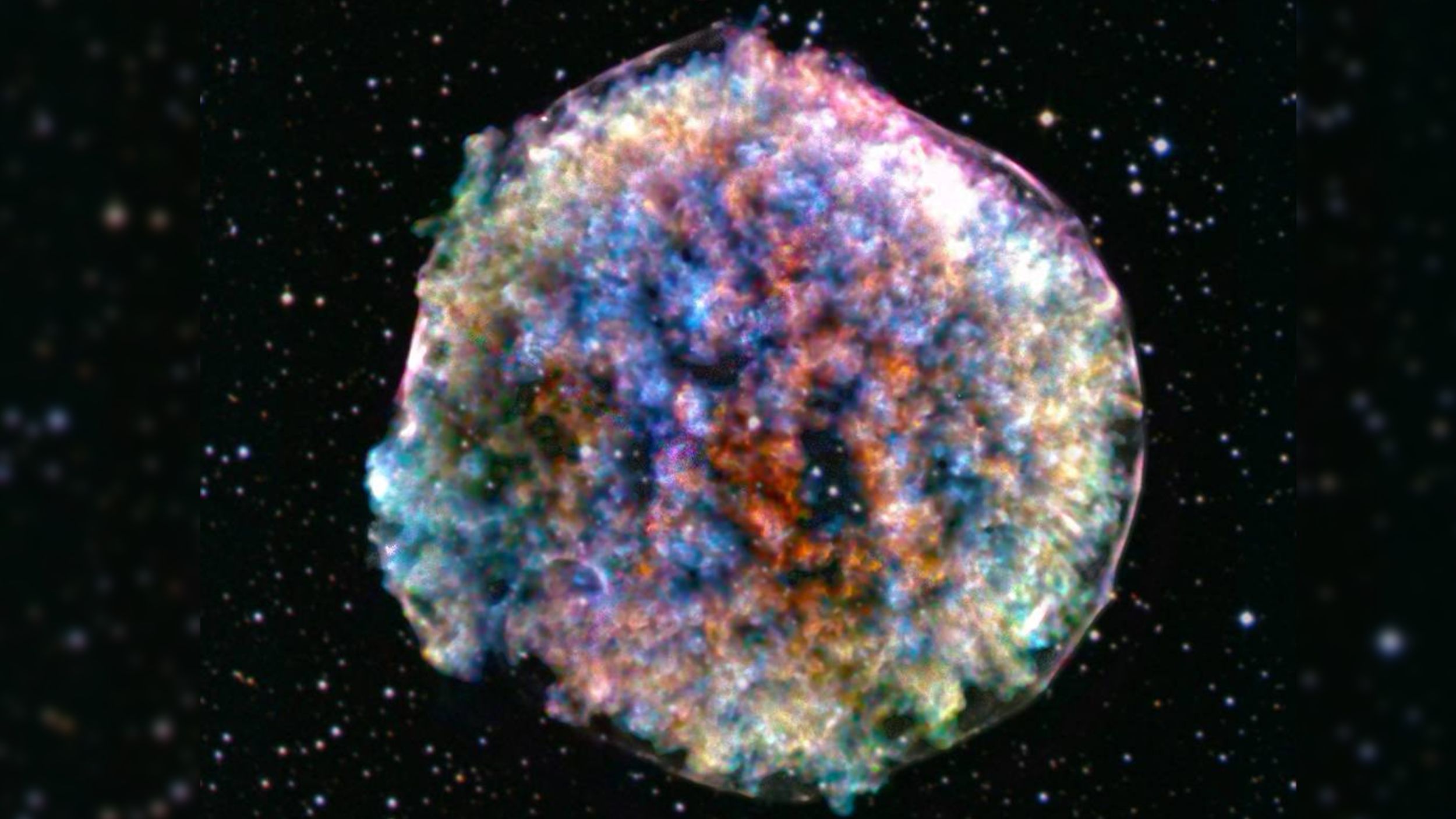
It was not until the 1940s that astronomers formally classified Tycho’s Star as a supernova—a titanic stellar explosion. Subsequent technological advancements in X-ray, infrared, and radio astronomy allowed researchers to peer back at the Cassiopeia constellation and locate the expanding debris field, known today as the Tycho supernova remnant.
Modern astrophysical analysis categorizes SN 1572 as a Type Ia supernova. This specific class of explosion occurs within a binary star system containing a dense white dwarf—the carbon-oxygen core of a dead, low-mass star. In a Type Ia scenario, the white dwarf steadily draws accreted gas and matter away from a larger companion star. As the white dwarf accumulates this additional mass, it eventually approaches the Chandrasekhar limit—approximately 1.4 times the mass of the sun. At this critical threshold, the internal pressure and temperature become so intense that runaway carbon fusion ignites, triggering a thermonuclear explosion that completely obliterates the white dwarf.
Because the progenitor star is situated roughly 13,000 light-years away from Earth, the actual cataclysm occurred thousands of years before human eyes ever witnessed the light arrive in 1572. The immense distance also explains why the remnant continues to expand outward at millions of miles per hour, generating massive shock waves that sweep through the interstellar medium.
Broader Impact and Implications
The philosophical and scientific implications of SN 1572 cannot be overstated. When Tycho Brahe published De Stella Nova in 1573, he directly challenged the sacred astronomical dogma inherited from ancient Greece. For centuries, scholastic philosophy maintained that the sublunary realm (Earth and its atmosphere) was subject to change, decay, and corruption, while the superlunary realm (the stars and planets) was eternal, unchanging, and divine.
The emergence of a brilliant new star in the heavens shattered this dichotomy. As renowned astronomer Alex Filippenko of the University of California, Berkeley, noted in connection with a 2004 study on the event, "This was at the end of the Dark Ages in Europe, and these observations were an important piece of evidence that the heavens were not immutable."
Brahe’s meticulous records of the star’s gradual brightening and subsequent dimming provided a vital empirical dataset. Centuries later, modern researchers utilized those historical light curves to verify the precise classification of SN 1572 as a Type Ia supernova, demonstrating how historical archives can directly feed contemporary astrophysical research. By proving that the universe was dynamic and subject to catastrophic transformation, observations like Tycho’s helped clear the intellectual pathway for the heliocentric models of Nicolaus Copernicus, Johannes Kepler, and Galileo Galilei.
Contemporary Parallels: The Watch for Future Explosions
The legacy of historical guest stars continues to resonate in modern astronomy, particularly as scientists monitor volatile stellar systems that may soon repeat history. Today, astronomers are closely tracking volatile objects such as T Corona Borealis, frequently referred to as the "Blaze Star."
Located roughly 3,000 light-years from Earth, T Corona Borealis is a recurrent nova system comprising a white dwarf and a red giant star. Unlike a terminal supernova—which completely destroys the white dwarf—a recurrent nova involves periodic thermonuclear eruptions on the surface of the white dwarf that blow off material without destroying the core. Historically, outbursts from T Corona Borealis were recorded in 1866 and 1946. Because of its predictable roughly 80-year cycle, astronomers anticipate that the system is currently on the verge of another dramatic outburst, which will cause the star to flare into naked-eye visibility for a brief period.
While T Corona Borealis will produce a much smaller nova rather than a universe-shaking supernova, the intense global focus on the system underscores humanity’s enduring fascination with transient cosmic events. From the naked-eye observations of Wolfgang Schulër and Tycho Brahe in 1572 to sophisticated space-based observatories like NASA’s Chandra X-ray Observatory, humanity’s drive to document, understand, and interpret the dynamic changes in our night sky remains as vital today as it was at the dawn of modern science.