The demographic composition of the United States is undergoing a fundamental transformation, a phenomenon economists and sociologists have termed the "silver tsunami." For decades, the milestone of 10,000 Americans reaching the age of 65 each day served as the primary metric for tracking this transition. However, current projections from the LIMRA Secure Retirement Institute indicate that this volume is accelerating. Between 2025 and 2027, the number of individuals entering the senior demographic is expected to peak at approximately 11,200 per day. This unprecedented shift in the population pyramid is creating a structural imbalance in housing demand, supply chains, and healthcare infrastructure, providing a unique landscape for real estate investors and developers to realign their portfolios with the needs of an aging nation.
The Macroeconomic Context of an Aging Population
The surge in the senior population is not merely a statistical anomaly but a byproduct of the post-World War II baby boom. As this cohort reaches retirement age, the demand for specialized housing—ranging from high-acuity assisted living facilities to age-restricted single-family homes—has surged. Historically, real estate investment strategies favored younger demographics or high-growth metropolitan areas. Today, the focus is shifting toward "longevity-ready" assets. With retirees controlling approximately 73% of total household wealth in the United States, their housing preferences and healthcare requirements represent a significant portion of domestic consumption.
Assisted Living Facilities: Addressing the Supply Gap
The most immediate impact of the aging population is the deficit in assisted living infrastructure. According to data from Matthews Real Estate Investment Services, occupancy rates in assisted living facilities have grown by roughly 2% annually over the past four years. In many secondary markets, occupancy has reached 90%, while primary markets are experiencing even tighter capacity.
The investment model for these facilities is transitioning from traditional passive real estate plays to hybrid operational models. Because these assets include both the physical property and the business entity, investors are increasingly looking at syndications or co-investing groups that allow for entry into the sector with lower capital requirements. By pooling resources, smaller investors can participate in institutional-grade projects, such as campus expansions or renovations, which offer projected annualized returns often exceeding standard residential rental yields. These investments frequently feature early capital return through refinancing, allowing for consistent cash flow distributions throughout the hold period.
The Resiliency of Active Adult Communities
Unlike standard multifamily properties, active adult communities—designed for healthy adults aged 55 and older—demonstrate higher levels of resident stability. Once a senior transitions into an active adult community, the probability of relocation is significantly lower compared to the broader rental market.
These properties offer a recession-resilient profile. Because the target demographic typically relies on a combination of pension income, Social Security, and fixed-income annuities, their ability to meet rental obligations remains stable even during broader economic downturns. Furthermore, the niche nature of these communities allows operators to command premium rents, as the amenities—such as wellness centers, organized social activities, and low-maintenance living environments—are tailored specifically to the lifestyle preferences of the cohort.
The Rise of Age-in-Place Rentals
A significant segment of the aging population prefers to remain in established neighborhoods rather than transitioning to institutional facilities. This has catalyzed the "age-in-place" rental market. Investors are increasingly acquiring dated, single-story ranch-style homes and retrofitting them for long-term senior occupancy.
Modifications such as the removal of bathtubs in favor of walk-in showers, the installation of handrails, improved lighting, and the creation of zero-threshold entrances are essential in this strategy. From a landlord’s perspective, these properties often command longer-than-average tenancy periods. Because these "forever homes" provide both autonomy and accessibility, they serve as a stable income-producing asset that requires lower turnover costs than traditional high-churn rental units.
Modular and Manufactured Housing
To combat the rising cost of traditional construction, some developers are focusing on the installation of high-quality manufactured homes on permanent land parcels. This strategy addresses the affordability crisis for seniors who are downsizing from larger family homes but lack the capital to purchase luxury real estate.
In many regional markets, these modular installations can be sold or rented at a fraction of the price of new-construction single-family homes, often at a 50% discount to local market averages. This price point ensures consistent demand across varying economic cycles, providing a degree of insulation against the volatility often seen in the luxury housing market.
The Multigenerational Housing Shift
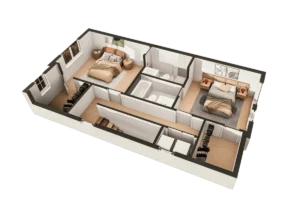
Social and economic pressures have led to a resurgence in multigenerational living. Many families are opting to house aging parents within their own properties to reduce costs and provide closer care. This has increased the market value of properties equipped with Accessory Dwelling Units (ADUs), in-law suites, or dual-primary-suite layouts.
Real estate professionals note that versatility is now a primary selling point for prospective buyers. Investors who focus on properties with two distinct, functional living areas are finding success in both the rental and resale markets. This trend reflects a broader societal shift toward communal care, where the burden of aging is shared within the family unit rather than outsourced to private institutions.
Catering to the Retiree Traveler
The hospitality and short-term rental (STR) sector is also adapting to the "silver tsunami." Retirees are increasingly active in the travel and leisure market, frequently choosing destinations that offer moderate climates and low-impact outdoor activities. STR operators are beginning to cater to this demographic by adjusting interior design and marketing efforts. Properties that are ADA-compliant, located near medical facilities, and equipped with modern connectivity are capturing a larger share of the affluent senior travel market. Given the concentration of wealth in the 55+ age bracket, these properties are often less sensitive to seasonal price fluctuations than those catering exclusively to the younger, more budget-conscious vacationer.
Tax-Abated Affordable Housing
A critical, often overlooked sector involves affordable housing for seniors living on fixed incomes. With approximately 44% of seniors relying heavily on Social Security, the demand for rent-controlled or income-restricted housing is immense.
The investment strategy here often involves public-private partnerships. Developers may work with nonprofits to designate units as affordable housing for seniors meeting specific income criteria. In return, the property owner may receive significant property tax abatements. This structure provides a dual benefit: it creates an immediate increase in net operating income through tax relief and ensures near-guaranteed occupancy due to the chronic shortage of affordable housing. Because these residents prioritize rent payments to maintain their housing stability, default rates are exceptionally low.
Broader Economic Implications
The "silver tsunami" is forcing a permanent recalibration of the real estate sector. As the demographic shift progresses through 2030, the demand for specialized, accessible, and affordable housing will continue to outpace supply. For the institutional investor, this presents an opportunity to deploy capital into assets that are fundamentally linked to the unavoidable aging of the American population.
For the individual investor, the barrier to entry is lowering through the use of passive investment platforms and syndication groups. By utilizing strategies such as dollar-cost averaging into various senior-focused real estate funds, investors can mitigate risk while maintaining exposure to a sector that is inherently resistant to the boom-and-bust cycles typical of the general housing market. As the demographic trend matures, the integration of these seven investment vehicles will likely become a staple of diversified, long-term real estate portfolios, ensuring that the needs of the aging population are met while providing sustainable growth for the investment community.