The modern battlefield is undergoing a fundamental technological transformation, shifting from centralized, cloud-dependent intelligence toward a model of decentralized, edge-native autonomy. At the forefront of this evolution is Scaleout Systems, a Swedish startup now working under the umbrella of NATO’s Defence Innovator Accelerator for the North Atlantic (DIANA). By utilizing federated learning—a machine learning technique that allows models to learn from decentralized data without requiring the raw information to be transferred to a central repository—Scaleout is enabling drones and field command posts to sharpen their target recognition capabilities in real-time, even in contested environments where communication links are frequently severed by electronic warfare.
Founded in 2018 by researchers from Uppsala University, Scaleout initially focused on commercial applications, such as optimizing machine learning deployments for heavy-duty trucking and logistics hardware. However, the 2022 Russian invasion of Ukraine catalyzed a strategic pivot. Recognizing that the operational tempo of contemporary conflict demands localized intelligence that does not rely on vulnerable data centers, the company redirected its focus toward defense-grade AI. Today, the startup is an integral participant in the DIANA program, specifically contributing to the Federated Aerial Intelligence for Recon (FAIR) project.
The Technical Shift: From Cloud to Edge
The traditional paradigm of AI development involves massive data collection, transport to a centralized server, and intensive model training using high-performance computing clusters. In a military context, this approach is increasingly obsolete. Centralized data centers have become prime targets for long-range munitions, as seen in the recent destruction of key infrastructure during the escalating tensions in the Middle East. Furthermore, modern electronic warfare—specifically GPS jamming and signal interception—makes the reliance on persistent, high-bandwidth satellite or radio links a liability.
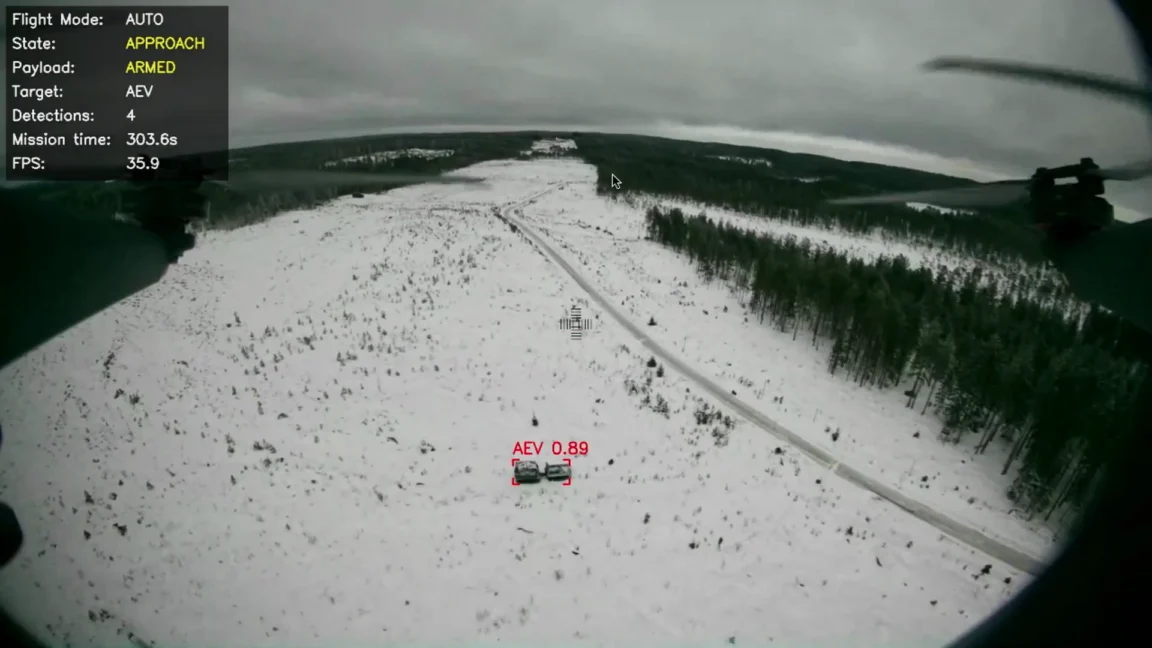
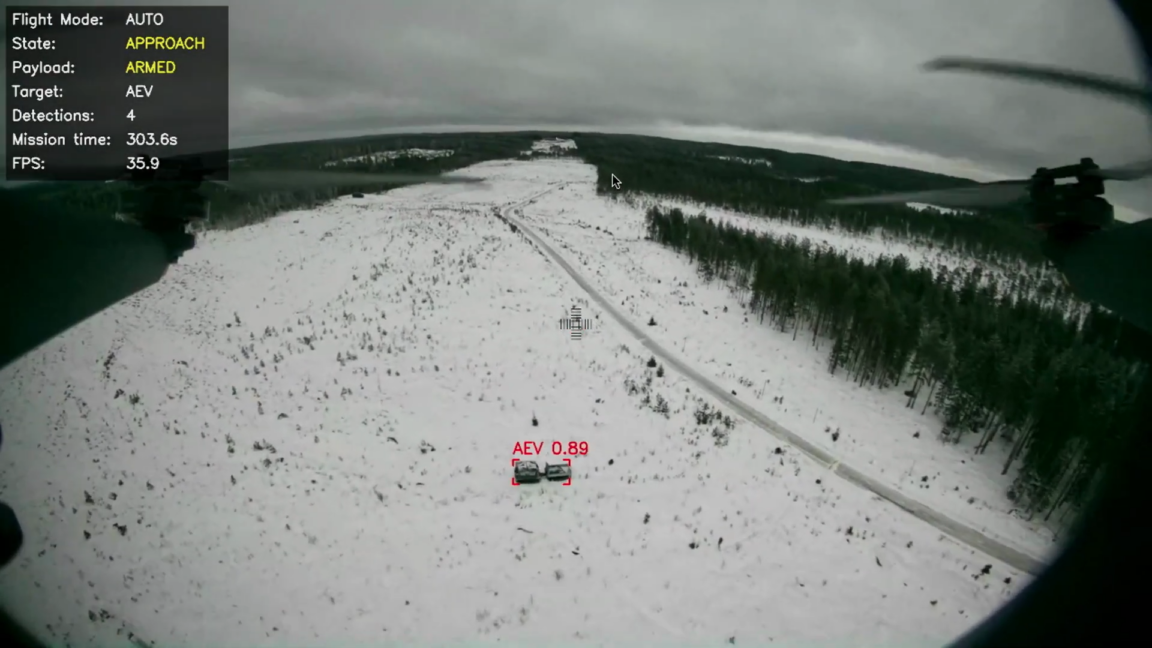
Scaleout’s solution bypasses these dependencies. By deploying leaner, optimized machine learning models directly onto the hardware of drones, tablets, and mobile field workstations, the startup ensures that critical intelligence functions remain operational even in a "denied" communication environment. These devices act as "nodes" in a federated network. They perform local inference—identifying targets such as armored vehicles or infantry—and capture metadata about the local environment. Crucially, they do not transmit the sensitive raw video feeds back to a central command. Instead, they share only "model updates" or mathematical weights derived from the local data.
These updates are then aggregated at a local platoon or company-level server, which retrains the master model and pushes improved capabilities back to the tactical edge. This creates a self-improving loop that allows AI systems to adapt to specific terrain or camouflage techniques in hours rather than weeks. As CEO Andreas Hellander noted, a model trained for desert conditions will inevitably falter in an urban environment; the ability to refine that model locally ensures the system maintains its strategic edge as the mission evolves.
Chronology of Development and Testing
The maturation of Scaleout’s technology has followed a rigorous trajectory of field testing and public demonstration.
- 2018: Scaleout Systems is established in Sweden, initially focusing on industrial machine learning and edge computing for commercial transport.
- 2022: The company undergoes a strategic pivot toward defense-oriented applications following the onset of the conflict in Ukraine, identifying critical gaps in battlefield edge computing.
- January 2026: During the "Winter Demo 2026" event in Sweden, Scaleout showcases its involvement in the Affordable Loitering Modular Ammunition (ALMA) project, led by BAE Systems Bofors. The demonstration highlights an autonomous kamikaze drone capable of detecting, identifying, and prioritizing high-value targets, such as armored engineering vehicles, without external human intervention.
- June 2026: A critical test occurs at a Swedish Air Force base in Uppsala. The exercise demonstrates that forward-deployed computing nodes can maintain full functionality after a total loss of connection to the central laboratory. The system successfully performed autonomous target recognition and, upon the restoration of the link, seamlessly synchronized its learned improvements with the central node.
- 2025–2026: Scaleout is formally inducted into the NATO DIANA program, cementing its role in developing resilient, decentralized intelligence architectures for the alliance.
Strategic Implications for NATO and Modern Warfare
The integration of AI into loitering munitions, as seen in the ALMA project, represents a shift toward "autonomous lethality" that has sparked significant debate among military ethicists and policymakers. By allowing drones to prioritize and engage targets autonomously—while maintaining the theoretical possibility of human override—Scaleout is addressing the demand for systems that can operate under intense signal jamming.
From a military perspective, the sustainability of this advantage is found in its scale. If a single platoon discovers a new method of concealment used by an adversary, that data can be folded into the federated network. Within a short window, every drone across the entire front line can be updated to recognize that concealment tactic. This turns the entire military force into a collective learning organism.
However, the technology also presents significant challenges regarding command and control. As autonomous decision-making increases, the ability of human commanders to maintain "meaningful human control" becomes more complex. Furthermore, the reliance on proprietary, though decentralized, AI models introduces new risks related to "model poisoning" or adversarial attacks, where an enemy might deliberately feed a drone false information to corrupt the federated learning process.

Industry Context and Future Outlook
Scaleout is operating within a highly competitive landscape. Companies like Anduril, Shield AI, and various defense contractors are all racing to solve the "edge AI" problem. Yet, Scaleout’s specific focus on the federated aspect of the learning process provides a unique value proposition. By enabling collaboration between NATO member states without requiring them to share raw, classified sensor data—only the resulting mathematical model updates—the startup is creating a blueprint for multinational military interoperability.
The implications for this technology extend beyond simple target recognition. Future applications could include autonomous medical triage, real-time logistics optimization, or the detection of chemical and biological hazards. As the Swedish military and other NATO allies continue to integrate these systems into their standard operating procedures, the role of decentralized, edge-native AI will likely become a core pillar of defense doctrine.
In summary, the transition toward federated intelligence on the battlefield is no longer a theoretical exercise but an operational reality. By prioritizing resilience, autonomy, and collaborative learning, Scaleout Systems is providing a technical framework that addresses the vulnerabilities of modern, connected warfare. As the conflict landscape continues to favor those who can process data the fastest—and with the least amount of external dependency—the success of these decentralized models will define the next generation of strategic parity. The future of the battlefield is not just about having the most drones, but about having the most intelligent, adaptable, and resilient network of machines.