The automotive industry is currently witnessing a paradigm shift that moves beyond the electrification of passenger vehicles and into the sophisticated realm of autonomous logistics. At the 2026 IAA Transportation show in Hannover, Stellantis Pro—the commercial division of the global automotive conglomerate—unveiled its latest project, the "BOW." (Box on Wheels). Developed in strategic partnership with UQI, a Chinese robotics specialist, this concept vehicle represents a significant departure from traditional van architecture, prioritizing modularity, efficiency, and full autonomy in urban and industrial environments.
The Genesis of the BOW. Concept
The unveiling at the IAA Transportation Hannover, a premier event for the commercial vehicle sector, serves as the primary stage for global manufacturers to display advancements in heavy-duty and light commercial transit. The BOW. concept was introduced not merely as a design study, but as a functional demonstration of how Stellantis plans to integrate robotics into the supply chain.
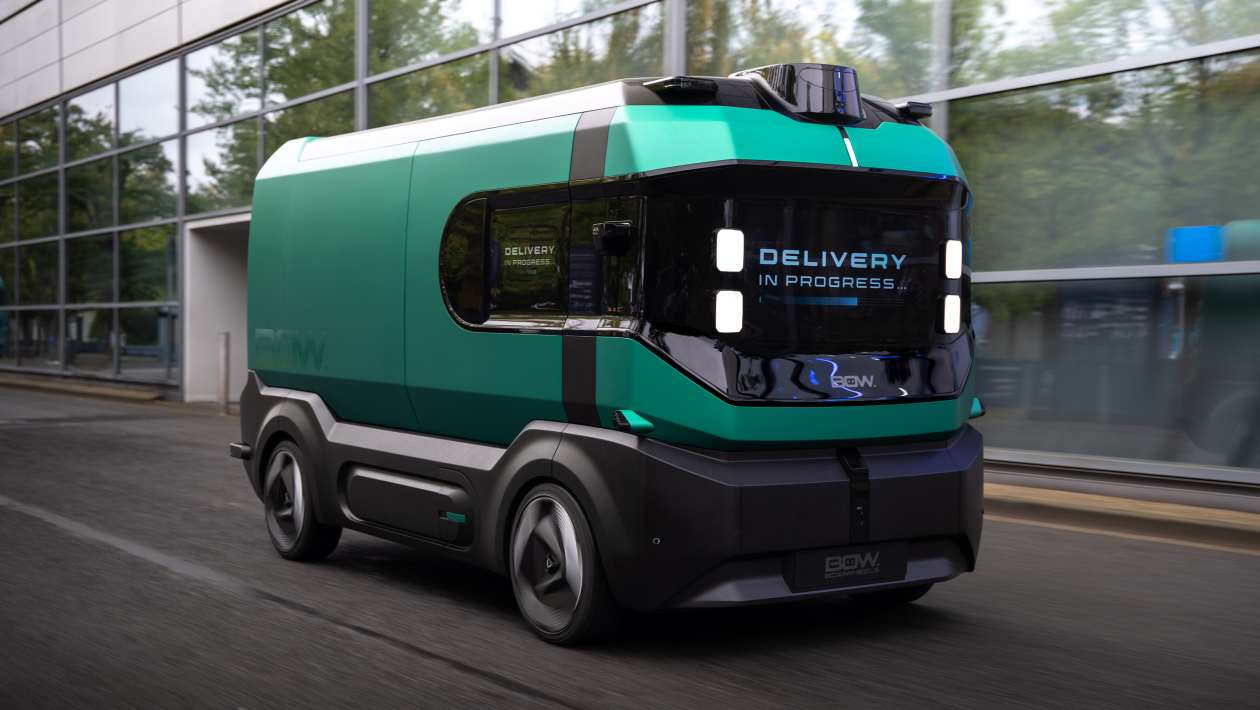
The collaboration with UQI is indicative of a growing trend among legacy Western automakers to leverage the rapid advancements in Chinese automation technology. UQI, already known for its "Chitu Alpha" logistics platform, provides the foundational robotics and sensing expertise necessary for the BOW. to operate in controlled environments. By removing the traditional driver cabin, the BOW. maximizes its footprint for internal cargo, effectively redefining the "last-mile" delivery model.
Design and Technical Architecture
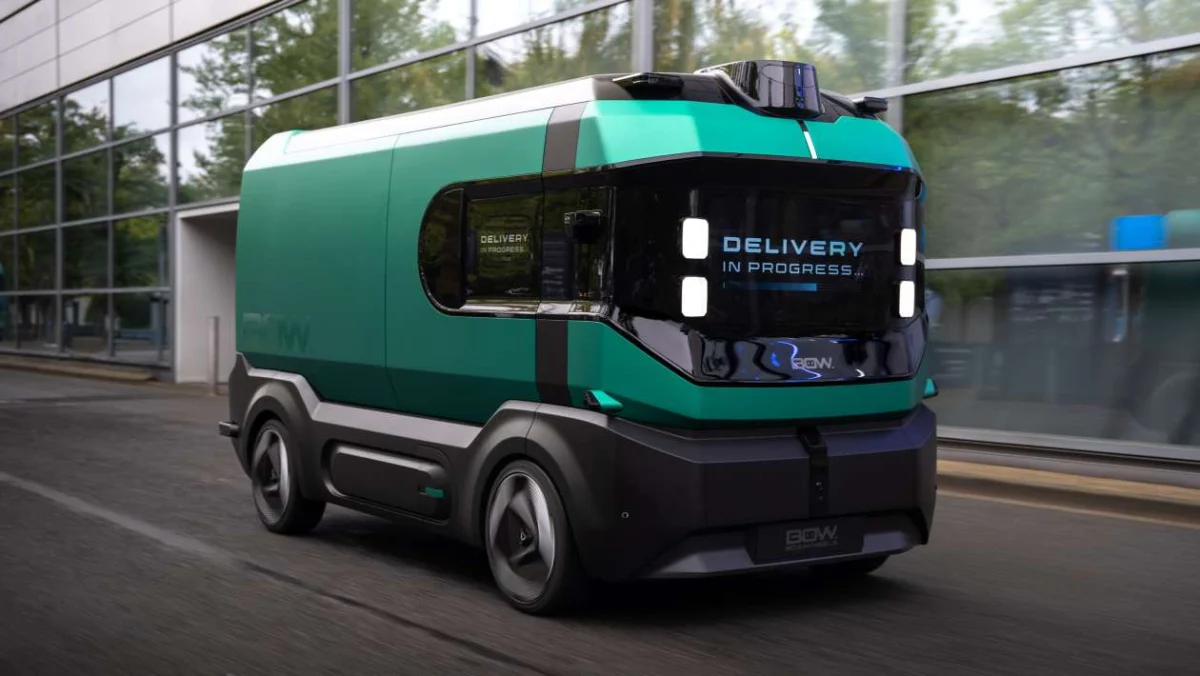
At first glance, the BOW. lives up to its name: it is a functional, rectangular block designed for optimal space utilization. Without the need for a driver’s seat, steering column, or pedal box, the interior is dedicated entirely to payload. The exterior design is minimalist, dominated by a large front screen that mimics a windscreen—likely intended to communicate with pedestrians through light signals or visual displays—and the distinct "hump" of a LiDAR sensor array.
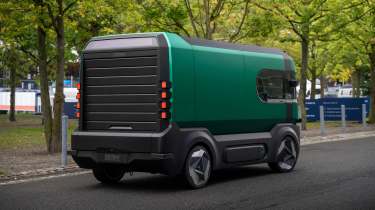
While specific technical specifications remain sparse, industry analysts point to the vehicle’s reliance on LiDAR for 360-degree environmental awareness. This sensor suite, coupled with advanced path-planning algorithms developed by UQI, allows the vehicle to navigate complex settings such as airports, sprawling hospital campuses, and large-scale manufacturing facilities. The rear of the unit features a high-utility roller-shutter door, which facilitates rapid loading and unloading, a critical requirement for time-sensitive logistics.

Chronology of Development and Public Engagement
The timeline of the BOW. project reflects the accelerated pace of the autonomous delivery sector:
- Early 2025: Stellantis Pro initiates internal discussions regarding the integration of robotics into its commercial fleet.
- Late 2025: Formal partnership established between Stellantis and UQI, with a focus on shared software development and hardware integration.
- September 2026: Official debut of the static prototype at the IAA Transportation show in Hannover.
- September 2026 (Ongoing): Deployment of a demo model outside the exhibition area, allowing logistics operators and industry experts to observe the vehicle’s autonomous navigation capabilities in real-time.
The Economic and Operational Context
The move toward autonomous, box-like delivery units is driven by the soaring costs of urban logistics. According to recent industry reports, the "last-mile" delivery segment currently accounts for approximately 53% of total shipping costs. The BOW. addresses this by eliminating the most expensive component of the chain: human labor and the overhead associated with driver ergonomics and safety.
In controlled environments like factories or airports, the BOW. can operate 24/7 without the fatigue-related risks associated with human operators. Furthermore, the modular nature of the design suggests that the "box" could be swapped out for different configurations—such as refrigerated units for perishable goods, secure cabinets for high-value logistics, or mobile tool-storage units for facility maintenance.
Stellantis Pro’s Broader Strategy
The BOW. is not an isolated experiment. It appeared on the Stellantis stand alongside the Fiat TRIS, an electric three-wheeler designed for narrow-street delivery, and the Fiat eDUCATO Fridge. This juxtaposition highlights a comprehensive approach to commercial transit:
- Macro-Logistics: Heavy-duty, high-capacity electrified vans like the eDUCATO.
- Last-Mile Urban Transit: Agile, low-footprint solutions like the Fiat TRIS.
- Autonomous Industrial Operations: Specialized, robotic units like the BOW.
This multi-pronged strategy ensures that Stellantis remains competitive against both traditional rivals like Ford Pro and emerging tech-centric delivery startups that have begun to encroach on the commercial space.
Official Perspectives and Industry Reaction
While Stellantis has maintained a degree of mystery surrounding the exact production timeline for the BOW., company representatives have emphasized that the concept is "designed to explore new approaches to urban operations." By positioning the BOW. in controlled environments first, Stellantis is mitigating the regulatory and liability risks that currently hinder fully autonomous vehicles on public roads.
Industry analysts suggest that the reaction to the BOW. has been largely positive, particularly from logistics managers who are struggling with labor shortages. By offloading repetitive, low-complexity tasks to autonomous units, companies can reallocate human workers to higher-level management and logistical oversight roles.
Broader Implications for Urban Infrastructure
The introduction of vehicles like the BOW. raises significant questions regarding the future of city planning. If autonomous logistics vehicles become common, urban infrastructure will need to evolve. This includes:
- Dynamic Loading Zones: Curbside spaces that can be reserved via digital APIs for autonomous vehicles.
- Charging Infrastructure: Widespread, fast-charging networks specifically designed for commercial fleets.
- Data Integration: City-wide traffic management systems that can "talk" to autonomous units to optimize flow and reduce congestion.
The BOW. represents a crucial step toward this automated future. While the concept is currently a demonstration of what is possible, its presence at a major commercial vehicle show signals that major automakers are preparing to move these technologies out of the laboratory and into the industrial mainstream.

Challenges and Future Outlook
Despite the enthusiasm surrounding the BOW., significant hurdles remain. The integration of LiDAR and sensor-heavy vehicles into complex urban traffic is inherently difficult due to unpredictable human behavior, weather conditions, and cybersecurity concerns. Furthermore, the legislative landscape regarding autonomous vehicles remains fragmented across different regions, particularly between the European Union, the United States, and China.
However, the collaboration between a global giant like Stellantis and a specialized robotics firm like UQI suggests that these challenges are being tackled with a "collaborative-specialist" model. By pooling resources—Stellantis providing the chassis and manufacturing scale, and UQI providing the robotics and AI—they have created a platform that is significantly more robust than what either could likely achieve in isolation.
As the industry moves toward 2030, the "Box on Wheels" may evolve from a quirky concept into a standard piece of logistics equipment. Whether in the sterile environment of a hospital, the high-security zone of an airport, or the bustling streets of a modern metropolis, the BOW. serves as a tangible reminder that the future of commerce is increasingly silent, electric, and, above all, autonomous. For now, the demonstration at the Hannover show stands as a milestone in the ongoing evolution of commercial transport, setting the stage for a new generation of utility-focused robotics.