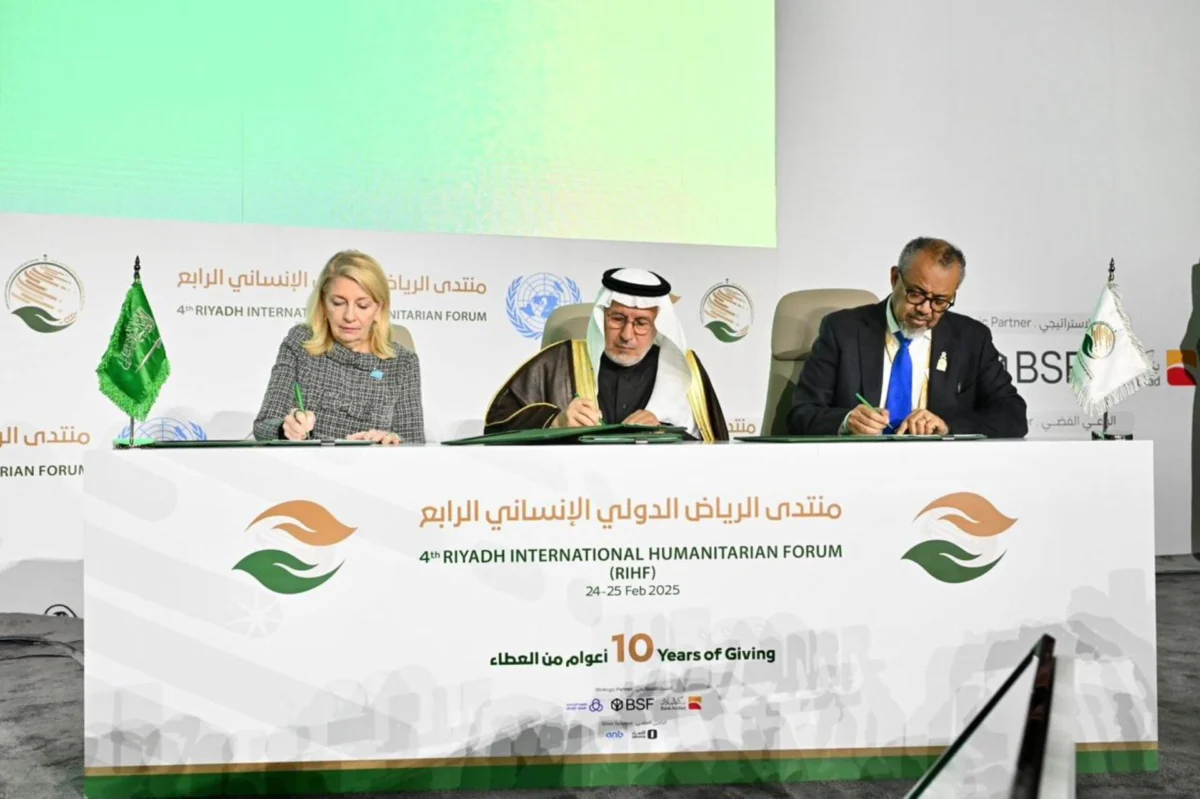
The global humanitarian landscape gathered in the capital of Saudi Arabia on February 24 and 25, 2025, for the Riyadh International Humanitarian Forum. Marking a decade of operations for the King Salman Humanitarian Aid and Relief Centre (KSRelief), the high-level convening brought together international leaders, multilateral health organizations, and aid agencies to address escalating vulnerabilities across the Middle East and wider global south. Against a backdrop of compounding conflicts, climate shocks, and resource constraints, the forum served as a critical platform for health diplomacy, centered on preserving the dignity, well-being, and basic survival of populations caught in acute crises.
Central to the proceedings was the reinforcement of strategic partnerships between the World Health Organization (WHO), UNICEF, and KSRelief. Over the course of the two-day summit, leaders finalized a series of multimillion-dollar funding agreements designed to tackle endemic diseases, support displaced populations, and reinvigorate global eradication campaigns against vaccine-preventable illnesses. The announcements underscore a growing recognition among international donors that sustainable health security requires flexible, immediate financing paired with long-term institutional cooperation.
Main Facts and Core Financial Commitments
The Riyadh forum yielded several immediate operational agreements targeting acute public health emergencies in Yemen, Egypt, and global regions afflicted by resurgence of polio.
Foremost among these is a comprehensive funding package addressing major disease outbreaks in Yemen. The WHO and KSRelief executed two distinct agreements: a US$ 12 million allocation dedicated to nationwide malaria control and prevention, and a US$ 2.1 million allocation aimed at expanding cholera treatment infrastructure. Yemen’s protracted conflict has decimated its public health infrastructure, leaving millions vulnerable to waterborne and vector-borne diseases. These funds will replenish essential medical supplies, support diagnostic capabilities, and maintain operational treatment centers in high-risk districts.
In response to the regional spillovers of the conflict in Sudan, KSRelief and the WHO Egypt Country Office formalized a US$ 3.6 million agreement. This funding is specifically earmarked to provide life-saving dialysis treatment for Sudanese refugees who have fled across the border into Egypt. Displaced patients suffering from chronic renal failure face immediate mortal danger when detached from continuous care; this specialized intervention ensures uninterrupted treatment for a vulnerable subset of the refugee population.
Furthermore, the forum formalized the monumental US$ 500 million pledge from the Kingdom of Saudi Arabia to the Global Polio Eradication Initiative (GPEI), initially announced in April 2024. This contribution was formally divided into bilateral funding agreements: US$ 300 million allocated to the WHO and US$ 200 million to UNICEF. The capital is designated to sustain immunization campaigns that reach an estimated 370 million children annually. This financial injection is particularly vital for combating the resurgence of wild poliovirus and vaccine-derived strains in high-risk, conflict-affected environments, notably Afghanistan, Pakistan, and the Gaza Strip.
Chronology and Evolution of the Partnership
The announcements made at the February 2025 forum represent the culmination of years of institutional maturation and deepening operational alignment between Saudi humanitarian bodies and United Nations specialized agencies.

Established in May 2015 by royal decree under the leadership of King Salman bin Abdulaziz Al Saud, KSRelief was envisioned as the central arm of Saudi Arabia’s international humanitarian assistance. Over its first decade, the organization expanded its footprint from emergency food security and shelter provision into complex health systems strengthening, disease surveillance, and epidemic response.
The partnership between KSRelief and the WHO has progressively deepened over successive years, shifting from ad-hoc disaster relief toward structured, multi-year disease mitigation frameworks. The initial announcement of the US$ 500 million GPEI contribution in April 2024 marked a watershed moment in donor financing for polio eradication, bridging a critical funding gap at a time when donor fatigue threatened global eradication timelines. The formal signing ceremonies at the Riyadh International Humanitarian Forum in February 2025 translated that political pledge into legally binding operational agreements, setting the stage for deployment throughout the 2025–2026 programmatic cycles.
Supporting Data and Epidemiological Context
The allocation of these funds aligns directly with pressing epidemiological data compiled by international health agencies operating in crisis zones.
In Yemen, years of infrastructural collapse have severely compromised water and sanitation networks, creating recurring cycles of acute watery diarrhea and cholera epidemics. Concurrently, stagnant water and degraded vector control programs have driven up malaria incidence rates, disproportionately affecting children under five and pregnant women. The combined US$ 14.1 million injection from KSRelief and the WHO targets these dual vulnerabilities directly, aiming to shore up community-level case management and supply chain resilience.
Regarding the Sudanese refugee crisis in Egypt, the United Nations High Commissioner for Refugees (UNHCR) and local health authorities have noted a heavy strain on host-country medical services. Specialized care, such as hemodialysis, requires consistent, high-cost inputs—including purified water, electricity, and imported consumables—that surpass standard humanitarian emergency budgets. The US$ 3.6 million earmarked for dialysis offers a critical fiscal bridge for Egyptian medical facilities absorbing displaced Sudanese patients with chronic conditions.
On a global scale, the GPEI data highlights the persistent threat of polio in pockets of low immunization coverage. While the world is closer than ever to total eradication, localized conflicts, mass population displacements, and logistical blockades have allowed the virus to stage concerning resurgences. The GPEI framework supported by the Saudi contribution targets the complete interruption of poliovirus transmission in the remaining endemic reservoirs of Afghanistan and Pakistan, while preemptively shielding vulnerable populations in conflict zones like Gaza from outbreaks.
Official Responses and Institutional Perspectives
The signing ceremonies drew prominent global health leaders to Riyadh, who utilized the platform to emphasize the necessity of multilateral solidarity.
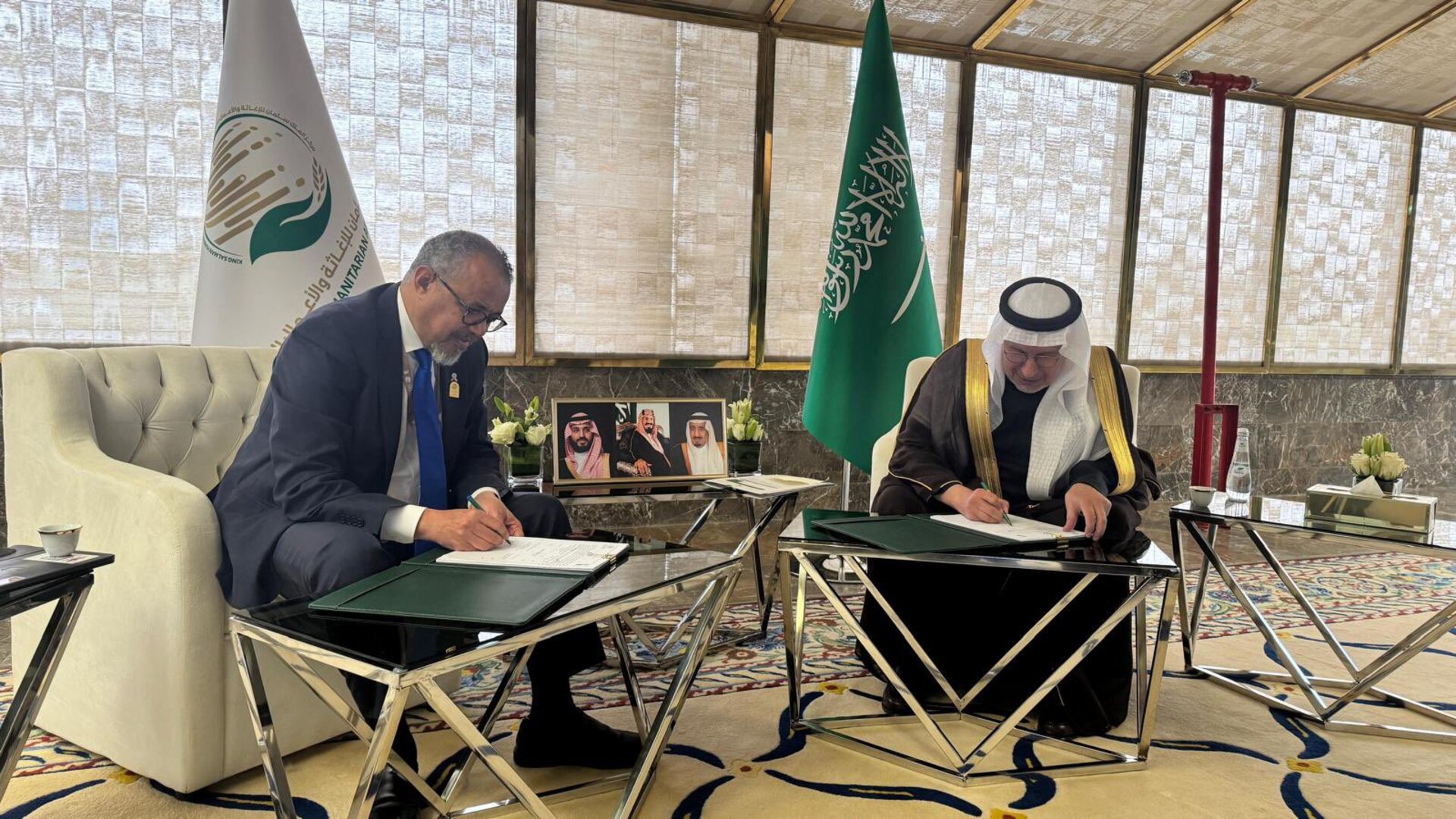
Dr. Tedros Adhanom Ghebreyesus, Director-General of the WHO, underscored the significance of health diplomacy during crises. Throughout the forum, Dr. Tedros highlighted that protecting health workers, maintaining facility security, and securing predictable funding streams are non-negotiable prerequisites for operational delivery in hostile environments. In statements shared alongside the signing of the Yemen and polio agreements, the WHO leadership commended KSRelief for its steadfast commitment to bridging humanitarian funding deficits.
Catherine Russell, Executive Director of UNICEF, joined KSRelief Supervisor-General Dr. Abdullah Al Rabeeah and Dr. Tedros for the formalization of the GPEI agreement. Russell emphasized that reaching 370 million children with life-saving vaccines requires unprecedented logistical coordination and financial predictability. The US$ 200 million allocation to UNICEF under the GPEI umbrella represents one of the single largest contributions to child immunization infrastructure in recent years, reinforcing the operational capacity needed to access hard-to-reach and conflict-isolated communities.
Dr. Abdullah Al Rabeeah, Supervisor-General of KSRelief, reiterated Saudi Arabia’s enduring dedication to alleviating human suffering irrespective of geography, politics, or religion. Reflecting on KSRelief’s ten-year milestone, Dr. Al Rabeeah noted that the organization has evolved into a pillar of global humanitarian assistance, executing thousands of projects across dozens of countries in close collaboration with UN partners.
Broader Impact and Strategic Implications
The outcomes of the Riyadh International Humanitarian Forum 2025 carry profound implications for the future of global humanitarian architecture. As traditional donor states face domestic fiscal pressures and competing geopolitical priorities, the emergence of sustained, high-level financing from regional donors like Saudi Arabia represents a vital diversification of the humanitarian funding base.
By institutionalizing funding through established multilateral channels such as the WHO and UNICEF, these agreements ensure that resources are deployed with adherence to international technical standards, transparency, and rigorous monitoring and evaluation frameworks. This model of cooperation mitigates the risk of fragmented aid delivery and maximizes the public health impact of every dollar spent.
Furthermore, the focus on protracted crises—such as those in Yemen, Sudan, and polio-endemic zones—signals a strategic shift from purely reactive emergency relief toward resilience-building and disease elimination. By addressing the root causes of health vulnerability, including the breakdown of routine immunization and chronic disease management, these initiatives help stabilize fragile states and prevent secondary humanitarian catastrophes.
Ultimately, the agreements forged at the Riyadh International Humanitarian Forum set a benchmark for international cooperation in the face of compounding global challenges. As the international community navigates an increasingly complex security and humanitarian environment, the strengthened alliance between KSRelief, the WHO, UNICEF, and global partners provides a functional blueprint for protecting human dignity, advancing health security, and driving toward a healthier, polio-free world.