The Hashemite Kingdom of Jordan has long stood as a pillar of regional stability and humanitarian resilience in the Middle East. On the first day of a significant two-day State visit, the Director-General of the World Health Organization (WHO), Dr Tedros Adhanom Ghebreyesus, arrived in Amman to review, reinforce, and expand collaborative frameworks spanning universal health coverage (UHC), mental health integration, and urgent humanitarian health action. Dr Tedros’s itinerary underscored Jordan’s exceptional contributions to regional health security, particularly its ongoing commitment to hosting millions of displaced persons and coordinating complex medical evacuations amidst severe geopolitical instability.
A defining moment of the opening day was an official audience with His Majesty King Abdullah II. The high-level talks focused extensively on the fortification of national health systems, widening population access to essential medical care, and sustaining international and regional emergency responses. Particular emphasis was placed on the plight of the Palestinian population, specialized medical treatments for patients evacuated from Gaza directly to Jordanian medical facilities, and the protracted refugee crisis involving millions of individuals displaced from neighboring conflict zones, primarily Syria and Gaza.
A Beacon of Humanitarian Leadership and Refugee Support
During his discussions with King Abdullah II, Dr Tedros expressed profound gratitude for the Hashemite Kingdom’s unwavering dedication to public health and humanitarian equity. Jordan currently hosts upwards of three million refugees, a staggering demographic reality for a country with finite domestic resources and economic constraints. Despite these challenges, the Jordanian government has continuously integrated refugee populations into its national health infrastructure, ensuring equitable access to primary health care, immunizations, and emergency services.
Central to these humanitarian operations is His Majesty’s pioneering Medical Corridor initiative. This critical logistical and diplomatic framework facilitates the transfer of critically ill and injured children—as well as other vulnerable patients—out of Gaza to receive life-saving interventions in specialized Jordanian hospitals. By bridging the gap between active conflict zones and advanced clinical care, Jordan has repeatedly demonstrated a practical model of putting health, dignity, and humanity ahead of political divides.
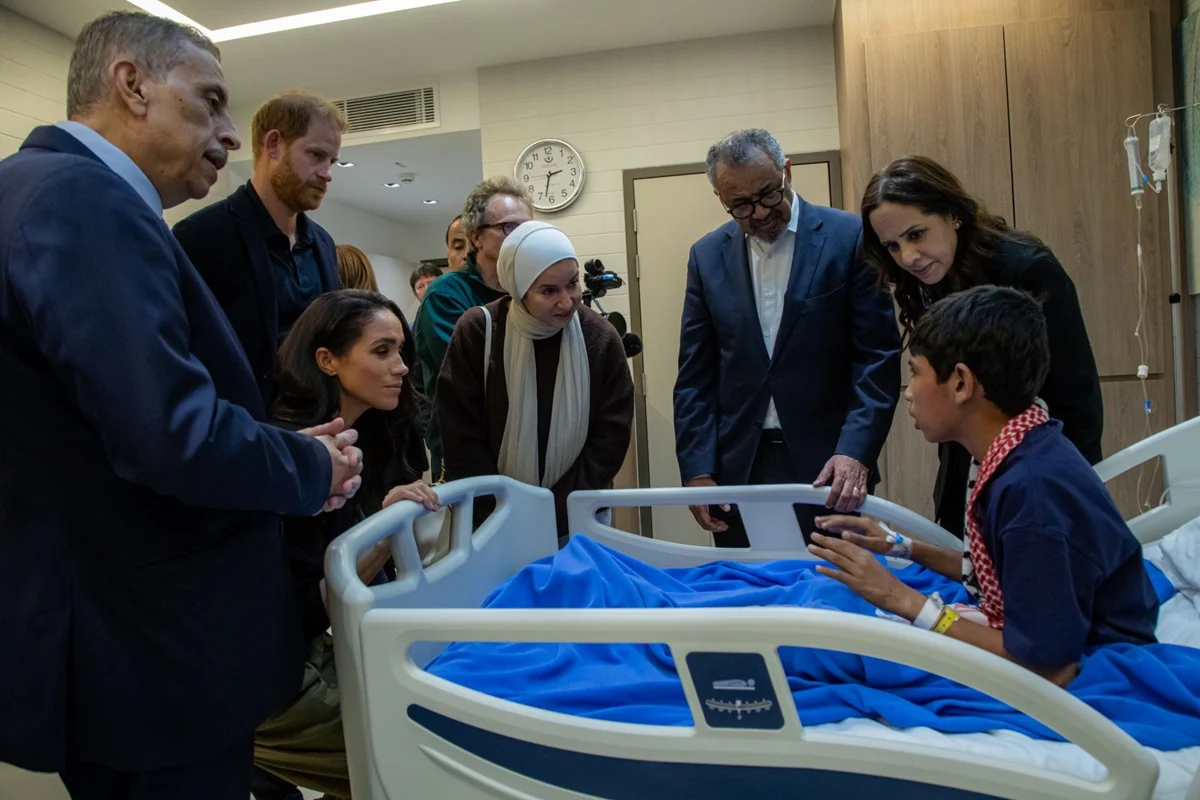
To witness the impact of these operations firsthand, Dr Tedros visited a specialized, WHO-supported pediatric hospital in Amman. There, he met with young patients evacuated from Gaza alongside their families and the frontline medical professionals delivering intensive treatments for severe trauma, oncological care, and other life-threatening conditions. The visit served as a stark reminder of the fragile state of regional healthcare infrastructure and the indispensable nature of the Jordan-led medical evacuation corridor. Dr Tedros emphasized that the international community must step up sustained financial and logistical support to ensure that these humanitarian lifelines remain open and fully resourced.
High-Level Partnerships and International Financing
In addition to his meeting with the King, Dr Tedros convened a strategic high-level roundtable with key international health partners, donor governments, United Nations agencies, and philanthropic foundations. The discussions centered on innovative financing mechanisms required to bolster Jordan’s health system against compounding crises, scale up community-level mental health services, and share the economic burden borne by host countries.
Participants evaluated the fiscal priorities necessary to maintain resilient primary health care networks. Dr Tedros commended the multilateral partners and philanthropic organizations for their continuous investments, noting that regional health security is an interconnected global public good that requires shared responsibility rather than isolated national efforts.
Advancing Universal Health Coverage and Mental Health Integration
Bilateral discussions between Dr Tedros and Jordan’s Minister of Health formed another vital pillar of the first day’s agenda. The talks focused heavily on domestic health sector reforms designed to institutionalize universal health coverage. Jordan has increasingly emerged as a global leader in utilizing a primary health care-oriented model to achieve UHC.
Crucially, the Jordanian health ministry has systematically integrated mental health services into routine primary care clinics. This integration ensures that patients can access psychiatric and psychological support without facing social stigma or bureaucratic fragmentation. This progressive approach is actively supported by the WHO Director-General’s Special Initiative for Mental Health, which aims to expand access to quality mental health care in underserved and crisis-affected regions worldwide.
High-Profile Advocacy and the Role of Archewell Philanthropies
Adding a prominent international advocacy dimension to the visit, Dr Tedros was accompanied during several key engagements by Prince Harry, Duke of Sussex, and Meghan, Duchess of Sussex. Participating in their capacities as the founders of Archewell Philanthropies and long-standing global advocates for WHO initiatives, the couple lent their platform to elevate urgent humanitarian and mental health concerns.
Archewell Philanthropies has previously partnered with the WHO on critical global health campaigns, ranging from advocating for equitable access to COVID-19 vaccines to supporting targeted medical evacuation operations and mental health programs in fragile settings. During the visit in Amman, Prince Harry actively participated as an ally of WHO’s mental health advocacy network. He underscored the critical necessity of prioritizing mental health investments across all communities and emergency environments, with a targeted focus on the psychological well-being of men, adolescents, and children living through protracted conflict.
Reflecting on the collaboration, Dr Tedros stated: "I want to thank our partners, including Prince Harry, Duke of Sussex and Meghan, Duchess of Sussex, whose commitment to mental health and humanitarian action has helped bring visibility, resources and hope to some of the world’s most vulnerable communities. Their collaboration is helping to advance WHO’s mission to ensure health for all."
Echoing these sentiments, Prince Harry shared his perspective on the ground realities observed during the visit: "It is an honour to join the Director-General of the World Health Organization in Jordan, a country that is leading by example in compassion, resilience and innovation. Through our work with Archewell Philanthropies, my wife and I have seen first-hand the impact of WHO’s efforts to support mental health and deliver life-saving care in emergencies. We remain deeply committed to advancing awareness, reducing stigma and expanding access to mental health support for all those affected by conflict and crisis. Mental health is fundamental to recovery, dignity and long-term peace, and we are proud to stand with WHO and partners around the world to make it a global priority."
Chronology and Forward-Looking Itinerary for Day Two
The comprehensive two-day diplomatic and technical mission is structured to cover a wide spectrum of specialized medical facilities, rehabilitation institutions, and community-based organizations.
Following the intensive schedule of high-level political meetings, hospital inspections, and partner roundtables on the first day, the second day of Dr Tedros’s visit is set to encompass several targeted field visits across Jordan:
- National Center for Rehabilitation of Addicts: Dr Tedros will tour this specialized facility, which receives technical and operational support from the WHO. The center provides comprehensive, integrated medical, psychological, and social rehabilitation services, serving as a model for substance use treatment in the Eastern Mediterranean region.
- Community Leadership and Women’s Empowerment: The Director-General will meet with local community leaders and women-led civil society networks, including delegations from the Jordanian Hashemite Fund for Human Development (JOHUD). These discussions will explore grassroots approaches to health promotion, gender equity, and social development.
- King Hussein Cancer Center (KHCC): Dr Tedros will visit the internationally renowned KHCC to examine advancements in regional oncological care, clinical research, and cross-border medical partnerships that allow cancer patients from neighboring countries to access specialized oncology treatments.
- Conclusion of State Engagements: The official visit will wrap up with final consultations involving humanitarian operations coordinators, cementing Jordan’s irreplaceable standing as a regional logistics hub for emergency medical responses, evacuations, and long-term health system resilience.
Fact-Based Analysis of Regional Implications and Systemic Challenges
The timing of Dr Tedros’s state visit highlights the acute pressures facing healthcare systems in the Middle East. Prolonged conflicts in Syria and the ongoing humanitarian catastrophe in Gaza have placed unprecedented demands on neighboring nations, particularly Jordan, which acts as a vital conduit for medical diplomacy and humanitarian relief.
From an economic and infrastructural standpoint, Jordan’s health sector operates under immense fiscal strain. The integration of millions of refugees into national public services requires sustained international burden-sharing. While domestic reforms and primary healthcare expansions have yielded remarkable public health indicators, the long-term sustainability of these systems relies heavily on predictable external financing from donor states and multilateral financial institutions.
Furthermore, the integration of mental health services into routine primary care—championed by both Jordanian health authorities and the WHO—represents a vital evolution in post-crisis healthcare delivery. Psychological trauma resulting from war, displacement, and economic hardship often goes untreated, creating generational cycles of suffering. By prioritizing mental health alongside physical trauma care, Jordan and the WHO are establishing a replicable blueprint for humanitarian health response in complex geopolitical emergencies.
As the visit concludes, the reinforced partnerships between the World Health Organization, the Jordanian government, philanthropic entities like Archewell Philanthropies, and international donors signal a renewed collective resolve. The mission serves as both a testament to Jordan’s extraordinary humanitarian legacy and a stark reminder to the global community that sustaining health in crisis settings requires unwavering financial commitment, political will, and absolute adherence to human dignity.