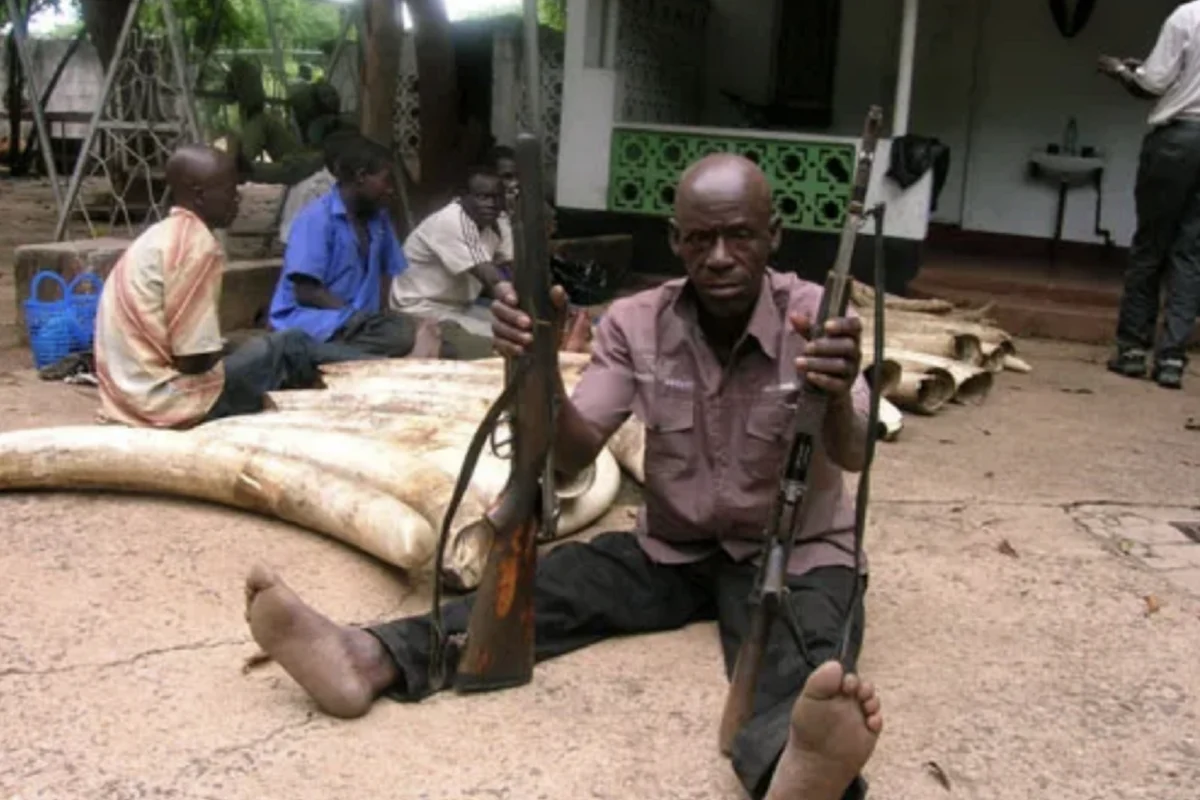
Behind the formidable walls of Zambia’s correctional facilities, the narrative of wildlife crime is being rewritten, not by the kingpins of international syndicates, but by the desperate hands of those at the bottom of the illicit trade. A recent, groundbreaking study conducted by Wildlife Crime Prevention (WCP) Zambia, in collaboration with Copperbelt University, has shed light on the complex web of motivations that drive individuals toward poaching and trafficking. By interviewing over 300 inmates incarcerated for wildlife-related offenses, researchers have uncovered a reality that contradicts the common perception of the “evil poacher,” revealing instead a landscape defined by economic precariousness, lack of opportunity, and systemic survival strategies.
The study, published in the International Journal of Law, Crime and Justice, highlights that for the vast majority of grassroots offenders, wildlife crime is not a calculated career choice born of malice, but a reactive measure to extreme socioeconomic pressure. One inmate’s testimony serves as a haunting archetype: approached by a middleman with promises of funds to build a home and secure his children’s education, he was lured into the illegal trade of ivory and pangolin scales. His journey from a local community member to a convicted prisoner is a microcosm of a much larger, more pervasive crisis that law enforcement alone has struggled to quell.

A Chronology of Conflict and Consequence
Zambia occupies a unique and challenging position in the global conservation landscape. As a landlocked nation sharing borders with eight countries, it serves as both a primary source of biodiversity and a vital transit corridor for illegal contraband. The history of wildlife crime in the region is long and deeply rooted in the post-colonial shift of land management and the subsequent rise of international demand for exotic animal products.
Over the last decade, the Zambian government, supported by various NGOs, has intensified its crackdown on poaching. This has led to an increase in arrests and the implementation of rigorous sentencing guidelines. Currently, wildlife crime accounts for approximately 7% of the nation’s total prison population. Legal frameworks are severe: first-time convictions for unauthorized hunting in protected areas carry mandatory sentences ranging from three to 10 years, while the possession of protected trophies—specifically ivory and rhino horn—can result in prison terms exceeding 20 years.
Despite these deterrents, the cycle of crime continues. The research team’s interviews, conducted across 32 different correctional facilities, mapped out the journey of 302 inmates. The data revealed that 50% of the respondents were middle-aged, suggesting that those most likely to engage in these crimes are individuals with established family obligations who find themselves suddenly unable to meet the financial demands of their households.

Data-Driven Insights into Grassroots Motivations
The research findings present a sobering breakdown of why individuals enter the illegal wildlife trade. For 40% of the surveyed inmates, the primary driver was the simple emergence of an opportunity—the right contact, the right time, and a sudden, illicit prospect. Another 16% cited urgent existential needs, such as the necessity to pay for emergency medical care or to secure food for their families, as the primary catalyst for their actions.
The researchers categorized the offenses into seven distinct groups, with bushmeat hunting representing the most frequent infraction. This is followed by the trafficking of high-value, protected species like pangolins and elephants. Crucially, the study noted that a third of the inmates had been involved in wildlife crime previously without being apprehended, suggesting that the initial entry into the trade is often a gradual process that becomes normalized within certain communities due to the absence of legal economic alternatives.
"There’s no social safety net here," noted one of the study’s authors, who remains anonymous to protect their ongoing investigative work. "You can’t go to the bank and get a loan. People generally aren’t saving up. Unless you’ve got a wealthy relative in town, there’s really not many other opportunities."

Official Responses and the Gap in Rehabilitation
The Zambia Correctional Service (ZCS) has provided the necessary clearance for this study, though it has maintained a reserved stance regarding the implementation of systemic changes to the current penal approach. While the ZCS works to maintain order and security, experts argue that the current prison model is ill-equipped to address the underlying drivers of wildlife crime.
Lead author and wildlife criminologist Emma Richards emphasizes that the "one-size-fits-all" approach to rehabilitation is fundamentally flawed. "You can have somebody doing a carpentry project in prison, but if they get out and they’ve got no access to carpentry tools, what have you really achieved?" Richards asks.
WCP Zambia has taken steps to bridge this gap through a pilot project designed to facilitate the reintegration of offenders. By connecting inmates with their families prior to release and providing start-up equipment for sustainable livelihoods—such as crop farming tools or capital for small-scale retail—the NGO is attempting to create a post-release reality that does not necessitate a return to poaching. However, these initiatives are currently localized and require broader support to reach the scale necessary to influence national recidivism rates.

The Broader Implications of Stigma and Recidivism
A significant, and perhaps surprising, finding of the research is the lack of perceived social stigma associated with wildlife crime. Approximately 80% of the male respondents reported no fear of community or family rejection upon their release. This lack of social deterrent complicates the efficacy of traditional criminal justice models, which rely on the premise that the shame of imprisonment will discourage future offenses.
Meredith Gore, an environmental crime researcher at the University of Maryland, points out that the gender dimension of this issue remains an "under-tapped" area of study. While the overwhelming majority of participants in this survey were men, the nine women involved expressed a much higher degree of anxiety regarding their return to society. Gore notes that if wildlife crime does not carry the same moral weight in rural communities as other forms of criminal activity, then standard recidivism models—which focus on individual moral correction—are likely to fail in the Zambian context.
The question of whether to apply conventional criminology to wildlife crime is now at the forefront of the debate. If the drivers are survival-based and the social stigma is non-existent, then the traditional punitive approach may simply be cycling individuals through the system without ever addressing the root of the problem.

Future Trajectories: Beyond Punishment
As Zambia looks toward the future of its conservation efforts, the study serves as a call for a paradigm shift. The researchers stress that the individuals currently filling the nation’s prisons are not monolithically "evil." Many are victims of a system that offers them few choices, and their incarceration is merely a temporary solution that leaves the high-level syndicates—the kingpins who manage the logistics and reap the true profits—largely untouched and easily able to replace the "lower-level links" who are apprehended.
The implications for conservation policy are clear: if the goal is to protect endangered species, the strategy must evolve from purely defensive enforcement to proactive economic empowerment. This involves listening to the needs of local communities and providing them with the means to thrive legally.
The WCP Zambia study is the first of its kind, and while it provides a vital baseline of data, the authors readily admit that it raises more questions than it provides answers. It challenges the global conservation community to look at the human cost of wildlife protection and to recognize that the preservation of biodiversity is inextricably linked to the preservation of human dignity. As the international community continues to grapple with the extinction crisis, the lessons from Zambia suggest that the most effective way to save a species may be to provide a sustainable future for the people living alongside them.