With the long-awaited Tesla Roadster reveal event scheduled for October 15, a recently unearthed patent filing has ignited intense speculation regarding the technical specifications of the upcoming hypercar. The automaker has officially secured a patent for a sophisticated "electric fan car" system, a design that utilizes integrated electric fans to manipulate underbody airflow, thereby enhancing downforce and reducing aerodynamic drag. While automotive manufacturers frequently file patents for research and development purposes—many of which never reach the assembly line—this particular technology aligns with the ambitious, "moonshot" performance metrics previously teased by CEO Elon Musk.
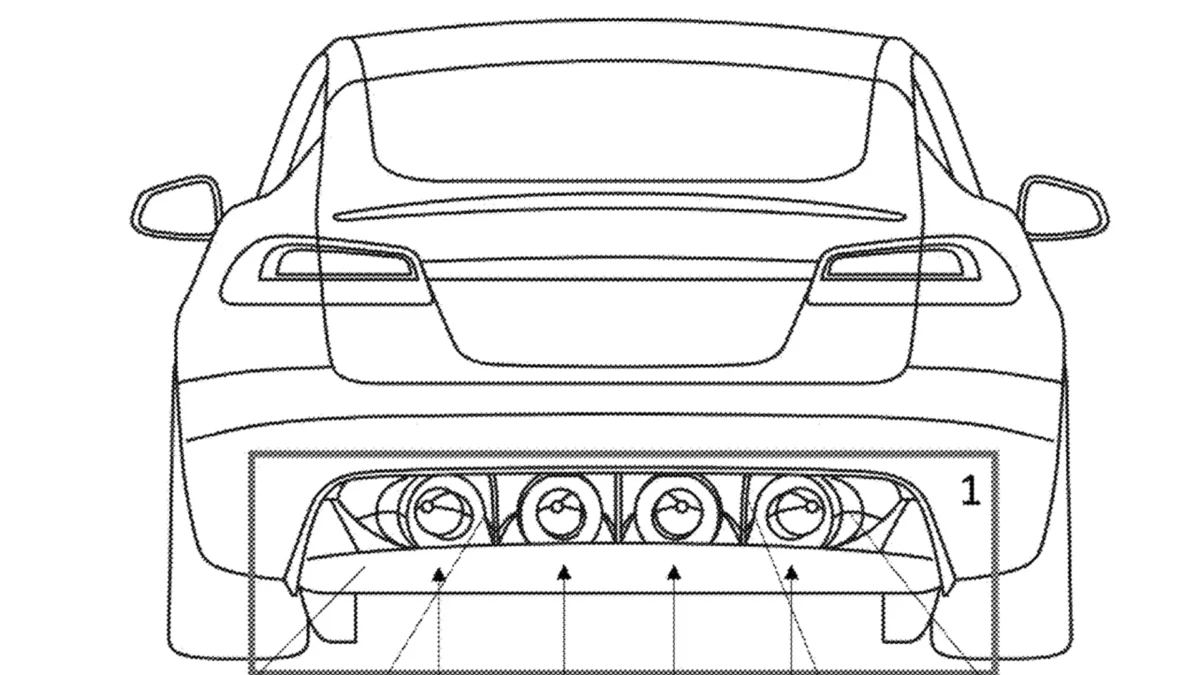
The patent document outlines a system featuring four electric fans mounted strategically to the vehicle’s rear diffuser. By pulling air through the underbody, the system is designed to smooth out turbulent airflow, effectively creating a localized low-pressure zone—a vacuum effect—that pulls the vehicle toward the pavement. This approach mirrors the principles seen in high-performance engineering marvels like the Gordon Murray Automotive T.50 and the McMurtry Speirling. However, while those vehicles are often defined by large, singular turbine-style fans, the Tesla filing illustrates a series of smaller fans, which some observers have colloquially compared to computer case cooling systems integrated into the rear fascia.
Chronology of the Roadster Project and Performance Claims
The history of the second-generation Tesla Roadster is a study in patience for enthusiasts and industry analysts alike. First unveiled as a surprise "one more thing" during the Tesla Semi event in November 2017, the original prototype promised a 0-60 mph acceleration time of 1.9 seconds, a top speed exceeding 250 mph, and a 620-mile range. Since that initial showcase, the timeline for production has been repeatedly shifted.
In early 2024, Elon Musk revitalized the conversation by asserting that the new production version would achieve a 0-60 mph sprint in "under a second," a feat that would fundamentally rewrite the physics of road-legal acceleration. To reach such a milestone, the vehicle would require unprecedented levels of grip and traction. Traditional tires and chassis dynamics are limited by the friction coefficient of standard road surfaces; active aerodynamic aids, such as the fan system described in the new patent, could be the missing link required to achieve such extreme mechanical performance without relying solely on tire compound advancements.
Engineering Analysis of the Fan System
The patent, titled "Electric Vehicle with a Ducted Fan System," describes a mechanism that integrates directly with the vehicle’s high-voltage battery and central control software. The technical description notes: "An electric vehicle comprising a ducted fan system configured to increase downforce and reduce drag. The ducted fan system can include a diffuser extending from an input on an underbody of the vehicle and to an outlet on a rear side of the vehicle."
From an aerodynamic perspective, the goal is twofold. First, by managing the airflow through the rear diffuser, the system prevents the "stalling" of air that often occurs when a vehicle transitions from high-speed travel to cornering, where turbulence can compromise grip. Second, by smoothing the airflow, the system reduces the wake behind the vehicle, thereby lowering the coefficient of drag (Cd).
While electric vehicles are generally heavy due to their battery packs—a trait that naturally aids in traction—the addition of an active suction system could allow the Roadster to maintain high-speed stability while retaining a cleaner, more aerodynamic profile. By using software to modulate the speed of the fans in response to real-time telemetry, Tesla could theoretically optimize downforce on a millisecond-by-millisecond basis, providing a distinct advantage over passive aerodynamic solutions like fixed spoilers or wings.
Precedent and Previous Patent Activity
This is not the first time Tesla has explored the intersection of fan-assisted aerodynamics and high-performance EVs. In late 2023, the company filed for a patent involving a complex system of side skirts combined with electric fans. That earlier filing emphasized the creation of a "ground effect" seal, which prevents air from leaking under the sides of the car, effectively maximizing the efficacy of the underbody suction.
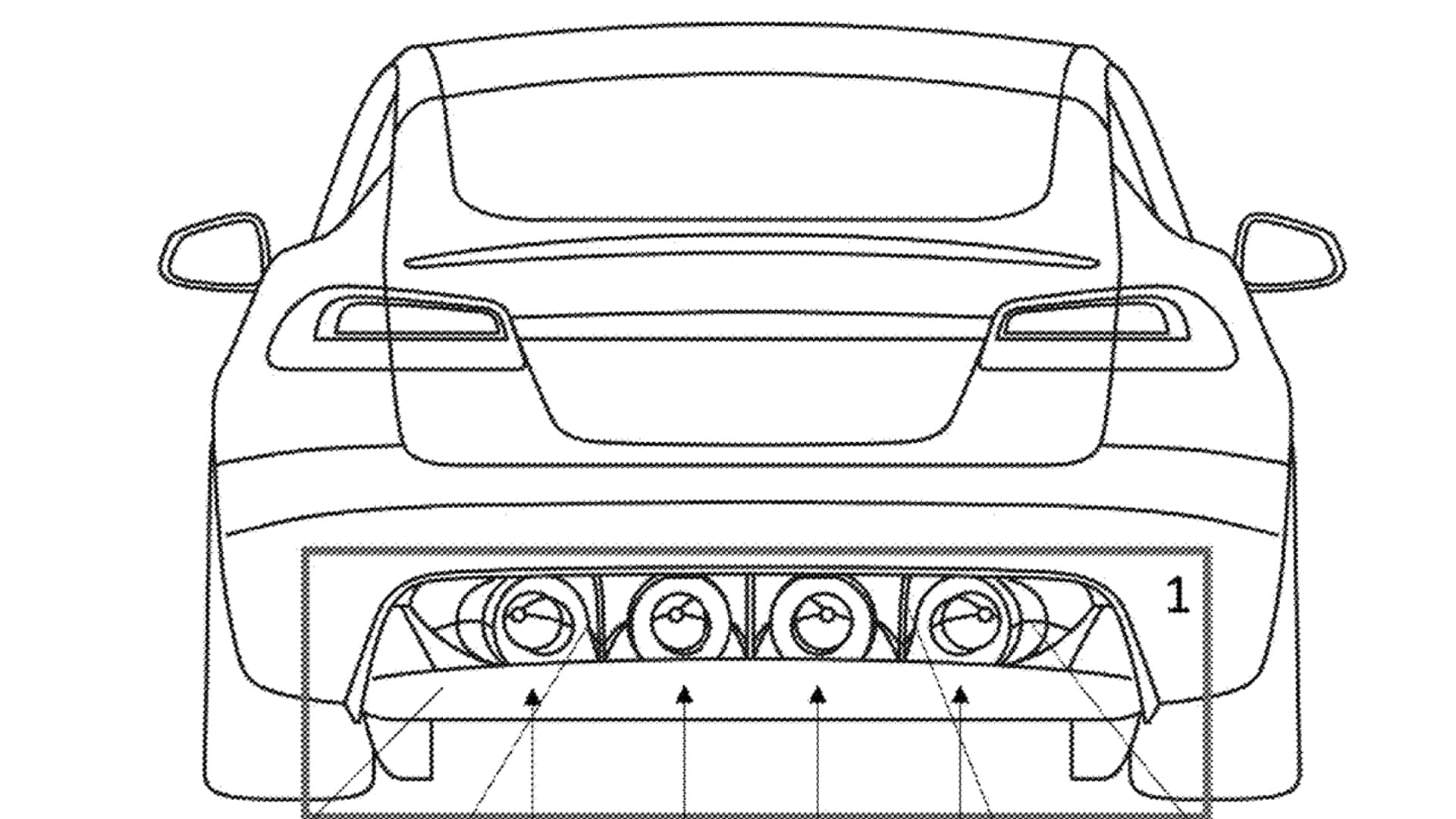
The evolution of these patents suggests that Tesla’s engineering team has been actively exploring the limits of ground-effect aerodynamics for several years. The fact that the latest patent focuses on a refined, rear-diffuser-mounted solution indicates a shift toward a more integrated, production-feasible implementation compared to the more elaborate side-skirt systems previously explored.
Implications for the Automotive Industry
If the production Roadster does indeed incorporate this fan technology, it would signal a departure from the industry standard of relying exclusively on passive spoilers and active wings. Such a move would place Tesla in a niche but elite category of high-performance manufacturers. The McMurtry Speirling, for instance, proved that fan-assisted downforce can enable cornering speeds that defy conventional logic, allowing a small, compact vehicle to outperform purpose-built race cars.
However, the integration of such a system comes with significant engineering hurdles. Managing the power draw from the high-voltage battery to drive the fans, ensuring durability against road debris, and mitigating the acoustic noise generated by high-speed fans are all factors that Tesla must address. Furthermore, the legal and safety implications of "sucking" a road-going car to the tarmac are complex; regulators in various jurisdictions have strict rules regarding aerodynamic devices that move or change the vehicle’s footprint.
The October 15th Reveal
The upcoming event on October 15 stands as a critical juncture for Tesla. Lars Moravy, the company’s Vice President of Vehicle Engineering, has publicly characterized the Roadster as the "last, best driver’s car" that Tesla intends to build. This statement suggests that the vehicle is designed to be a halo product—a showcase of technological mastery rather than a mass-market commodity.
As the industry prepares for the reveal, the focus will likely remain on whether the fan system is merely a piece of forward-looking intellectual property or a functional element of the final production model. If Tesla successfully incorporates this tech, it may validate Musk’s bold claims regarding the Roadster’s acceleration, cementing the car’s status as a transformative moment in the history of the electric sports car.
Market Context and Future Outlook
The broader electric vehicle market is currently seeing a "performance race," with manufacturers like Rimac, Pininfarina, and Lotus pushing the boundaries of what is possible with battery-electric powertrains. In this landscape, the Roadster is positioned as a direct competitor to these ultra-luxury, high-performance hypercars.
While the general public may focus on the 0-60 mph figures, industry analysts are looking at the efficiency gains. If the fan system can significantly reduce aerodynamic drag, it could also contribute to greater efficiency at high speeds, potentially extending the range of the vehicle during high-performance driving—a common pain point for existing EVs.
As the October 15 date approaches, the engineering community remains divided on the feasibility of a production-ready fan car. However, given Tesla’s history of disruptive innovation and its willingness to utilize complex software-defined hardware, the inclusion of such a system would be consistent with the company’s philosophy of using high-tech solutions to solve classical mechanical problems. Whether the fans are the defining feature of the new Roadster or simply a footnote in the development process, they highlight a continued, aggressive pursuit of performance excellence in the electric era.