The financial safety net designed to help private landowners recover from catastrophic weather events has effectively ground to a halt. Across the United States, federal disaster relief funds earmarked for forest restoration have dried up entirely, leaving hundreds of property owners, forestry experts, and local economies in limbo.
According to regional offices of the federal Farm Service Agency (FSA), the Emergency Forest Restoration Program (EFRP) has been overwhelmed by an unprecedented surge of nationwide requests, vastly outstripping the capital currently available to disburse. A spokesperson for the United States Department of Agriculture (USDA), which houses the FSA, acknowledged the deepening fiscal crisis.
"Currently, requests for financial assistance through the Emergency Forest Restoration Program exceed the funding currently available," the USDA spokesperson stated, highlighting a systemic bottleneck that spans multiple states and various types of natural disasters.
The freeze in financial assistance underscores a growing vulnerability in America’s disaster response architecture. As climate change supercharges extreme weather—spawning heavier ice storms, unprecedented wind events, aggressive pest infestations, and historic hurricane seasons—the mechanisms meant to help ecosystems and rural economies bounce back are buckling under the sheer volume of need.
Origins and Intent of the Emergency Forest Restoration Program
Established by Congress under the 2008 national Farm Bill, the EFRP was designed to provide crucial emergency relief to private, nonindustrial forest landowners. The program offers financial and technical assistance to help property owners clear debris, manage invasive species, mitigate severe fire risks, and replant timber stands following natural disasters. Typically, the program reimburses qualifying landowners for up to 75 percent of the total eligible costs required to restore their damaged woodlands.
Nearly two years ago, Congress appropriated $357 million for the program, explicitly mandating that the funds remain available until expended. A significant portion of this allocation was subsequently earmarked by the USDA to address lingering damage from the historic 2004 and subsequent monster Atlantic hurricane seasons, which battered coastal and inland ecosystems alike.
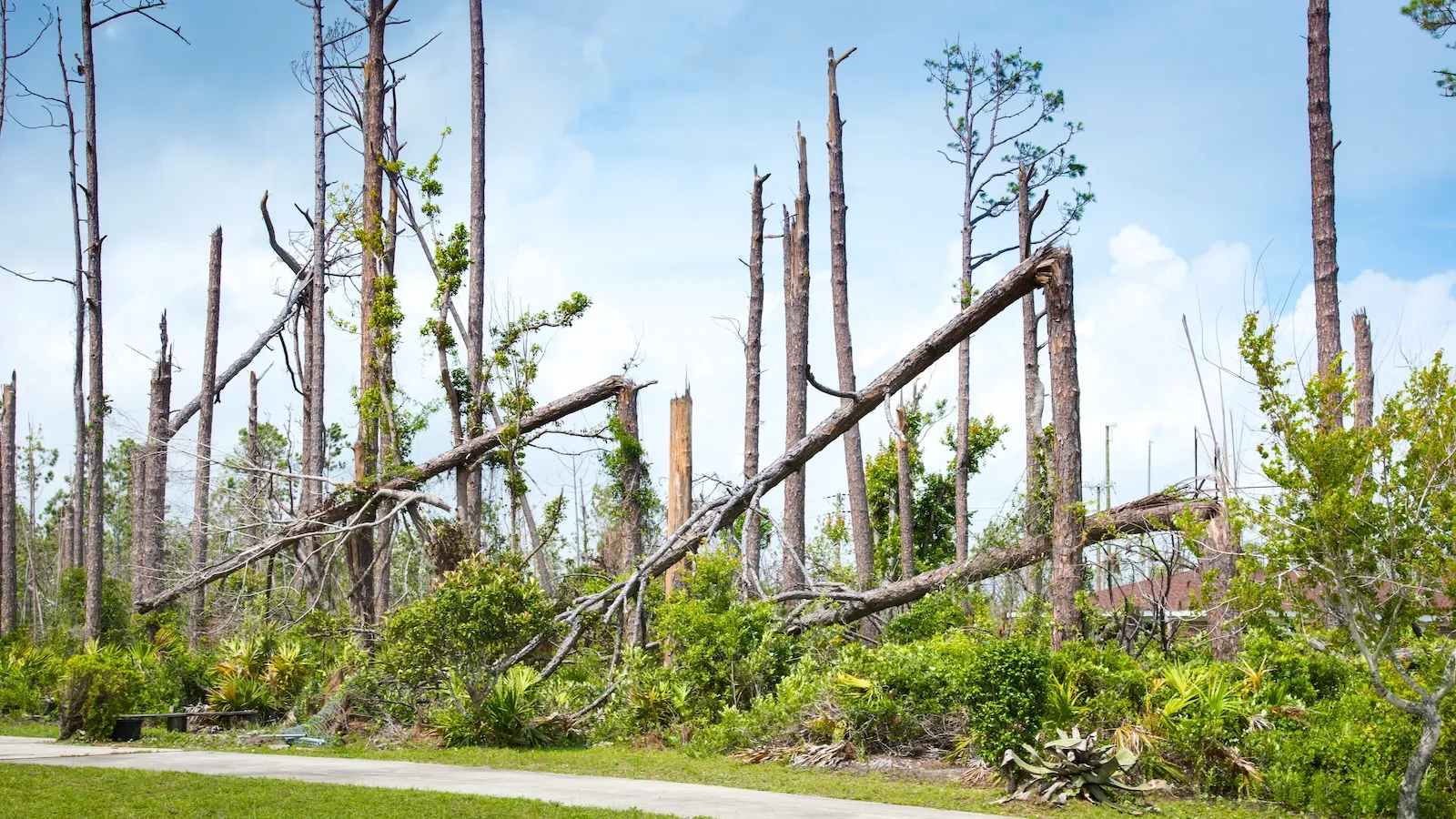
However, the geographical scope of disasters eligible for EFRP funds has expanded dramatically in recent years. Since the last major congressional funding injection in 2024, the FSA has solicited applications for a wide array of compounding climate and weather emergencies. These include extensive hurricane recovery efforts across Eastern states, destructive southern pine beetle infestations decimating timber in Georgia, severe flooding events in Hawaiʻi, a massive windstorm in Minnesota, and a devastating multi-county ice storm in northern Michigan.
With demands pouring in from all corners of the country, the $357 million war chest has been entirely depleted, rendering new approvals impossible and stalling ongoing recovery projects in their tracks.
A Timeline of Crisis: The Northern Michigan Ice Storm
The paralysis of the EFRP is acutely visible in northern Michigan, where private landowners and communities are still grappling with the catastrophic aftermath of a severe ice storm that struck in March 2025.
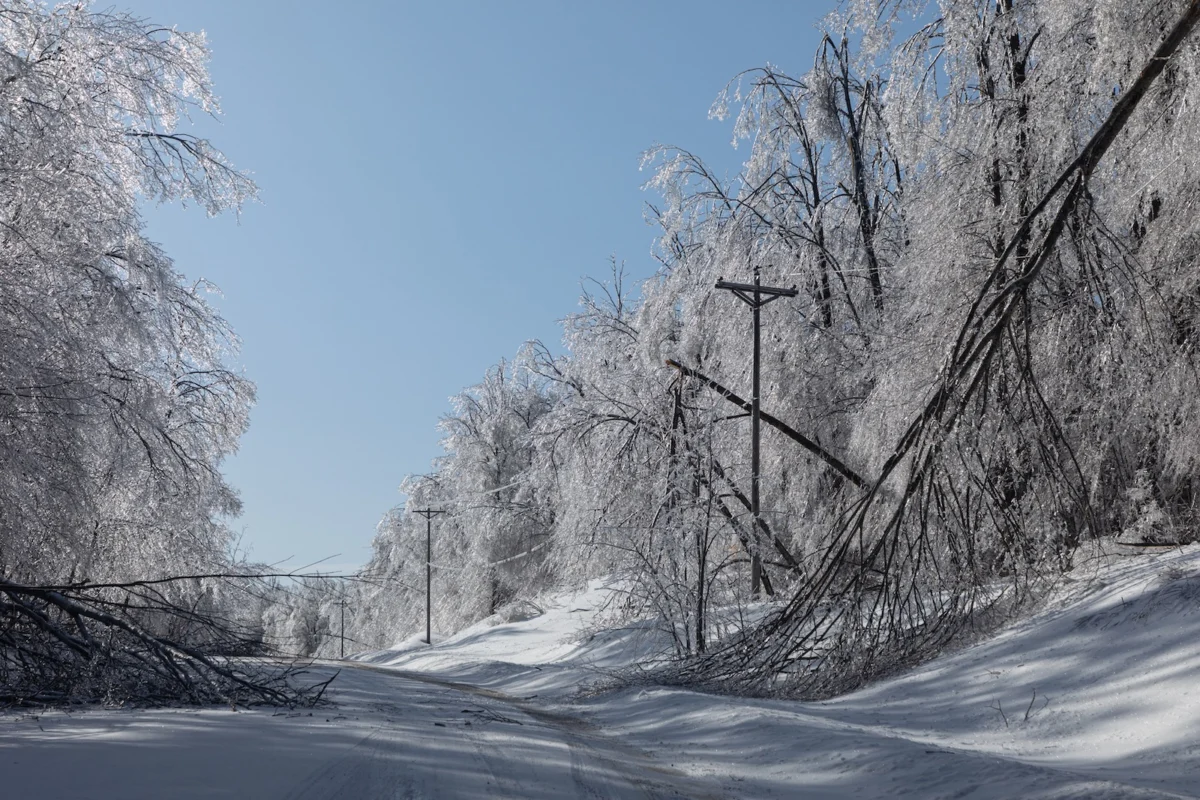
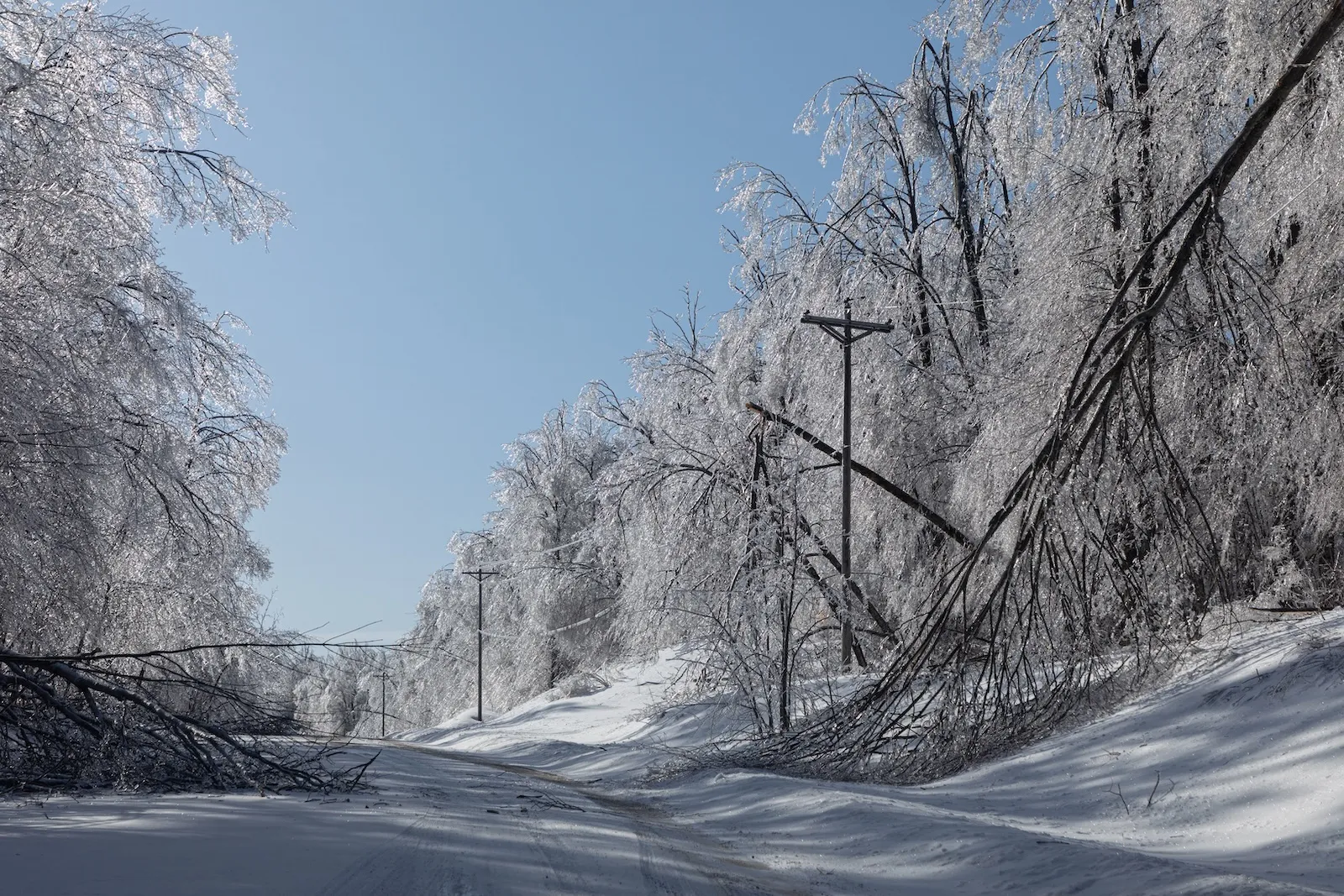
In a matter of just two days, the powerful storm blanketed 12 counties in thick layers of ice. The sheer weight of the accumulation snapped branches, uprooted mature hardwoods, and downed thousands of utility poles, wreaking havoc across approximately 3 million acres of forestland. For the state’s public lands—specifically the 1 million acres managed by the Michigan Department of Natural Resources (DNR)—recovery costs alone were estimated at an astronomical $14 million. For private landowners, who control the vast majority of the region’s forests, federal aid through the EFRP represented virtually the only viable financial lifeline.
The rollout of the federal program in Michigan, however, was plagued by institutional friction from its inception. The state’s FSA office—historically structured to assist commercial agricultural operations and traditional row-crop farmers—faced a steep learning curve when attempting to administer aid to complex hardwood forest ecosystems.
- May 2025: The USDA officially approves EFRP assistance for Michigan landowners impacted by the March ice storm, inviting them to submit applications.
- Summer and Fall 2025: More than 600 landowners enter the application process. The Michigan DNR collaborates to contract 25 professional foresters to conduct on-site evaluations, draft mandatory restoration plans, and recommend specific reimbursement schedules.
- Late 2025 to Early 2026: Delays mount. Landowners report prolonged periods of poor communication, confusion regarding complex eligibility standards, and mounting frustration as months pass without funding approvals.
- Spring 2026: Adding insult to injury, parts of northern Michigan are struck by yet another unseasonal ice storm, catching recovering ecosystems off guard while previous restoration efforts remain unfunded.
- Mid-2026: USDA and FSA officials officially confirm that nationwide requests have exceeded available appropriations, halting the flow of checks and leaving applicants in a state of indefinite uncertainty.
On-the-Ground Frustrations and Economic Stakes
For forestry professionals and property owners who invested significant time and resources into navigating the federal bureaucracy, the funding freeze feels like a betrayal of the program’s intended purpose.
"We’ve spent so much time filling out the paperwork, going and doing in-person meetings, having them on site doing visits, for what feels like nothing," said Neil Haney, executive director of the Lake Louise Christian Community in Boyne Falls, Michigan. Roughly 1,700 acres of the campground’s woodlands suffered severe structural damage during the 2025 ice storm.
Tony Fox, a professional forester based in Lake City, Michigan, who assisted in drafting more than 10 restoration plans for applicants, noted that the administrative mismatch between agricultural bureaucrats and forest management professionals caused unnecessary friction.
"It was a little unfair to the folks at FSA," Fox explained. "You had a lot of folks who had no clue about the forest trying to wedge an agricultural program into the woods, so there was a steep learning curve."
The stakes for the region are immense. Michigan’s forest industry—spanning commercial wood products, paper manufacturing, localized tourism, and outdoor recreation—pumps billions of dollars into the state’s economy annually. Timely forest stewardship is vital to protecting these economic drivers.
According to Fox, the window for effective ecological intervention varies wildly depending on the tree species involved. Red pine and aspen stands hit hard by the ice storm, for instance, face immediate threats from timber rot and invasive insect pests if downed wood is not promptly salvaged. Conversely, hardwood species like maple and oak are naturally resilient and more likely to recover independently, albeit with some loss in commercial timber value.
Nevertheless, without federal assurances, many landowners find themselves trapped in a difficult Catch-22. Michigan’s FSA office has officially warned applicants that they may begin restoration work at their own discretion, but cautioned that any work initiated prior to formal federal approval is undertaken strictly at personal expense, as financial assistance cannot be guaranteed.
Because clearing, replanting, and managing thousands of acres can cost hundreds of thousands of dollars, many cash-strapped landowners simply cannot afford to proceed without reimbursement. Logan Hawley, a landowner and contracted forester in Hubbard Lake, Michigan, noted that the ongoing delays continually force communities to reset their recovery efforts just as the next seasonal weather anomaly strikes.
Broader Implications for Carbon Storage and Climate Resilience
The paralysis of the EFRP carries profound implications that extend far beyond local timber markets and regional aesthetics. Healthy forests serve as one of the nation’s primary natural defenses against climate change. According to federal estimates, American forests store nearly 60 billion metric tons of carbon, effectively offsetting approximately 13 percent of the country’s total annual greenhouse gas emissions.
Ecologists emphasize that damaged, unmanaged forests compromised by storm debris, deadfall, and pest outbreaks lose significant carbon sequestration capacity and face exponentially higher risks of catastrophic wildfires and severe disease outbreaks. As global temperatures rise and weather patterns become increasingly erratic, the frequency and intensity of natural disasters are projected to climb, placing unprecedented strain on federal conservation budgets.
Recognizing these systemic flaws, lawmakers have begun questioning the structural design of federal disaster relief. The timing of traditional congressional appropriations rarely aligns with the unpredictable, sudden nature of natural disasters. Earlier this year, Congress passed bipartisan legislation aimed at addressing some of these structural concerns by authorizing advance payment mechanisms for landowners. However, the practical application of this new law remains ambiguous, and it has done little to immediately alleviate the current funding shortfall facing Michigan, Minnesota, and other affected states.
Political leaders representing hard-hit regions have voiced sharp criticism over the administrative gridlock. Representative Jack Bergman, a Republican whose district encompasses all of northern Michigan, issued a blunt rebuke of Washington’s handling of the crisis.
"Landowners shouldn’t have to fight Washington just to get help recovering," Bergman said, calling on his colleagues on the House Appropriations Committee to swiftly replenish EFRP funding. "If Washington calls this emergency relief, it needs to act like it’s an emergency."
Despite the widespread disappointment and financial strain, some community leaders are philosophical about the limits of government assistance. While reflecting on his campground’s damaged acreage, Neil Haney acknowledged that while federal funds would have accelerated the recovery process, nature ultimately follows its own timeline.
"Nature will be nature, and it’ll come back," Haney observed. "It’ll just take longer."
For federal policy makers, however, the broader lesson is clear: unless disaster relief programs like the EFRP are adequately funded and structurally adapted to handle modern climate-driven catastrophes, America’s vital forest ecosystems will increasingly be left to fend for themselves.