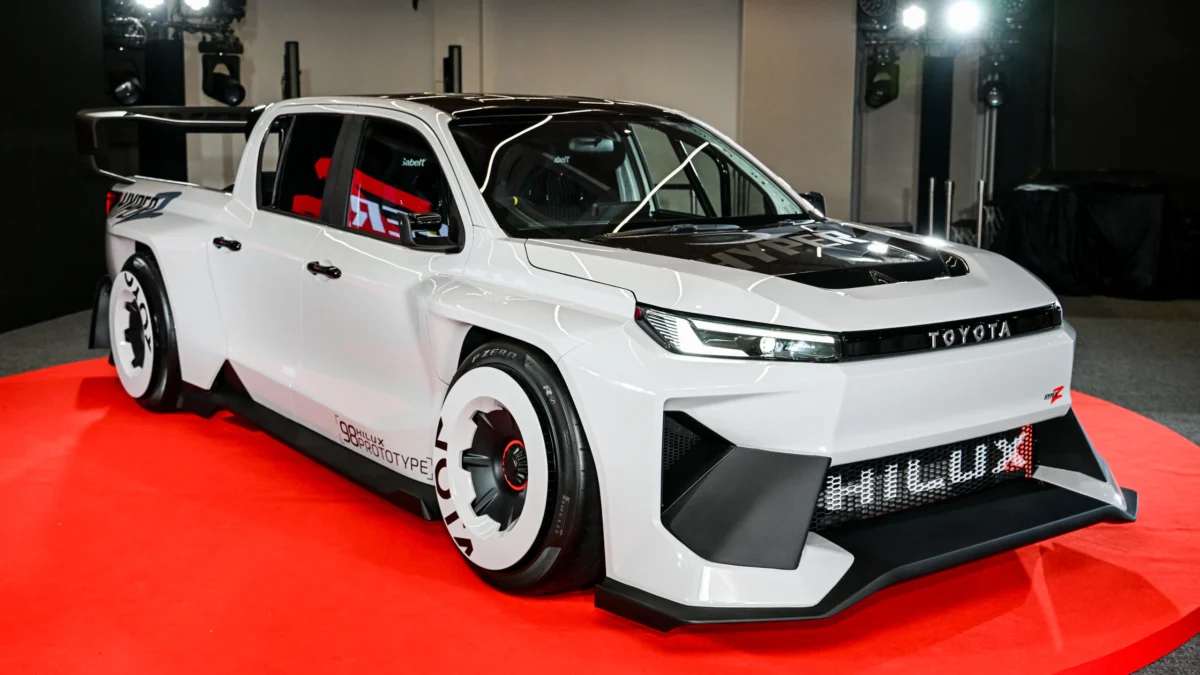
The automotive world has been set abuzz by the unveiling of the Toyota Hilux Hyper Z, a radical prototype that pivots away from the storied pick-up’s traditional reputation as an unkillable workhorse and toward the territory of high-performance street aesthetics. While the Hilux nameplate is synonymous with global durability, challenging terrains, and industrial utility, this latest iteration, showcased in late November 2026, signals a bold, stylistic departure for the Japanese manufacturer. The Hyper Z is not designed for the mud-plugging trails of the Outback or the remote mountain passes; it is a design-led concept that prioritizes visual impact and urban presence over traditional off-road functionality.
A Radical Departure in Design Philosophy
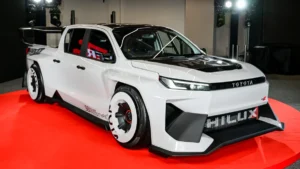
The Hilux Hyper Z represents a significant shift in Toyota’s design language for its commercial vehicle lineup. Historically, the Hilux has been categorized by its high ground clearance, robust suspension, and utilitarian interior. The Hyper Z, however, sits significantly lower to the ground, suggesting a suspension geometry tuned for asphalt performance rather than articulation over rocks. The bodywork features aggressive aerodynamic appendages, including a deepened front splitter, flared wheel arches that house massive, low-profile performance tires, and a rear profile that appears to prioritize streamlined airflow over cargo-bed capacity.
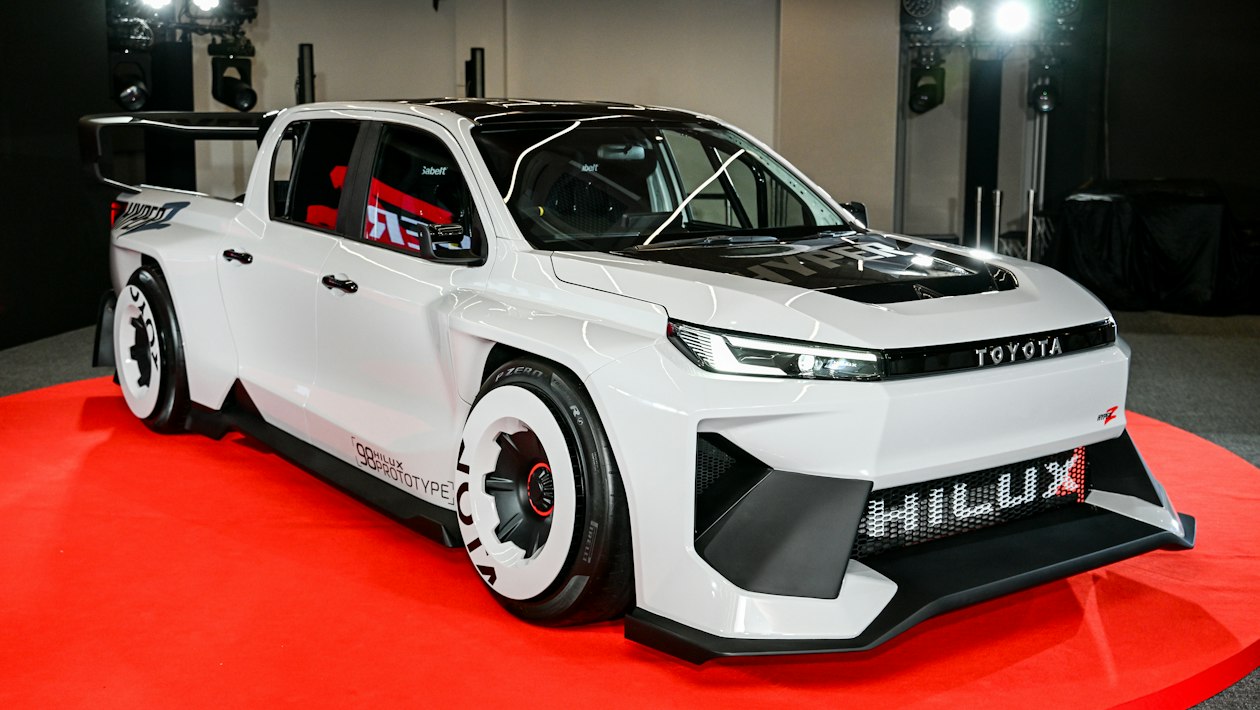
Industry analysts observe that this prototype reflects a broader trend among major truck manufacturers to capture the "lifestyle" segment of the market. As urban consumers increasingly look toward pick-up trucks as personal vehicles rather than strictly for commercial use, the demand for "sport-tuned" aesthetic packages has surged. The Hyper Z appears to be Toyota’s answer to this shift, effectively creating a "street-truck" variant that maintains the iconic Hilux silhouette while stripping away the rugged trail-readiness that has defined the model for over five decades.
Chronology of the Hilux Evolution
The emergence of the Hyper Z comes at a pivotal time in the Hilux timeline. The current generation of the Hilux, which arrived in the UK market earlier in 2026, set a new benchmark for the segment by undercutting the Ford Ranger on price while offering a dual-powertrain strategy.
- May 2026: Toyota officially introduces the new Hilux generation at the Brussels Motor Show. The launch focuses on a dual-track strategy: a mild-hybrid diesel engine for traditional heavy-duty users and a dual-motor electric variant aimed at corporate fleets and low-emission urban zones.
- June 2026: Official order books open in the United Kingdom, marking a major competitive push against the dominant Ford Ranger. Early sales data indicates strong interest in the EV variant, particularly among urban-based contractors.
- July 2026: Automotive publications recognize the new Hilux range for its balance of utility and technological advancement, solidifying its position as a top-tier contender in the UK pick-up market.
- November 2026: Toyota unveils the Hyper Z prototype, a surprise reveal that shifts the narrative from utility to design-forward experimentation.
Supporting Data and Market Context
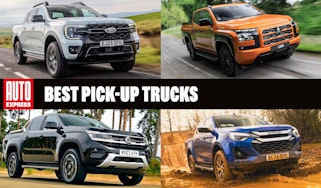
The commercial vehicle sector in the UK has undergone a period of intense transformation throughout 2026. According to recent industry reports, the demand for pick-up trucks has shifted from traditional agricultural and construction utility to a more diverse user base. While the "Best pick-up trucks to buy in the UK 2026" rankings still favor vehicles with high payload capacities and deep wading depths, the market segment for "sport" or "adventure" trim levels has seen an 18% growth year-on-year.
The Hilux Hyper Z occupies a unique space within this data. By utilizing the chassis of the current EV-powered Hilux, Toyota has been able to lower the center of gravity significantly. The battery placement, typically housed within the frame rails, naturally aids in the handling characteristics required for a "street" performance vehicle. Preliminary, non-official estimates suggest that the Hyper Z, should it reach production, would retain the torque-heavy characteristics of the dual-motor EV powertrain, potentially offering a 0-60 mph time that would put it in direct competition with performance SUVs rather than other work-focused pick-ups.
Official Responses and Strategic Implications
While Toyota has maintained a degree of secrecy regarding the production feasibility of the Hyper Z, the decision to exhibit the prototype suggests that it is more than just a static design study. Spokespeople for the brand have remained guarded, describing the project as an "investigative exercise into the performance potential of the current electrified architecture."
Market experts suggest that the Hyper Z serves as a "halo" project for the Hilux line. By creating an extreme, low-slung, and visually arresting version of their most reliable truck, Toyota is attempting to reshape public perception. The implication is clear: the Hilux is no longer just a tool for the job site; it is a platform for performance and individual expression.
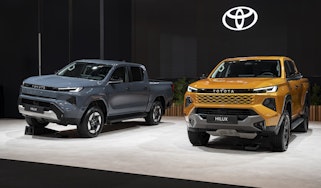
The broader impact on the market could be significant. If Toyota decides to move forward with a production version—or at least a "performance pack" inspired by the Hyper Z—it would likely force competitors like Ford, Isuzu, and Mitsubishi to reconsider their own sport-oriented offerings. The shift toward electrification in the truck sector has provided a unique opportunity for engineers to tune vehicles for performance in ways that were previously impossible with traditional internal combustion engines, where power-to-weight ratios and torque delivery were constrained by gearbox limitations.
A New Era for the Toyota Hilux
The Hyper Z is, in many ways, the antithesis of the "unbreakable" Hilux that became a cultural icon in the 1990s and 2000s. Where the original Hilux was praised for being able to survive extreme conditions with minimal maintenance, the Hyper Z is a showcase of sophisticated, modern engineering intended for smooth tarmac and high-speed cornering.
This shift does not necessarily alienate the traditional customer base, but it does broaden the reach of the brand. As environmental regulations—such as the Euro 7 standards—become more stringent across Europe and the UK, manufacturers are forced to pivot. The success of the current Hilux generation, which offers a seamless transition between diesel and electric power, has provided the financial and technical stability for Toyota to experiment with the Hyper Z.
Comparative Analysis: Street Performance vs. Off-Road Capability
To understand the Hyper Z, one must look at what it intentionally lacks. The traditional Hilux is designed with a high approach and departure angle, allowing it to climb steep inclines and navigate uneven terrain without damaging the bodywork. The Hyper Z removes these features. By lowering the vehicle, Toyota has sacrificed the "go-anywhere" capability for better aerodynamics and a lower center of gravity.
This is a calculated trade-off. The "Street Truck" segment—historically dominated by aftermarket modifiers—is now being recognized by major OEMs. By offering a factory-backed performance truck, Toyota can capture a segment of the market that previously had to look toward third-party tuners to modify their vehicles. This brings the advantage of factory warranties, safety testing, and integrated software tuning, which are often absent in the aftermarket scene.
Future Outlook and Conclusion
As we look toward 2027, the automotive landscape appears to be moving toward a state of extreme diversification. The success of the Hilux range in the UK, combined with the curiosity generated by the Hyper Z, suggests that Toyota is well-positioned to maintain its market share. Whether the Hyper Z remains a one-off prototype or becomes the foundation for a new "Z-Series" of performance trucks, it has already succeeded in its primary objective: keeping the Hilux nameplate at the center of the automotive conversation.
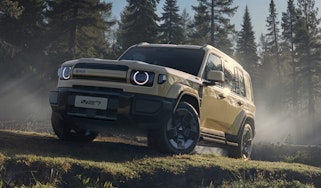
The Hyper Z is more than just a visual experiment; it is a symptom of a changing industry. As the world moves toward electrification, the "traditional" definitions of what a pick-up truck should be are being challenged. Toyota has shown that it is willing to play with these definitions, proving that even a vehicle as rooted in tradition as the Hilux can be reimagined for the high-performance, electric future. For now, enthusiasts and industry observers will continue to analyze the imagery and performance potential of the Hyper Z, waiting to see if Toyota will take the final step and bring this radical design to the open road.