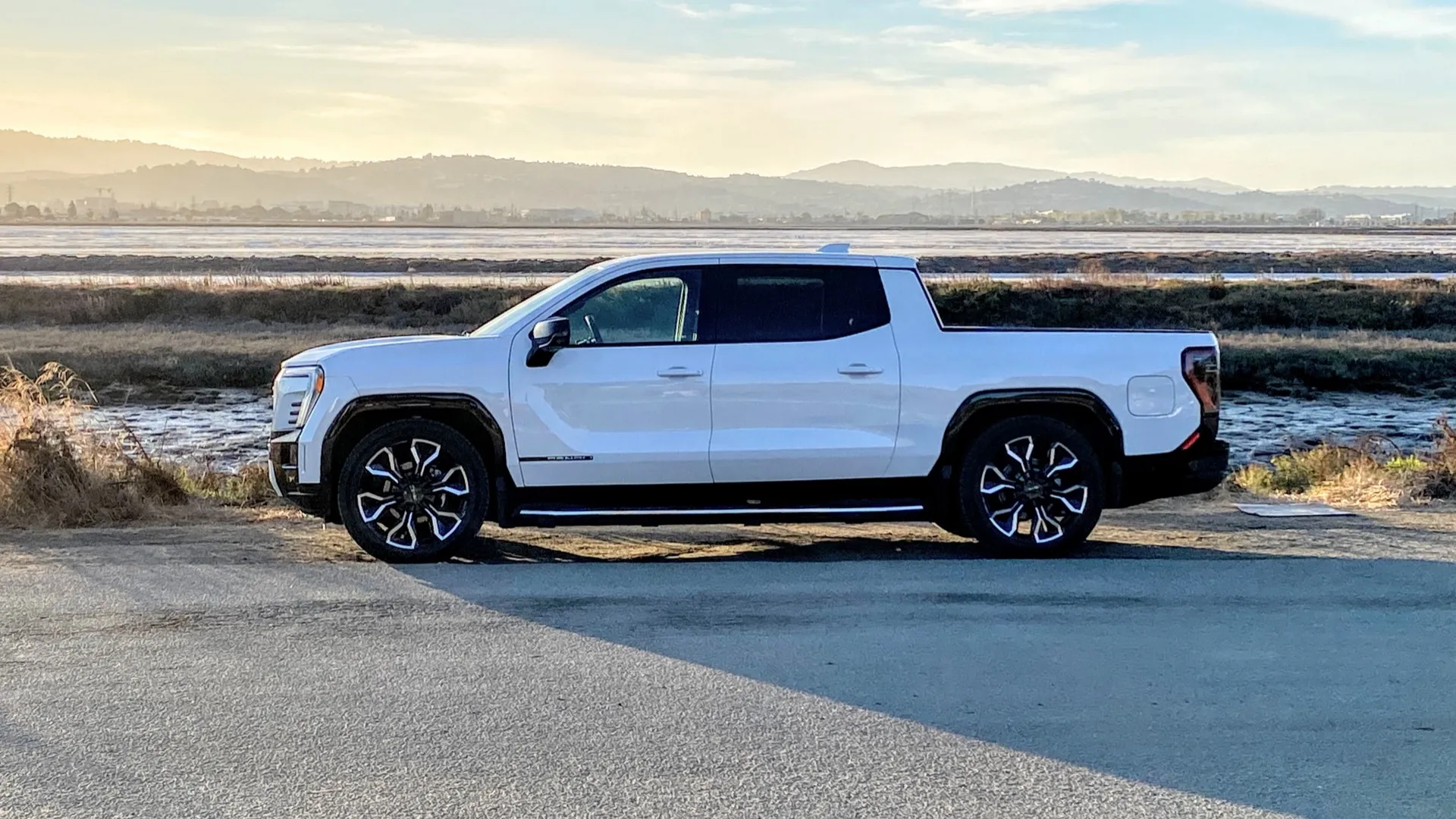
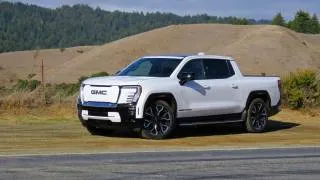
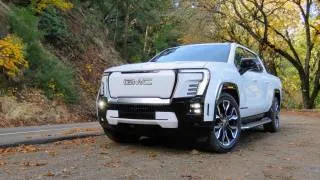
The 2025 GMC Sierra EV Denali has arrived as a definitive statement in the rapidly evolving electric vehicle landscape, positioning itself not merely as an alternative to internal combustion pickups, but as a superior technological successor. Weighing nearly 9,000 pounds and stretching 233 inches in length, the Sierra EV represents the pinnacle of General Motors’ Ultium platform. While its sheer scale might suggest a lumbering giant, early real-world testing through the narrow, winding highways of Northern California’s Redwood forests and the undulating ridges of Skyline Boulevard reveals a vehicle that defies conventional physics through advanced chassis engineering and a sophisticated dual-motor powertrain.

Engineering a Heavyweight Contender
The Sierra EV Denali’s road presence is defined by its massive dimensions—84 inches wide excluding mirrors—yet it exhibits a level of maneuverability previously reserved for mid-size sedans. This agility is primarily attributed to its standard rear-wheel steering system. At low speeds, the rear wheels pivot at a small angle opposite the front wheels, effectively shortening the wheelbase and allowing the truck to navigate tight hairpins and narrow urban corridors with precision. This system is further augmented by the "CrabWalk" mode, a feature shared with the GMC Hummer EV, which allows the vehicle to move diagonally by turning the rear wheels in the same direction as the fronts, providing a unique solution for navigating off-road obstacles or tight parking scenarios.
Underpinning the driving experience is a standard four-corner air suspension system that maintains a level stance regardless of load. This system works in tandem with the truck’s low center of gravity—a byproduct of the massive battery pack integrated into the floor—to provide a composed, "even-keeled" sensation on winding roads. The powertrain, consisting of two permanent magnet motors designed and manufactured by GM, delivers instant torque that ensures momentum is never lost during steep climbs.
Performance Specs and Powertrain Dynamics
The 2025 Sierra EV is offered in two primary configurations: the Max Range and the Extended Range. The Max Range version, which features a dual-layer battery pack with a massive 205-kWh capacity, is the current performance leader. In its "Max Power" mode, the truck produces a staggering 760 horsepower and 785 lb-ft of torque. This allows the 4.5-ton vehicle to accelerate from 0 to 60 mph in just 4.5 seconds.
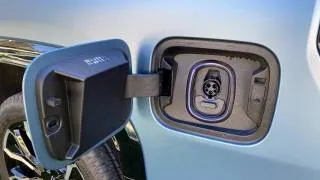
The Extended Range version, while utilizing the same motor hardware, is paired with a 170-kWh battery pack. This configuration produces 645 horsepower and 785 lb-ft of torque. Both models feature an 800-volt DC fast-charging architecture, which allows the two layers of the battery pack to be "stitched" together in series during charging. This enables the Max Range pack to accept up to 350 kW of power, while the Extended Range pack supports up to 300 kW. According to GMC, users can recoup approximately 100 miles of range in just 10 minutes when using a compatible high-output charger.
Range and Efficiency: Breaking the 400-Mile Barrier
One of the most significant hurdles for electric trucks has been range, particularly when subjected to the demands of towing and hauling. GMC has addressed this by opting for sheer battery volume. The Max Range Sierra EV boasts a GM-estimated 460 miles of total range. Because of its weight, the Max Range version falls into a medium-duty category that does not require standard EPA light-duty ratings, though the 460-mile figure is based on similar testing cycles. The Extended Range model offers an EPA-estimated 390 miles.
In real-world testing involving a mix of highway and spirited backroad driving, the Sierra EV demonstrated an efficiency of approximately 1.9 miles per kWh. While this figure is modest compared to electric sedans, it is competitive within the full-size electric truck segment and suggests that the 390-to-460-mile range claims are achievable under normal driving conditions.
Versatility and the Return of the Midgate
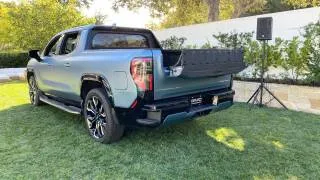
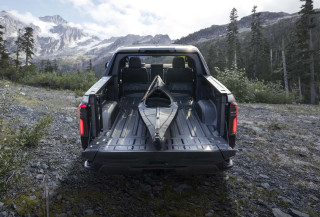
GMC differentiates the Sierra EV from its stablemate, the Hummer EV, by labeling the latter the "it" truck and the Sierra the "do it" truck. Central to this utility-first philosophy is the return of the Midgate, a feature first popularized by the Chevrolet Avalanche. The Midgate allows the wall between the cabin and the cargo bed to be folded down, extending the usable floor length from the standard 5-foot-11-inch bed to a 9-foot-1-inch space with the tailgate closed. With the tailgate down and the MultiPro Load Stop engaged, the truck can accommodate items up to 10 feet 10 inches long, such as kayaks or lumber.
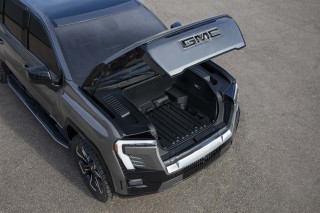
Beyond the bed, the Sierra EV features an 11.0-cubic-foot "eTrunk" (frunk) located under the hood. This weatherproof compartment includes a drain plug, a 120-volt outlet, and integrated cupholders, making it an ideal space for grocery storage or tailgating gear.
Towing Capabilities and Real-World Impact
Towing remains the ultimate test for any pickup, and the Sierra EV is engineered to handle substantial loads. The Extended Range model is rated to tow up to 10,500 pounds, while the Max Range model is rated for 10,000 pounds. During testing with a 5,500-pound trailer, the Sierra EV maintained an acceleration profile that outperformed most conventional passenger vehicles.
While towing significantly impacts efficiency—dropping to roughly 1.0 mile per kWh during heavy-load testing—the sheer size of the 205-kWh battery ensures that even when the range is halved, the truck can still cover 200 miles between charges. This makes long-distance towing a viable reality for EV owners for the first time. Furthermore, the inclusion of GM’s Super Cruise hands-free driving technology, which now supports towing, provides lane-centering and speed control that reduces driver fatigue during long hauls.
Interior Luxury and the Software Shift
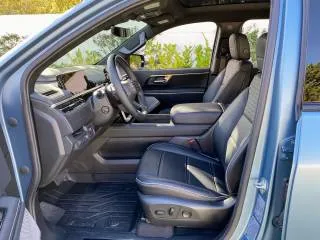
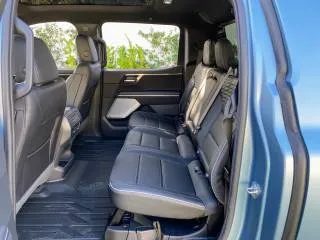
The Denali trim level ensures that the Sierra EV competes directly with luxury SUVs. The cabin is characterized by high-quality materials, including laser-cut wood trim, stainless steel speaker grilles for the seven-speaker Bose audio system, and perforated leather upholstery with intricate stitching. To enhance the premium feel, GMC has employed active noise cancellation and acoustic side glass, resulting in a cabin environment that is exceptionally quiet even at highway speeds.
The focal point of the interior is a 16.8-inch portrait-oriented touchscreen. Unlike many competitors, GMC has moved away from Apple CarPlay and Android Auto, opting instead for a "Google Built-in" ecosystem. This native system integrates Google Maps, Google Assistant, and the Play Store directly into the vehicle’s interface. While this shift has been met with some resistance from smartphone-reliant consumers, GMC argues that the integrated system allows for better battery preconditioning and more accurate range forecasting based on navigation routes.
Energy Ecosystem and Home Integration
The Sierra EV is designed to be more than a vehicle; it is a mobile power station. The truck features a 7.2-kW offboarding power system, capable of powering tools at a job site or appliances at a campsite. When equipped with the GM Energy home suite and the $1,699 PowerShift charger, the Sierra EV can provide up to 10.2 kW of backup power to a home during an outage. This bidirectional charging capability positions the truck as a critical component of a modern home energy management system, potentially rivaling dedicated home battery solutions like the Tesla Powerwall.
Market Positioning and Future Outlook
The 2025 GMC Sierra EV Denali enters the market with a starting price of $100,495, including a $2,095 destination fee. This puts it at the high end of the segment, competing with the Ford F-150 Lightning Platinum, the Rivian R1T, and the Tesla Cybertruck.
While the Denali is currently the only trim available, GMC has confirmed that more accessible versions, including the off-road-focused AT4 and the entry-level Elevation trims, are slated for release. However, production remains a bottleneck. GM has yet to provide a definitive timeline for the full production ramp-up at its Lake Orion, Michigan, assembly plant, which was previously delayed.
Analysis of Implications
The launch of the Sierra EV Denali marks a pivotal moment for General Motors. By delivering a truck with a 460-mile range, GM is directly addressing "range anxiety," the primary barrier to EV adoption in the truck segment. The inclusion of the Midgate and high-output bidirectional charging demonstrates a focus on functional innovation that goes beyond simple electrification.
However, the success of the Sierra EV will ultimately depend on GM’s ability to scale production and lower the entry price. At $100,000, the Denali is a niche luxury product. For the Sierra EV to achieve mainstream success and displace internal combustion leaders, the upcoming Elevation and AT4 trims must maintain the core strengths of the Ultium platform—range and utility—at a price point that appeals to fleet buyers and traditional truck enthusiasts. As it stands, the 2025 Sierra EV Denali is a technical tour de force that proves the electric pickup can finally do "truck things" without compromise.