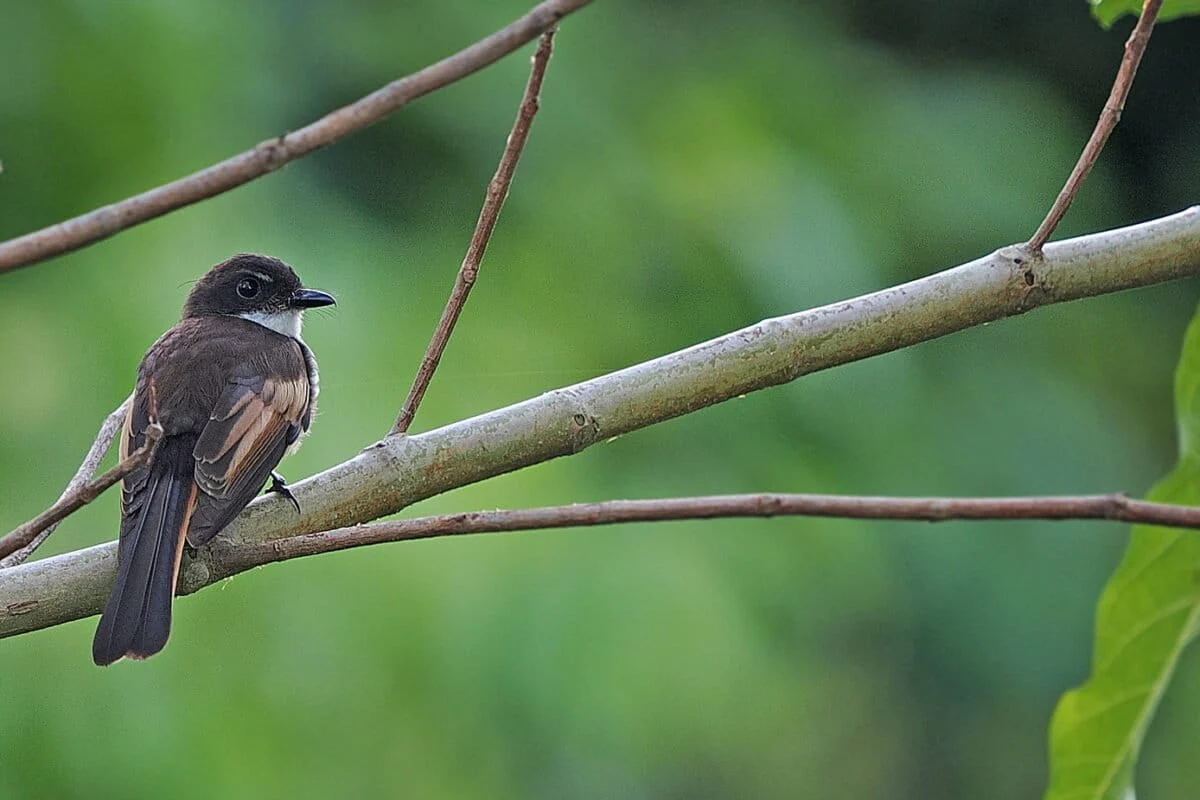
The avian landscape of the Indonesian archipelago has undergone a significant revision following a comprehensive study that has identified a new species of songbird, previously hidden in plain sight for over a century. Researchers have confirmed that the bird populations on the Babar Islands, once categorized as the cinnamon-tailed fantail (Rhipidura fuscorufa), are in fact a distinct species now officially named the cheerful fantail (Rhipidura laguceria). This discovery, published in the Bulletin of the British Ornithologists’ Club, highlights the complexities of island evolution and the critical role of bioacoustics in modern taxonomy.
For more than 120 years, the scientific community operated under the assumption that the cinnamon-tailed fantail occupied a range spanning both the Tanimbar Islands and the Babar Islands in the eastern Banda Sea. While the two island groups are separated by a mere 135 kilometers (84 miles) of open water, this geographical gap has proven sufficient to facilitate a complete speciation event. The study, led by James A. Eaton of Birdtour Asia Limited and Alex J. Berryman of BirdLife International, utilizes a combination of morphological analysis, vocal recordings, and behavioral experiments to substantiate the split.
A Century of Taxonomic Misidentification
The history of the cinnamon-tailed fantail dates back to the late 19th century when early naturalists first collected specimens from the region. At the time, the subtle physical differences between the birds of Babar and Tanimbar were dismissed as individual variations within a single species. This classification remained unchallenged largely due to the extreme isolation of the Babar Islands. Following initial surveys in the early 1900s, the islands remained virtually unvisited by ornithologists for nearly a century, with the next significant scientific foray not occurring until 2009.
The lack of field data, particularly regarding the birds’ vocalizations, allowed the misclassification to persist. In the era of classical taxonomy, species were often defined solely by their physical appearance in preserved museum skins. However, as the field of ornithology has evolved to include bioacoustics and behavioral ecology, scientists have begun to realize that many "cryptic species"—those that look nearly identical but are genetically and behaviorally distinct—have been overlooked.
The cheerful fantail (Rhipidura laguceria) takes its name from its lively disposition and its distinct vocal profile, which differs sharply from its relative on the Tanimbar Islands. The recognition of this new species is a testament to the importance of revisiting "known" populations in remote regions with modern analytical tools.
Methodology: Combining Museum Science and Field Experiments
To reach their conclusions, Eaton, Berryman, and their team employed a rigorous three-pronged investigative approach. The first phase involved a detailed examination of 19 museum specimens labeled as cinnamon-tailed fantails. These specimens, housed in various international collections, provided a historical baseline for physical comparison.
The researchers noted that the cheerful fantail exhibits slightly darker upperparts and a less extensive distribution of cinnamon-colored plumage on its underparts compared to the cinnamon-tailed fantail of Tanimbar. While these morphological differences are subtle enough to escape the notice of a casual observer, they are consistent across the populations, suggesting a long period of evolutionary separation.
The second phase of the study focused on bioacoustics. The team recorded the songs of the birds on both island groups and subjected them to sonographic analysis. The results were striking: the songs of the Babar birds consist primarily of single whistles that rise in pitch toward the conclusion. In contrast, the Tanimbar birds produce a more complex series of short and long whistles, creating a rhythmic cadence with a pitch that fluctuates up and down.
The final and perhaps most definitive phase of the research involved field playback experiments. Over several years, the researchers conducted 132 separate trials in which they played the recorded calls of one population to wild birds of the other. The "response" of a bird to a call is a primary indicator of whether it recognizes the caller as a member of its own species. The results were conclusive: birds on Babar routinely responded to their own calls but ignored the recordings from Tanimbar, and vice versa. This lack of recognition indicates that even if the two populations were to meet, they would be unlikely to mate, confirming their status as biologically distinct species.
Geographical Context and the Wallacea Region
The discovery takes place within the Wallacea region, a transition zone between the Asian and Australian continental plates. This area is world-renowned for its high levels of endemism—species found nowhere else on Earth. The deep ocean trenches that separate the islands of the Banda Sea act as formidable barriers to the movement of small songbirds, allowing isolated populations to follow unique evolutionary trajectories.
The Babar Islands and Tanimbar Islands are part of the Outer Banda Arc. Despite their proximity, the deep-water channels between them have prevented the cinnamon-tailed fantail and the cheerful fantail from interbreeding. This "island effect" is a classic driver of biodiversity, where limited gene flow leads to the accumulation of distinct traits over thousands of generations.
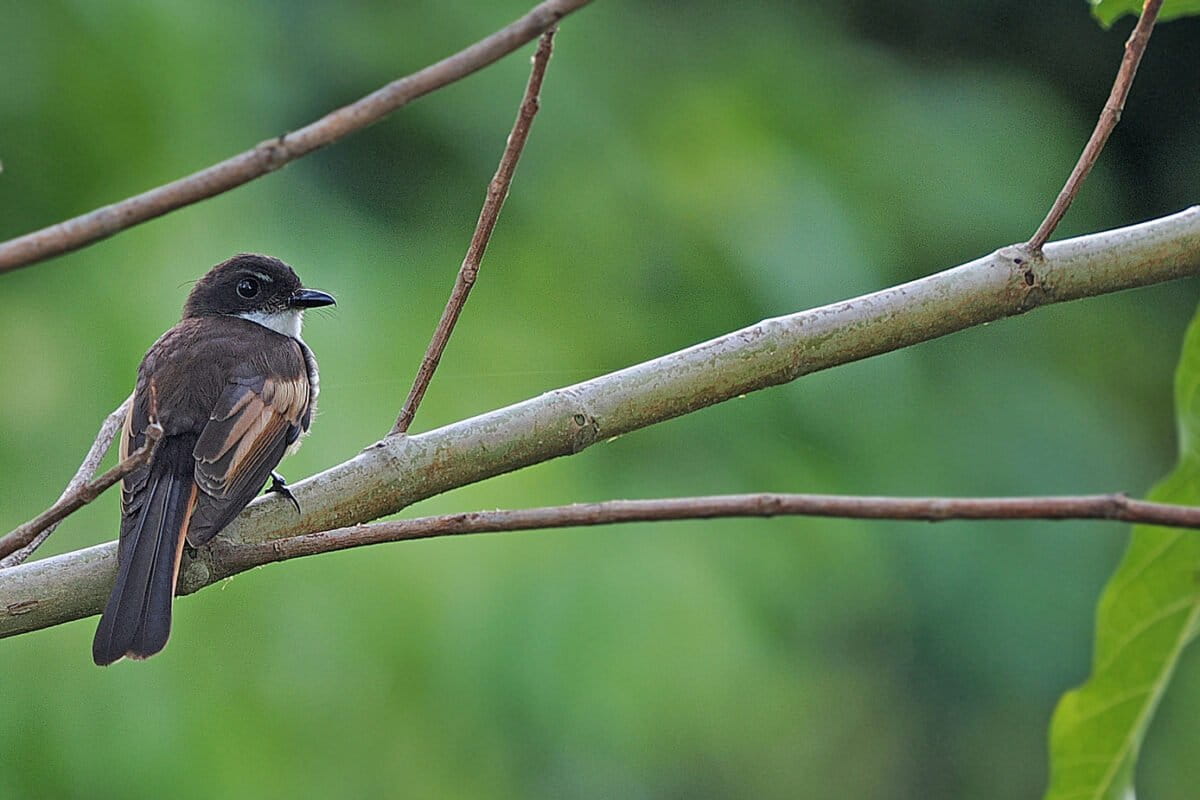
The fact that the Babar Islands were "forgotten" by the scientific community for a century underscores the potential for further discoveries in Indonesia’s lesser-known island chains. As more researchers venture into these remote areas, the number of recognized species in the Wallacea region is expected to continue rising.
Conservation Implications and Habitat Resilience
The taxonomic split has immediate implications for the conservation status of both species. Currently, the cinnamon-tailed fantail is listed as "Least Concern" on the IUCN Red List of Threatened Species. This status was based on the combined population and range of the birds across both Tanimbar and Babar.
By splitting the species, the "Extent of Occurrence" (EOO) and "Area of Occupancy" (AOO) for both the cinnamon-tailed fantail and the cheerful fantail are significantly reduced. The study authors noted that the reduced ranges meet the initial technical thresholds for listing the species as "Threatened." When a species’ range is restricted to a small group of islands, it becomes inherently more vulnerable to localized threats such as natural disasters or invasive species.
However, the researchers also provided a more optimistic outlook based on the birds’ behavior. Unlike many endangered tropical birds that require pristine, old-growth forests, both the cinnamon-tailed and cheerful fantails appear to be highly resilient. They are "habitat generalists" that thrive in edge habitats, clearings, glades, and scrubland featuring taller trees like mangoes. They tend to avoid closed-canopy forests, preferring heavily modified landscapes instead.
"Both species are highly tolerant of habitat degradation," the authors stated in the study. This adaptability suggests that while their geographic ranges are small, their populations may remain stable even in the face of human-driven landscape changes. This resilience is a crucial factor that conservationists will need to weigh when determining whether to officially upgrade their threat status.
The Role of Bioacoustics in Modern Ornithology
The discovery of the cheerful fantail serves as a high-profile example of how bioacoustics is revolutionizing the way we understand avian diversity. In the past, if two birds looked alike, they were considered the same species. Today, scientists understand that for many birds, "sound is identity."
In the avian world, songs are used for territory defense and mate attraction. If a female bird does not recognize the song of a male, no breeding occurs. This "pre-zygotic isolation" is a fundamental component of the Biological Species Concept. By using playback experiments, Eaton and Berryman were able to let the birds "speak for themselves," effectively asking the birds if they considered the other population to be the same species. The answer was a resounding "no."
This methodology is being applied globally to re-examine many wide-ranging species. It is particularly effective in the tropics, where many bird groups—such as flycatchers, owls, and fantails—have evolved distinct vocalizations while maintaining similar plumage to avoid detection by predators.
Future Research and Regional Biodiversity
The identification of the cheerful fantail is likely not the last discovery to emerge from the Banda Sea. Indonesia is a "megadiversity" nation, and its thousands of islands offer a near-infinite number of niches for evolution to explore. The researchers’ work highlights the necessity of continued investment in field surveys and the maintenance of museum collections.
Without the 120-year-old museum specimens, the researchers would have lacked the historical context needed to compare the populations. Conversely, without the modern field recordings, the museum specimens would have remained "cryptic." The synergy between old-school natural history and new-school technology is the current gold standard for biological discovery.
As the scientific community processes this find, the focus will likely shift to other "widespread" species in the Indonesian archipelago that may also be composed of multiple, island-specific species. Each new species identified adds a piece to the puzzle of how life distributed itself across the shifting tectonic plates and rising sea levels of the Malay Archipelago.
The cheerful fantail now stands as a symbol of the "hidden" nature of biodiversity. Its presence on the Babar Islands, singing a song that went unrecorded by science for a century, serves as a reminder that even in an age of satellite imagery and global connectivity, the natural world still holds profound mysteries waiting to be heard.