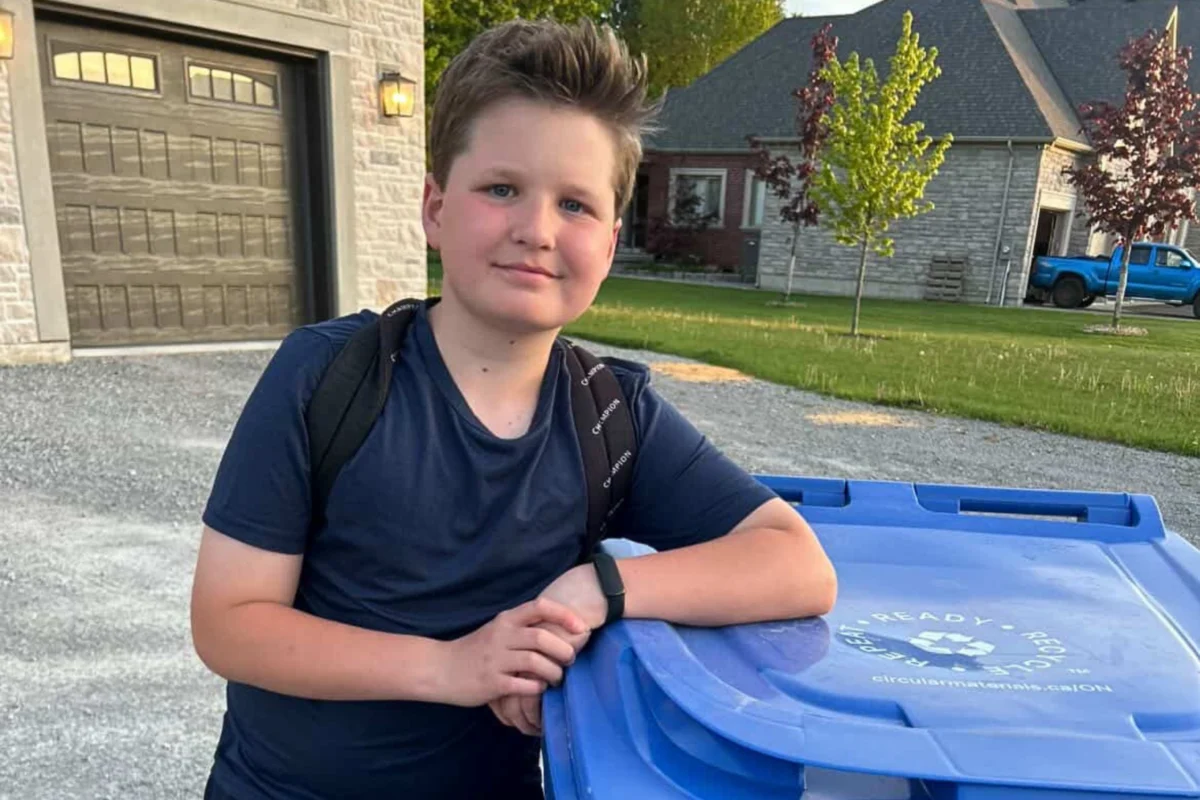
The summer of 2026 has cast a long shadow over the aspirations of countless teenagers across North America, as they confront the most challenging summer job market in nearly 80 years. From the sun-drenched beaches to the bustling local ice cream parlors, competition for entry-level positions has reached unprecedented levels, pushing young job seekers to their limits. However, amidst this daunting economic landscape, an extraordinary story of youthful ingenuity and entrepreneurial grit has emerged from East Gwillimbury, Canada. Ashton Meyer, an 11-year-old, has not only circumvented the traditional job market but has also built a burgeoning business cleaning his neighbors’ trash cans for $10 a pop, captivating a significant social media audience and inspiring a new wave of micro-entrepreneurs.
The Dire State of Youth Employment: A Historical Low
The assertion that teenagers are navigating the worst summer job market since 1948 is not hyperbole but a stark reflection of current economic realities. Data from various labor statistics agencies across North America paints a grim picture. Historically, the summer months have provided a crucial entry point for young people into the workforce, offering opportunities to earn money, gain experience, and develop essential life skills. However, the confluence of persistent inflation, an escalating cost of living, and the transformative impact of artificial intelligence (AI) has significantly altered this dynamic.
In the United States, for instance, the teenage labor force participation rate, which measures the percentage of 16-to-19-year-olds who are employed or actively looking for work, has seen a long-term decline since its peak in the late 1970s. While there have been minor fluctuations, the current environment presents unique obstacles. Economists point to several contributing factors. The soaring cost of living has forced many adults, including retirees and those with higher qualifications, to seek part-time or seasonal work, directly competing with teenagers for roles traditionally filled by younger, less experienced individuals. This phenomenon is particularly evident in sectors like retail, hospitality, and food service, where a significant portion of summer jobs are typically found.
Moreover, the cautious spending habits of everyday consumers, squeezed by inflationary pressures, have led businesses to scale back hiring. Many small and medium-sized enterprises, the backbone of summer employment for teens, are operating with leaner staff complements to manage rising operational costs. The shadow of AI also looms large; while its impact on entry-level jobs is still evolving, the increasing automation of routine tasks and the enhanced efficiency it offers are making some employers hesitant to invest in training new, less experienced staff for roles that might soon be streamlined or replaced. Even seemingly stable roles like lifeguarding and retail assistants are disappearing or becoming harder to secure, and the once-reliable babysitting market is struggling as families cut discretionary spending. This collective pressure has created an environment where even a single shift at an ice cream shop becomes a highly coveted position, making Ashton Meyer’s initiative not just remarkable but almost a necessity for self-sufficiency.
Ashton Meyer’s Entrepreneurial Genesis: A Timeline of Innovation
Ashton Meyer’s journey into entrepreneurship began in May, immediately following the conclusion of his school year. Like many children his age, the desire for extra pocket money was a primary motivator. However, instead of passively searching for scarce opportunities, Ashton, with the collaborative support of his parents, decided to forge his own path.
May: The Seed of an Idea
The initial concept for the bin cleaning service was sparked by his father, who suggested the practical idea of offering to take out neighbors’ trash cans on garbage day. This was a simple, unmet need in many suburban communities, where busy residents often appreciate assistance with mundane chores.
Late May – Early June: Expanding the Vision and Going Door-to-Door
Ashton, with an intuitive understanding of market demand, quickly refined this initial concept. He proposed expanding the service beyond merely moving bins to actively cleaning them. This elevated the offering from a simple errand to a value-added service addressing sanitation and hygiene. Crucially, his mother encouraged him to document his efforts on social media platforms like Instagram and TikTok. This proved to be a pivotal decision, transforming a local endeavor into a publicly visible and engaging narrative. Armed with a determined smile and a rehearsed pitch, Ashton began knocking on doors in his East Gwillimbury neighborhood. His direct approach, captured on camera, became the cornerstone of his early marketing strategy. "My name is Ashton, and I’m doing a service to clean out all of your bins—that includes your garbage, your green bin and your recycling," he would confidently state, door after door.
June – July: Overcoming Rejection and Building a Client Base
As Ashton’s videos vividly show, initial success was not guaranteed. He faced numerous rejections, a common experience for any budding entrepreneur. However, his resilience shone through. Instead of being deterred, he adopted a proactive strategy: even when turned down, he would politely hand over his contact information, smiling, "Take it, and if you need me you can call me. I’ll be here all summer." This persistence paid off, gradually building trust and a client base. In just two months, his diligent efforts translated into securing 40 regular clients.
July – August: Social Media Sensation and Growing Influence
The decision to document his journey on Instagram and TikTok proved to be a stroke of genius. His authentic, earnest approach resonated widely, transforming him from a local entrepreneur into a social media sensation. In a remarkably short period, his Instagram following soared past 111,000, attracting attention far beyond East Gwillimbury. His videos, showcasing his door-to-door salesmanship, the grime of dirty bins, and the satisfying results of his cleaning, captured the imagination of viewers globally. This rapid rise in online visibility not only validated his efforts but also provided a powerful, organic marketing channel for his growing business.
Looking Ahead: Seasonal Expansion and Sustained Growth
As the summer draws to a close, Ashton’s entrepreneurial vision extends beyond bin cleaning. He plans to leverage the changing seasons to diversify his services. "I will definitely keep up washing bins as the weather allows," he affirms, with a schedule designed to accommodate school, working "after school and Saturdays." As the leaves begin to turn, he intends to expand into leaf raking, and during the colder months, snowplowing is on his agenda. This forward-thinking approach demonstrates a keen understanding of market opportunities and seasonal demand, a hallmark of successful business acumen.
The "Bin Boy" Phenomenon: A Case Study in Modern Micro-Entrepreneurship
Ashton Meyer’s success offers valuable insights into the burgeoning world of micro-entrepreneurship and the power of digital platforms for local businesses. His "Bin Boy" persona, as he’s affectionately become known online, is more than just a catchy title; it’s a brand built on authenticity and a tangible service.
Business Model and Value Proposition:
Ashton’s service is straightforward yet highly effective: for $10, he thoroughly cleans residential trash, green, and recycling bins. This addresses a common household chore that many homeowners either dislike, lack the time for, or simply overlook. His offering provides convenience and hygiene, a clear value proposition in a busy world. While the original article doesn’t detail the cleaning process, it can be inferred that he uses water, brushes, and perhaps sanitizers to achieve a "totally clean" result, indicating a commitment to quality that justifies his fee.
Marketing and Sales Strategy:
His marketing is a masterful blend of traditional and digital approaches. The door-to-door direct sales method, while challenging, allows for personal connection and immediate feedback. It demonstrates initiative and trustworthiness. The genius lies in overlaying this with a robust social media strategy. By documenting each interaction—the successes, the rejections, the actual cleaning process—he created compelling, relatable content. This content not only attracted new local clients but also garnered a massive online following, turning his personal venture into an inspirational narrative for thousands. His advice to "lower prices and get comfortable with rejection" is a testament to his practical understanding of sales and market entry. He recognizes that as a young, aspiring entrepreneur, offering competitive pricing is crucial for building a client base and gaining experience.
The Role of Family Support:
Ashton’s journey underscores the critical role of parental encouragement and guidance in fostering youthful entrepreneurial spirit. His father’s initial idea and his mother’s insistence on filming his efforts were instrumental. This familial support provided not just logistical help but also the confidence and foundational framework for Ashton to launch and scale his business. It highlights how families can empower children to explore self-employment as a viable alternative or supplement to traditional jobs, especially when the latter are scarce.
Broader Implications: Inspiring a Generation of Young Innovators
Ashton Meyer’s story resonates far beyond the confines of East Gwillimbury, offering profound lessons for youth in a rapidly evolving economic landscape.
Adaptability and Resourcefulness:
His journey is a powerful example of adaptability in the face of adversity. When traditional summer job avenues are blocked, the entrepreneurial mindset encourages looking for unmet needs and creating opportunities. This resourcefulness is a vital skill for the future workforce, where agility and problem-solving will be paramount.
Resilience in the Face of Rejection:
Ashton’s candid portrayal of rejection, followed by his persistent handing over of contact details, teaches an invaluable lesson: "The first no is the hardest. Keep going." This message of resilience is crucial for young people navigating not only job searches but also broader life challenges. It emphasizes that setbacks are part of the process, not a definitive end.
Identifying and Filling Market Gaps:
His advice, "Try and find a need that no one is filling and see if you can do it. Ask your neighbors if they need any help—maybe it’s bin cleaning or weeding or watering their plants," is a concise primer on market analysis. It encourages young people to observe their surroundings, identify problems, and devise solutions, laying the groundwork for innovation.
Developing Transferable Skills:
Even at 11, Ashton is acquiring a wealth of transferable skills: salesmanship, customer service, marketing, financial management (tracking his $700 earnings), time management, and project execution. These are foundational skills that will serve him well regardless of his future career path, whether he continues as an entrepreneur or transitions into other roles.
The Gig Economy for Youth:
Ashton’s business is a prime example of how young people can thrive within the gig economy, leveraging small, independent tasks to generate income. This model offers flexibility and autonomy, which can be particularly appealing to younger individuals who might not fit into rigid traditional employment structures. It also demystifies the concept of "owning your own business," making it accessible and achievable.
A Ripple Effect of Inspiration:
Perhaps the most heartwarming aspect of Ashton’s story is its ripple effect. "We have heard from people all around the world. Many parents have shown the video to their kids and it has inspired them to start businesses, which is so cool," he expresses, visibly "mind blown" by his newfound fame. This global inspiration underscores the power of a simple, authentic story to spark creativity and ambition in others. It suggests a growing movement of young people looking to create their own economic opportunities rather than waiting for them to appear.
Looking Ahead: The Long-Term Vision
Ashton Meyer’s aspirations to become "an entrepreneur who owns his own business" are not just childhood dreams but a concrete plan in motion. His $700 earnings (approximately $500 USD) are a significant achievement for an 11-year-old and represent the initial capital for his expanding seasonal ventures. His story draws parallels to other successful entrepreneurs who started young, such as Chase Gallagher, who began mowing lawns at 12 and now runs a landscaping company with 10 employees and over $1.5 million in annual revenue. While Ashton’s journey is just beginning, he has already built two crucial assets that often take years for startups to acquire: a loyal customer base and a massive, engaged audience. This foundation positions him uniquely for sustained growth and potential future ventures.
In a summer defined by economic uncertainty and limited opportunities for many young people, Ashton Meyer stands as a beacon of youthful enterprise. His initiative not only provides him with pocket money but also demonstrates a powerful alternative pathway for young people to contribute to their local economies, develop essential skills, and inspire a generation to embrace the spirit of entrepreneurship. His proactive approach to identifying and filling an unmet need, coupled with his resilience and strategic use of social media, offers a compelling blueprint for success in an increasingly challenging world. As the leaves turn and the seasons change, Ashton Meyer’s entrepreneurial journey promises to evolve, leaving a lasting mark on his community and the wider world of youth business.