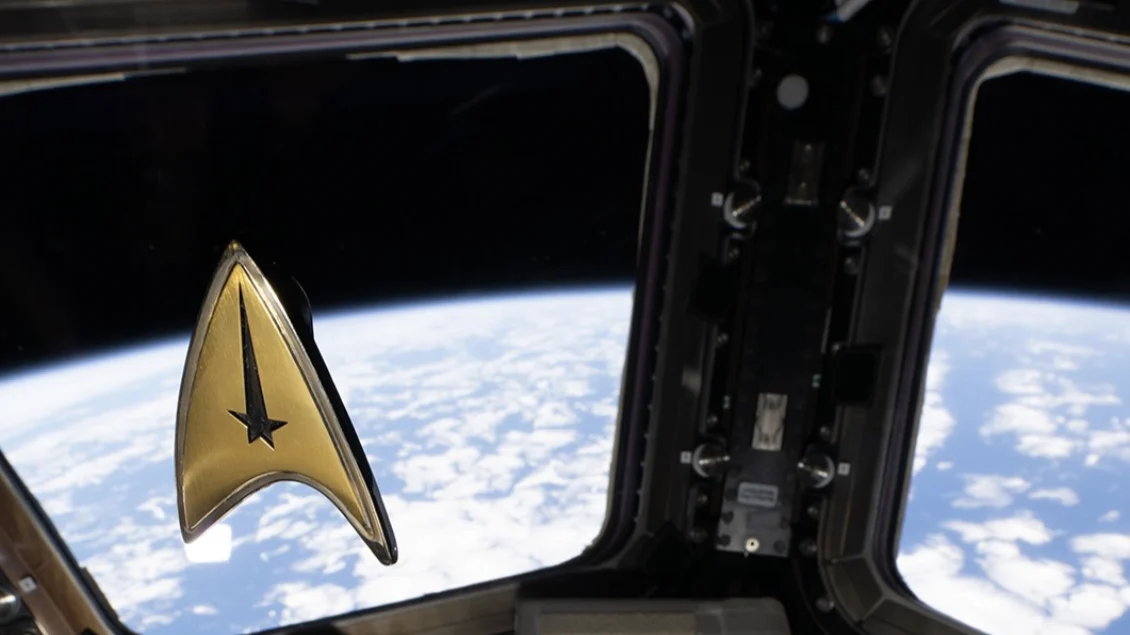
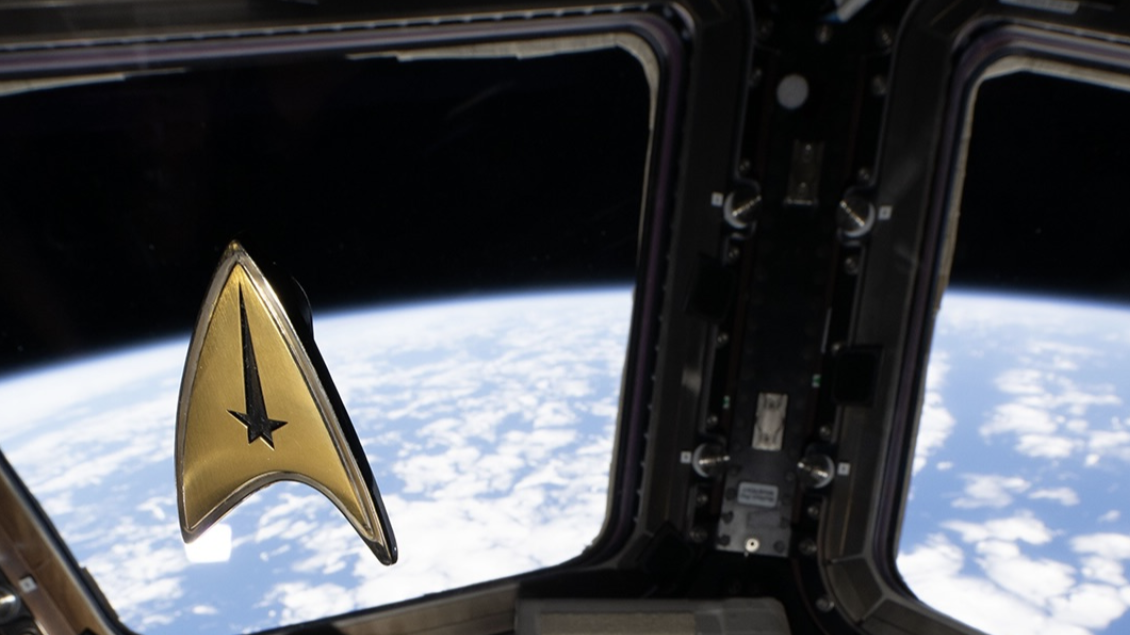
The intersection of science fiction and scientific reality merged in low Earth orbit as European Space Agency (ESA) astronaut Sophie Adenot commemorated the enduring legacy of the Star Trek franchise aboard the International Space Station (ISS). Floating inside the station’s European-built Columbus laboratory module, Adenot proudly wore a golden Starfleet delta badge—specifically styled after the modern series Star Trek: Strange New Worlds—to mark nearly six decades of cultural and inspirational impact.
The tribute, shared globally through joint digital campaigns by the ESA and the entertainment franchise, bridges the gap between decades of speculative fiction and the tangible, multinational cooperation required to maintain permanent human presence in space. For an orbiting laboratory that relies on the synchronized efforts of space agencies from the United States, Europe, Japan, Canada, and Russia, the core tenets of Gene Roddenberry’s visionary universe continue to serve as an authentic North Star for modern explorers.
A Historic Mission and Routine Operations
Adenot arrived at the International Space Station on February 13, following a launch aboard a SpaceX Falcon 9 rocket and Crew Dragon spacecraft. Liftoff from NASA’s Kennedy Space Center in Florida marked the commencement of NASA’s Crew-12 mission, integrating Adenot into the Expedition 75 flight engineer roster. Representing a new generation of European fliers, Adenot’s maiden voyage to space highlights the expanding role of international partners in commercial crew transportation architectures.
As a flight engineer, Adenot’s responsibilities extend far beyond commemorative video recordings. Her daily schedule encompasses complex biomedical experiments, maintenance of station life-support infrastructure, and Earth observation tasks designed to better understand terrestrial climate dynamics. Her tenure in space, however, is drawing to a close. Operational schedules dictate that the Crew-12 complement will soon hand over station duties to the incoming astronauts of NASA’s Crew-13 mission, an event anticipated within a matter of weeks, pending final clearance and launch windows.
The inclusion of the Starfleet badge in her personal payload allotment demonstrates the deeply personal connection many modern scientists, engineers, and astronauts maintain with space-themed media. Far from a mere novelty, the golden badge served as a visual anchor for a recorded message focusing on the shared philosophy of discovery.
The Intersection of Science Fiction and Aerospace Reality
The deployment of science fiction memorabilia in space is a storied tradition. Over the decades, artifacts ranging from toy models and authentic props to customized mission patches inspired by fictional starships have found their way into the cosmos. In 1976, NASA famously named its very first prototype space shuttle Enterprise following a massive letter-writing campaign organized by devoted fans of the original television series.
Gene Roddenberry, the creator of Star Trek, envisioned a future where humanity had moved past terrestrial conflicts, poverty, and systemic division, choosing instead to channel its collective intellectual and physical capital into the peaceful exploration of the universe. In a 1976 recorded philosophy album, Roddenberry articulated a foundational premise: maturity as a species requires not merely tolerating differences, but actively appreciating the diversity of thought and biology.
"If we cannot learn to actually enjoy those small differences—take a positive delight in those small differences between our own kind—here on this planet, then we do not deserve to go out into space and meet the diversity that is almost certainly out there," Roddenberry stated.
This ethos has frequently been cited by real-world aerospace professionals as a vital psychological motivator. The operational reality of the International Space Station—where international crews must communicate across language barriers, cultural divides, and geopolitical tensions—mirrors the collaborative spirit of the United Federation of Planets. When political relationships on Earth experience strain, operations aboard the ISS have historically remained a sanctuary of peaceful, cooperative scientific inquiry.
Broad Implications for Public Engagement and STEM
The acknowledgment of Star Trek’s 60th anniversary by an official space agency underscores a broader institutional strategy: leveraging popular culture to inspire the next generation of scientists, technologists, engineers, and mathematicians (STEM). Space agencies worldwide recognize that sustained public funding and political backing for deep-space exploration rely heavily on public enthusiasm.
Science fiction acts as a cultural vanguard, conditioning public imagination to accept ambitious technological goals as achievable realities. Concepts once relegated to television screens—such as tablet computers, voice-activated computer interfaces, wireless communication, and advanced medical imaging—have transitioned from fiction to everyday tools, driven largely by research and development investments catalyzed by the aerospace sector.
By drawing a direct line between the fictional USS Enterprise and the multi-national crew of the ISS, agencies like the ESA aim to democratize the narrative of space exploration. The message emphasizes that the future of humanity in space is not restricted to fictional captains and scripted television crews, but is actively being constructed by scientists, technicians, and international operators working in high-stress, high-consequence environments.
As Adenot prepares for her eventual return to Earth, the imagery of the Starfleet badge floating weightlessly against the backdrop of the planet serves as a reminder of the symbiotic relationship between what humans imagine and what they ultimately achieve. Sixty years after television audiences first heard the iconic monologue promising to "explore strange new worlds, to seek out new life and new civilizations," those words remain an accurate description of the daily work being performed 250 miles above the surface of the Earth.