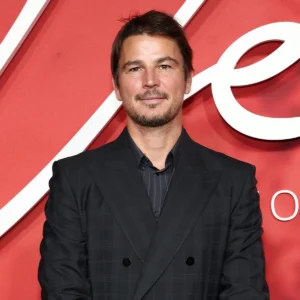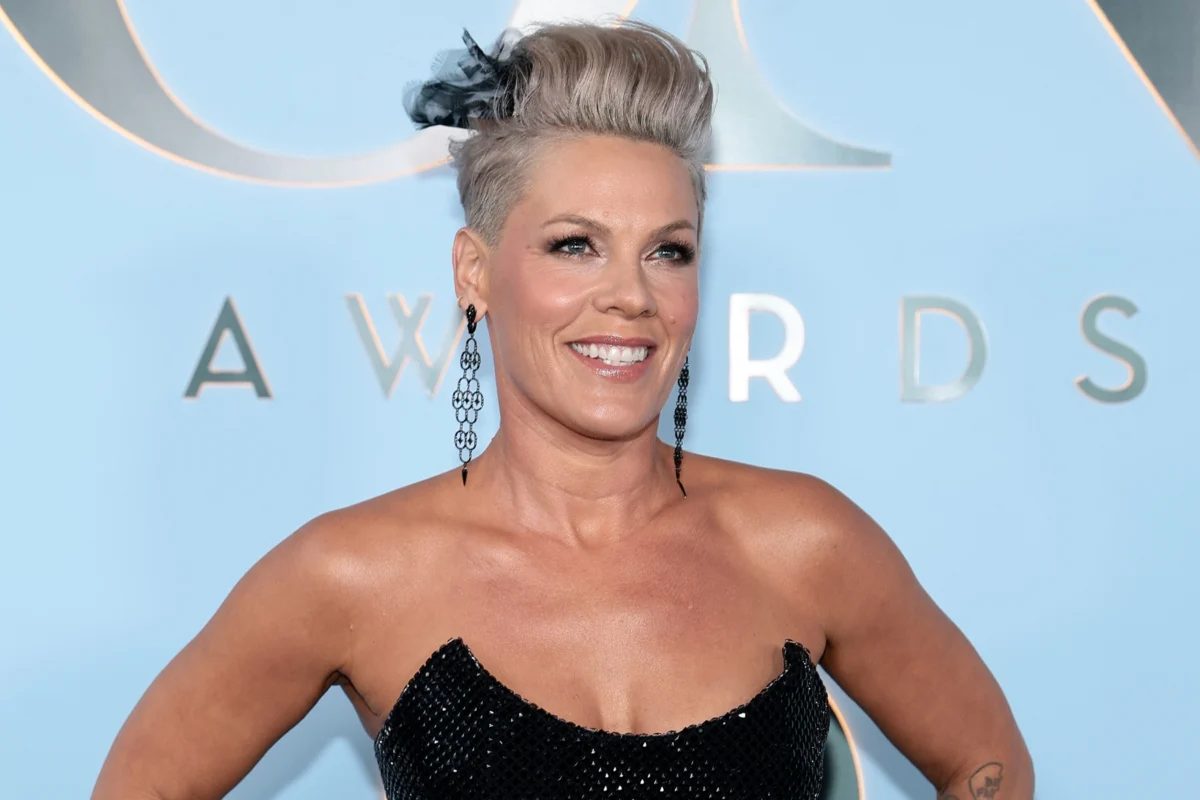
Pop star Pink has issued a formal, multi-part statement addressing the intense public scrutiny surrounding her reaction to Macklemore’s recent onstage advocacy for Palestine during his opening sets for Ed Sheeran’s ongoing international stadium tour. The controversy, which unfolded rapidly across social media platforms, centers on a sequence of events beginning at New Jersey’s MetLife Stadium on September 4 and 5, where the rapper utilized his platform to make explicit pro-Palestine remarks.
The situation escalated when Pink, a veteran of the music industry and a high-profile performer, shared a post from the organization StopAntisemitism, which characterized Macklemore’s comments as problematic and suggested that the rapper should be removed from the remainder of Ed Sheeran’s tour. This digital gesture triggered a wave of criticism from fans and observers, forcing the singer to take to Instagram on September 11 to clarify her position, her personal history as a Jewish woman, and her nuanced perspective on the geopolitical conflict currently unfolding in the Middle East.
Chronology of the Controversy
The tension originated during the early September dates of Ed Sheeran’s "Loop Tour" at MetLife Stadium. Macklemore, known for his socially conscious lyrics and outspoken political stances, used his opening slot to engage the audience in chants of "Free Palestine." These remarks were met with varying reactions from the crowd, but they drew immediate national attention when advocacy groups and celebrity figures weighed in on the appropriateness of such discourse during a large-scale music event.
Following the initial outcry, Pink’s repost served as a catalyst for a broader debate regarding celebrity responsibility and the intersection of entertainment and geopolitical activism. By sharing content that called for the removal of a fellow artist from a tour, Pink inadvertently stepped into the center of an ideological firestorm. Over the following week, the singer faced accusations of stifling speech and was scrutinized for her perceived alignment with specific political factions. Her subsequent statement on Instagram was designed to de-escalate the situation and provide context that, she argued, had been missing from the viral social media discourse.
Personal Reflection and The Nature of Online Discourse
In her detailed response, Pink acknowledged the limitations of social media as a medium for complex political discussion. She admitted that her initial repost was a reactive measure, fueled by personal frustration and an impulsive desire to respond to criticism of her character. "Social media makes all of us cheap and fast," she wrote, noting that a repost should not be interpreted as a fully formed political manifesto.
A significant portion of her statement was dedicated to addressing her identity as a Jewish woman. Pink emphasized that her reaction was not an attempt to silence the call for Palestinian liberation, but rather a visceral response to what she perceived as a disregard for the safety and feelings of Jewish attendees at the stadium. She drew a direct parallel to a 2014 incident involving Macklemore, in which the rapper wore a costume that was widely condemned as antisemitic. While noting that she had moved past that incident following his formal apology, she expressed that the recent stadium remarks felt to her like a dismissal of the Jewish experience within the context of the current war.
"I’m not asking for another artist to be silenced," she clarified. "What I need is to be able to say, as a Jewish mom, that scared me, and it scared people I love, without being told our fear is just propaganda."

Institutional Responses and Public Advocacy
The controversy has drawn the attention of various organizations, most notably the Israeli-American Council (IAC). Following the New Jersey shows, the IAC launched a formal petition requesting that concert promoters and the tour organizers remove Macklemore from the remaining eight stadium dates scheduled through early November. The council argued that the platform provided by the tour was being used to propagate inflammatory rhetoric that creates an unsafe environment for Jewish concertgoers.
Conversely, Macklemore has remained steadfast in his messaging. In a statement released via his official social media channels, he argued that the call for human equality and the liberation of Palestinians is a moral imperative that should not be viewed as controversial. By posting video footage of his performance alongside his statement, he reinforced his commitment to using his music and his stage time to highlight the humanitarian crisis in Gaza.
The Role of Celebrity in Geopolitical Conflict
The friction between Pink and Macklemore highlights a growing trend in the entertainment industry: the increasing pressure on high-profile artists to take definitive stands on global conflicts. As audiences become more politically active, the expectation for celebrities to act as moral authorities has shifted, often resulting in public clashes that mirror the broader political polarization seen in society.
From an analytical standpoint, this event underscores the volatility of "hashtag activism." When artists utilize a massive, non-political platform like a stadium tour for highly charged political statements, the response is rarely confined to the immediate audience. Instead, it ripples across social media, where nuances are frequently lost, and the intent of the speaker is often overshadowed by the interpretation of the audience.
Furthermore, Pink’s specific mention of her work as a UNICEF ambassador serves as a reminder of the long-standing tradition of celebrity humanitarianism. By highlighting her history of working with children in conflict zones, she attempted to broaden the scope of the conversation beyond the immediate controversy, aiming to reframe the debate around the protection of innocent life rather than the endorsement of government policies.
Broader Implications for Live Entertainment
The fallout from these events has potential implications for tour management and venue policies. As artists continue to navigate these sensitive waters, promoters may find themselves in the difficult position of balancing the contractual obligations of performers with the potential for public relations backlash. The "Free Palestine" discourse has already begun to influence the internal operations of entertainment agencies, which are increasingly tasked with managing the political output of their clients in a way that minimizes brand damage while respecting the right to artistic expression.
As the industry moves forward, the "Pink-Macklemore" episode stands as a case study in the risks and rewards of performative politics. It highlights the difficulty of navigating deeply ingrained trauma and geopolitical sensitivity in an era where every utterance is instantly recorded, analyzed, and critiqued. For the fans, the events of the past week have served as a stark reminder that the stage is not an apolitical space, and that the artists they support are subject to the same ideological fissures that define the wider global landscape.
Ultimately, as the tour continues, the focus remains on whether these artists can coexist in the same professional ecosystem while holding diametrically opposed views on how to express their political beliefs. While Pink has moved to clarify that she does not seek the silencing of her peers, the tension between the two remains a focal point for those interested in the intersection of pop culture and international relations. Whether this leads to a new standard for artist conduct or simply continues the current trend of reactive, platform-based conflict remains to be seen.