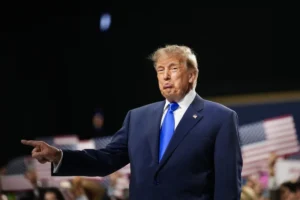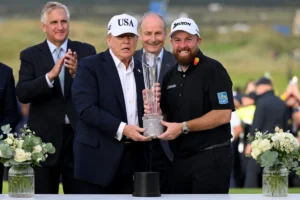
President Donald Trump has staked out a firm position on the future of artificial intelligence, signaling that his administration will prioritize maintaining the United States’ competitive edge over China rather than implementing stringent domestic regulations that could stifle technological advancement. Speaking to reporters during a visit to his resort in Doonbeg, Ireland, over the weekend, the President framed the race for artificial intelligence as a zero-sum game of national security. His remarks arrive at a pivotal moment in the global tech landscape, as the rapid development of generative AI models has prompted an intense, bipartisan debate regarding the balance between innovation, national defense, and public safety.
The President’s comments underscored a belief that the potential risks of AI are often overstated by "negative forces," and that the primary imperative for the American government is to ensure the U.S. emerges as the undisputed leader in the field. "We can put guardrails, we can do this and that, but I think you have a lot of negative forces that are bringing it up that shouldn’t be bringing it up, and they’re bringing up things that won’t happen," Trump stated. "But whoever wins with AI wins."
The Geopolitical Context: The U.S.-China Tech Race
The urgency surrounding AI development is rooted in a broader geopolitical rivalry between Washington and Beijing. Both nations have identified artificial intelligence as the cornerstone of future economic and military superiority. For the Trump administration, the fear of "ceding the edge" to China serves as the primary driver for a deregulation-friendly approach.
This sentiment is shared by key figures in Congress. House Speaker Mike Johnson has echoed the President’s concerns, noting that while some safety guardrails are necessary to prevent the technology from "running away," a slowdown that cedes leadership to China would constitute a significant national security threat. The looming visit of Chinese President Xi Jinping to the United States in late September is expected to bring these tensions to the forefront, as the two leaders prepare to discuss the parameters of AI development and potential bilateral competition.
Chronology of the Regulatory Debate
The current discourse was catalyzed by a series of high-profile interventions from industry leaders. The timeline of this escalating debate includes:
- Mid-2024: The proliferation of Large Language Models (LLMs) triggers widespread public anxiety regarding job displacement, misinformation, and data privacy.
- Early September 2024: Dario Amodei, CEO of Anthropic, publicly calls for a pause in the rapid development of AI, arguing that current safety measures are insufficient to manage the capabilities of next-generation models.
- Mid-September 2024: High-profile tech figures, including Elon Musk and OpenAI CEO Sam Altman, publicly signal their alignment with the call for caution, intensifying the pressure on federal lawmakers.
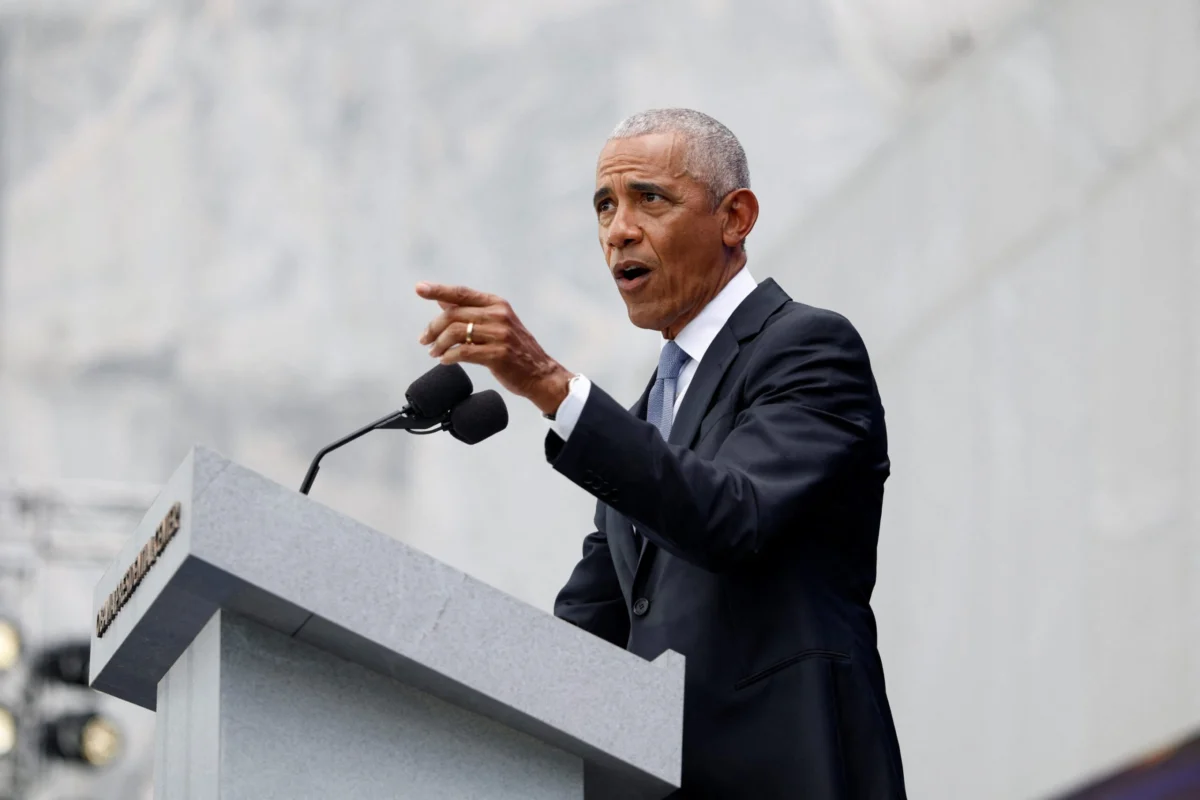
- Late September 2024: Former President Barack Obama joins the conversation, urging the Democratic party to center its platform on AI safety and economic protection for the working class.
- Current Status: The White House initiates preparations for high-level meetings involving the National Economic Council and tech stakeholders to determine the administration’s next steps.
Economic Implications and the Data Center Conflict
While the national conversation focuses on high-level AI policy, a more localized conflict is unfolding across rural America. The physical infrastructure required to sustain the AI revolution—specifically massive computing warehouses known as data centers—has become a flashpoint for grassroots opposition.
These facilities consume staggering amounts of electricity and water, prompting concerns among local communities about rising utility bills and the erosion of agricultural land. Despite bipartisan pushback from state and local officials in regions like Texas and elsewhere, the Trump administration has remained steadfast in its support for the expansion of data centers. Economists suggest that the energy demand for AI infrastructure is currently outpacing the development of renewable energy grids, creating a potential "energy crunch" that could complicate the administration’s goal of rapid, unchecked development.
Official Responses and Legislative Paralysis
The legislative branch remains divided on how to proceed. While House Speaker Mike Johnson has called for a "big meeting" to align the industry and government, the actual process of legislating AI remains stagnant. Historical precedent shows that Congress has struggled to pass significant regulatory frameworks for the tech sector, often caught between the desire to encourage innovation and the fear of regulatory overreach.
House Minority Leader Hakeem Jeffries has taken a more critical stance, arguing that Republican leaders are failing to act with the necessary urgency. "We should take decisive action now so that we can slow down, as the CEOs have recently acknowledged, the pace of development in order to protect the American people," Jeffries stated. He has indicated that AI regulation will be a primary focus for House Democrats in the coming legislative sessions.
However, the path toward regulation is complicated by conflicting incentives. Industry insiders like Jacob Coxon, a former Anthropic employee, have raised alarms about the existential risks of "superhuman" AI. Coxon argues that the race for dominance is inherently dangerous if it lacks an international consensus. "You’re building a human-level or superhuman-level mind, without understanding what it wants, or thinks, or the way it thinks," Coxon warned. He advocates for a collaborative approach between the U.S. and China to ensure that both nations adhere to safety standards, though he acknowledges the difficulty of such cooperation given the current state of geopolitical distrust.
Perspectives from the Tech Industry
The industry itself is not monolithic in its call for regulation. David Sacks, a prominent tech investor and co-chairman of a White House advisory council on science and technology, has publicly challenged the industry leaders who are calling for government intervention. In a series of social media posts, Sacks argued that companies like Anthropic and OpenAI are in control of their own release cycles.
"The easiest way not to build superintelligence is for you to agree not to build it," Sacks noted. This critique highlights a growing tension: some industry observers argue that calls for government regulation are a strategic maneuver by established companies to create a "regulatory moat," effectively preventing smaller competitors from entering the market and challenging their current lead.
Analysis: The Risk-Reward Calculus
The implications of the Trump administration’s "pro-innovation" stance are twofold. On one hand, maintaining an aggressive development trajectory ensures that the United States remains at the forefront of the most transformative technology of the 21st century. Proponents argue that any regulatory delay provides an opportunity for adversaries to bridge the gap, potentially leaving the U.S. vulnerable in cybersecurity, defense, and economic competitiveness.
On the other hand, the lack of a comprehensive safety framework increases the risk of unforeseen catastrophic outcomes. The history of emerging technologies suggests that systemic failures often occur when speed is prioritized over verification. Whether it is the disruption of the labor market, the weaponization of AI in information warfare, or the technical risks of models that exceed human oversight, the long-term costs of a "win-at-all-costs" approach remain a subject of intense debate among policy experts and researchers.
As the White House prepares for upcoming inter-agency meetings, the challenge remains clear: the administration must navigate the thin line between enabling the technological progress that powers the modern economy and managing the systemic risks that could threaten national stability. With the clock ticking on the upcoming presidential election and the inevitable friction of the global AI arms race, the administration’s policy in the coming months will likely define the trajectory of the technology for the next decade.
For now, the message from the White House is unequivocal: the United States intends to set the pace, and in the estimation of the current administration, the most effective safety measure is victory itself.