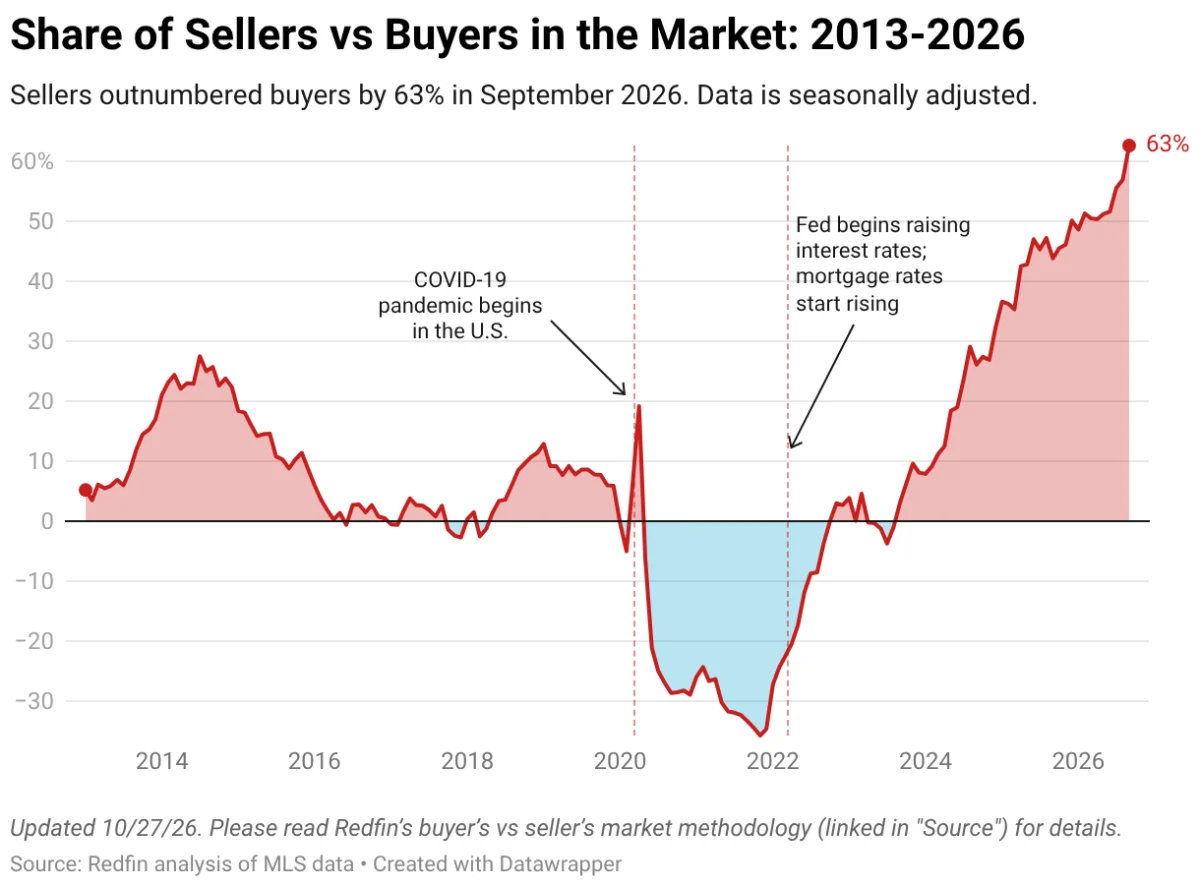
For homeowners contemplating a move, the autumn of 2026 presents a remarkably complex economic puzzle. Across the United States, the housing market continues to tip firmly in favor of buyers, driven by a growing surplus of inventory and a cooling pool of active purchasers. With typical monthly housing payments hovering above $2,600 and everyday living expenses elevated by persistent inflation, many potential buyers have elected to stay on the sidelines. These macroeconomic headwinds—compounded by volatile mortgage rates, geopolitical instability in the Middle East, and broader bond market anxieties—have transformed what was once a hyper-competitive seller’s paradise into a sluggish, highly selective marketplace.
As the year progresses toward its final quarter, prospective sellers are increasingly forced to weigh the immediate costs of a hesitant market against the prospect of holding out until 2027. Understanding the convergence of inventory levels, macroeconomic pressures, and regional real estate divergences is essential for anyone evaluating whether to list their property today or delay their real estate ambitions.
The Macroeconomic Backdrop and Market Volatility
The contemporary housing market does not exist in a vacuum; it is deeply intertwined with a volatile global and domestic economy. As of September 2026, the U.S. median home sale price sits at approximately $393,000, representing a modest year-over-year increase of just 1.3%. While this slower rate of price appreciation has theoretically allowed wage growth to catch up slightly—improving affordability on paper—the reality on the ground remains constrained by financing costs.
Mortgage rates have stubbornly remained above the 7% threshold since September, heavily influenced by external economic shocks. Analysts point to a confluence of factors keeping these rates elevated: rising energy costs stemming from Middle Eastern conflicts, renewed fears of domestic inflation, and escalating trade tariff discussions. Furthermore, labor market resilience and rapid advancements in artificial intelligence have injected layers of both optimism and uncertainty into broader financial markets, leaving the Federal Reserve with narrow margins for aggressive monetary easing.
According to Daryl Fairweather, Chief Economist at Redfin, sellers must brace themselves for a distinct buyer’s market. Elevated inventory levels mean that active buyers are greeted with an abundance of choices, yet record-high costs make them inherently cautious. Because affordability has improved only marginally over the past year, the buyers who are currently active in the market are well-prepared to lead hardline negotiations, demand seller concessions, and insist on fair, realistic pricing.
Supply, Demand, and the Geography of Real Estate
National averages tell only part of the story, as the 2026 housing landscape is characterized by stark regional divides. Nationwide, the inventory gap has widened significantly, with nearly 600,000 more home sellers than active buyers. This widening chasm has forced a growing number of sellers to adjust their expectations downward, resulting in asking prices dropping to their lowest levels in over a year across many major metropolitan areas.
However, this dynamic shifts dramatically depending on geography:
- The Sun Belt Expansion: Metropolitan areas across the South and Southwest continue to heavily favor buyers. Years of sustained new construction and a prolonged surge in housing developments have flooded these markets with supply, giving purchasers immense leverage.
- The Midwest and Northeast Shortages: Conversely, cities in the Midwest and Northeast—such as Rochester, New York, and Milwaukee, Wisconsin—face acute housing shortages. In these locales, demand severely outpaces local inventory, frequently resulting in competitive bidding wars, quick sales, and properties commanding top dollar despite national rate pressures.
For sellers navigating softer markets, the prolonged timeline of transactions is another vital consideration. The typical home now takes approximately 51 days to sell. While this duration represents a significant slowdown compared to the blistering pace of the 2020–2022 pandemic boom—when homes routinely sold in under a month—it remains noticeably faster than the 60-to-100-day listing periods that characterized much of the 2010s.
The Strategic Calculus: When to Sell and When to Wait
Deciding whether to list a property requires an objective assessment of both market fundamentals and personal financial imperatives. Real estate experts generally advise categorizing market timing based on specific indicators.
Favorable Conditions for Selling
Homeowners are most likely to experience a smooth, lucrative transaction under specific circumstances:
- Low Local Inventory: If a property is located in a region where housing supply remains tight, sellers can leverage high demand to command competitive prices and favorable contract terms.
- Anticipated Rate Reductions: Should macroeconomic pressures ease and mortgage rates experience a sustained drop, a sudden influx of sidelined buyers is expected to return to the market, driving up competition and offer strength.
- Compelling Personal Circumstances: Life events—such as family expansion, mandatory employment relocation, or the necessity of downsizing—often override macro-level market conditions. For those who must move, timing the market takes a back seat to executing a clean, strategic transaction.
Conditions Favoring a Delay
Conversely, certain market markers suggest that homeowners might be better served by waiting:
- High Financing Barriers: When mortgage rates remain elevated, buyer purchasing power is severely compressed. Sellers unwilling or unable to reduce their asking prices or offer valuable concessions may find their properties lingering on the market as "stale inventory."
- Recent Refinancing Constraints: Homeowners who locked in historic low rates prior to 2022 and subsequently refinanced may find that selling now and purchasing a new property at current rates erodes their long-term financial positioning.
- Deferred Maintenance: In a discerning buyer’s market, properties requiring extensive structural or cosmetic repairs face steep penalties. Homes with significant deferred maintenance often attract lowball offers or fail to sell entirely until updates are completed.
Expert Analysis and Industry Implications
The broader implications of the 2026 market point toward a prolonged period of recalibration. Chen Zhao, Head of Economics Research at Redfin, notes that unless residential construction plummets or the broader economy enters a severe recession, buyer activity and overall affordability are unlikely to experience radical improvements in the near term. The unpredictable trajectory of inflation, energy markets, and technological shifts like AI ensures that economic volatility will remain a constant variable for the foreseeable future.
For prospective sellers, attempting to time the market to absolute perfection is rarely a winning strategy. Historical data consistently indicates that while the spring season—specifically late April—traditionally yields the fastest sales and highest returns, personal readiness remains paramount. Waiting out the market until 2027 carries no guarantee of a vastly improved economic climate, as lingering structural supply deficits and monetary policy adjustments will continue to shape the landscape.
Ultimately, successful navigation of the current real estate environment depends on realistic pricing strategies, flexibility regarding buyer concessions, and close collaboration with experienced real estate professionals. Sellers who approach the market with a pragmatic mindset, backed by sound financial preparation, are best positioned to achieve their real estate goals regardless of broader economic turbulence.