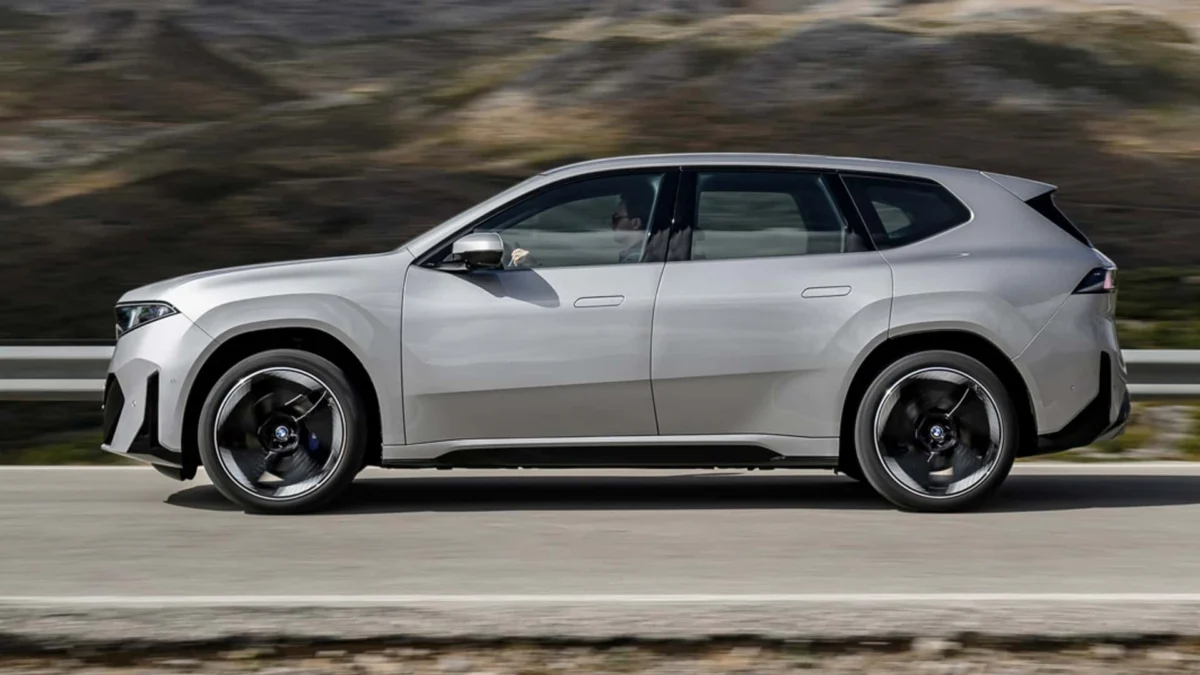
BMW has officially announced a new financial incentive program aimed at accelerating the adoption of its 2027 electric vehicle lineup. Prospective owners and lessees of the i5, i7, and iX3 models will receive $500 in public charging credits, a strategic move designed to mitigate concerns regarding charging infrastructure accessibility and cost-of-ownership for high-end electric vehicles. This initiative underscores BMW’s broader commitment to its "Neue Klasse" strategy, which seeks to redefine the company’s EV architecture, performance metrics, and digital user experience as it navigates a rapidly shifting global automotive landscape.
The credit program, which remains valid for one year from the vehicle’s initial date of purchase or lease, provides a structured approach to public charging. Of the $500 total, $300 is available for use across an expansive ecosystem of more than 15 established charging networks, including major industry players such as Shell Recharge, ChargePoint, and EVgo. The remaining $200 of the credit is exclusively reserved for the Ionna charging network—a joint venture in which BMW is a key stakeholder. In addition to the monetary credits, the automaker is bundling a one-year complimentary membership to Ionna, granting users a 25 percent discount on charging sessions at all locations within that specific network. To utilize these benefits, customers are required to register through the official BMW mobile application and manage their payments via the BMW ChargingNetwork platform, ensuring a seamless, integrated digital experience.
The Strategic Context of the Neue Klasse Architecture
The introduction of these incentives coincides with the rollout of BMW’s "Neue Klasse" platform, a fundamental architectural pivot for the German manufacturer. While the BMW i5 has established itself as a reliable, high-performance electric sedan offering over 300 miles of range, the brand is positioning the newer i7 and iX3 models as the vanguard of its technological evolution.
The Neue Klasse platform represents more than just a chassis; it is an overhaul of the vehicle’s digital core. These models feature the "Panoramic Vision" display—a high-definition interface positioned at the base of the windshield designed to minimize driver distraction while maximizing data accessibility. Beyond aesthetics, the technical specifications of these next-generation vehicles represent a significant leap in efficiency. The iX3, for instance, is projected to deliver over 400 miles of range and support charging speeds of up to 400 kilowatts, effectively addressing the "range anxiety" that has historically acted as a primary barrier to mainstream EV adoption. By providing charging credits, BMW is essentially subsidizing the "fueling" process while these high-tech vehicles prove their real-world capabilities to consumers.
Chronology of BMW’s Electrification Efforts
BMW’s journey toward full electrification has been characterized by a transition from modifying internal combustion engine platforms to creating dedicated electric vehicle architectures.
- 2013: Launch of the i3, marking the company’s first foray into mass-market electric vehicles.
- 2020–2022: The expansion of the "i" sub-brand with the introduction of the iX and the i4, utilizing a shared platform approach to balance development costs.
- 2023: Initial previews of the Neue Klasse concepts, signaling the move toward a flexible, software-defined vehicle architecture.
- 2024: Strengthening of infrastructure partnerships, most notably through the formation and capitalization of the Ionna joint venture.
- 2025–2027: The formal rollout of the 2027 model year fleet, accompanied by the current $500 incentive package designed to bolster consumer confidence in the public charging ecosystem.
This timeline demonstrates a methodical transition. By investing in its own charging infrastructure through the Ionna joint venture—a project involving several major automakers—BMW is attempting to solve the fragmentation problem that plagues the current public charging landscape.
Industry Analysis: Infrastructure and Economic Implications
The decision to offer charging credits is not merely a marketing tactic; it is an economic necessity in the current automotive climate. As EV adoption rates begin to stabilize after a period of rapid growth, manufacturers are increasingly competing on the quality of the "ecosystem" rather than just the vehicle’s hardware.
Public charging reliability remains a critical pain point for consumers. By partnering with established networks like ChargePoint and EVgo, BMW is leveraging existing infrastructure to ensure its customers have reliable access to energy. However, the specific allocation of $200 toward the Ionna network indicates a long-term goal to steer users toward a more controlled and potentially more reliable charging experience.
From an economic perspective, the $500 credit acts as a "soft discount" on the total cost of ownership. While luxury EV buyers are typically less price-sensitive than those in the mass market, the psychological impact of "free fuel" for a year can be a decisive factor in the showroom. Furthermore, the 25 percent discount provided through the Ionna membership encourages repeat usage of specific charging sites, providing the network with the necessary utilization rates to remain financially sustainable.
The Broader Impact on the Automotive Market
The shift toward the Neue Klasse platform and the accompanying charging incentives signal that BMW is preparing for a future where vehicle differentiation is defined by software and charging speed. As competitors such as Tesla continue to influence the market with the North American Charging Standard (NACS) and proprietary Supercharger networks, BMW’s investment in a multi-network credit system is a defensive move intended to keep its customers within its digital orbit.
Industry experts observe that the inclusion of advanced features like 400-kilowatt charging in the upcoming iX3 model is a direct challenge to current industry benchmarks. If these capabilities are successfully integrated across the entire lineup, as BMW intends, the brand could significantly reduce the time spent at charging stations, effectively narrowing the gap between refueling an internal combustion vehicle and charging an EV.
Moreover, the emphasis on a unified app experience for managing these credits highlights the increasing importance of the "connected car." By centralizing the payment, credit management, and membership status within the BMW app, the company is capturing valuable user data, which will likely inform future charging infrastructure investments and software updates.
Conclusion and Future Outlook
BMW’s latest move is indicative of a broader industry trend where the vehicle is no longer a standalone product but a component of a larger mobility service. By combining hardware advancements in the Neue Klasse platform with tangible financial incentives for charging, the company is addressing both the functional and the psychological aspects of the electric transition.
As 2027 approaches, the success of this program will depend largely on the density and reliability of the charging networks involved, particularly the growth trajectory of the Ionna network. Should the performance of the Neue Klasse models meet the high expectations set by their technical specifications, BMW will likely find itself in a strong position to maintain its luxury market share in an increasingly electric future. For the consumer, the program represents a low-risk entry point into a high-performance EV experience, effectively lowering the barrier to entry while the global charging infrastructure continues to mature.
The automotive landscape is undergoing its most significant transformation in a century. Through its strategic integration of performance, technology, and service-based incentives, BMW is demonstrating that it is not merely reacting to the electric shift, but actively shaping the ecosystem in which its future vehicles will operate. As these models enter the market, the automotive industry will be watching closely to see if this blend of hardware innovation and ecosystem support becomes the new standard for premium electric mobility.