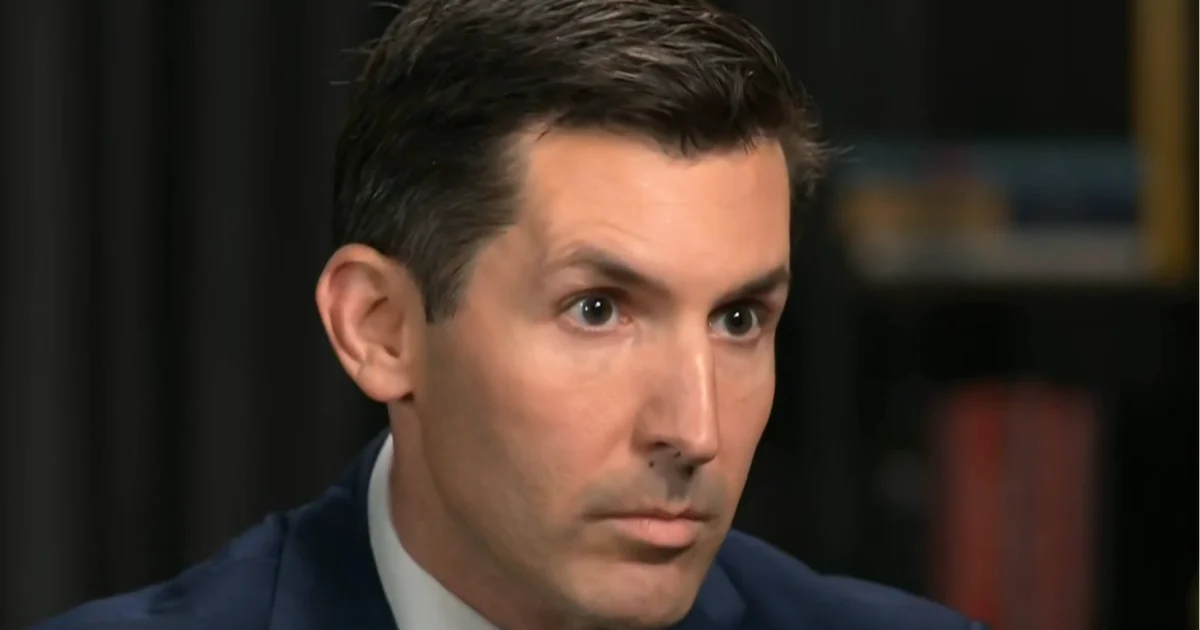
WASHINGTON — In the wake of a resounding Republican defeat in the midterm elections and the high-profile departure of White House Chief of Staff Susie Wiles, former senior health adviser Calley Means sat down for a wide-ranging, contentious interview on Face the Nation with Margaret Brennan. Means, a prominent figure in the Make America Healthy Again (MAHA) movement closely aligned with Health and Human Services (HHS) Secretary Robert F. Kennedy Jr., used the platform to level direct accusations of political corruption, corporate capture, and the systematic obstruction of popular public health reforms from within the highest tiers of the federal government.
The interview illuminated deep internal fractures within the Trump administration, offering a rare glimpse into the policy battles fought behind closed doors over issues ranging from ultra-processed foods and chemical regulation to e-cigarettes and pharmaceutical pricing.
The Power Struggle and White House Shakeup
The timing of Wiles’ departure from the White House has intensified scrutiny over the direction of the administration’s second term. Means did not mince words when asked if his public whistleblowing campaign, which included recent appearances on popular digital platforms like Joe Rogan’s podcast, was intended to force a leadership change.
"Yes," Means stated plainly. He argued that President Donald Trump’s core agenda had been subverted by advisers beholden to special interests rather than the voters who elected him. According to Means, a tight-knit circle of political operatives—including Richard Walters, Walker Barrett, James Blair, and pollster Tony Fabrizio—wielded disproportionate control over policy by evaluating legislative and executive initiatives through the lens of midterm fundraising and political expediency.
Means accused these officials of catering directly to the pharmaceutical, ultra-processed food, pesticide, and vaping industries while sidelining policies with overwhelming public support, such as a federal definition for ultra-processed foods.
The allegations drew immediate pushback and formal denials from several named individuals. Wiles defended her tenure to CBS News, stating that President Trump "did more for MAHA than any president before or likely any president in the future." Meanwhile, Tony Fabrizio released a statement calling the allegations that he is in the pocket of big pharma "not only ridiculous, but demonstrably false," pointing out that he has encouraged Republican lawmakers to campaign on issues that challenge pharmaceutical bottom lines.
Chronology of Conflict: The MAHA Agenda Versus Special Interests
The clash between public health advocates and corporate lobbyists has defined much of the internal debate surrounding the MAHA initiative. Means highlighted several key policy battles that illustrate how corporate lobbying allegedly stalled the administration’s reform efforts:
- Ultra-Processed Foods: Means spearheaded an interagency push to establish a formal federal definition for ultra-processed foods, noting that roughly 70 percent of an American child’s diet consists of such items. Despite securing support from agencies like the USDA and major health organizations, Means claimed the policy was shelved at the eleventh hour following a barrage of industry lobbying directed at Wiles’ office.
- The Vaping and Nicotine Debate: Former FDA Commissioner Dr. Marty Makary resigned in May 2026, a departure attributed by associates to intense pressure from tobacco companies seeking favorable regulatory pathways for fruit-flavored e-cigarettes. Means alleged that political strategists prioritized these policies to secure campaign donations, citing a $5 million contribution from an affiliate of Reynolds American to a pro-Trump political action committee shortly before a new tobacco policy was rolled out. James Blair defended his role to CBS News, stating he was simply working to ensure the FDA processed nicotine delivery device applications in accordance with federal law timelines.
- Glyphosate and EPA Oversight: Means criticized administration actions concerning glyphosate, the cancer-linked herbicide manufactured by Bayer. He asserted that a brief submitted by the Department of Justice to the Supreme Court—urging the court to hear a case that would grant liability protection to the chemical’s manufacturer—was orchestrated by officials without the knowledge or consent of Secretary Kennedy or President Trump.
Lobbying Revelations and Financial Scrutiny
The interview also touched upon the staggering revenue growth of lobbying firms connected to administration insiders. Public records under the Lobbying Disclosure Act show that Continental Strategy, a firm employing Katie Wiles, saw its revenue surge from $1.8 million in 2024 to $27.3 million in 2025. Additionally, LegiStorm tracking data revealed that Ballard Partners brought in nearly $82 million in lobbying revenue last year, setting a single-year record for a federal lobbying firm.
Means argued that these financial trajectories are evidence of a system where corporate money routinely supersedes voter mandates. However, Means himself faced pointed questions from Brennan regarding his own past financial holdings. Congressional Democrats have raised ethical concerns over Means’ former ownership of between $25 million and $50 million in stock in Truemed, a company focused on directing medical spending toward exercise and healthy food.
Means defended his record, stating that he fully divested his holdings when he transitioned from a special government employee to a permanent White House staffer, and dismissed accusations of illegal activity from congressional critics as partisan posturing.
A New Chapter: Elevating Stephen Miller and Reaching Across the Aisle
Despite the turbulent policy fights of the past two years, Means expressed optimism about the future of the administration following the elevation of Stephen Miller. Describing Miller as uniquely knowledgeable about the corporate capture of healthcare institutions, Means suggested that the administration is pivoting back to an "America First" policy process focused on structural reform.
In a surprising pivot, Means advocated for bipartisan cooperation, arguing that the core tenets of the MAHA movement—lowering healthcare costs, combating chronic disease, and taking on entrenched corporate lobbies—are fundamentally nonpartisan. He pointed to figures like Senator Bernie Sanders, Senator-elect Abdul El-Sayed, and Senator Elizabeth Warren as potential partners for achieving legislative wins on drug pricing, food labeling, and environmental safety.
"The next two years are going to be the most consequential two years in American history," Means said, emphasizing that the underlying crisis facing the nation is not partisan division, but institutional corruption that spans decades and multiple administrations.
Broader Implications and Public Trust in Health Institutions
As the new Congress prepares to take office amid a backdrop of voter skepticism—highlighted by exit polls indicating widespread public concern over health policies and vaccine access—the path forward for federal health agencies remains complex.
While administration allies point to unprecedented cultural momentum regarding diet, nutrition, and corporate accountability, critics and congressional lawmakers continue to demand rigorous oversight regarding regulatory decisions at the FDA and EPA. Whether the administration can successfully bridge the gap between its populist health messaging and the realities of Washington policymaking will likely remain a central political battleground as the nation looks toward the 2028 election cycle.