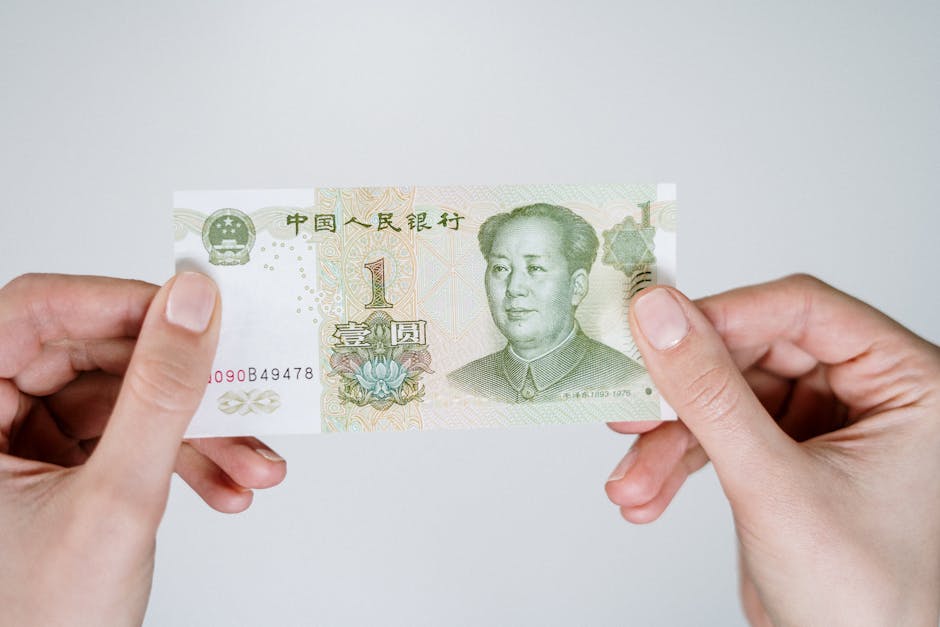
China’s Yuan Slips to 2-Year Low vs. Peers After Trump-Xi Call Leaves Issues Unresolved
The Chinese yuan (CNY) has experienced a notable depreciation, hitting a two-year low against a basket of major trading partners’ currencies. This decline is directly attributable to the lingering uncertainties following a recent call between Chinese President Xi Jinping and U.S. President Donald Trump. While the conversation aimed to de-escalate escalating trade tensions, it ultimately left key outstanding issues unresolved, dampening investor sentiment and prompting a reassessment of China’s economic outlook and its currency’s value. The yuan’s weakening trajectory reflects a broader trend of currency adjustments in emerging markets facing trade disputes and a generally uncertain global economic environment.
The immediate catalyst for the yuan’s slip can be traced to the market’s interpretation of the Trump-Xi call. While both leaders expressed a desire to find a path forward, the lack of concrete breakthroughs on critical trade irritants, such as intellectual property theft, forced technology transfers, and market access, has left a void filled with speculation and apprehension. Investors, particularly those with significant exposure to Chinese assets, view these unresolved issues as persistent headwinds that could continue to weigh on China’s export-oriented economy. A weaker yuan can, in theory, make Chinese exports cheaper for foreign buyers, thereby providing a potential competitive advantage in the global marketplace. However, this benefit is often offset by the negative implications of capital flight, increased import costs, and a general erosion of confidence in the long-term stability of the Chinese economy. The People’s Bank of China (PBOC) has historically managed the yuan’s exchange rate with a degree of intervention, seeking to maintain stability and prevent sharp depreciations or appreciations that could disrupt economic growth. The current depreciation, however, appears to be at least partially tolerated, if not subtly encouraged, as a means to buffer the impact of tariffs and trade friction.
The impact of the Trump-Xi call on the yuan’s valuation is multi-faceted. Firstly, the lack of a definitive trade deal or a clear roadmap towards one emboldens the perception of ongoing trade warfare. This uncertainty creates a risk premium for Chinese assets, including the yuan. Foreign investors, often risk-averse, tend to pull capital out of economies perceived as having higher risks, leading to selling pressure on the yuan. Secondly, the call’s outcome has likely influenced expectations regarding future trade policy. If the U.S. administration signals a continued commitment to aggressive trade tactics, the pressure on China to devalue its currency to remain competitive will persist. This creates a self-fulfilling prophecy, where anticipation of further depreciation leads to actual selling of the yuan. Thirdly, the yuan’s performance is not solely determined by its direct bilateral relationship with the U.S. dollar. It is also influenced by its basket of trading partners’ currencies, as indicated by the yuan hitting a two-year low against a broader peer group. This suggests that other major economies are also experiencing currency movements influenced by their own trade dynamics and global economic sentiment, and the yuan’s depreciation is occurring within this wider context.
From a macroeconomic perspective, the yuan’s depreciation can be viewed through the lens of China’s broader economic strategy. In the face of external pressures, a weaker currency can serve as an automatic stabilizer. It can help to offset the negative impact of tariffs by making Chinese goods more affordable abroad, thereby supporting export volumes. This can be crucial for an economy that relies heavily on exports for growth and employment. However, this strategy is not without its risks. A sustained and sharp depreciation of the yuan could trigger concerns about a currency war, leading to retaliatory devaluations by other countries and further exacerbating global trade tensions. Moreover, a weaker yuan increases the cost of imports for Chinese consumers and businesses, potentially leading to higher inflation and reduced purchasing power. For companies that rely on imported raw materials or components, a weaker yuan translates to higher production costs, which can erode profit margins.
The PBOC’s role in managing the yuan’s exchange rate is critical in this environment. While the central bank has shown a willingness to allow for greater flexibility in the yuan’s movements, it also aims to prevent excessive volatility. The current depreciation suggests that the PBOC is allowing the market forces, driven by trade uncertainties, to exert their influence, but likely with an eye on preventing any disorderly decline. The central bank may intervene in the foreign exchange market if it deems the depreciation to be too rapid or detrimental to financial stability. The tools at its disposal include direct intervention, adjusting reserve requirements for banks, and influencing interest rates. The market will closely monitor the PBOC’s actions and pronouncements for clues about its future policy direction regarding the yuan.
The implications of a weaker yuan extend beyond trade. For foreign direct investment (FDI) in China, a depreciating currency can make existing investments less attractive in dollar terms. However, it can also make new investments in China relatively cheaper for foreign companies, potentially attracting capital if the underlying economic fundamentals remain strong. Conversely, for Chinese companies looking to invest abroad, a weaker yuan makes overseas acquisitions and investments more expensive. This can impact China’s outward investment flows and its global expansion plans.
The broader global economic context also plays a significant role. Many emerging market currencies have been under pressure due to similar factors, including trade protectionism, rising global interest rates, and slowing global growth. The yuan’s depreciation, therefore, is not an isolated event but part of a larger trend. However, China’s sheer size and its central role in global supply chains mean that its currency movements have a disproportionate impact on the world economy. Any significant and prolonged weakening of the yuan could have ripple effects across various economies, influencing commodity prices, inflation rates, and investment flows globally.
Looking ahead, the trajectory of the yuan will be heavily influenced by the ongoing trade negotiations between China and the United States. Any positive developments, such as a meaningful de-escalation of trade tensions or a concrete trade agreement, could lead to a strengthening of the yuan. Conversely, continued hostility and further imposition of tariffs would likely exert downward pressure on the currency. Investor sentiment will remain a key driver, with confidence in China’s economic resilience and its ability to navigate trade challenges being paramount. Furthermore, domestic economic factors within China, such as its GDP growth, inflation rate, and monetary policy stance, will also play a crucial role in determining the yuan’s value. The market will be intently watching for any signals from the PBOC regarding its tolerance for further depreciation and its commitment to currency stability. The current slip to a two-year low serves as a clear indicator that the unresolved issues from the Trump-Xi call have created a climate of uncertainty that is directly impacting the value of China’s currency.
The sustained pressure on the yuan also raises questions about China’s long-term economic model. As the country seeks to transition towards a more consumption-driven economy, an over-reliance on currency devaluation to boost exports might be seen as a short-term fix that hinders the broader strategic goals. The international community will be observing whether China can successfully rebalance its economy and reduce its dependence on export-led growth, especially in the face of increasing global trade protectionism. The yuan’s performance is thus a barometer not only of the immediate trade situation but also of China’s broader economic adaptation and its role in the global economic order. The market’s reaction following the Trump-Xi call underscores the interconnectedness of geopolitical developments and currency markets, highlighting how unresolved bilateral issues can translate into tangible economic consequences.
