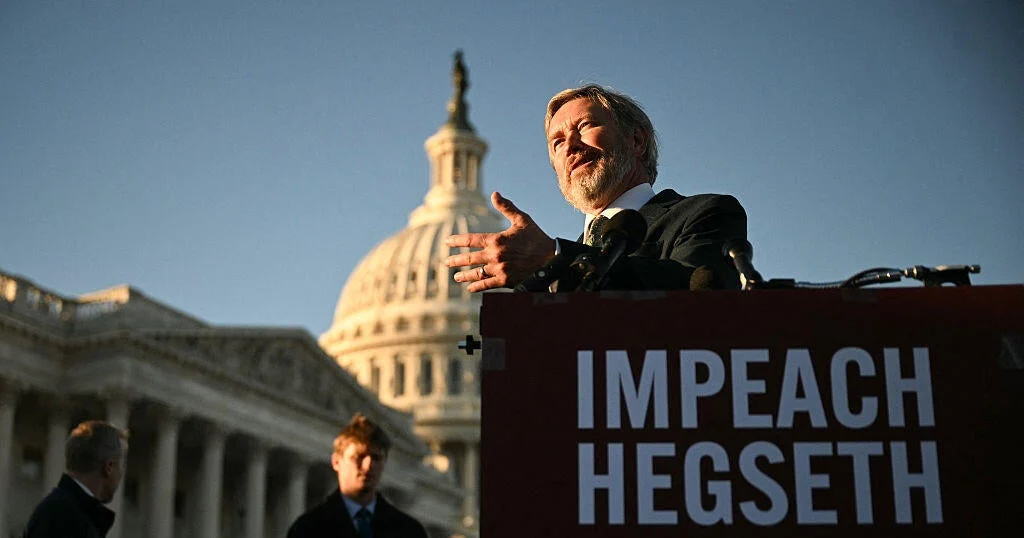
WASHINGTON — Defense Secretary Pete Hegseth is facing an unprecedented legislative battle following the official introduction of updated articles of impeachment by Representative Thomas Massie, a Republican from Kentucky. The sweeping 34-page resolution, which outlines eight distinct articles, accuses Hegseth of high crimes and misdemeanors, most notably waging an unauthorized war against Iran and abusing the institutional powers of the Department of Defense.
The parliamentary maneuver sets the stage for a dramatic floor vote. Under House rules, Massie’s privileged resolution forces congressional leadership to bring the matter up for a vote within two legislative days. As lawmakers return to Capitol Hill for the final weeks of a lame-duck session, the unfolding constitutional showdown threatens to deepen fractures within the Republican caucus, test the limits of executive military authority, and cast a long shadow over the administration’s foreign policy agenda.
Chronology of the Impeachment Push
The path toward the current legislative crisis has been steadily developing over several months, marked by escalating friction between the legislative and executive branches over military operations abroad.
- Early 2026: Military engagements escalate, including controversial operations in the Caribbean, the capture of Venezuelan President Nicolas Maduro, and a deadly strike on an Iranian school that draws intense domestic and international scrutiny regarding civilian casualties.
- September 2026: Representative Massie first introduces preliminary articles of impeachment against Defense Secretary Hegseth, citing unauthorized military actions. To avert an immediate intra-party clash, House Republican leadership abruptly recesses the chamber, effectively deferring a floor vote until after the midterm elections.
- November 2026: Midterm elections conclude with significant setbacks for the ruling Republican majority. Voters heavily penalize the party at the ballot box, with public opinion polls highlighting deep dissatisfaction concerning the ongoing conflict with Iran and its inflationary impact on the cost of living.
- Monday, November 9, 2026: Lawmakers return to Washington for the lame-duck session. Massie formally introduces revised and updated articles of impeachment on the House floor, successfully restarting the mandatory two-day clock for leadership to schedule a definitive vote. Defense Secretary Hegseth dismisses the move as "political theater" orchestrated by a defeated lawmaker and allied Democrats, while announcing plans to hold a dedicated press conference.
Substantive Allegations Within the Resolution
The resolution spearheaded by Massie is comprehensive, dividing the eight formal charges into distinct categories of alleged executive overreach, disregard for international norms, and suppression of internal military dissent.
Three of the central articles focus on the Department of Defense’s military campaign against Iran. Massie contends that these offensive operations were initiated and executed in direct violation of Article I, Section 8 of the United States Constitution, which grants Congress the sole power to declare war. The articles further allege that Hegseth willfully ignored established protocols and laws designed to minimize non-combatant casualties, specifically pointing to the controversial airstrike on an Iranian educational facility earlier in the year.
Beyond the Middle East, the resolution targets kinetic actions closer to home. It highlights Pentagon-directed boat strikes in the Caribbean Sea and the high-profile capture of Venezuelan President Nicolas Maduro, arguing both actions lacked clear statutory backing or proper congressional oversight.
Perhaps most notably, one of the articles centers on First Amendment protections and internal Pentagon discipline. The charge details administrative scrutiny directed at Senator Mark Kelly after he and several other lawmakers released a public video advising active-duty service members to "refuse illegal orders." Massie argues that targeting lawmakers and service members for engaging in protected political speech constitutes a gross abuse of executive authority.
Defense Secretary Response and Administration Defiance
Defense Secretary Hegseth has forcefully rejected the legitimacy of the impeachment proceedings, framing the effort as a partisan vendetta driven by disgruntled political actors. In a video statement shared on social media, Hegseth did not mince words regarding his critics.
"A disgruntled, defeated congressman, along with all his Democrat allies, has also dropped sham articles of impeachment against yours truly, just like they tried against President Trump twice," Hegseth stated. He accused proponents of the resolution of engaging in the "politics of personal destruction" because their broader policy initiatives failed to resonate with the public.
Speaking to reporters on Capitol Hill, Hegseth maintained a posture of nonchalance, declaring, "We’re not worried about that." Allies of the defense secretary have similarly argued that launching impeachment proceedings during an active military conflict undermines national security and sends a fractured message to adversaries abroad.
Republican Lawmakers Divided Amid Post-Midterm Realities
The impeachment push has exposed deep ideological and strategic divisions within the Republican Party, particularly in the wake of bruising midterm losses that left the GOP grappling with its future direction.
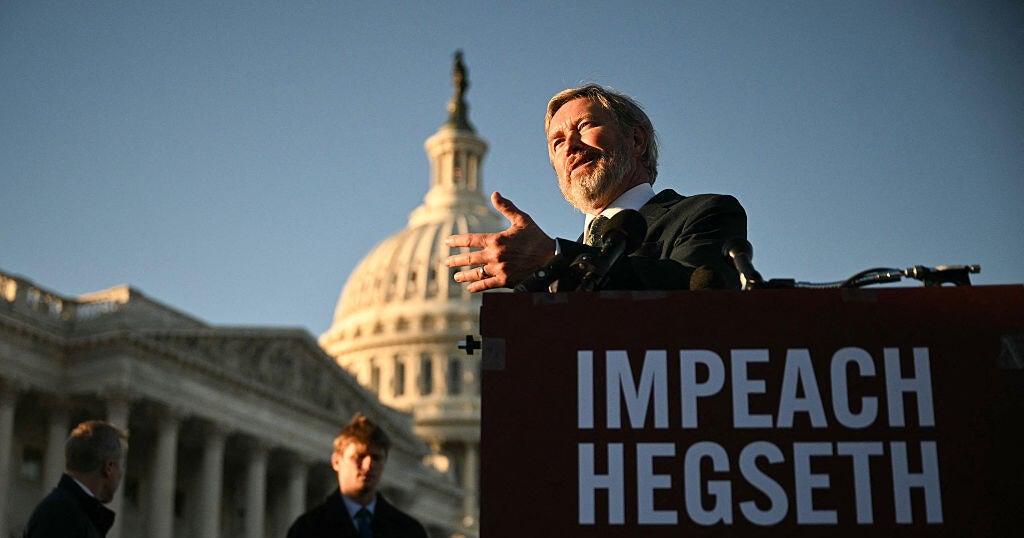
House Speaker Mike Johnson expressed strong opposition to the timing and premise of the vote, asserting that pursuing the impeachment of a sitting Cabinet secretary amid foreign hostilities "would be a terrible, terrible look" for the party.
However, rank-and-file Republicans have displayed a notable spectrum of reactions, reflecting genuine voter anxiety over the administration’s foreign entanglements. Representative James Comer, chairman of the House Oversight Committee, acknowledged the growing unease among constituents.
"We have no idea what the strategy is moving forward in Iran. No one’s happy about Iran," Comer noted in a recent media appearance, suggesting that Republican voters are increasingly frustrated with the administration’s Middle East posture.
Other members remain hesitant. Representative French Hill of Arkansas indicated he was carefully weighing the debate, drawing a distinction between policy disagreements and impeachable conduct. "If you don’t think he’s done a good job conducting his job, that doesn’t mean per se that he’s committed an impeachable offense," Hill remarked.
Similarly, retiring Representative Don Bacon of Nebraska admitted he was "wrestling" with the decision, noting that while Hegseth’s administrative style and handling of military policy trouble him, the constitutional threshold for a high crime or misdemeanor remains high.
Democratic Position and Broader Legislative Implications
While House Democrats are overwhelmingly expected to vote in favor of the resolution—with House Minority Leader Hakeem Jeffries declaring himself a "hard yes"—the narrow GOP majority means the ultimate fate of the resolution hinges entirely on Republican defections.
Massie has cautioned his colleagues against viewing the vote through a purely political lens of whether they support or oppose the Iran conflict. Instead, he maintains that the fundamental question is whether Hegseth committed impeachable offenses under the Constitution.
Furthermore, Massie highlighted the strategic timeline facing the current Congress. If the Republican-controlled House passes the resolution, the measure would move to the Senate. Because impeachment articles survive across congressional sessions, any unresolved trial would automatically carry over into the next Congress, where incoming Democratic majorities in the upper chamber would assume control of the proceedings.
Massie warned his party that failing to address the matter now could invite a far more aggressive and comprehensive inquiry once Democrats take the reins. "When the Democrats get in charge, they are going to be very vicious," Massie told reporters. "An impeachment is just firing somebody, really. But the Democrats are going to have hearings… and bring people in here who have served under him and with him."
Historical Precedent and Context
The invocation of impeachment against a Cabinet-level official is an exceedingly rare constitutional remedy. Throughout United States history, only two Cabinet secretaries have ever been impeached by the House of Representatives.
The first instance occurred in 1876, when Secretary of War William Belknap was impeached by a Republican-controlled House amid sweeping corruption and kickback allegations involving military trading posts. Belknap resigned hours before the House vote, and he was subsequently acquitted by the Senate.
The second historical instance took place recently, in 2024, when Homeland Security Secretary Alejandro Mayorkas was impeached by the Republican-led House over policy disagreements concerning the administration’s handling of the southern border. Those charges were ultimately dismissed by the Senate without a full trial.
Should Hegseth’s impeachment process advance through the House and result in a trial, it would mark only the third time in American history that a civilian leader of the nation’s military apparatus faced formal removal proceedings by the legislative branch. As the clock ticks toward the mandatory floor vote, the political ramifications threaten to reshape the final weeks of the current congressional term and set a contentious precedent for executive-legislative relations.