
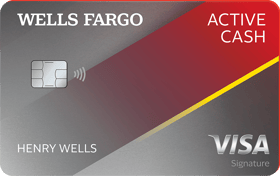
In the evolving landscape of personal finance, simplicity has increasingly become the primary metric by which consumers evaluate credit products. As the financial services industry navigates a period of economic normalization, the Wells Fargo Active Cash Card has secured the title of Best Credit Card for 2026, distinguishing itself through a combination of flat-rate rewards, low-barrier entry, and a robust suite of protective features. This recognition comes at a time when inflationary pressures and shifting interest rate environments have caused many cardholders to abandon complex, category-based rewards programs in favor of streamlined, predictable cash back structures.
The ascent of the Active Cash card reflects a broader shift in consumer behavior observed over the past 24 months. According to recent industry data, credit card utilization remains high, but there is a marked decline in the popularity of cards requiring quarterly activation or intricate spending tracking. The Wells Fargo product offers a straightforward 2% cash rewards rate on all purchases, a feature that has become the gold standard for value-oriented consumers seeking to maximize returns without the burden of manual management.
The Evolution of the Flat-Rate Rewards Market
The credit card industry has historically been divided into two camps: premium travel and lifestyle cards that offer high-tier point multipliers for specific spending categories, and flat-rate cards designed for the average consumer. The Wells Fargo Active Cash Card occupies the latter space but has pushed the boundaries of what is expected from a no-annual-fee product.
When the card was initially introduced, it was positioned as a direct competitor to long-standing industry staples like the Citi Double Cash Card. However, the 2026 designation highlights how Wells Fargo has iteratively improved the card’s value proposition to include not just the headline 2% return, but also meaningful secondary benefits that add to the consumer’s total financial health. By pairing the unlimited 2% cash back with a competitive welcome offer and a significant 0% introductory APR period, the card serves as a multifunctional tool for both debt management and daily spending.

Chronology of Competitive Positioning
The timeline of the Active Cash card’s rise to prominence began with a strategic pivot by Wells Fargo to modernize its retail banking and credit offerings. By consolidating its rewards ecosystem, the bank sought to minimize the friction often associated with legacy credit products.
In early 2024, the institution began emphasizing the "Active" nature of the card, focusing on the speed of rewards accumulation. Unlike some competitors that require a specific billing cycle to conclude before rewards are credited, or those that impose annual caps on earning potential, the Active Cash structure provides a consistent, transparent experience. Throughout 2025, as interest rates remained elevated, the card’s 0% introductory APR offer on both purchases and balance transfers became a critical lifeline for households looking to refinance high-interest credit card debt. This utility, coupled with the absence of an annual fee, created a compound effect that drove adoption rates across diverse demographic segments.
Analyzing the Core Features and Economic Impact
The financial mechanics of the Wells Fargo Active Cash Card are designed for high-volume, low-effort usage. The core offering—an unlimited 2% return on every dollar spent—eliminates the "category fatigue" often experienced by users of cards that require them to track spending at grocery stores, gas stations, or restaurants.
1. The Rewards Structure
The 2% flat-rate model is economically advantageous for the majority of consumers. While some cards offer 5% or 6% on specific categories, these are often capped at a certain dollar amount per quarter. For a household spending $20,000 annually, the Active Cash card guarantees a return of $400, regardless of whether that spending is categorized as groceries, utility payments, or discretionary travel. This predictability is a significant factor in the card’s top-tier ranking.
2. Introductory APR and Debt Management
The inclusion of a 12-month 0% introductory APR period on both purchases and balance transfers is a significant incentive for new applicants. For those carrying balances from other, higher-interest cards, this offer provides a structured path toward debt reduction. The transition to a variable APR of 18.74%, 24.74%, or 28.74% after the promotional window concludes is consistent with current market benchmarks, but the initial flexibility remains a primary draw.
3. Ancillary Protections
One of the most frequently cited reasons for the card’s success is the inclusion of cell phone protection. By simply paying their monthly mobile service bill with the card, users are eligible for up to $600 in coverage against damage or theft, subject to a $25 deductible. In an era where flagship smartphones can exceed $1,000 in retail value, this perk functions as a "hidden" financial benefit that provides real-world value, effectively lowering the total cost of ownership for a consumer’s mobile technology.
Market Context and Consumer Sentiment
Industry analysts note that the success of the Wells Fargo Active Cash Card is a microcosm of a broader trend: the flight to quality. Consumers are increasingly wary of "points inflation," where the value of rewards earned in proprietary systems changes arbitrarily. By opting for direct cash rewards, users insulate themselves from the volatility associated with airline miles or hotel points.
Furthermore, the "Good/Excellent" credit score requirement (670–850) makes the card accessible to a wide swath of the population, including those who have recently improved their financial standing and are looking to graduate from entry-level "credit-builder" cards to more robust, feature-rich products.
Comparisons and Alternatives
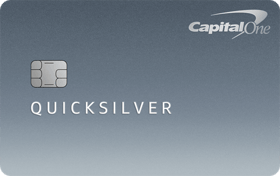
While the Active Cash card currently holds the title of Best Credit Card for 2026, the marketplace remains highly competitive. Other products, such as the Capital One Quicksilver Cash Rewards Credit Card and the Citi Double Cash Card, continue to provide strong alternatives.
The Capital One Quicksilver card, for example, is often cited for its user-friendly interface and global utility, though its base reward rate of 1.5% is lower than that of the Active Cash. The Citi Double Cash card offers a unique "1% when you buy, 1% when you pay" structure, which encourages disciplined payment habits. However, the Active Cash card’s edge in 2026 is its superior combination of a strong welcome bonus—$100 after spending $500 in the first three months—and the lack of foreign transaction fees on some versions of the card, making it a well-rounded tool for both domestic and international users.
Implications for Future Financial Planning
The designation of the Wells Fargo Active Cash Card as the best in its class carries implications for how consumers view their relationship with financial institutions. It suggests that banks that prioritize clarity and tangible, liquid benefits will capture the largest share of consumer loyalty.
For the average user, the card represents a move away from the "gamification" of credit cards. Instead of spending time in mobile apps managing categories or chasing quarterly bonuses, the cardholder is rewarded for their fundamental consumption patterns. This "set it and forget it" approach aligns with the current trend of optimizing personal finance through automation.
As the industry looks toward the remainder of the decade, the success of the Active Cash card suggests that the next generation of financial products will likely continue to emphasize simplicity. The "Live Richly, Not Risky" motto, often associated with prudent use of such tools, reinforces the idea that a credit card should be an asset that facilitates daily life, not a source of complexity or hidden fees.
In conclusion, the Wells Fargo Active Cash Card has earned its position through a deliberate design that minimizes friction while maximizing return. For those with good to excellent credit, it serves as a highly efficient tool that addresses the most common financial needs: earning consistent rewards, managing debt through interest-free periods, and securing baseline protection for essential personal property. As economic conditions continue to fluctuate, the reliability of a consistent 2% cash return remains an attractive anchor in any personal finance strategy.