The political landscape of the United States underwent a profound and historic transformation following the conclusion of the 2026 midterm elections. In what political analysts and commentators have increasingly characterized as a sweeping "blue tsunami," the Democratic Party decisively dismantled the Republican congressional majority, capturing full control of both the House of Representatives and the United States Senate. This sweeping electoral rebuke not only signals a severe public backlash against the second-term agenda of President Donald Trump but also introduces a major shift in the balance of federal power, effectively rendering the incumbent administration a lame duck for its final two years in office.
The scale of the Democratic victory caught even seasoned pollsters off guard, as voters across traditional battleground regions and firmly entrenched Republican strongholds expressed intense frustration over economic pressures, the escalating cost of living, rising energy prices, and the foreign policy ramifications of the ongoing conflict involving Iran. With the dust settling on a chaotic and fiercely contested election cycle, the implications of this shift are reverberating far beyond Capitol Hill, impacting financial markets, international alliances, and the internal leadership structures of both major political parties.

A Historic Realignment Across the Map
The 2026 midterms will be remembered as an electoral reckoning for the Republican Party, featuring unprecedented breakthroughs for Democrats in states long considered impregnable for the GOP. Among the most stunning developments of the night was the political transformation of Texas. For the first time since Republicans secured dominance following the 2002 elections, Democrats seized control of the Texas state House, propelled by historic statewide victories.
Democrat James Talarico broke a 38-year drought for his party in the Lone Star State by winning a seat in the US Senate, defeating the Trump-endorsed Ken Paxton and delivering a severe blow to the national Republican strategy. Simultaneously, Gina Hinojosa achieved a monumental upset by defeating incumbent Governor Greg Abbott, a titan of Texas politics who was running for a record fourth term, thereby becoming the state’s first Latina governor. The dual victories in Texas encapsulated a broader national trend in which suburban and urban voters mobilized in record numbers to reject conservative leadership.

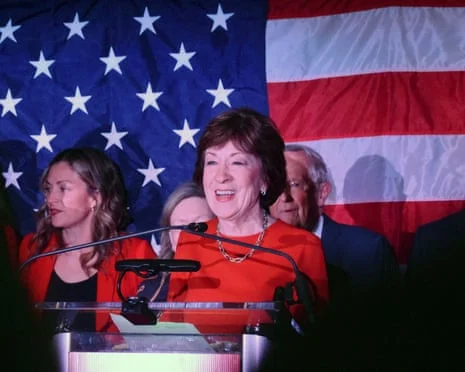
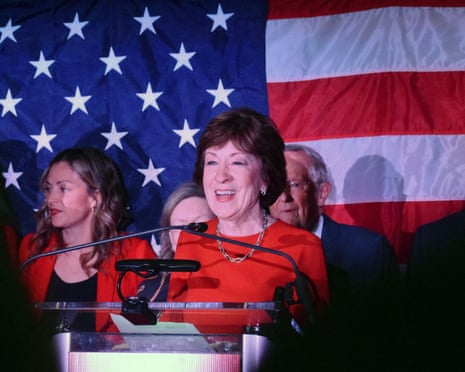
Further north, the political ground shifted beneath long-standing fixtures of Washington. In Maine, the nearly three-decade tenure of Republican Senator Susan Collins came to an abrupt and dramatic end. Collins, who had weathered numerous tough campaigns by projecting an independent image, was unseated by working-class challenger Troy Jackson. Jackson’s grassroots victory underscored a deep-seated populist anger among voters who felt alienated by decades of institutional politics and economic strain.
Additional Democratic pickups materialized across the map, including sweeping victories in states like Iowa, Kansas, and South Carolina. In the House of Representatives, Democrats secured at least 237 seats, easily surpassing the threshold required for a majority and neutralizing the impacts of mid-decade GOP redistricting efforts in states like Texas and Florida. Progressive and moderate candidates alike capitalized on voter discontent, flipping competitive suburban and rural districts and ensuring a commanding numerical advantage in the lower chamber.
Leadership Upheaval and the Race for Congressional Control
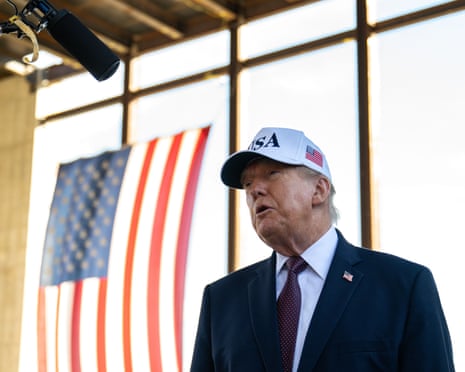
The immediate fallout from the election triggered a scramble for power and accountability within the Republican Party. Following the catastrophic losses, House Speaker Mike Johnson announced that he would not pursue the role of minority leader in the upcoming Congress, effectively stepping aside to allow a new generation of conservative leadership to emerge.
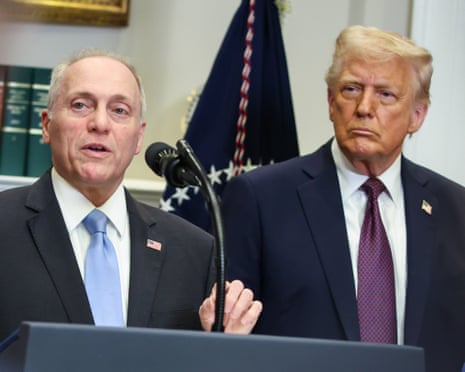
Almost immediately, prominent Republican heavyweights positioned themselves to fill the void. Louisiana Representative Steve Scalise, the current House majority leader, formally announced his candidacy for minority leader, emphasizing his extensive legislative experience and the necessity for structural discipline within the GOP caucus. Simultaneously, Ohio Representative Jim Jordan, the hard-line conservative chairman of the House Judiciary Committee, launched his own bid for the position. In a letter to his colleagues, Jordan argued that the party must adopt an offensive strategy rather than a defensive posture, prioritizing economic security, public safety, and voter trust ahead of the 2028 presidential cycle.
On the Democratic side, preparations are already underway to assume the responsibilities of governing the legislative branch. Hakeem Jeffries, the current House minority leader, officially announced his candidacy for speaker of the House. With Democrats commanding a solid majority, Jeffries is poised to make history as the first Black speaker of the House of Representatives. Outlining the party’s legislative priorities, Jeffries declared that the American people had issued a clear mandate to lower the cost of living, protect healthcare access, reverse Medicaid cuts, and re-evaluate foreign military engagements.

Economic Fallout and Financial Market Reactions
The seismic political shift sent immediate shockwaves through domestic and global financial markets. Wall Street experienced a notable rally at the opening bell following the election results. The Dow Jones Industrial Average surged by 2%, while the tech-heavy Nasdaq and the benchmark S&P 500 both registered gains exceeding 1%. This robust market performance represented a sharp overnight reversal from initial pre-market jitters, where investors had anticipated regulatory headwinds, particularly surrounding the artificial intelligence sector and potential constraints on technological infrastructure development.
Conversely, the political downturn directly impacted the personal financial assets associated with President Trump. Shares of the Trump Media and Technology Group (DJT), traded on the Nasdaq exchange, plummeted to historic lows, dropping to just over $5 per share—a steep decline from an all-time high of $101. Analysts noted that the valuation of Trump-affiliated financial instruments, including digital tokens under World Liberty Financial and various novelty cryptocurrency assets, has historically been intrinsically linked to the political popularity and momentum of the president. With public approval ratings experiencing a downward trajectory following the midterm results, these investment vehicles suffered significant contractions.
International Repercussions and Foreign Policy Implications
The outcome of the US midterm elections also drew immediate and varied reactions from international leaders, particularly concerning American foreign policy in the Middle East and Eastern Europe. European allies viewed the Democratic congressional takeover as a potential turning point. British Prime Minister Andy Burnham stated that the results provided the global community with a vital opportunity to refocus international cooperation on resolving ongoing conflicts and alleviating global cost-of-living pressures. Similarly, officials in Germany, France, and the European Union expressed optimism that a new Democratic-led Congress would maintain steadfast support for Ukraine while encouraging a re-evaluation of US diplomatic and military entanglements.
In the Middle East, the political ramifications were acutely felt regarding the prolonged conflict involving Iran. Administration critics, including Vice President JD Vance, acknowledged that the economic fallout of the conflict—specifically short-term spikes in gasoline prices—played a decisive role in alienating voters and driving down Republican turnout. President Trump defended the military actions as a necessary measure to prevent nuclear proliferation, yet the electorate’s clear rejection of prolonged foreign interventions has signaled a hardening domestic consensus against unconstrained military expenditures.

Furthermore, the new Congress will feature a diverse cohort of progressive lawmakers whose campaigns centered heavily on a critical reassessment of US military aid to Israel. The changing composition of the legislative branch reflects a generational shift in voter attitudes regarding the Middle East, setting the stage for potential legislative battles over arms embargoes, diplomatic oversight, and foreign policy accountability.
Outlook and Future Governance
As the 110th Congress prepares to convene in January, the political reality in Washington has fundamentally altered. With Democrats controlling both chambers of the legislature, the federal government enters a period of divided governance characterized by ideological confrontation and strategic maneuvering. Democratic leadership has signaled an aggressive agenda focused on economic relief, anti-corruption measures, and rigorous oversight of executive actions. Meanwhile, President Trump has vowed to utilize executive veto powers to block progressive legislation, setting up high-stakes showdowns over federal spending, environmental regulations, and national security policy.
The 2026 midterm elections have fundamentally redrawn the American political map, exposing deep vulnerabilities within the populist conservative movement and handing Democrats a powerful mandate to shape the nation’s trajectory. Whether the newly empowered Democratic majority can successfully translate voter frustration into enduring legislative achievement will ultimately determine not only the success of the next two years but also the political battlegrounds of the 2028 presidential election.