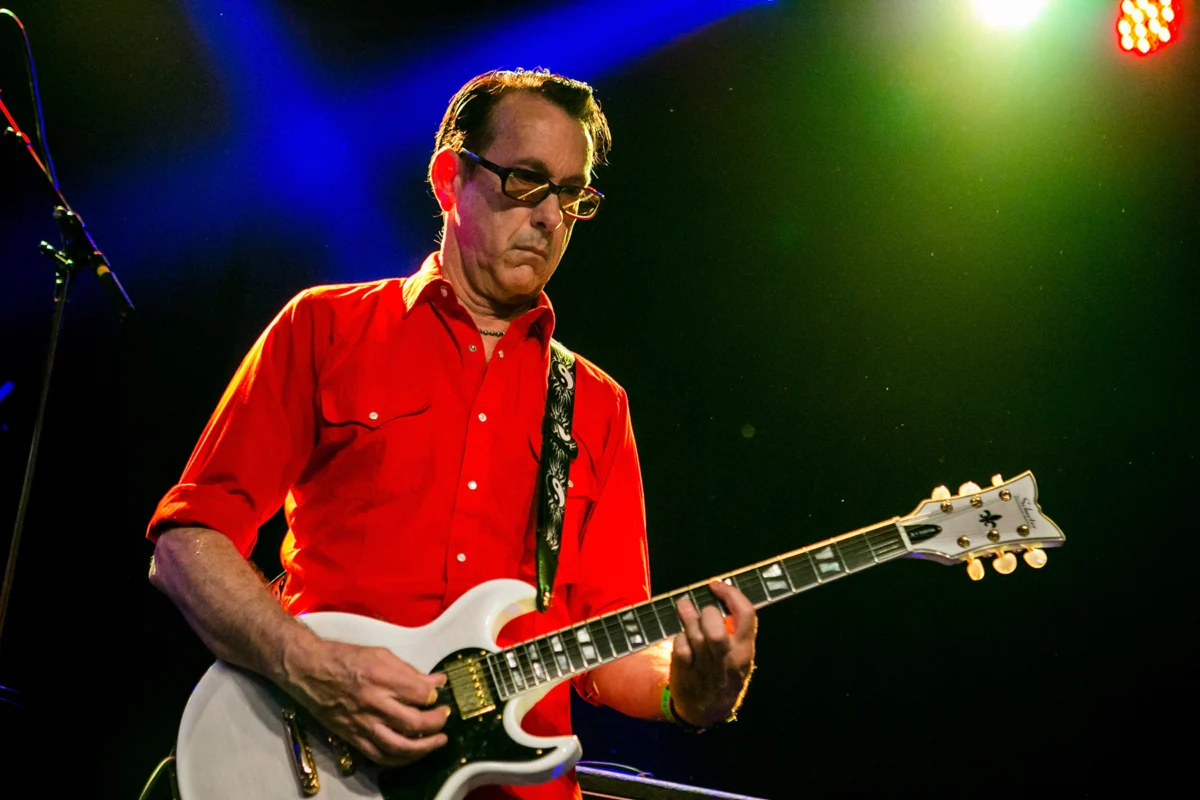
The landscape of American punk rock was shaken this week following the announcement that East Bay Ray, the legendary guitarist and a founding pillar of the influential San Francisco band Dead Kennedys, has been diagnosed with Parkinson’s disease. The news, released by the band’s management via social media on Tuesday, marks a somber milestone for a group that has remained a fixture of the international music scene for nearly five decades. Despite the gravity of the diagnosis, the band confirmed that Ray intends to continue his professional commitments, including upcoming tour dates, for as long as his physical health permits.
Parkinson’s disease, a progressive neurological disorder that primarily affects movement, presents significant challenges for performing musicians, particularly those who rely on the precise motor control required for complex guitar work. As the industry processes this revelation, fans and peers alike are reflecting on the enduring legacy of the Dead Kennedys and the resilience of a musician who helped define the sound of the late 1970s and 1980s hardcore punk movement.
A Legacy of Sonic Defiance
Born Raymond John Pepperell, East Bay Ray emerged as a singular voice in the post-punk era. His guitar style—often characterized by surf-rock sensibilities, heavy reverb, and a jagged, angular approach to rhythm—provided the melodic backbone for the band’s politically charged, satirical lyrics. Since co-founding the group in 1978, Ray has been the primary architect of the band’s sonic identity, spanning seminal albums such as "Fresh Fruit for Rotting Vegetables" (1980) and "Plastic Surgery Disasters" (1982).
The band’s trajectory has been marked by both immense creative influence and internal turbulence. After the group’s initial dissolution in 1986—following a period of intense legal and creative friction—the members went their separate ways. When the band eventually reunited in 2001, it did so without original vocalist Jello Biafra, leading to a complex series of legal battles regarding ownership and licensing. Despite these shifts, Ray remained a constant, serving as the musical anchor through various iterations of the lineup.
The Current State of the Band
Today, the Dead Kennedys operate with a lineup that balances historical legacy with contemporary performance. Ray is joined by original bassist Klaus Flouride, whose rhythmic partnership with the guitarist has been a staple of the band’s sound since the inception of the group. The current iteration also features vocalist Ron "Skip" Greer, who has fronted the band since 2008, and drummer Steve Wilson, who joined the ranks in 2022 following the untimely passing of the group’s longtime drummer, D.H. Peligro.
The loss of D.H. Peligro just two years ago remains a significant chapter in the band’s recent history, highlighting the aging process and the physical toll inherent in the touring life. Peligro’s death was attributed to trauma caused by an accidental fall, a reminder of the fragility of the veteran musicians who continue to hit the road decades after their initial rise to prominence.
Addressing the Diagnosis and Tour Status
The announcement on Instagram featured a stark, black-and-white portrait of Ray, accompanied by a brief but resolute statement: "Ray says he plans to continue performing and touring with Dead Kennedys for as long as his health allows, and expressed his appreciation to everyone for their continued support."
The band’s immediate schedule reflects this commitment. A series of West Coast dates is slated for October, beginning on October 6 at the Showbox at the Market in Seattle and concluding on October 11 at the Riverside Municipal Auditorium in California. The band’s management has signaled that these dates will proceed as planned, though the condition remains a factor that the group is monitoring closely.
Broader Context: The Aging Punk Icon
The news of East Bay Ray’s diagnosis arrives in a year that has seen significant health challenges for the original members of the Dead Kennedys. Earlier in 2024, former lead singer Jello Biafra suffered a stroke. While Biafra was not part of the reunion that saw the band return to touring in the early 2000s, his health scare drew widespread concern from the punk community.
Recent updates regarding Biafra’s condition have been relatively optimistic. In May, social media updates from his camp indicated that he has made significant progress in his recovery, with his speech largely restored and his cognitive faculties unaffected. The contrast between these two health events—one affecting the band’s original frontman and the other its primary instrumentalist—underscores the reality that the architects of the punk explosion are now navigating the complexities of their later years.
Medical Implications and Professional Continuity
Parkinson’s disease is characterized by tremors, stiffness, and balance issues, all of which pose substantial hurdles for a touring guitarist. However, the medical community notes that consistent, purposeful activity can often help manage the symptoms of the disease. Music therapy and the continued practice of fine motor skills, such as playing the guitar, are frequently cited by neurologists as beneficial for maintaining dexterity in patients diagnosed in the early to mid-stages of the condition.
The choice to continue touring is a decision often made by legacy artists who find that their connection to the audience and the act of performance serve as a vital component of their well-being. For an artist like East Bay Ray, whose career has spanned over 45 years, the stage remains the primary forum for his creative expression.
Industry and Fan Reactions
The response from the music industry has been one of solidarity. As news spread, fans took to social media to share stories of the band’s influence, emphasizing the impact Ray’s guitar work had on the development of the alternative rock genre. Unlike many of his contemporaries who drifted away from the genre, Ray remained steadfast in his commitment to the punk ethos, navigating the shifts in the music industry from the analog era of the 1970s to the digital landscape of the 2020s.
Music historians suggest that the Dead Kennedys’ influence is not merely confined to the punk scene but extends to the broader development of independent music. By controlling their own production and maintaining a DIY approach to touring and promotion, Ray and his bandmates set a blueprint for future generations of musicians.
Future Implications for the Band
The coming months will be a period of adjustment for the band as they integrate the reality of Ray’s condition into their touring logistics. While the band has not released detailed information regarding any changes to their long-term touring strategy, the current focus remains on the upcoming West Coast shows.
Observers within the industry note that the band has always been resilient, surviving lineup changes, legal battles, and the loss of key members. This latest development is being viewed as another chapter in the group’s storied history, characterized by a refusal to fade away. Whether this leads to a reduction in touring frequency or a change in the scale of their performances remains to be seen, but the intent to honor scheduled dates suggests a "business as usual" approach in the face of adversity.
Conclusion: A Resilient Spirit
The diagnosis of Parkinson’s disease is undoubtedly a challenging development for East Bay Ray and his family, friends, and bandmates. However, the determination to continue performing is consistent with the defiant spirit that first brought the Dead Kennedys to prominence in the San Francisco underground scene. As the band prepares for their upcoming tour, the focus will likely remain on the music—the same music that has served as a soundtrack for generations of listeners.
For now, the focus is on the October tour, where fans will have the opportunity to support one of punk rock’s most influential guitarists. The legacy of the Dead Kennedys is built on endurance, and as East Bay Ray faces this new personal challenge, the outpouring of support from the global punk community stands as a testament to the lasting impact of his work and his role in shaping the history of modern music.