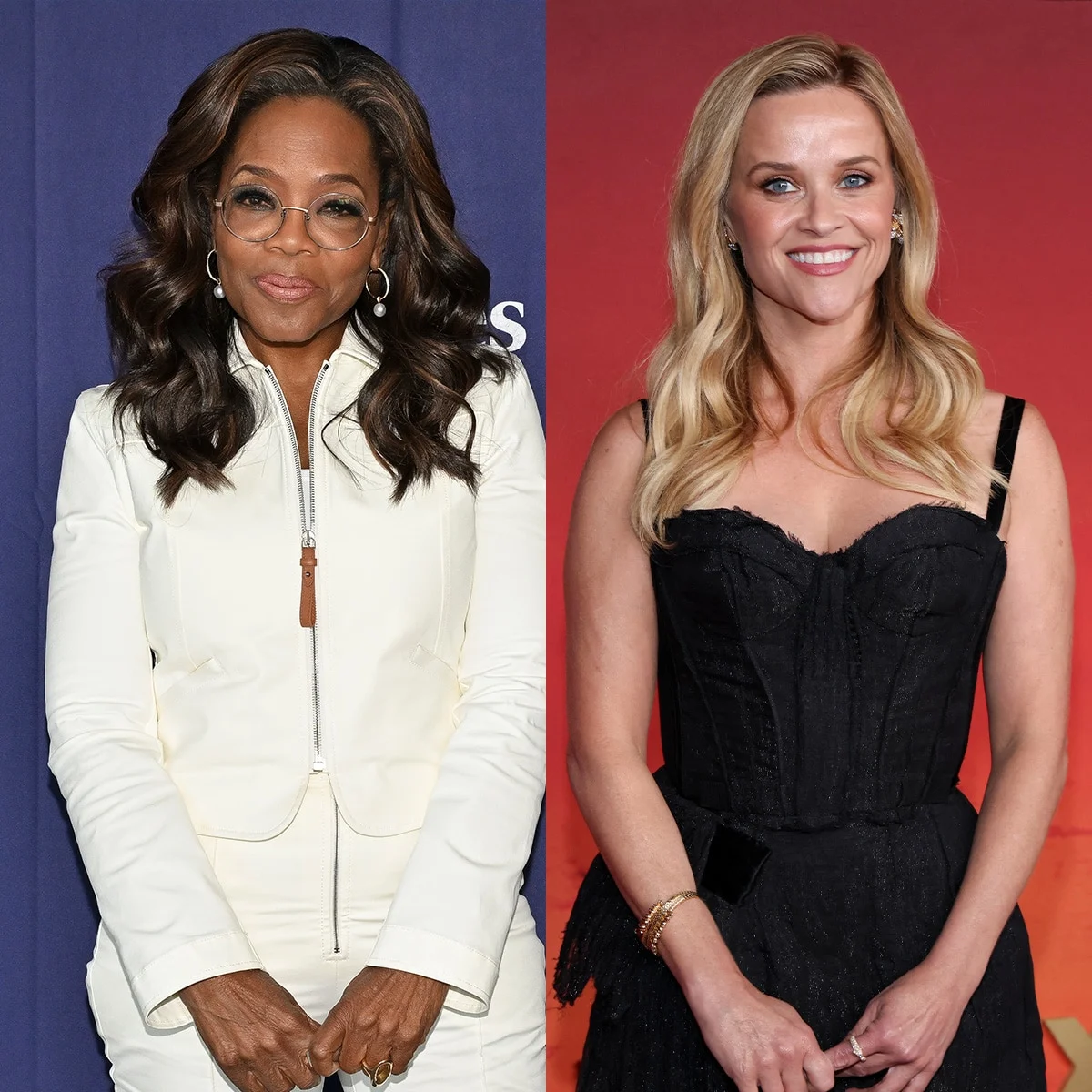
You’ve been spelling Oprah Winfrey wrong all these years, and surprisingly, so has she. The media titan, renowned for her influential talk show and expansive media empire, recently shared a personal revelation with fellow entertainer Keke Palmer that underscored the often-unseen nuances behind public personas. Winfrey, born Orpah Gail Winfrey, revealed on Palmer’s podcast, "Baby, This Is Keke Palmer," that her given first name, a biblical reference to the sister-in-law of Ruth in the Book of Ruth, was a constant source of confusion. "I was a kid and nobody knew how to spell it," Winfrey explained, leading to the widespread adoption of "Oprah" as her name. She didn’t discover the discrepancy until she was well into her twenties, a testament to how deeply ingrained the mispronunciation had become.
This personal anecdote, shared during a seemingly lighthearted conversation, resonated with Palmer, who playfully quipped about her own birth name, Lauren Keyana Palmer, joking about a potential "Eekey" moniker. The exchange highlights a common phenomenon in the entertainment industry and beyond: the adoption of stage names or the subtle evolution of given names into public identities. It raises questions about identity, legacy, and the practicalities of navigating a world that often favors simplicity and familiarity.
The Evolution of Names: A Celebrity Trend
The phenomenon of celebrities using names different from their birth certificates is far from uncommon. It serves a variety of purposes, from professional branding and avoiding confusion to honoring family or simply choosing a name that resonates more personally.
Paul McCartney’s Identity Journey:
Even legendary figures like Paul McCartney have a history with name variations. While widely known as Paul McCartney, his birth name is James Paul McCartney. He revealed in 2023 that his family, including his father, James McCartney, often addressed him by his middle name. This practice was so ingrained that it even helped distinguish their mail. The continued use of "James" within his immediate family highlights how middle names can sometimes hold significant personal weight, even when a first name becomes the public identifier.
Reese Witherspoon’s Familial Naming Convention:
Reese Witherspoon, another prominent figure in Hollywood, also operates under a name that isn’t her birth given. Laura Jeanne Reese Witherspoon adopted her mother’s maiden name, Reese, as her professional moniker. This decision, made when she entered the industry in 1990, created a unique identifier. The practical implications of this choice were humorously highlighted when she discussed with Nicole Kidman the need to distinguish themselves from their "Big Little Lies" co-star, Laura Dern, stating, "We can’t both be Laura." This illustrates how choosing a distinct name can prevent professional confusion, especially in an industry with many individuals sharing common given names.
Navigating Professional Landscapes: The Case for Stage Names
The entertainment industry, with its emphasis on distinct branding and marketability, has a long history of performers adopting stage names. These names are often chosen to be more memorable, impactful, or to avoid confusion with existing registered professionals.
Michael Keaton’s Quest for Uniqueness:
The story of Michael Keaton, born Michael John Douglas, exemplifies the need to carve out a unique professional identity. Douglas discovered that another actor was already registered with the Screen Actors Guild under the same name. This common industry hurdle prompted him to seek an alternative. He recounted to People magazine in 2024 the process of selecting his stage name, describing it as a pragmatic decision. He recalled scanning for options, finding "Keaton" to be a suitable and "reasonable" choice, thus becoming the beloved actor known worldwide.
Jamie Foxx’s Strategic Choice:
Jamie Foxx, born Eric Marlon Bishop, adopted his stage name for strategic reasons rooted in the early days of his comedy career. He explained on "The Late Show With David Letterman" in 2014 that he chose a more gender-neutral name, "Jamie Foxx," to increase his chances of getting stage time. In a comedy scene heavily dominated by men, he believed a name like "Jamie" might lead to opportunities being mistakenly offered to him if the booker assumed he was female, thereby securing him a spot on the lineup. This decision reflects a calculated approach to navigating a competitive and often imbalanced industry.
Beyond the Moniker: A Gallery of Celebrity Name Transformations
The practice of adopting a different public name extends across various facets of the entertainment world, from music to reality television. These transformations often reveal personal histories, strategic career moves, or simply a desire for a more resonant identity.
Post Malone’s Embrace of His Name:
Austin Richard Post, known professionally as Post Malone, has a stage name that directly incorporates his surname. This choice allows for a direct connection to his birth identity. During the 2024 MTV VMAs, when he and Taylor Swift won an award for their collaboration "Fortnight," Swift affectionately referred to him as "Austin," underscoring the blend of his public persona and his personal identity. His close friends and collaborators often refer to him by his given name, reinforcing the personal significance of his birth name.
Aubrey Anderson-Emmons’ Musical Shift:
Aubrey Anderson-Emmons, recognized for her role as Lily Tucker-Pritchett on "Modern Family," transitioned her professional identity to Frances Anderson as she embarked on a music career. She explained in a 2025 interview with E! News that "Frances" is her legal middle name and honors a family friend. The change also offered a more streamlined moniker, as she noted the length of her hyphenated surname. This shift signifies a deliberate evolution, aligning her professional identity with her new artistic direction.
The Fanning Sisters’ Middle Name Tradition:
Dakota Fanning and Elle Fanning, sisters and accomplished actresses, both chose to go by their middle names professionally: Hannah Mary Fanning and Mary Hannah Fanning, respectively. They adopted Dakota and Elle, respectively, as their professional names. This choice stemmed from their mother’s precedent of using her middle name. Elle recounted to Glamour in 2016 the occasional awkwardness in school roll calls when her birth name, Mary, was called, leading to a moment of public identification that felt less than ideal.
Carl Radke’s "Summer House" Identity:
Carl Radke, a familiar face on the Bravo reality series "Summer House," revealed a surprising detail about his name during an August 2025 appearance on PopViewers. His legal first name is William, with Carl being his middle name. Despite this, he has consistently been known and referred to as Carl since the show’s inception. This highlights how a middle name can become a primary identifier in public life, sometimes even overshadowing the legal first name.
Sterling K. Brown’s Homage to His Father:
Sterling K. Brown, the Emmy-winning actor, initially went by his middle name, Kelby, until his teenage years. His father was Sterling Brown Jr., and his grandfather was Sterling Brown Sr. Brown explained on "The Kelly Clarkson Show" in April 2025 that he initially sought his own distinct name, finding "Sterling" to sound like an "old man’s name." However, after his father’s untimely death from a heart attack when Brown was ten, he chose to revert to his first name, Sterling, in his mid-teens as a way to honor his father’s memory and keep his name alive.
Dylan Efron’s Preferred Moniker:
Dylan Efron, a reality television personality and winner of "The Traitors," shared on E!’s "Hot Goss" that his legal name is Nicholas Dylan Harrison Efron. He has chosen to "axed off" his first name, preferring to be addressed as Dylan. This implies a preference for his middle name, which effectively becomes his first name in his professional and public life.
The Lawrence Brothers’ Surname Switch:
Actors Andrew Lawrence, Matthew Lawrence, and Joey Lawrence opted for a collective name change for their professional careers. Joey, whose middle name is Lawrence, was the first to adopt this surname professionally after a talent agent advised against the family’s original surname, deeming it less marketable. This decision unified the brothers under a common professional banner.
Kat Dennings’ Early Stage Name Adoption:
Kat Dennings, born Katherine Victoria Litwack, adopted her stage name at the remarkably young age of nine, well before her professional acting debut on "Sex and the City" in 2000. The "2 Broke Girls" star explained to Kylie Kelce on her podcast "Not Gonna Lie With Kylie Kelce" in March 2025 that she felt her birth name was not suitable for public display on a poster. Her stage name was inspired by Christina Ricci’s character in the film "Casper" and the surname of Janine Denni, the wife of the author Lloyd Alexander, who was a close friend of her mother’s.
Cher’s Name Revelation:
Cher, the iconic entertainer, lived for over three decades believing her legal first name was Cherilyn. It wasn’t until the late 1970s, when she sought to officially change her name to simply "Cher," that she discovered her birth certificate listed her as "Cheryl." In her 2024 memoir, "Cher: The Memoir, Part One," she recounted her mother Georgia Holt’s reaction to this discovery, attributing the error to her own youth and postpartum pain at the time of birth.
Shaboozey’s Accidental Alias:
The outlaw country artist Shaboozey, born Collins Obinna Chibueze, adopted his stage name after his surname was misspelled on his Virginia high school’s records. This accidental alteration eventually became his professional alias, a testament to how even minor administrative errors can shape an artist’s identity.
Katy Perry’s Pop Persona:
Katy Perry, born Katheryn Elizabeth Hudson, initially released a Christian music album under her birth name in 2001. However, for her foray into mainstream pop music, she adopted the stage name Katy Perry, inspired by her mother’s maiden name. This shift was intended to create a more impactful and memorable persona for the pop music landscape.
Cardi B’s Evolution:
Cardi B, born Belcalis Almanzar, derived her stage name from the nickname "Bacardi," which was given to her by friends and family who called her sister "Hennessy." She eventually shortened it to "Cardi B," a more concise and distinctive moniker that has become synonymous with her global brand.
Meghan Markle’s Brief Identity:
Before becoming the Duchess of Sussex, Meghan Markle was briefly known by the name Rachel. This suggests a period of identity exploration or a pragmatic approach to her early career.
Shania Twain’s Grandmother’s Legacy:
Shania Twain, born Eilleen Regina Edwards and later Eilleen Regina Twain after her adoption, adopted her stage name to create a persona that felt distinct from her grandmother’s name. She recounted on Apple Music’s "Home Now Radio" that she wanted a name that sounded less like her grandmother’s and found "Shania" to be beautiful, thus creating Shania Twain.
Chappell Roan’s Artistic Alter Ego:
Chappell Roan, born Kayleigh Rose Amstutz, views her stage persona as a "drag project." This artistic choice allows her to establish clear boundaries between her personal life and the demands of the music industry, providing a distinct platform for her creative expression.
Gigi Hadid’s Classroom Alias:
Gigi Hadid, born Jelena Noura Hadid, acquired her stage name in a rather unconventional way. In school, her teacher, struggling to differentiate between her and another student named Helena, began calling her "Gigi," a term of endearment her mother used at home. The name quickly stuck and became her public identity.
Vin Diesel’s Action-Hero Name:
Vin Diesel, born Mark Vincent, adopted a stage name that evokes a sense of power and intensity, fitting for an action star. The name "Vin Diesel" suggests a robust and dynamic persona that has become synonymous with his film roles.
Miley Cyrus’s Sunny Origins:
Miley Cyrus, born Destiny Hope Cyrus, earned her nickname "Smiley" due to her bright and cheerful disposition as a child. This nickname was later shortened to "Miley," which ultimately became her official stage name, reflecting a playful and endearing origin story.
Bruno Mars’s Fatherly Inspiration:
Bruno Mars, born Peter Gene Hernandez, was nicknamed "Bruno" by his father due to his resemblance to boxer Mike Tyson. The name resonated and stuck, leading him to adopt Bruno Mars as his stage name, a departure from his given name that has become globally recognized.
Lady Gaga’s Artistic Transformation:
Lady Gaga, born Stefani Germanotta, adopted her stage name as part of her artistic persona. This transformation from an everyday New Yorker to the avant-garde performer known worldwide signifies the power of adopting a distinct identity in the music industry.
Jason Sudeikis’s Parental Confusion:
Jason Sudeikis, born Daniel Sudeikis, confirmed on "Today" that he was named Daniel after his father. However, due to confusion, his mother began using his middle name, Jason, to distinguish between them. This pragmatic adjustment led to his public identity as Jason Sudeikis.
Emma Stone’s SAG Requirement:
Emma Stone, born Emily Stone, adopted her stage name after discovering that the Screen Actors Guild already had a registered member named Emily Stone. This common industry issue required her to select an alternative, leading to her adoption of the name Emma Stone.
Lana Del Rey’s Persona:
Lana Del Rey, born Elizabeth Woolridge Grant, embraced her stage name as an artistic persona. This alter ego allows her to explore themes and create a distinct artistic identity that resonates with her music and aesthetic.
Frank Ocean’s Legal Change:
Frank Ocean, born Christopher Edwin Breaux, legally changed his name in 2014. The exact reasons for the change remain personal, but it underscores the agency individuals have in shaping their public identities.
Tina Fey’s Subtle Nod:
Tina Fey, born Elizabeth Stamatina Fey, subtly acknowledged her birth name by naming her iconic "30 Rock" character Liz Lemon, a clear reference to her given first name, Elizabeth.
Snoop Dogg’s Infamous Nickname:
Snoop Dogg, born Calvin Broadus, adopted his now-iconic moniker due to a childhood nickname. The name became synonymous with his distinctive style and persona in the West Coast hip-hop scene.
Lorde’s Aristocratic Influence:
Lorde, born Ella Marija Lani Yelich-O’Connor, chose her stage name from the concept of aristocracy, adding a feminine ‘e’ to the end. This reflects her interest in themes of royalty and elevated status, which often permeate her music.
Ricky Martin’s Humble Beginnings:
Ricky Martin, the global music superstar, was born Enrique Morales. His stage name is a significant departure, marking a transformation into a Latin pop icon.
Iggy Azalea’s Amethyst Origin:
Iggy Azalea, born Amethyst Kelly, adopted a stage name that is a complete departure from her birth name. The choice of "Iggy Azalea" creates a unique and memorable brand for the artist.
Gigi Hadid’s Schoolyard Name:
As previously mentioned, Gigi Hadid’s name originated from a classroom mix-up, highlighting how informal nicknames can sometimes become enduring public identities.
Vin Diesel’s Powerful Persona:
Vin Diesel’s stage name is designed to project strength and authority, aligning with his image as a formidable action star.
Miley Cyrus’s Childhood Nickname:
Miley Cyrus’s stage name is a direct evolution of her childhood nickname, "Smiley," stemming from her bright personality.
Bruno Mars’s Fatherly Nickname:
Bruno Mars’s stage name is rooted in a nickname given by his father, reflecting a familial connection that became his public identity.
Lady Gaga’s Artistic Evolution:
Lady Gaga’s transformation from Stefani Germanotta to a global pop phenomenon exemplifies the power of a carefully crafted stage persona.
Jason Sudeikis’s Middle Name Preference:
Jason Sudeikis’s public identity is tied to his middle name, a practical adjustment made by his mother to avoid confusion.
Emma Stone’s SAG Necessity:
Emma Stone’s stage name was a professional necessity, a common occurrence in the entertainment industry where unique identifiers are crucial.
Lana Del Rey’s Artistic Persona:
Lana Del Rey’s chosen name serves as an artistic persona, allowing her to craft a specific narrative and aesthetic for her music.
Frank Ocean’s Legal Redefinition:
Frank Ocean’s legal name change signifies a deliberate act of self-definition and control over his public identity.
Tina Fey’s Character Homage:
Tina Fey’s subtle nod to her birth name through her character Liz Lemon demonstrates a personal connection to her origins, even within her professional persona.
Snoop Dogg’s Ubiquitous Nickname:
Snoop Dogg’s stage name, a childhood nickname, has become so ingrained that it is inseparable from his identity as a hip-hop legend.
Lorde’s Thematic Name Choice:
Lorde’s stage name reflects a deliberate choice to align her artistic output with specific themes and influences.
Ricky Martin’s Transformative Moniker:
Ricky Martin’s stage name represents a significant transformation from his birth name, signaling his emergence as a global music sensation.
Iggy Azalea’s Unique Branding:
Iggy Azalea’s distinct stage name is a key element of her artist branding, setting her apart in the music industry.
The Broader Implications: Identity in the Digital Age
In an era where personal brands are meticulously curated, the evolution of names—whether through official changes, stage monikers, or the adoption of nicknames—speaks to the multifaceted nature of identity. For celebrities, these choices are often strategic, designed to enhance marketability, create a distinct persona, or simply reflect a personal evolution. For the public, these revelations offer a glimpse behind the curtain, reminding us that the names we know are not always the names we are given, and that identity itself can be a fluid and evolving construct. The stories of Oprah Winfrey, Keke Palmer, and countless others underscore the enduring human desire to craft a name that resonates, whether it’s the one etched on a birth certificate or the one that echoes through the halls of fame.