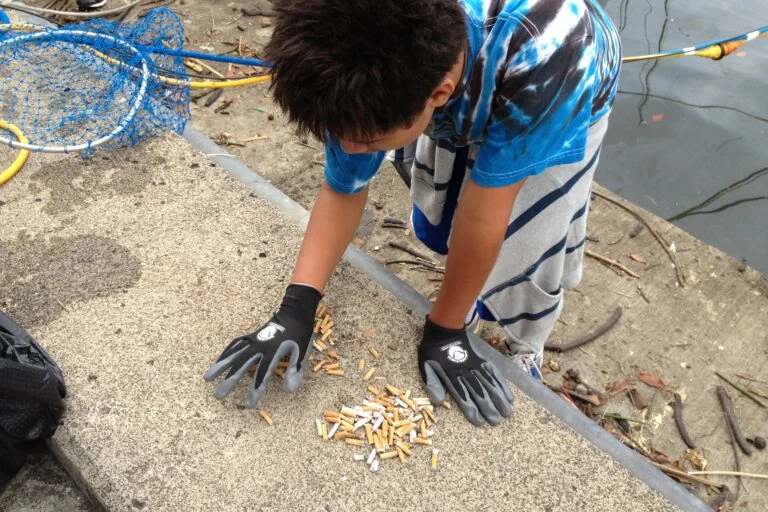
Cigarette butts are far more than a minor nuisance on city sidewalks; they represent one of the most pervasive and environmentally destructive forms of litter on the planet. A comprehensive new global review, synthesizing data from 130 individual studies conducted across 55 countries between 2013 and 2024, has shed light on the staggering scale of this pollution. The research reveals that cigarette butts account for approximately 12% of all litter found in rivers, lakes, and oceans. Across diverse ecosystems, both terrestrial and aquatic, the average density of this debris stands at one cigarette butt for every four square meters (approximately 43 square feet). This data underscores a critical, often overlooked dimension of the global plastic pollution crisis: the systematic contamination of our waterways by the remnants of the tobacco industry.
A Chronology of Accumulation: Tracking the Decade of Data
To understand the gravity of the situation, researchers at Brazil’s Federal University of São Paulo analyzed a vast dataset spanning over a decade. The timeline of this research, covering the period from 2013 to 2024, reflects a consistent upward trajectory in the prevalence of cigarette waste despite increasing global awareness regarding plastic pollution.
In the early part of this period, from 2013 to 2016, environmental groups and marine biologists began identifying cigarette filters—composed of cellulose acetate—as a major constituent of coastal debris. By 2018, organizations like the Ocean Conservancy began consistently ranking cigarette butts as the number one item collected during international coastal cleanup events. The current study serves as the definitive synthesis of this decade of observation, confirming that the problem is not merely localized but is a ubiquitous feature of human environmental impact. From the pristine coastlines of Chile and Brazil to the heavily trafficked tourist hubs in Italy and Spain, the data confirms that wherever human activity congregates, the density of cigarette waste increases exponentially.
The Chemical Composition of a Silent Threat
The environmental danger posed by discarded cigarettes is twofold: physical and chemical. Physically, the filters are made from cellulose acetate, a synthetic polymer that is not biodegradable. Over time, these filters break down into microplastics, entering the food chain and infiltrating the water column, where they can persist for decades.
However, it is the chemical composition of the "butts" that has led researchers to classify them as "chemical bombs." A cigarette butt consists of more than just the filter; it retains the remnants of paper, ash, and unburnt tobacco. Once submerged in water, these remnants act as a delivery mechanism for a toxic cocktail of heavy metals, polycyclic aromatic hydrocarbons (PAHs), nicotine, and various phenolic compounds.
When a single butt enters a freshwater or marine ecosystem, these substances leach into the surrounding water. Studies have shown that these chemicals are highly toxic to various aquatic species, including fish, crustaceans, and amphibians. Exposure to these leachates can cause developmental abnormalities, inhibit growth, and, in high concentrations, lead to rapid mortality. For sensitive coastal ecosystems, the cumulative effect of thousands of these "chemical bombs" being deposited daily is nothing short of catastrophic.
Regional Hotspots and the Coastal Crisis
The review highlights that aquatic ecosystems suffer the most disproportionate impact. While the global average of litter attributed to cigarettes is roughly 12%, this figure masks much higher concentrations in specific hotspots. In certain coastal sites studied in Iran, Brazil, Peru, and Chile, more than half of the total volume of collected litter consisted of cigarette filters.
Beaches represent a primary hotspot for this contamination. The nature of these areas as recreational magnets, combined with high foot traffic and, in many cases, a lack of adequate disposal infrastructure, creates a perfect storm for pollution. The study found that across 17 surveyed countries, the top 5% of litter hotspots were almost exclusively coastal, suggesting that the intersection of human leisure and marine proximity is where the environmental burden is most acute.

The Efficacy of Policy Interventions
One of the most significant takeaways from the research is the clear correlation between government intervention and reduced pollution levels. The data shows that the density of cigarette butts in unprotected, high-traffic areas is roughly 0.29 per square meter. In contrast, in protected or regulated areas, this number drops to 0.06 per square meter—a nearly fivefold decrease.
Several nations have already begun implementing targeted policies to combat this issue. Countries such as Malaysia, Spain, Mexico, and Italy have introduced smoking bans on public beaches. The success of these bans is largely attributed to two factors: the prohibition itself and the enforcement of fines. When smoking is banned in an area, and there is a tangible consequence for non-compliance, the volume of cigarette litter drops significantly.
However, the researchers note that even in highly protected areas, the total eradication of cigarette litter remains elusive. The persistence of the waste and the ease with which it is transported by wind and tides mean that environmental management requires more than just local bans; it necessitates a fundamental shift in how the public perceives the environmental cost of tobacco consumption.
Perspectives from the Scientific Community
Lead author Victor Vasques Ribeiro, a researcher at the Federal University of São Paulo, emphasizes that the findings should serve as a wake-up call regarding our daily interactions with the environment. "This shows the impact that a seemingly everyday human activity can leave even in some of the environments we try hardest to preserve," Ribeiro stated in an email interview.
Ribeiro further articulated the gravity of the chemical contamination, noting that the "chemical bomb" analogy is not an exaggeration. The toxicity of these substances to aquatic life is well-documented in laboratory settings, and their presence in the wild represents a continuous, low-level assault on biodiversity. Regarding the solution, Ribeiro suggests that the path forward must be multifaceted. While better disposal and stricter enforcement are necessary, the most effective long-term strategy is the reduction of overall tobacco consumption.
"It may seem obvious, but it is important to say: there wouldn’t be butts in these environments if there wasn’t cigarette consumption," Ribeiro observed. "Reducing the consumption of tobacco has a double benefit: it reduces the enormous impacts on human health, and at the same time, reduces the production of this kind of litter and the environmental impacts it produces."
Broader Implications for Global Policy
The implications of this research extend far beyond the beaches of South America or the Mediterranean. As global plastic reduction policies gain momentum, cigarette filters are increasingly being identified as a priority item for regulation. Current environmental policies often focus on single-use plastics like straws and bags, but the sheer volume and chemical toxicity of cigarette filters suggest they should be categorized alongside these high-priority pollutants.
Furthermore, the economic burden of cleanup is currently being borne by local municipalities and volunteer organizations rather than the producers of the waste. There is a growing international movement to hold the tobacco industry accountable for the full life-cycle costs of their products, including the environmental remediation of the filters. By implementing Extended Producer Responsibility (EPR) schemes, governments could theoretically force manufacturers to invest in better filtration technology or fund cleanup and recycling programs.
The evidence is clear: the ubiquity of cigarette butts is a symptom of a systemic failure in waste management and consumer responsibility. With one in every nine pieces of litter in aquatic environments originating from a cigarette, the evidence provided by this global review serves as a definitive argument for more aggressive environmental policy. Whether through legislative bans, increased fines, or a global shift toward reduced tobacco usage, the protection of our waterways depends on addressing the smallest, yet perhaps most numerous, pieces of plastic waste on Earth. As we look toward the next decade, the integration of these findings into national and international environmental strategies will be essential for the preservation of fragile ecosystems that are currently suffering under the weight of human habit.