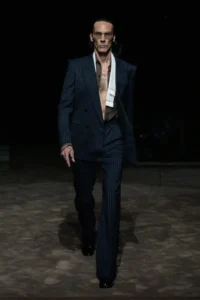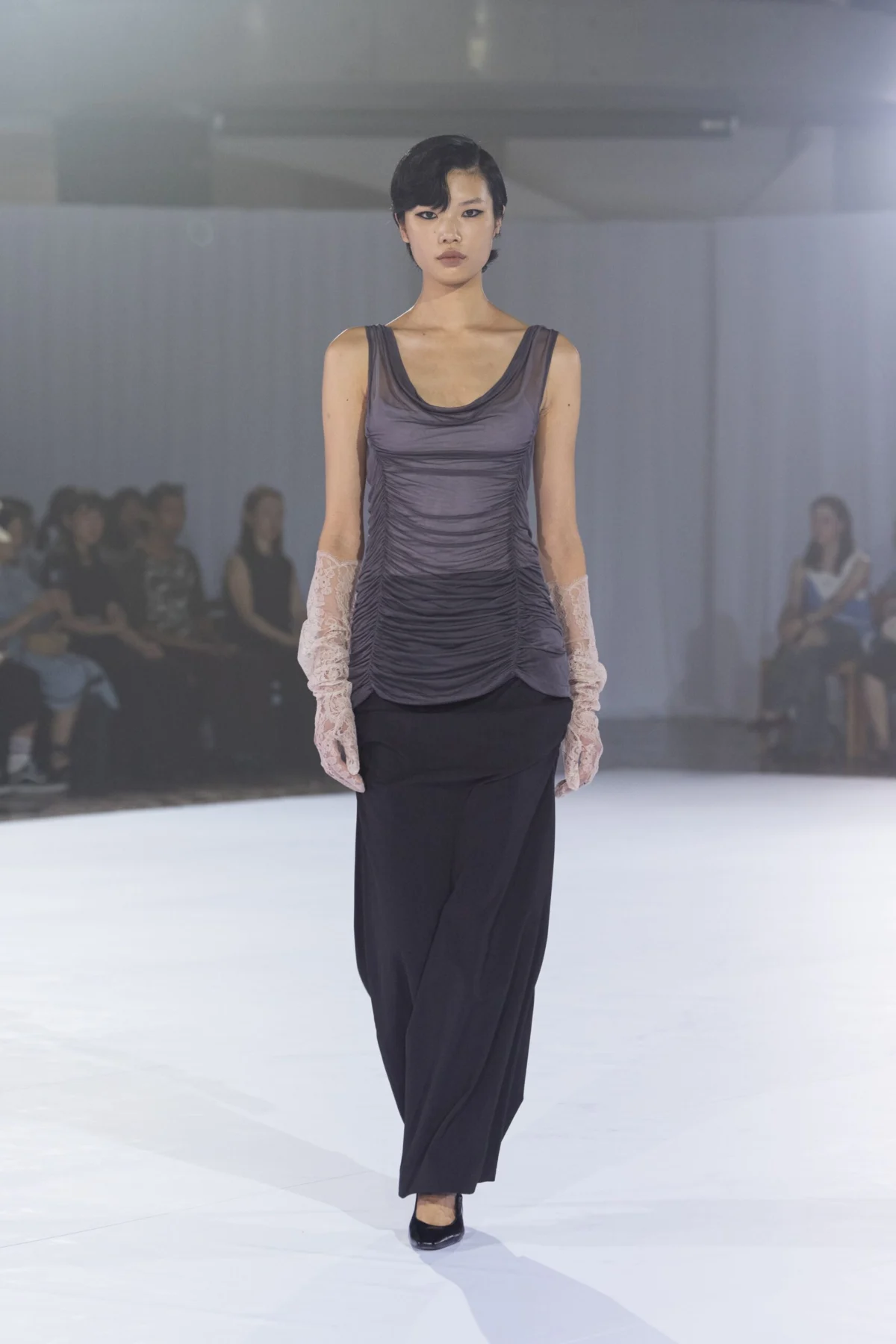
The evolution of Fetico, the Japanese label founded by designer Emi Funayama, reached a significant milestone this season as the brand unveiled its latest collection within the hallowed, misty-lit hall of the Yodobashi Church. This presentation marked a departure from the brand’s previously high-octane, strictly defined "sexy" aesthetic, pivoting instead toward a softer, more atmospheric interpretation of femininity. By centering the collection on the interplay between light, shadow, and the human form, Funayama demonstrated a maturing design language that prioritizes the "nature of ambiguity." This shift suggests a strategic move to broaden the brand’s appeal while deepening its artistic foundations, utilizing translucent fabrics and sophisticated tailoring to invite the viewer’s imagination into the sartorial process.
The Aesthetic Shift: From Overt Seduction to Atmospheric Nuance
Since its inception in 2020, Fetico has carved out a distinct niche in the Japanese fashion landscape by reclaiming "sexiness" through a female-centric lens. Traditionally, the brand has been characterized by body-con silhouettes, bold cutouts, and a nostalgic nod to 1980s glamour. However, the Spring/Summer 2025 collection, presented during Rakuten Fashion Week Tokyo, signaled a deliberate "loosening up." Funayama herself noted a personal transition, reflected even in her own appearance, as she embraced a softer edge that resonated throughout the garments.
The core of this collection was inspired by the work of Sarah Moon, the renowned French photographer known for her painterly, blurred, and highly atmospheric imagery. Moon’s influence was evident in the "misty" lighting of the venue and the choice of materials that felt "supple" and "soft to the touch." By focusing on the "beautiful interplay between transparency and shadow," Funayama moved away from the literal exposure of skin toward a more suggestive and cinematic form of dress. This approach aligns with broader global trends where "quiet luxury" meets "sensual minimalism," favoring texture and silhouette over overt branding or provocative detailing.
Technical Execution and Material Innovation
The collection’s success relied heavily on Funayama’s technical mastery of fabric manipulation. The designer utilized a diverse array of textiles to create a sense of fluid contouring. Key elements of the collection included:
- Translucent Layering: The heavy use of sheer fabrics was not intended for shock value but rather to create depth. By layering translucent materials, Funayama achieved a hazy, "out-of-focus" effect that mirrored Sarah Moon’s photography. These fabrics were designed to fall gently over the body, emphasizing movement and the natural silhouette.
- Strategic Tailoring: A significant portion of the collection was dedicated to structured tailoring. Funayama introduced voluminous, nip-waisted suits, which she signaled would become brand staples. This move toward "power dressing" with a feminine twist indicates a maturation of the Fetico woman—one who balances professional authority with personal sensuality.
- Artisanal Detailing: The collection featured intricate "cutout petal" details that allowed for a fleeting glimpse of skin. This was complemented by the inclusion of lace and leather, materials that provided a tactile contrast to the ethereal qualities of the organza and silk.
- Sartorial Seduction: The closing looks of the show integrated "lashings of lace" and sharp leather accents. These pieces served as a bridge between the brand’s heritage of bold seduction and its new direction of refined elegance.
Chronology of the Event and Brand Development
The presentation at Yodobashi Church was the culmination of a multi-year trajectory that has seen Fetico rise from a cult favorite to a significant player in the Tokyo fashion scene.
- 2020: Emi Funayama, formerly of Christian Dada, launches Fetico with a focus on highlighting the beauty of the female form.
- 2022: Fetico wins the JFW Next Generation Award, providing the brand with the resources to scale its production and visibility.
- 2023: The brand receives the Tokyo Fashion Award, further cementing its status as a leader in the "new wave" of Japanese designers who are challenging traditional minimalist tropes.
- SS2025 Design Phase: Funayama begins exploring the archives of Sarah Moon, seeking a way to translate the photographer’s "ambiguous world" into wearable garments.
- The Runway Show: The choice of Yodobashi Church as a venue was pivotal. The architectural sanctity of the space provided a stark contrast to the sensuality of the clothes, creating a "cinematic" experience that emphasized the collection’s romantic undertones.
Supporting Data: The Rise of Independent Japanese Labels
The evolution of Fetico occurs within a broader economic and cultural context in Japan. According to data from the Japan Fashion Week Organization (JFWO), there has been a 15% increase in the international buyer attendance at Tokyo Fashion Week over the last two years, driven largely by an interest in independent labels that offer a distinct alternative to European luxury houses.
Furthermore, market analysis indicates a growing demand for "versatile sensuality" in the luxury segment. Consumers are increasingly seeking garments that can transition from high-fashion events to daily wear. Funayama’s decision to introduce "brand staples" like the nip-waisted suit is a direct response to this market trend, ensuring the brand’s longevity by offering pieces with high utility and timeless appeal.
Industry Reactions and Inferred Implications
While official reviews from major fashion mastheads praised the collection for its "effortless" quality, industry insiders have noted the strategic importance of this shift. By moving into the realm of "atmospheric fashion," Fetico is positioning itself to compete with established names like Mame Kurogouchi or even international labels like Chloé, which occupy the space between romanticism and modern structure.
Observers at the show remarked on the "imagination" invited by the obscured silhouettes. One industry analyst noted, "Funayama is no longer just selling a look; she is selling an atmosphere. By not showing everything clearly, she forces the consumer to engage with the garment on a deeper, more emotional level." This psychological approach to design is often what separates "trend" brands from "legacy" brands.
The inclusion of more robust tailoring also suggests a preparation for further international expansion. Structured pieces often perform better in Western markets, where the "working wardrobe" remains a primary driver of luxury consumption. By grounding her ethereal designs with solid tailoring, Funayama has created a balanced portfolio that appeals to both the avant-garde and the pragmatic consumer.
Broader Impact on the Fashion Landscape
The Fetico Spring/Summer 2025 collection serves as a case study in how a brand can evolve without losing its core identity. Funayama has successfully transitioned from "sartorial seduction" as an act of exposure to "sartorial seduction" as an act of suggestion. This nuance is critical in a post-trend world where authenticity and depth are valued over mere visual impact.
The "nuanced world" Funayama evoked at Yodobashi Church reflects a broader cultural shift toward valuing the "unseen." In an era of high-definition digital saturation, the blurred edges and hazy transparencies of this collection offer a form of visual relief. It suggests that fashion is not just about the clothes themselves, but about the space between the fabric and the body—the "interplay between transparency and shadow."
As Fetico continues to define its staples and refine its aesthetic, the brand’s influence on the Tokyo fashion scene is likely to grow. The move toward softer, more fluid contours, backed by rigorous tailoring, provides a blueprint for other emerging designers looking to balance artistic expression with commercial viability.
Conclusion: The Nature of Ambiguity
Emi Funayama’s latest work is a testament to the power of restraint. By embracing the "intriguing nature of not seeing things clearly," she has created her most sophisticated collection to date. The transition from the sharp, defined lines of her earlier work to the "gentle, fluid contours" of the SS2025 season marks the arrival of a designer who understands that a "fleeting glimpse" is often more powerful than a full revelation.
The Fetico woman of 2025 is not just seen; she is felt. She inhabits a world of lace, leather, and light—a world where the clothes do not just cover the body but interact with the environment to create something entirely new. As the "misty-lit" hall of the Yodobashi Church cleared at the end of the show, it was evident that Fetico had not just presented a collection, but had successfully invited the world into a new, more nuanced chapter of its history.