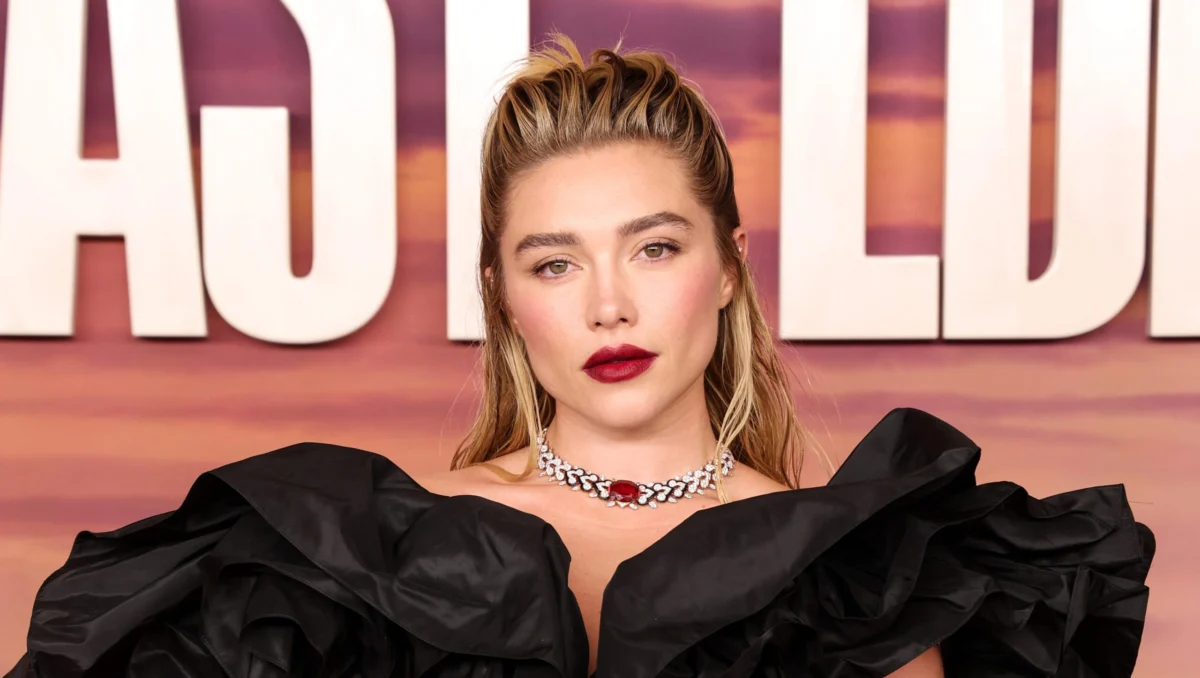
Oscar-nominated actress Florence Pugh has offered a candid reflection on the intersection of celebrity, social media influence, and geopolitical advocacy, detailing her decision to speak out on the humanitarian crisis in Palestine despite the inevitable professional and personal backlash. In a recent cover story for Vanity Fair, the star of the upcoming Netflix adaptation of East of Eden revealed that her public stance resulted in the loss of hundreds of thousands of followers, a consequence she views as secondary to the gravity of the ongoing conflict.
The actress, known for her roles in Midsommar and the Marvel Cinematic Universe, has consistently utilized her platform to highlight global injustices. Her remarks come at a time when the entertainment industry faces intense pressure regarding how artists engage with sensitive political issues. For Pugh, the decision to speak out was not a calculated PR move, but an extension of what she describes as a basic human necessity to acknowledge suffering.
The Catalyst: Together for Palestine
The focal point of Pugh’s recent commentary traces back to September 2024, when she attended the Together for Palestine event. Her speech at the gathering drew significant attention, specifically for her assertion that, “Silence in the face of such suffering is not neutrality, it is complicity, and empathy should not be this hard and it should have never been this hard.”
This event served as a definitive moment for the actress, who acknowledged that while many in the public eye have remained silent—or chosen to offer carefully curated, neutral statements—she felt compelled to abandon ambiguity. During her interview with Vanity Fair, she admitted to being perplexed by the industry-wide hesitation to address the scale of the crisis in Gaza. She noted that the lack of vocal support from peers actually served to galvanize her resolve, suggesting that if a stance is controversial simply because others refuse to acknowledge the human cost, then that stance is inherently the correct one to hold.
Chronology of Advocacy and Public Reaction
The discourse surrounding celebrity activism in the Middle East has evolved rapidly since the October 7, 2023, attacks and the subsequent military campaign in Gaza. Throughout late 2023 and into 2024, various Hollywood figures faced scrutiny for their social media activity, with many being dropped by agencies or facing public boycotts.
Pugh’s timeline reflects a deliberate, sustained engagement rather than a momentary trend. Her involvement in the Together for Palestine event required logistical navigation, as the production schedule for the high-profile Marvel project Avengers: Doomsday was already underway. Despite the tight schedule, Pugh’s management team reportedly supported her attendance, marking a notable departure from the “stick to acting” advice often given to high-profile stars.
The loss of hundreds of thousands of followers, as noted by the actress, highlights a broader trend in digital media where influencers and celebrities are increasingly subjected to “de-platforming” or mass unfollowing campaigns when their personal values clash with a segment of their audience. Analysts suggest that for A-list talent, these losses are often temporary or negligible in terms of overall marketability, but they represent a significant shift in the relationship between fans and public figures.
Humanitarian Context and Moral Urgency
Beyond the metrics of social media, Pugh’s commentary underscores the psychological toll of witnessing humanitarian disasters in real-time. She described the cognitive dissonance of balancing the requirements of her professional life—red carpets, film premieres, and promotional tours—with the relentless influx of images depicting civilian suffering.
“Babies are still dying. Mothers are still in pain,” Pugh told the publication. “It’s really horrible to be watching such pain when so much of our lives just seem to be moving forward.”
This perspective aligns with reports from various international aid organizations, including the United Nations and the World Health Organization, which have consistently described the situation in Gaza as a catastrophe of unprecedented proportions. The humanitarian crisis, characterized by widespread food insecurity, the collapse of medical infrastructure, and the displacement of nearly the entire population of the Gaza Strip, has remained at the center of international discourse. By centering her comments on the victims rather than the politics of the conflict, Pugh has tapped into a narrative of universal empathy that resonates with many, even as it alienates those who favor a strictly geopolitical interpretation of the events.
The Changing Landscape of Celebrity Activism
The implications of Pugh’s stance extend to how the next generation of actors perceives their role in the public sphere. For decades, the “Hollywood silence” model was the standard—avoiding political controversy to ensure maximum box-office appeal and avoid alienating international markets. However, the rise of social media has made that model increasingly difficult to maintain.
Data from media consulting firms suggests that modern audiences, particularly Gen Z and Millennials, place a higher premium on “authenticity.” Research indicates that younger demographics are more likely to support brands and public figures who demonstrate a commitment to social causes, even if those causes are divisive. Conversely, this creates a volatile environment where celebrities are forced to choose between the risk of public backlash and the risk of being perceived as disingenuous.
Pugh’s experience suggests that the industry may be moving toward a new equilibrium where personal conviction is considered a component of a performer’s public identity. While the loss of followers is a measurable metric, the long-term impact on her career remains to be seen. Given her current trajectory—starring in the Netflix adaptation of East of Eden, expected to be a major awards contender, and her upcoming roles in Marvel’s Avengers: Doomsday and the continuation of the Dune franchise—her career seems insulated from the potential downsides of her political expression.
Professional Trajectory and Future Projects
Despite her vocal stance, Pugh’s professional life remains as robust as ever. Her calendar is packed with some of the most anticipated projects of the coming year, underscoring the reality that for stars of her stature, political activism does not necessarily equate to career stagnation.
The release of East of Eden on October 1 is expected to further cement her reputation as one of the most versatile actresses of her generation. Her transition into the Marvel Cinematic Universe with Avengers: Doomsday, set for release on December 18, places her at the heart of the world’s largest entertainment franchise. Notably, that same day will see the debut of the next installment in the Dune series, in which she also features.
This concentration of high-profile projects creates a unique juxtaposition: a global star who uses her massive platform to spotlight human rights concerns while simultaneously acting as a pillar for some of the most profitable intellectual properties in history.
Fact-Based Analysis: The Cost of Speaking Out
The phenomenon of “cancel culture” or “consequence culture” often dominates headlines, but in the case of major stars like Pugh, the reality is more nuanced. While the actress noted a dip in her follower count, this is a common occurrence for celebrities who engage with polarizing topics. Political polarization in the digital age means that any public statement regarding the Middle East will inevitably result in a churn of followers.
Experts in media relations observe that the “cost” of such activism is often overstated in the short term. For an actor with Pugh’s depth of work and critical acclaim, the support of the industry and the loyalty of a core fanbase tend to outweigh the volatility of social media metrics. Furthermore, by framing her support as an act of empathy rather than a political ultimatum, she has managed to maintain a level of public discourse that is less inflammatory than many of her peers, potentially mitigating the long-term damage to her brand.
The Broader Impact on the Industry
The willingness of actors to speak out, even at the cost of personal popularity, is forcing a shift in how studios and agents handle talent management. Historically, publicists functioned as buffers, shielding stars from the potential fallout of political engagement. Today, as stars gain more direct control over their messaging via social media, the role of the publicist has shifted toward crisis management rather than total prevention.
Pugh’s case demonstrates that the era of the “apolitical star” is fading. As the global public continues to demand transparency and accountability from those in positions of influence, the pressure on Hollywood to respond to humanitarian crises will only grow. Whether this leads to a more socially conscious entertainment industry or one that is increasingly fragmented by ideological lines remains the primary question facing the studio system.
In conclusion, Florence Pugh’s decision to speak on the crisis in Palestine is illustrative of a broader shift in the entertainment landscape. By prioritizing her personal convictions over the metrics of social media popularity, she has joined a growing cadre of artists who are redefining what it means to be a public figure in the 21st century. Her commitment to the cause, combined with her continued success in the film industry, suggests that the perceived barrier between activism and career advancement is becoming increasingly porous. As she moves forward with her upcoming slate of major releases, her voice will likely continue to be one of the most significant in the conversation regarding the responsibility of the privileged to advocate for the voiceless.