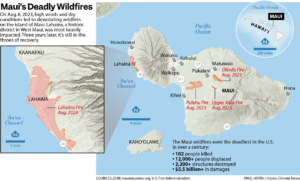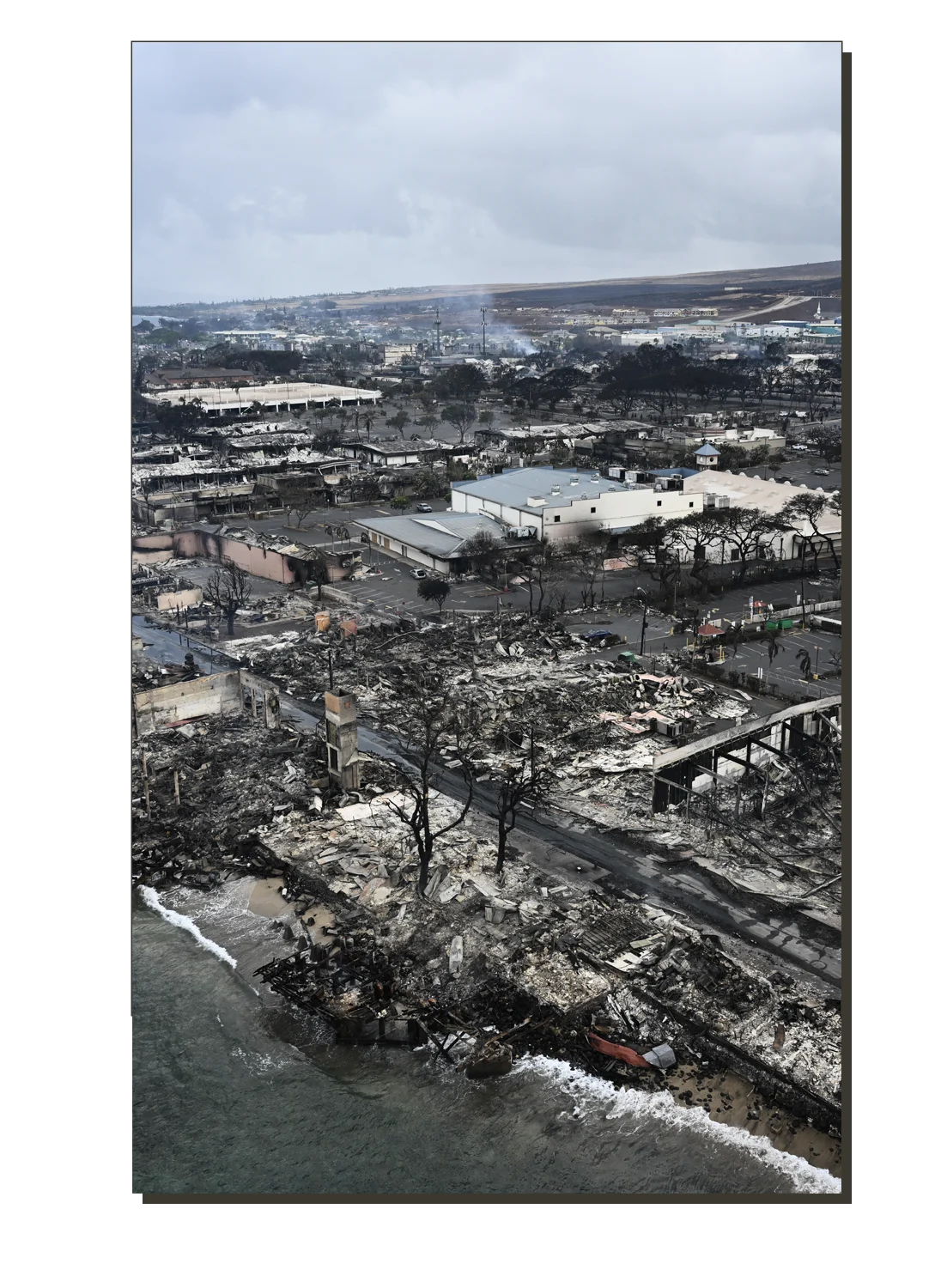
The 2023 Maui wildfires stand as one of the deadliest and most destructive natural disasters in recent American history, claiming over 100 lives, reducing nearly 2,000 homes to ash, and effectively erasing the historic town of Lahaina. While official investigations traced the origin of the fires to a broken utility power pole sparking against dry vegetation amid intense winds, an entirely different narrative took root online. Within hours of the tragedy, social media platforms including X, TikTok, and Instagram were flooded with viral posts alleging that the disaster was intentionally engineered using a "direct energy weapon" or an invisible laser. Proponents of these unverified claims argued the fires were part of a sinister government plot to clear land for high-speed rail lines or high-tech "smart cities."
This phenomenon illustrates a dangerous modern reality: rumors, conspiracy theories, and disinformation are spreading faster than emergency managers can track, creating an information vacuum that delays disaster relief, distorts public perception, and places human lives directly in jeopardy. As extreme weather events grow more severe and frequent due to climate change, emergency response systems find themselves battling not only raging fires and rising floodwaters, but also a tidal wave of digital fabrication.
Anatomy of a Modern Climate Conspiracy
The rapid evolution of online disinformation can be mapped through a bizarre trail of recycled imagery that transformed unrelated events into a cohesive climate conspiracy. The anatomy of the Maui wildfire hoax highlights how digital ecosystems strip context from real images to manufacture outrage.
The sequence began innocuously on January 16, 2018, when the Marathon Petroleum Refinery in Canton, Ohio, experienced a mechanical issue and conducted a routine industrial flare. A local resident captured a blurry photograph featuring an upward-facing lens flare and posted it to Facebook. Months later, in May 2018, SpaceX published an Instagram photograph of a Falcon 9 rocket launch from Vandenberg Space Force Base in California. Five years later, in May 2023, a severe windstorm in Santiago, Chile, caused an electrical transformer to explode, prompting a resident to capture video footage featuring a bright electrical flash and accompanying lens flare.
When the brush fires ignited in Maui in August 2023, causing more than $5.5 billion in damages, bad actors and confused users began resurfacing these completely unrelated historical images. Social media accounts on Instagram, TikTok, and X stitched the photos together, presenting them as empirical evidence of a military-grade laser targeting the island.
Although some users who initially shared the images later issued apologies after realizing the error, the retractions were completely drowned out by high-profile alternative accounts. An Instagram account managed by a prominent wellness entrepreneur shared screenshots of the debunked posts under the headline that a "laser beam" was striking the city. That post garnered more than 430,000 views—dwarfing the reach of the original corrections. By the time screenshots of screenshots circulated globally, the original context of a 2018 industrial flare in Ohio was entirely lost, proving how easily historical media morphs into pervasive modern mythology.
The Perfect Storm: Drivers of Post-Disaster Disinformation
The collision of escalating climate change, societal polarization, and technological transformation has created unprecedented vulnerabilities in emergency communications. According to Amber Silver, a professor of emergency management at the University at Albany and an expert in disaster communications, modern disasters possess all the ingredients required for misinformation to thrive.
"Disasters are, by their nature, very urgent and have a lot of uncertainty surrounding them," Silver explained. Victims face an immediate, desperate need for facts while having virtually no access to reliable, real-time data about their localized safety, creating a vacuum that unverified rumors immediately rush to fill.
Compounding this environmental chaos is a severe institutional deficit. Public trust in government institutions has plummeted to historic lows, with a Pew Research Center study indicating that less than 20 percent of Americans believe the federal government does the right thing most of the time. This baseline skepticism makes emergency management agencies prime targets for conspiracy theorists.
Furthermore, the information landscape has undergone a radical shift. Major social media corporations have systematically rolled back content moderation and fact-checking protocols. Generative artificial intelligence models now introduce new vectors for sourcing and synthesizing information, while short-staffed government agencies struggle to respond to simultaneous digital and physical crises. A recent report from the News Literacy Project found that a vast majority of teenagers frequently encounter social media conspiracy theories, and most are inclined to believe them.
Real-World Consequences and Institutional Strain
The proliferation of online falsehoods extends far beyond harmless digital chatter; it results in tangible, real-world harms that compromise emergency responses and strain public safety infrastructure. Academic reviews of recent disaster research consistently indicate that bad information leads directly to the misallocation of limited emergency resources, overwhelms emergency services, and diverts critical attention away from genuine humanitarian needs.
The Federal Emergency Management Agency has long served as the primary lightning rod for disaster-related conspiracies. Historically dogged by recurring rumors regarding fictitious "FEMA concentration camps," the agency faced unprecedented physical threats during the catastrophic aftermath of Hurricane Helene in 2024. The convergence of a major hurricane weeks before a presidential election supercharged political disinformation.
Right-wing and foreign-backed social media accounts accused the federal government of intentionally withholding aid from Republican-leaning areas in North Carolina. Concurrently, false reports regarding armed militias targeting federal workers forced FEMA administrator Deanne Criswell to temporarily suspend field operations to protect personnel. Anonymous trolls subjected Criswell and her deputy chief of staff to "swatting" attacks, tricking local law enforcement into deploying heavily armed SWAT teams to their personal residences. These coordinated disruptions severely strained an already overwhelmed disaster response apparatus, leaving vulnerable storm victims waiting longer for basic food, water, and shelter.
Studies from around the world document similar erosions of civic stability following climate shocks. Research published by the Inter-American Development Bank demonstrated that an earthquake in Mexico triggered an 11 percent drop in public trust toward the government. Similarly, a Department of Homeland Security analysis revealed that an inaccurate evacuation map tweeted during a 2017 California flood sparked unnecessary mass evacuations, dangerously clogging evacuation routes for citizens facing actual peril.
The Emerging Frontier of Generative AI
As emergency managers grapple with legacy social media platforms, the widespread adoption of generative artificial intelligence introduces a complex new variable. Approximately one-quarter of U.S. adults now utilize AI chatbots daily, frequently turning to large language models for informational queries.
While commercial chatbots like ChatGPT or Gemini are generally programmed to rely on official news reports and scientific consensus—frequently debunking wild conspiracies like the Maui laser myth when directly queried—they remain susceptible to systemic vulnerabilities. During a fast-moving crisis, AI models risk scraping outdated news articles or unverified reports, potentially providing disaster victims with erroneous evacuation guidance or miscalculating their eligibility for federal recovery benefits.
Organizations such as the American Red Cross and the Massachusetts Institute of Technology have begun deploying specialized crisis-response chatbots like Clara and Crisischat to assist victims. However, communication experts warn that the objective accuracy of an AI tool is only half the battle. Anita Atwell Seate, a professor of communication and crisis expert at the University of Maryland, emphasizes that public action is dictated by trust rather than factual veracity. If populations trust a poorly calibrated digital tool over official warnings, they will act on inaccurate guidance, with potentially fatal results.
Trench Warfare: Strategies for Restoring Truth
Solving the disinformation crisis within a deeply fragmented society remains an elusive goal for policymakers. Fact-checking initiatives and public myth-busting websites are inherently reactive, lagging far behind the rapid viral velocity of social media hoaxes. Consequently, emergency management experts argue that traditional top-down communication strategies are obsolete.
Instead, building resilience against disinformation requires long-term community engagement and the cultivation of trusted local messengers long before a storm makes landfall or a wildfire sparks. Toward the conclusion of the Biden administration, FEMA began shifting its communication strategy by partnering directly with trusted community leaders. In Maui, the agency worked alongside Native Hawaiian civil servants who could directly reassure local networks that the government had no intention of seizing ancestral land. Similar partnerships with caregiver networks have allowed public health officials to distribute verified safety protocols through trusted intermediaries.
"From a government perspective, they’re just like, ‘They don’t know us,’" Seate noted, referencing communication hurdles observed at the National Weather Service. "But they don’t have to know us, they know Jim down at the fire station and Jim, you know, rings the alarm and posts on Facebook for us."
Ultimately, combating climate-related disinformation functions less like a decisive victory and more like trench warfare. Justin Knighten, a risk communication consultant who led FEMA’s external affairs team under the Biden administration, underscores the sheer scale of the challenge facing modern emergency management.
"It’s at a level that we’ve never really seen before, because the systems and the silos of information have gotten so siloed and quick," Knighten said. "When trust is low, you have a lot of work to not only build up that trust, but to also get ahead of those upcoming threats, so you’re really working at a deficit."