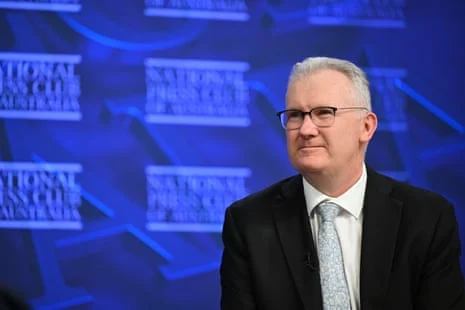
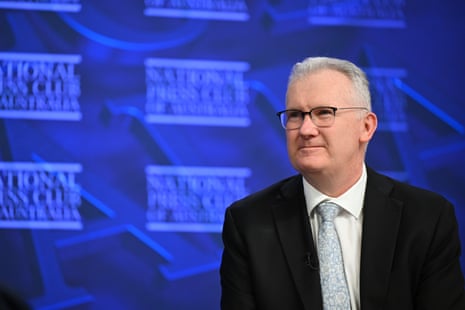
Federal Home Affairs Minister Tony Burke has robustly defended the Labor government’s timeline for releasing its highly anticipated national immigration plan, pushing back against intense political scrutiny and shifting the blame back onto the opposition Coalition. Speaking on the Australian Broadcasting Corporation’s flagship current affairs program, 7.30, following the formal unveiling of the framework on Thursday, Burke addressed persistent questions regarding why the policy launch was delayed by roughly six weeks from his original intended address at the National Press Club.
Navigating the intricacies of Australia’s contemporary visa system, Burke argued, requires profound administrative diligence rather than hasty policymaking. The federal government has faced an uphill battle balancing competing economic pressures, structural housing shortages, and the ongoing demand for skilled and unskilled labor across various sectors. As immigration policy continues to dominate public discourse and intersect directly with the cost-of-living crisis, the government’s calculated delay was framed as a necessary measure to ensure economic stability.
The Complexity of Post-Pandemic Migration and Economic Impacts
Immigration has evolved into one of the most sensitive touchstones of Australian domestic policy. In the wake of pandemic-era border closures and subsequent record influxes of international students, migrant workers, and families, the federal government has been forced to recalibrate its long-term population planning.
During his interview on 7.30, Burke emphasized that virtually every sector of the Australian economy is currently touched by immigration dynamics. Addressing the persistent public anxiety surrounding housing supply, the home affairs minister noted that while immigration is not the root cause of the housing crisis, it must necessarily form part of the solution.
"Dealing with the challenges we’ve got with housing supply, which is not immigration’s fault, but immigration needs to be part of the answer, to do that in a way that has the softest landing for the economy is something you’ve got to get right," Burke told viewers.

The government’s comprehensive plan targets various facets of the migration architecture, including student visa regulations, family reunion pathways, and measures to curb visa overstays. However, the deliberative process required extensive cross-departmental consultation involving the Treasury, the Department of Employment and Workplace Relations, and social infrastructure planners to mitigate any sudden shocks to the labor market.
Opposition Backlash and the Coalition’s Preconditions
The release of the migration framework has drawn swift and sharp condemnation from the federal opposition. Coalition Leader Angus Taylor criticized the government’s package during his own appearance on 7.30, asserting that the proposed reforms fail to adequately address public concerns over population growth and infrastructure capacity.
Taylor revealed that the Coalition had previously attempted to negotiate terms for bipartisan cooperation on migration reform, but claimed the government was unwilling to meet their foundational demands.
"The Coalition laid out what we needed as preconditions in order to be able to work with the government and they couldn’t meet the preconditions," Taylor said. "The numbers are too high and what we’ve seen from the government today is no cut to the numbers… We are a great immigrant nation. Make no mistake about it. But immigration needs to be capped based on the housing supply, the infrastructure, the services we have, and that has not been the case in recent years."
The opposition has consistently argued for lower, hard-capped permanent migration numbers linked directly to verified benchmarks in housing completions and public service expansions. By refusing to legislate aggressive cuts immediately, the government has left itself vulnerable to attacks from a Coalition eager to position itself as the champion of burdened suburban and regional taxpayers.
Employment Minister Defends Agricultural and Regional Needs
As debate intensifies over whether reduced migration quotas could trigger labor shortages—particularly in agricultural and regional sectors—Employment Minister Amanda Rishworth stepped forward to defend the government’s strategy. Rishworth rejected claims that the migration adjustments would jeopardize national food security or drive up grocery prices.

Appearing on morning broadcast media, Rishworth stated that she "doesn’t accept the premise" that migration reductions would harm primary producers. She pointed to existing structural mechanisms designed to protect regional labor supply, including the Pacific Australia Labour Mobility (PALM) scheme and modified provisions for working holidaymakers.
"There will still be access to backpackers," Rishworth said, highlighting that under the revised policy parameters, working holiday visa holders will still be incentivized to fulfill regional work requirements in their second and third years to maintain visa status. "I’d encourage farmers to have a look at that scheme, because there is opportunity. But more broadly, when it comes to migration, it is about taking a response that ensures that we have integrity in the system, that we have compliance in the system."
Broader Domestic and Geopolitical Context
While the immigration debate dominates the domestic front, the Albanese government is simultaneously managing a complex suite of international and national security priorities. The unfolding political week has been characterized by major developments spanning foreign policy, technology regulation, and defense strategy.
Prime Minister Anthony Albanese is scheduled to depart for the United States, where his itinerary includes a high-profile visit to Apple’s headquarters in California. The visit follows the introduction of landmark Australian digital duty of care reforms and world-first legislation banning children under 16 from maintaining social media accounts. Albanese is slated to meet with Apple executive chair Tim Cook to discuss parental controls and online safety frameworks, which the Australian government has touted as pioneering global standards.
From California, the prime minister will travel directly to New York to lead Australia’s delegation at the United Nations General Assembly high-level week. The government has prioritized discussions surrounding climate change, digital safety, and international peace, while aggressively ramping up diplomatic lobbying for a non-permanent seat on the UN Security Council for the 2029–2030 term—a position Australia last held in 2013 and 2014.
Foreign Minister Penny Wong underscored the gravity of Australia’s diplomatic positioning ahead of the summit, stating in a formal release that "sovereignty, prosperity and peace are not a gift or a given."
Concurrently, defense policy remains under the microscope following recent high-level forums in Washington DC marking the fifth anniversary of the AUKUS security pact. Sir Stephen Lovegrove, the UK prime minister’s special representative on AUKUS, told a gathering at the Center for Strategic and International Studies that the intensity of opposition from potential adversaries serves as a key metric of the pact’s success. Australian Ambassador to the US Greg Moriarty echoed these sentiments, defending the acquisition of nuclear-powered submarines against criticisms of regional destabilization and affirming Australia’s long-term strategic alignment within the Indo-Pacific.
Implications for the Future Policy Landscape
The intersection of immigration reform, housing supply pressures, and economic management will undoubtedly remain a defining battleground for Australian politics as the federal election cycle progresses.
While the Labor government maintains that its measured, integrity-focused approach will provide a "soft landing" for a complex economy, the Coalition’s insistence on hard caps guarantees that population and infrastructure will stay front and center in the national dialogue. As ministers traverse international stages to cement digital safety standards and security alliances, domestic voters will continue to judge the administration largely on its ability to balance sustainable population growth with everyday cost-of-living pressures.