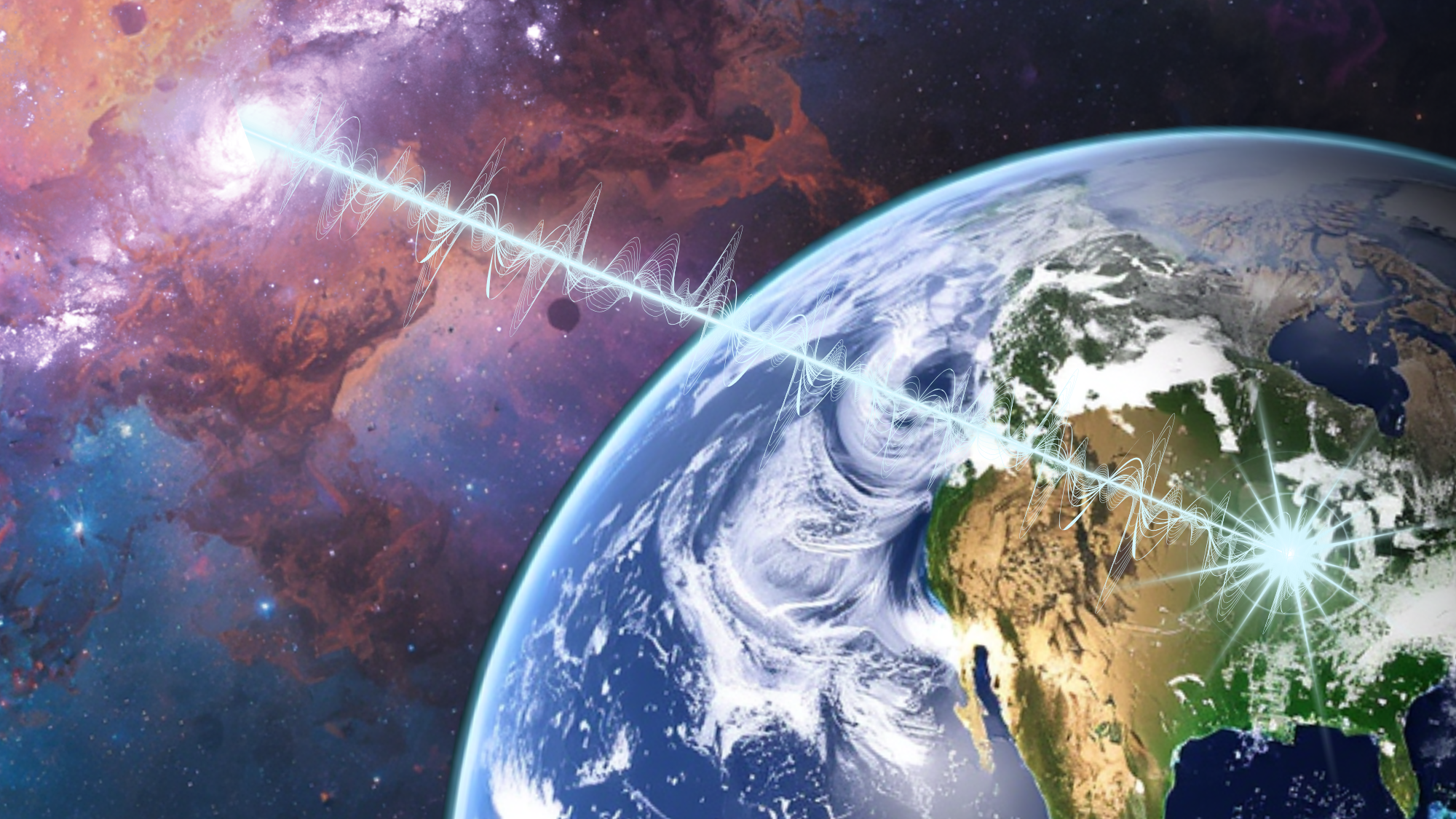
For centuries, humanity has gazed up at the night sky, charting stars, mapping galaxies, and attempting to comprehend the silent vastness of the universe. Yet, much of the cosmos operates in wavelengths entirely imperceptible to human senses. Among the most elusive and energetic phenomena in astrophysics are fast radio bursts—brief, blinding flashes of radio waves originating from billions of light-years away. Although invisible to the naked eye and fundamentally silent as radio waves, these mysterious cosmic signals can now be heard. Through an innovative collaboration between art and science, a contemporary composer and an MIT physicist have successfully transformed billions of years of cosmic history into an immersive auditory experience, allowing human ears to listen to the echoes of deep space.
The Genesis and Mystery of Fast Radio Bursts
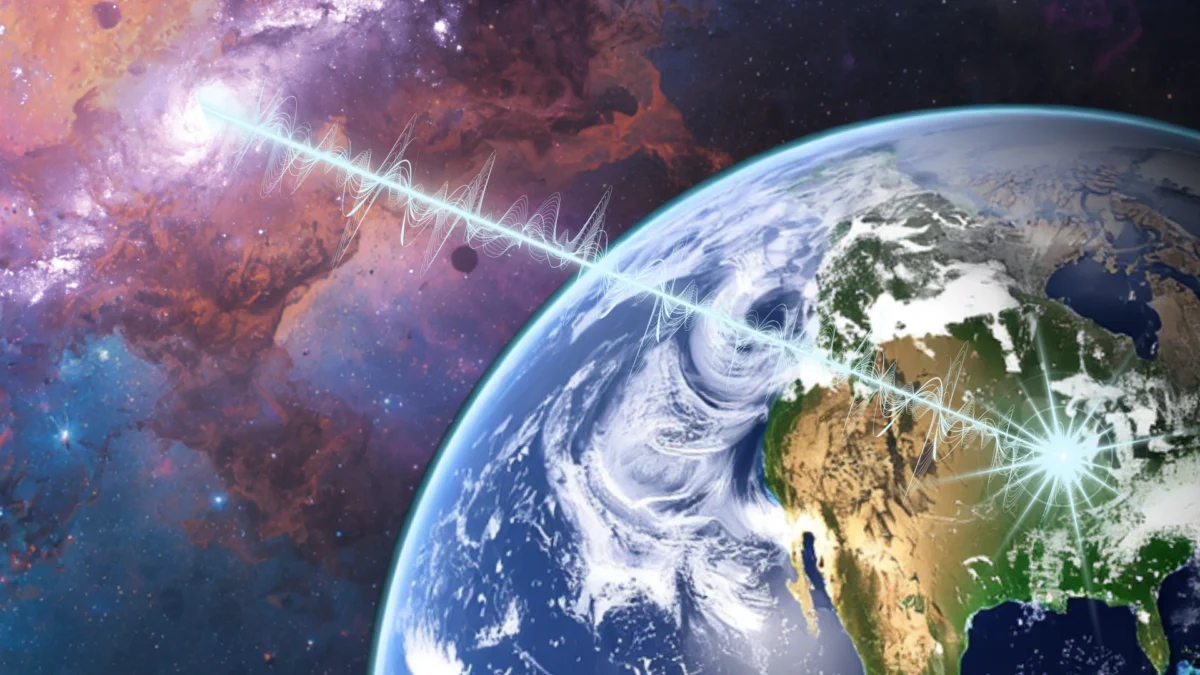
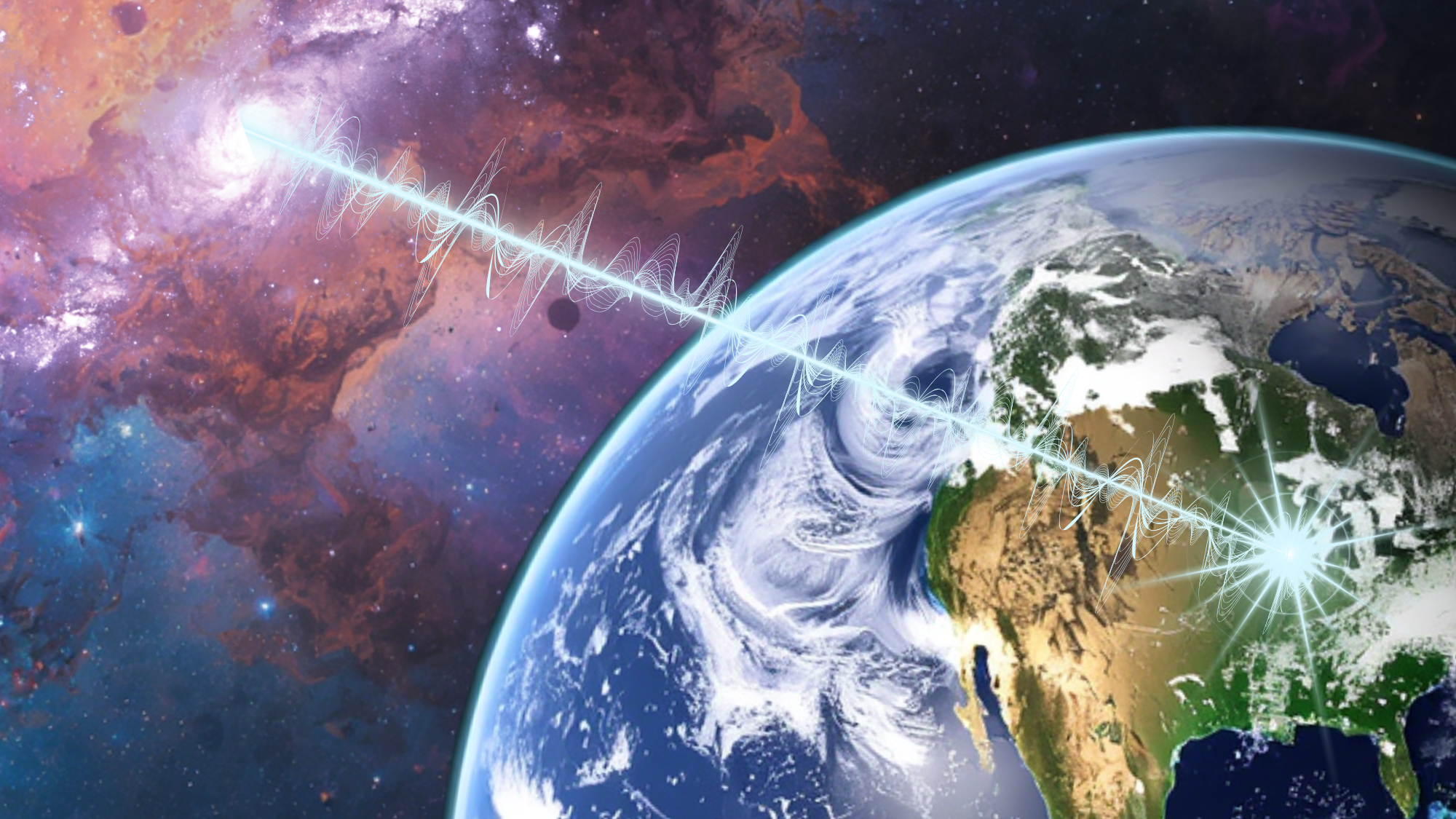
Fast radio bursts, commonly known as FRBs, represent some of the most extreme energetic events recorded in the universe. In a mere millisecond—a fraction of the blink of an eye—a single FRB can release as much energy as our sun produces in three entire days. For a brief moment, these flashes can completely outshine the host galaxies in which they reside.
Since the first FRB was serendipitously discovered in archival data in 2007 by astronomer Duncan Lorimer and his student David Narkevic, the astrophysical community has been captivated and baffled by them. Thousands of these transient events have since been detected across the sky, yet the precise mechanisms driving them remain fiercely debated. While early hypotheses ranged widely from extraterrestrial technosignatures to merging black holes, recent empirical evidence has increasingly pointed toward extreme stellar environments, specifically those involving rotating neutron stars and highly magnetized stellar remnants known as magnetars.
Despite their immense power, catching an FRB in the act has historically been a matter of extreme astronomical fortune. Because they vanish almost as instantly as they appear, traditional narrow-field telescopes had to be pointed at precisely the correct patch of the sky at the exact microsecond a burst occurred.
The Game-Changer: CHIME and the Data Revolution
That observational bottleneck changed dramatically with the deployment of the Canadian Hydrogen Intensity Mapping Experiment, universally known as CHIME. Located at the Dominion Radio Astrophysical Observatory in British Columbia, Canada, CHIME features a unique architectural design with no moving parts. Instead, its stationary, half-cylinder metallic reflectors sweep across a massive swath of the northern sky every single day.
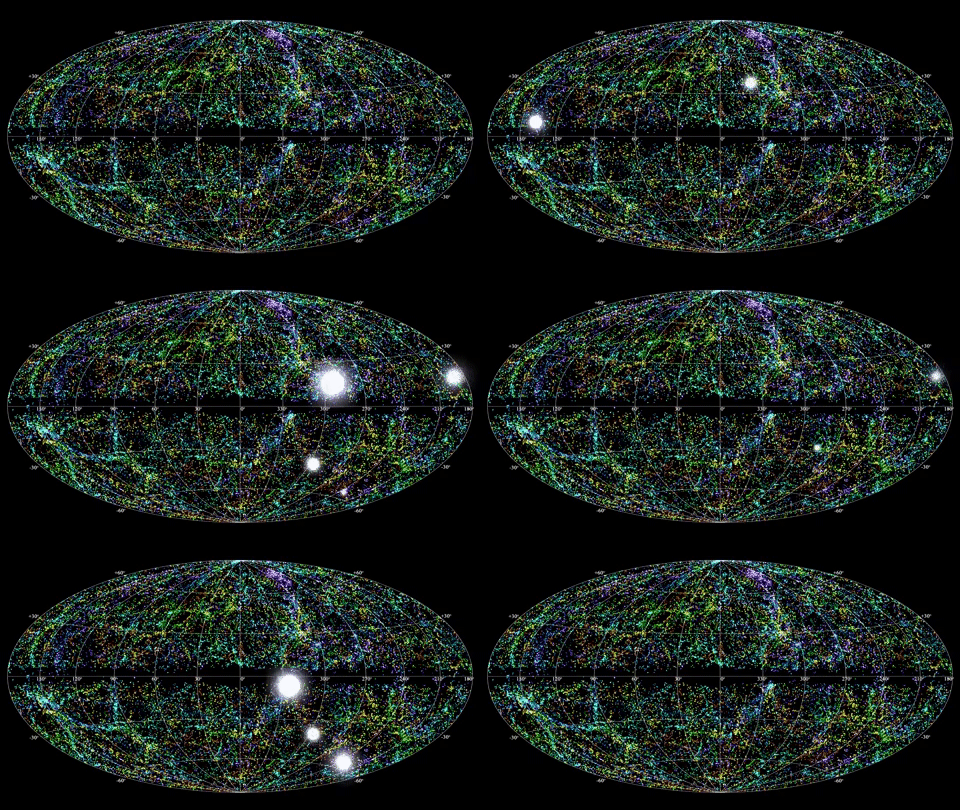
Backed by a powerful supercomputer capable of processing massive data streams in real time, CHIME revolutionized transient astronomy. In its very first year of operation, the facility quadrupled the global inventory of known FRBs. Between 2018 and 2023, CHIME’s continuous monitoring recorded an unprecedented 4,539 distinct bursts originating from 3,641 separate cosmic sources. This monumental dataset transformed FRBs from rare, anomalous curiosities into a statistically rich population of signals that scientists could begin to analyze systematically.
Translating Data into Acoustics: The Birth of "The Logos"
Because FRBs travel across the cosmos as pulses of high-frequency radio waves, human biology prevents us from experiencing them directly. Our eyes cannot detect radio frequencies, and our ears cannot capture them natively because they do not travel as atmospheric sound waves.
To bridge this sensory gap, artist and composer Andrew Melchior partnered with Kiyoshi Masui, an associate professor of physics at the Massachusetts Institute of Technology (MIT). Together, the pair embarked on a project to "sonify" CHIME’s vast repository of FRB data, translating raw digital telemetry into audible acoustics.
The result of this collaboration is "The Logos," an ambitious sound installation hosted at Oulu Cathedral in Finland. Running daily from early April through the end of the year, the installation maps the structural properties of real cosmic signals to varying musical pitches. These tones are broadcast through an intricate array of 12 loudspeakers strategically positioned throughout the historic cathedral.
Rather than a cacophony of noise, the installation produces a haunting, organic soundscape. Distant FRBs hum, rumble, pop, and whistle as they resonate through the vaulted architecture of the church. According to documentation on Melchior’s project website, the temporal span of these signals is staggering: the youngest bursts integrated into the installation traveled for approximately 50 million years to reach Earth, while the oldest embarked on their journeys roughly 8 to 9 billion years ago—long before our solar system even existed.
The Physics of Intergalactic Echoes
The auditory experience delivered by "The Logos" is not merely artistic interpretation; it is deeply rooted in the actual physics of the universe. As an FRB travels across millions or billions of light-years of intergalactic space, it encounters sparse clouds of gas, plasma, and cosmic dust.
This journey leaves a distinct physical signature on the signal. Higher-frequency radio waves travel slightly faster through ionized gas than lower-frequency waves, causing the signal to disperse over distance. When translated into sound, this dispersion manifests as a characteristic downward sweep. "Each burst arrives with its high frequencies first and sweeps downward, stretched by its journey through intergalactic gas, and you can hear that dispersion as it falls from the dome," Melchior explained.
Recent Breakthroughs: Tracing FRBs to Their Homes
As artists interpret these signals on Earth, astronomers continue to push the boundaries of observational technology to uncover where and how FRBs are born. Just weeks prior to the public installations of these soundscapes, researchers utilizing the James Webb Space Telescope (JWST) achieved a major milestone by pinpointing the host galaxy of the most distant FRB detected to date. This particular burst erupted when the universe was only about 3 billion years old.
Surprisingly, the host galaxy identified by JWST was a compact, young, star-forming dwarf galaxy—significantly smaller than theoretical models had predicted. This discovery complicated prevailing models suggesting that FRBs originate from the merger of binary neutron stars, a process that typically requires billions of years of stellar evolution to occur.
Instead, the data heavily favors an alternative hypothesis: that these powerful flashes are generated by magnetars—young, highly magnetic neutron stars born immediately after the cataclysmic death of massive stars in supernova explosions. Because magnetars form quickly, their host environments can be young, star-dense dwarf galaxies, aligning closely with the observations made by the James Webb Space Telescope.
Bridging Art, Science, and the Public
The intersection of art and astrophysics reaches a tangible crescendo in live performances designed to bring the public into direct contact with the cosmos. On November 21, Oulu Cathedral is scheduled to host a unique interactive performance where 30 vocalists will stand among the audience, harmonizing and "singing back to the sky in Finnish" while Melchior performs the CHIME FRB data live from a keyboard.
"The fast flashes will echo as snare-like beats bouncing through the cathedral," physicist Kiyoshi Masui noted in an institutional statement released by MIT. "It should feel rich and layered, while also revealing something real about how these signals travel across billions of years of cosmic space before reaching Earth."
Broader Implications and Future Horizons
Projects like "The Logos" highlight a growing trend in modern scientific outreach: the translation of complex, abstract astronomical data into sensory formats that resonate with the general public. By democratizing access to cosmic phenomena through sound and immersive art, researchers and creators are fostering a deeper cultural appreciation for the scale and complexity of the universe.
As upcoming next-generation radio telescopes come online over the next decade, the volume of detected fast radio bursts is projected to increase exponentially. With millions more signals expected to be cataloged, scientists hope to use FRBs not just as objects of study in their own right, but as cosmic probes. Because these signals pass through the invisible web of matter spanning the universe, they carry encoded information about the distribution of normal matter—baryons—that remains largely hidden from optical telescopes.
Whether through the cold precision of supercomputer analytics or the resonant acoustics of a centuries-old European cathedral, fast radio bursts continue to challenge our understanding of physics. They remind humanity of the violent, dynamic beauty hidden within the silent void of space—a melody that has been traveling toward us for billions of years, finally waiting to be heard.