Design Evolution: Subtle Refinement and Aerodynamic Efficiency
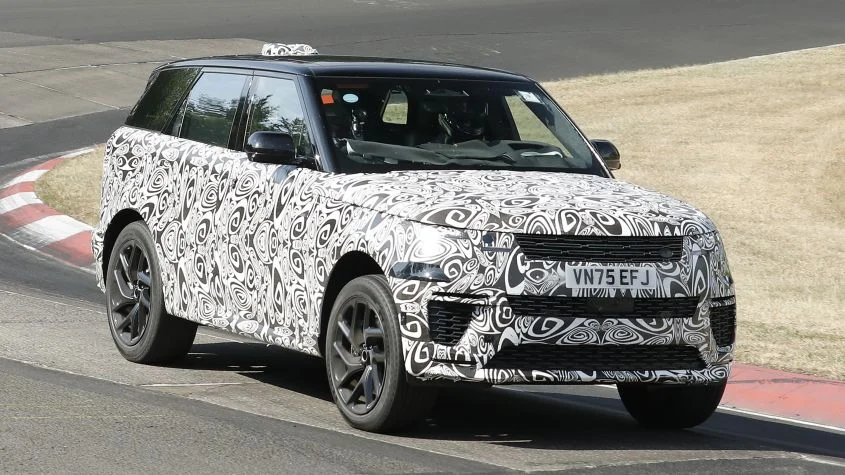
The visual changes observed on the latest Range Rover Sport prototypes suggest a philosophy of evolutionary refinement rather than a radical departure from the minimalist "reductionist" design language introduced in 2022. At the front, the prototype reveals a revised bumper assembly. While the overall silhouette remains familiar, the lower intakes appear slightly reshaped to optimize airflow, likely benefiting both cooling for high-performance variants and aerodynamic efficiency for plug-in hybrid models. A new mesh pattern within the grille and air intakes adds a fresh texture to the fascia, differentiating the facelifted model from the current iteration.
Close inspection of the test mules confirms the retention of slimline LED foglights, though their integration into the bumper surrounds has been subtly tweaked. Interestingly, the high-mounted license plate seen on recent prototypes is widely considered a temporary testing fixture; production models are expected to return the plate to its standard position on the lower bumper. More significant, however, are the expected changes to the lighting signatures. Industry insiders suggest that the Range Rover Sport will adopt new headlight internals that align it with the forthcoming Range Rover GT—a high-performance, low-slung electric luxury model currently in development. This move would create a stronger visual link across the top-tier "Range Rover" family of vehicles.
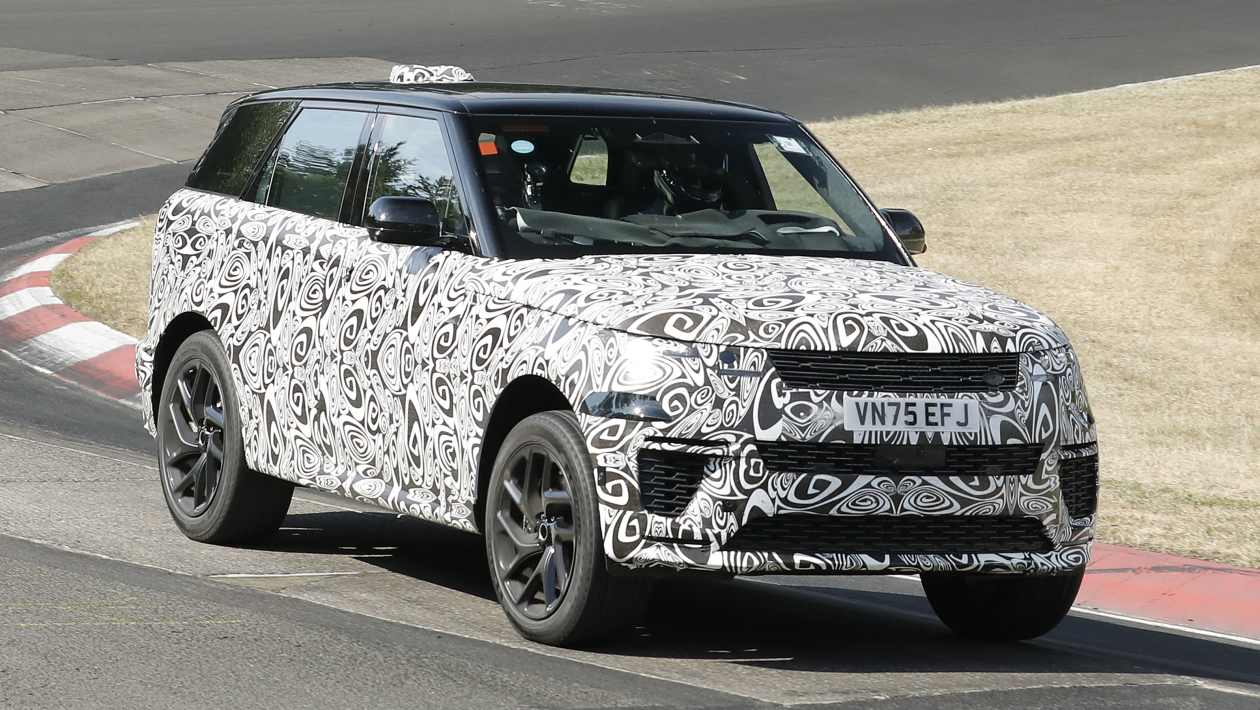
Moving to the rear, the most prominent change is the inclusion of large trapezoidal exhaust finishers. These are integrated into a redesigned lower rear bumper, signaling that internal combustion engines (ICE) will continue to play a major role in the lineup, particularly for the high-output performance versions. Furthermore, the rear LED light clusters, while maintaining their horizontal orientation and flush-fitting design, show evidence of a revised internal illumination pattern. This new lighting signature is intended to provide a more modern "graphic" at night, distinguishing the 2027 model from the 2022-2026 versions.
Digital Transformation and Interior Enhancements
While the exterior updates are focused on aesthetic sharpening, the interior of the facelifted Range Rover Sport is set to undergo a more fundamental technological overhaul. JLR (Jaguar Land Rover) is preparing to debut a new generation of digital interfaces, which will first appear in the Range Rover GT and subsequently trickle down to the Range Rover Sport and the flagship "Big" Range Rover.
The centerpiece of the cabin will remain the curved glass touchscreen, currently measuring 13.1 inches. However, the software powering this display—the Pivi Pro system—will receive a major version update. This new interface is expected to offer faster processing speeds, more intuitive menu structures, and enhanced integration for third-party applications. Despite the move toward a more digital-centric cockpit, sources indicate that the Range Rover Sport will not adopt the small, high-mounted information display rumored for the Range Rover GT, instead sticking to a more traditional luxury layout that prioritizes the driver’s line of sight through a high-definition digital instrument cluster and an advanced Head-Up Display (HUD).

Materials and trim options are also expected to be refreshed. In line with the brand’s "Modern Luxury" strategy, we expect to see an expanded range of sustainable material choices, including Kvadrat wool blends and Ultrafabrics, providing high-end alternatives to traditional leather. These changes are part of a broader effort to appeal to a younger, more environmentally conscious demographic of luxury buyers.
Powertrain Strategy: The Euro 7 Transition and BMW V8 Integration
One of the primary drivers behind this mid-cycle update is the necessity to comply with the Euro 7 emissions standards, which are scheduled for implementation in 2027. These regulations represent a significant challenge for manufacturers of large, heavy SUVs, requiring substantial investment in engine efficiency and exhaust after-treatment systems.
For the Range Rover Sport’s high-performance variants, JLR will continue its partnership with BMW. The current 4.4-liter twin-turbocharged V8, found in the P530 and the high-performance SV models, will undergo a series of technical modifications. These updates will likely mirror the changes being applied to the 2027 Land Rover Defender, focusing on mild-hybrid integration and optimized thermal management to reduce NOx and particulate emissions without sacrificing the effortless torque and power delivery that V8 customers demand.
The plug-in hybrid (PHEV) variants, currently branded as P460e and P550e, are also expected to see incremental improvements. By leveraging advancements in battery chemistry, Land Rover may be able to squeeze additional electric-only range out of the existing 38.2kWh (usable) battery pack. Currently, these models offer an official electric range of up to 75 miles; a slight increase could push the vehicle even further ahead of rivals like the BMW X5 xDrive50e and the Porsche Cayenne E-Hybrid.
The All-Electric Range Rover Sport: A Parallel Launch
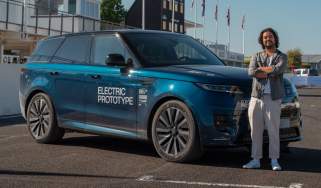
The most significant addition to the Range Rover Sport portfolio, however, is the upcoming all-electric (BEV) variant. While the facelifted ICE and PHEV models are being prepared for 2027, the Range Rover Sport Electric is expected to be revealed much sooner, with a launch window likely in late 2024 or early 2025.
This creates a complex timeline for Land Rover. The brand must decide whether to launch the Electric version with the current styling or wait to align its debut with the facelifted look of the 2027 ICE models. The Range Rover Sport Electric will utilize the MLA-Flex (Modular Longitudinal Architecture) platform, which was designed from the outset to accommodate pure-electric propulsion. It is expected to feature an 800V charging architecture, enabling ultra-fast charging speeds that could add 100 miles of range in just a matter of minutes.

The introduction of the BEV variant is a critical step in JLR’s "Reimagine" strategy, which aims to see all Land Rover nameplates available in pure-electric form by the end of the decade. Initial prototype reviews of the electric variant have praised its "serenity" and refinement, suggesting that the lack of engine noise further enhances the Range Rover Sport’s luxury credentials.
Chronology of the Range Rover Sport Lifecycle
To understand the significance of the 2027 update, it is helpful to look at the timeline of the Range Rover Sport’s development:
- May 2022: The third-generation (L461) Range Rover Sport is officially unveiled, featuring the MLA-Flex platform and a minimalist design.
- 2023: The high-performance Range Rover Sport SV is introduced, replacing the old "SVR" moniker and debuting the BMW-sourced V8.
- Early 2024: JLR begins public road testing of the Range Rover Sport Electric prototypes.
- July 2026: Spy shots of the facelifted 2027 prototypes emerge, revealing new bumpers, lights, and exhaust configurations.
- Late 2026 / Early 2027: Expected official reveal of the mid-life update.
- 2027: The facelifted Range Rover Sport goes on sale globally, coinciding with the implementation of Euro 7 standards.
Market Impact and Competitive Landscape
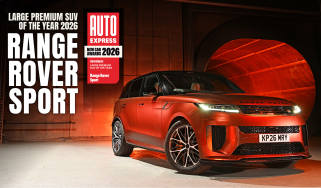
The Range Rover Sport remains JLR’s most vital product in terms of profit margins and brand image. In 2026, it was named the Auto Express "Large Premium SUV of the Year," beating out stiff competition from the Land Rover Defender and the Porsche Cayenne. Its ability to balance genuine off-road capability with sports-sedan-rivalling on-road dynamics has made it a favorite among enthusiasts and luxury commuters alike.
The 2027 update is a strategic move to defend this market position against a wave of new competitors. The BMW X5 and X6 are also expected to see updates or new generations in the same timeframe, while Audi is pushing forward with its Q8 e-tron and Porsche is readying an all-electric version of the Cayenne. By refreshing the styling and, more importantly, the digital experience and engine compliance, Land Rover ensures that the Sport remains a viable and aspirational choice in a rapidly changing regulatory environment.
Industry Reaction and Analyst Perspectives
Automotive analysts suggest that JLR’s decision to continue refining the ICE and PHEV versions of the Range Rover Sport alongside the new Electric model is a pragmatic response to varying rates of EV adoption globally. While European markets are moving toward electrification quickly, demand for high-performance V8 and long-range hybrid SUVs remains strong in North America and the Middle East.
"The Range Rover Sport is the heart of the JLR lineup," says one industry observer. "The challenge for the 2027 facelift is to maintain the vehicle’s mechanical soul while successfully transitioning it into the digital and electric era. The integration of BMW’s V8 technology and the new 800V electric architecture shows that they are covering all bases."
As Land Rover continues to peel back the camouflage on its prototypes in the coming months, the automotive world will get a clearer picture of how this "critical model" will look. For now, the combination of sharper styling, a more advanced digital cockpit, and a diverse range of powertrains—from the roar of a V8 to the silence of a BEV—ensures that the Range Rover Sport will remain a dominant force in the luxury SUV market for years to come.