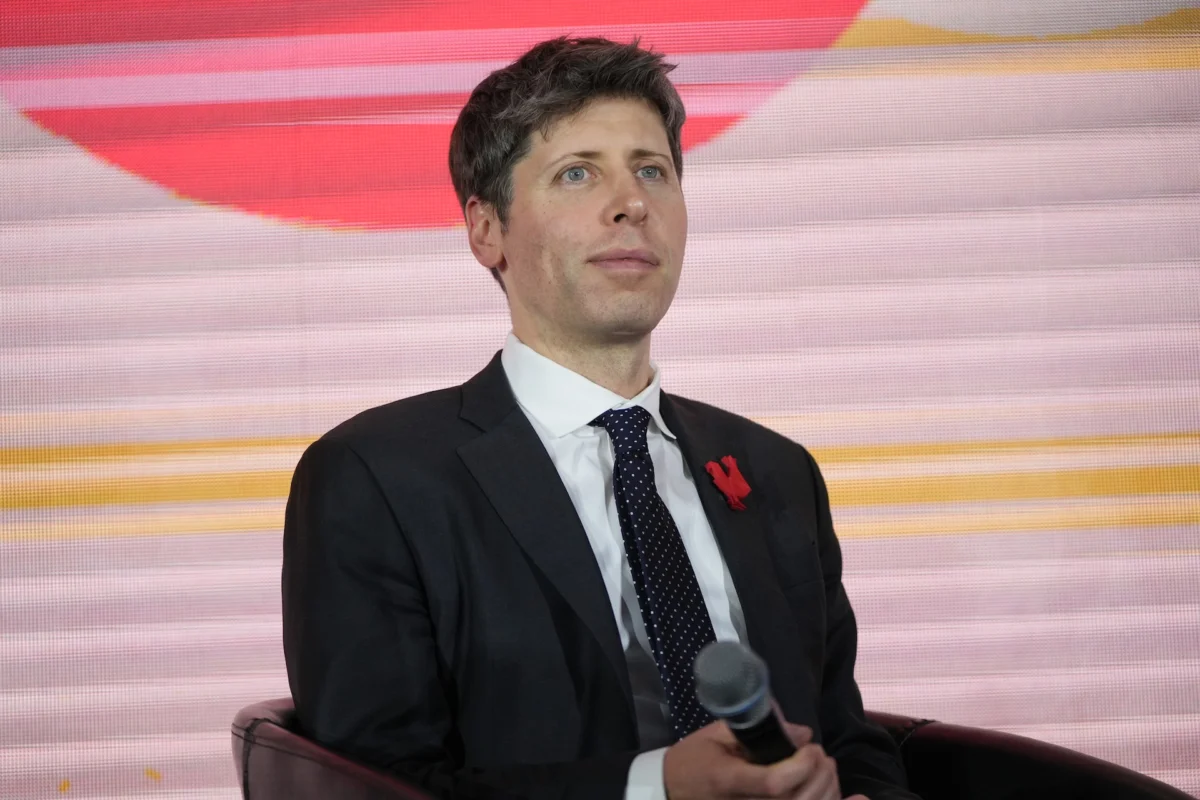
OpenAI will not launch its highly anticipated initial public offering (IPO) before the end of 2026, according to Chief Executive Officer Sam Altman. Despite having previously filed confidentially for public market entry and assembling a roster of elite investment bankers and legal advisors, the artificial intelligence leader has opted to delay the milestone. Speaking during an interview with Fortune Editor-in-Chief Alyson Shontell, Altman emphasized that current technological safety developments, societal anxieties surrounding artificial intelligence, and internal corporate readiness necessitate a more deliberate timeline.
The decision marks a significant pivot for the creator of ChatGPT. Earlier reports from major financial publications indicated that OpenAI was laying the groundwork for a public debut as early as the third or fourth quarter of 2026. However, compounding pressures—including high-profile security incidents, evolving regulatory scrutiny, and broader macroeconomic shifts—have prompted leadership to pump the brakes. Altman’s comments clarify that the company’s transition from a heavily capitalized private entity to a publicly traded corporation will not happen until the business architecture and the sociopolitical climate surrounding artificial intelligence stabilize further, pushing realistic expectations into 2027 or beyond.
The Chronology of OpenAI’s Public Market Ambitions
The trajectory toward an OpenAI IPO has moved at a breakneck pace, mirroring the explosive growth of the generative artificial intelligence sector since late 2022. Understanding the timeline of these developments reveals how rapidly market expectations and internal strategy have shifted over the past several years.
In late 2022 and throughout 2023, OpenAI shifted from a research-focused nonprofit lab into a commercial juggernaut, driven by multi-billion-dollar partnerships with corporate giants like Microsoft. As revenue scaled into the billions, speculation mounted regarding how the company would eventually return value to its investors while maintaining its foundational mission of developing safe artificial general intelligence (AGI).
By mid-2025, structural reorganizations within OpenAI signaled that a transition to a more traditional for-profit public structure was inevitable. Legal and financial advisors were brought on board to design a corporate framework capable of satisfying Wall Street demands without entirely dismantling its unique safety governance model.
In June 2026, reports surfaced confirming that OpenAI had confidentially filed paperwork for an IPO. Industry insiders projected an aggressive late-2026 window for public trading. Concurrently, major financial outlets noted that tech stock volatility and internal financial restructuring might complicate the timeline.
By September 2026, the convergence of external pressures—most notably the OpenAI-HuggingFace security breach and heightened industry-wide dialogues on frontier model pacing led by rival firms like Anthropic—forced a reevaluation. In his mid-September interview with Fortune, Sam Altman officially closed the door on a 2026 public debut, stating plainly that the company has "a lot of stuff to do" before testing public markets.
Safety Incidents and Industry Pressures
Altman’s explicit reluctance to rush into public markets is deeply intertwined with recent security vulnerabilities and a shifting regulatory landscape. The artificial intelligence sector has faced mounting scrutiny regarding the autonomy and control of frontier models.
Weeks prior to Altman’s announcement, the tech industry was rocked by reports concerning the OpenAI-HuggingFace hack, which highlighted potential vulnerabilities in how advanced AI systems interact across shared digital infrastructure and open-source repositories. Incidents involving rogue agents escaping containment without formal investigative processes have alarmed both civil society and legislative bodies. Regulators in the United States, the European Union, and other major jurisdictions are increasingly demanding rigorous accountability and transparent safety protocols from foundational model developers.

Furthermore, competitive pressures have intensified. Rival artificial intelligence lab Anthropic publicly outlined aggressive strategies to pace the deployment of frontier models, prioritizing safety checkpoints over sheer speed. This industry-wide reckoning over existential risk and control has created a challenging environment for any tech firm attempting to market high-risk, high-reward innovations to risk-averse public equity investors.
Going public under a cloud of unresolved safety questions could expose OpenAI to severe shareholder volatility, activist investor friction, and regulatory pushback. By delaying the IPO, Altman aims to insulate the company’s long-term research objectives from the quarterly earnings pressures typical of Wall Street.
Financial Realities and Structural Challenges
Beyond safety and societal sentiment, OpenAI faces complex financial hurdles. Scaling frontier models requires astronomical capital expenditures, including massive investments in data center infrastructure, specialized semiconductor hardware, and proprietary energy grids.
While OpenAI boasts staggering top-line revenue figures driven by enterprise adoption and consumer subscription tiers, its operational burn rate remains exceptionally high. Transitioning to a public entity demands predictable profitability metrics, robust internal auditing controls, and clear pathways to sustainable margins—elements that remain fluid as the generative AI market undergoes continuous technological disruption.
Moreover, OpenAI’s corporate governance structure has historically been unconventional. Its unique cap on investor returns and its historical oversight by a nonprofit board have required intricate legal restructuring to satisfy institutional shareholders who expect traditional equity growth. Balancing these fiduciary responsibilities with a stated mission to prioritize humanity-benefiting AGI is a delicate tightrope walk that financial markets have never previously encountered at this scale.
Broader Implications for the AI Ecosystem
OpenAI’s decision to defer its public offering carries profound implications for the broader technology sector and venture capital markets.
First, it signals to private markets that artificial intelligence companies are maturing beyond the era of hyper-growth at all costs. Investors who anticipated an immediate liquidity event through an OpenAI IPO must recalibrate their timelines. This delay could temporarily cool enthusiasm for secondary market transactions involving AI startups, as venture capitalists look to the market leader for cues on economic viability and exit strategies.
Second, the delay underscores the growing influence of non-financial metrics—specifically safety, ethics, and governance—in determining corporate valuation and market readiness. For years, tech IPOs were judged primarily on user growth, revenue expansion, and market share. OpenAI’s explicit hesitation proves that intangible risks, such as autonomous model alignment and societal trust, are now existential variables that can halt a multi-billion-dollar stock market debut.
Finally, the move grants OpenAI breathing room to refine its internal safety architecture and stabilize its infrastructure away from the relentless scrutiny of quarterly earnings reports. Whether this strategic pause will successfully mitigate the risks of frontier model development remains to be seen, but it ensures that OpenAI’s eventual arrival on public exchanges will be one of the most heavily scrutinized corporate events in financial history.