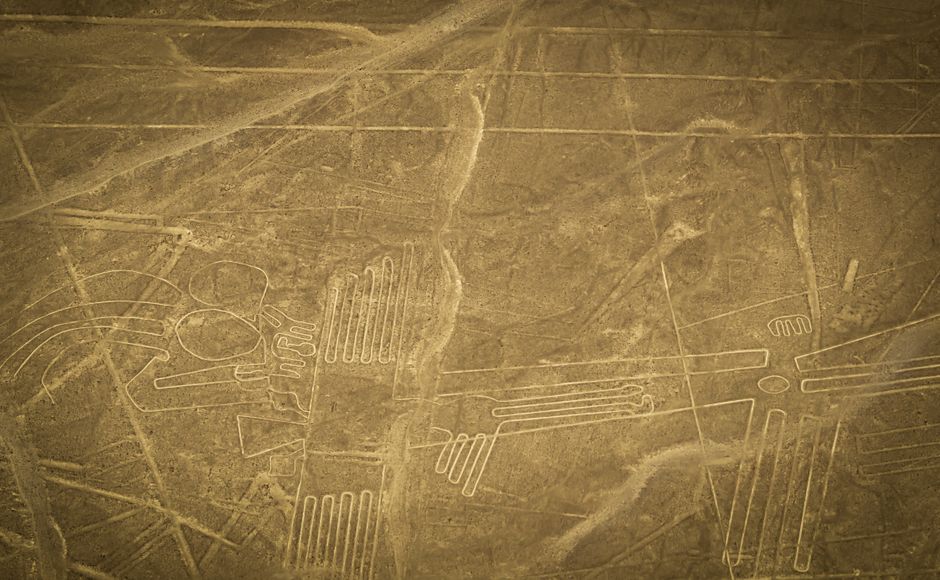
Peru’s Nazca Lines Face Mining Threat After Protected Area Slashed
The ancient geoglyphs of Peru’s Nazca Lines, a UNESCO World Heritage site renowned for their enigmatic designs etched into the desert floor, are now facing an unprecedented threat: large-scale mining operations. A recent decree has drastically reduced the size of the protected area surrounding these cultural treasures, opening up vast tracts of land to potentially destructive extraction activities. This drastic alteration of protective boundaries, driven by economic interests, risks irreversible damage to a heritage that has captivated archaeologists, historians, and the public for centuries. The Nazca Lines, believed to have been created by the Nazca culture between 500 BCE and 500 CE, consist of hundreds of intricate figures, including animals, plants, and geometric shapes, some stretching for hundreds of meters. Their scale and precision, only fully appreciated from aerial views, have fueled countless theories about their purpose, ranging from astronomical calendars to religious offerings. The very existence of these delicate etchings, often mere scraped lines on the dark desert crust, makes them extraordinarily vulnerable to any significant ground-level disturbance.
The decree that has triggered this alarm, issued by the Peruvian government, has significantly downsized the designated buffer zone around the Nazca Lines. This buffer zone was initially established to provide a critical layer of protection, preventing the encroachment of industrial activities, infrastructure development, and agricultural expansion that could directly impact or obscure the geoglyphs. By reducing this protective perimeter, the government has effectively greenlit exploration and potential exploitation of mineral resources that lie within or in close proximity to the ancient geoglyphs. The justification for this sweeping change is often cited as a need to boost national economic growth, attract foreign investment, and create employment opportunities, particularly in regions with limited economic alternatives. However, critics argue that this short-sighted approach prioritizes immediate financial gains over the long-term preservation of an invaluable cultural and historical legacy. The economic benefits are often transient, while the damage to the Nazca Lines could be permanent, robbing future generations of the opportunity to study, appreciate, and learn from this unique testament to human ingenuity.
The specific mining activities that pose the greatest threat include open-pit mining, which involves the removal of large quantities of earth and rock, and extractive processes that can lead to soil erosion and groundwater contamination. Open-pit mines, by their very nature, reshape the landscape on a massive scale. The visual impact alone could overshadow the subtle artistry of the geoglyphs, and the dust generated by mining operations can settle on the delicate lines, gradually obscuring them. Furthermore, the heavy machinery and vehicle traffic associated with mining can cause vibrations and ground tremors, which, over time, could destabilize the fragile soil layers that form the geoglyphs. Water usage in mining, especially in an arid environment like the Nazca desert, is also a major concern. Any disruption to the delicate hydrological balance of the region could exacerbate erosion and desertification, further imperiling the geoglyphs. The potential for chemical runoff from mining operations, including heavy metals and other pollutants, poses a direct threat to the integrity of the soil and could leach into groundwater, impacting the surrounding ecosystem and the preservation of the geoglyphs.
The historical context of the Nazca Lines’ protection is crucial to understanding the gravity of this recent development. For decades, conservationists, archaeologists, and international bodies like UNESCO have worked to safeguard this site. The designation as a World Heritage site in 1994 underscored its universal value and triggered a commitment to its preservation. This commitment has involved not only legal protections but also extensive research into the geoglyphs’ creation, meaning, and the delicate environmental conditions required for their survival. The Nazca Lines are not simply drawings on the ground; they are intrinsically linked to the geological and climatic conditions of the Nazca desert. Their preservation depends on the stability of the soil, the minimal interference from human activities, and the preservation of the arid environment. The reduction of the protected area directly undermines the principles of heritage conservation that are internationally recognized and championed by organizations like UNESCO.
The economic drivers behind this policy shift are complex and deeply rooted in Peru’s reliance on its extractive industries. Mining has long been a cornerstone of the Peruvian economy, contributing significantly to its Gross Domestic Product (GDP) and export earnings. However, this economic model has frequently been criticized for its environmental and social costs. The allure of lucrative mineral deposits, often found in remote and ecologically sensitive areas, presents a persistent challenge for governments balancing development with conservation. In the case of the Nazca region, rich in mineral resources such as copper, gold, and iron ore, the pressure to exploit these assets has been considerable. Proponents of the mining expansion argue that the revenue generated will fund social programs, improve infrastructure, and diversify the local economy beyond tourism, which, while important, can be subject to fluctuations. However, the long-term viability of such a strategy is questionable if it comes at the expense of irreplaceable cultural heritage.
Archaeological experts and heritage advocates have voiced strong opposition to the government’s decision. They emphasize that the geological and archaeological significance of the Nazca Lines extends beyond their visual appeal. The lines are a direct link to the sophisticated knowledge systems and cultural practices of the Nazca people. Studying them provides invaluable insights into ancient astronomy, engineering, social organization, and religious beliefs. Allowing mining to proceed in such close proximity risks not only the physical destruction of the geoglyphs but also the loss of critical archaeological context. Subterranean mineral exploration and extraction can disturb archaeological layers and features that may lie hidden beneath the surface, even in areas not directly overlaid by the geoglyphs themselves. The vibrations and ground disturbance can also impact undiscovered archaeological sites that are equally vital for understanding Peru’s pre-Columbian history.
The potential for significant environmental degradation accompanying mining activities is another major point of contention. The Nazca desert is an inherently fragile ecosystem, characterized by extreme aridity and sparse vegetation. Mining operations can lead to extensive deforestation, habitat destruction, and the contamination of scarce water resources. Dust pollution from mining can travel for miles, impacting air quality and potentially settling on the geoglyphs. Furthermore, the construction of access roads, processing plants, and waste disposal sites associated with mining projects requires significant land clearing, further fragmenting the landscape and potentially disrupting the visual integrity of the geoglyphs. The long-term consequences of such environmental damage could extend far beyond the mining concessions themselves, affecting the broader Nazca region and its delicate ecological balance.
The international community, through UNESCO, has expressed serious concerns regarding the potential impact of mining on the Nazca Lines. As a World Heritage site, the Nazca Lines are considered to be of outstanding universal value, and their protection is a shared responsibility. UNESCO has historically played a crucial role in advocating for the preservation of such sites and has called upon the Peruvian government to reconsider its decision and to ensure that any development activities are conducted in a manner that does not compromise the integrity of the geoglyphs. The potential for inscription of the Nazca Lines onto the List of World Heritage in Danger, a designation that highlights sites facing serious threats and requires urgent action, looms as a possibility should the situation not be rectified. Such a designation would bring international scrutiny and potentially lead to calls for increased external support for preservation efforts, but it also signifies a grave loss of protection.
The tourism industry, a vital source of income for the Nazca region, is also at risk. The mystique and allure of the Nazca Lines are their primary draw for tourists. Any degradation of the geoglyphs or the surrounding landscape would undoubtedly diminish their appeal, leading to a decline in visitor numbers and impacting local economies that depend on tourism. While mining may offer short-term economic gains, it could ultimately undermine the long-term sustainability of the region’s tourism sector. The visual impact of mining infrastructure, such as large open pits, processing plants, and tailings dams, can irrevocably alter the aesthetic of the landscape, making it less attractive to visitors. Furthermore, the environmental pollution associated with mining can further deter tourists.
The legal framework surrounding the Nazca Lines’ protection has been a subject of debate. While the site is a UNESCO World Heritage site, the specifics of its national protection often depend on domestic legislation and government enforcement. Critics argue that the recent decree highlights a weakness in Peru’s commitment to enforcing its own heritage protection laws, especially when faced with powerful economic interests. The government’s decision to reduce the protected area suggests a re-evaluation of priorities, where economic development has been elevated above the preservation of cultural heritage. This raises questions about the long-term effectiveness of international designations if national governments are not fully committed to upholding their obligations. The lack of transparency and public consultation surrounding the decree has also been a point of concern for many involved in heritage preservation.
The ongoing conflict between economic development and cultural heritage preservation in Peru is not unique to the Nazca Lines. Many countries rich in both natural resources and historical sites face similar challenges. The decision to diminish protections for the Nazca Lines highlights the difficult choices governments must make when balancing competing interests. However, the irreversible nature of damage to archaeological sites, especially those as delicate and unique as the Nazca Lines, demands a cautious and responsible approach. The long-term value of cultural heritage, in terms of historical knowledge, national identity, and sustainable tourism, often outweighs the immediate financial returns from resource extraction. The question remains whether Peru will prioritize its invaluable cultural legacy or succumb to the pressures of short-term economic gains, potentially sacrificing an irreplaceable part of human history for generations to come. The ongoing debate and potential consequences of this decision underscore the critical need for robust heritage protection policies, effective enforcement, and a commitment to sustainable development that respects and preserves cultural treasures for the future. The world watches to see if these ancient wonders will be preserved or if they will fall victim to the relentless march of industrial progress.
