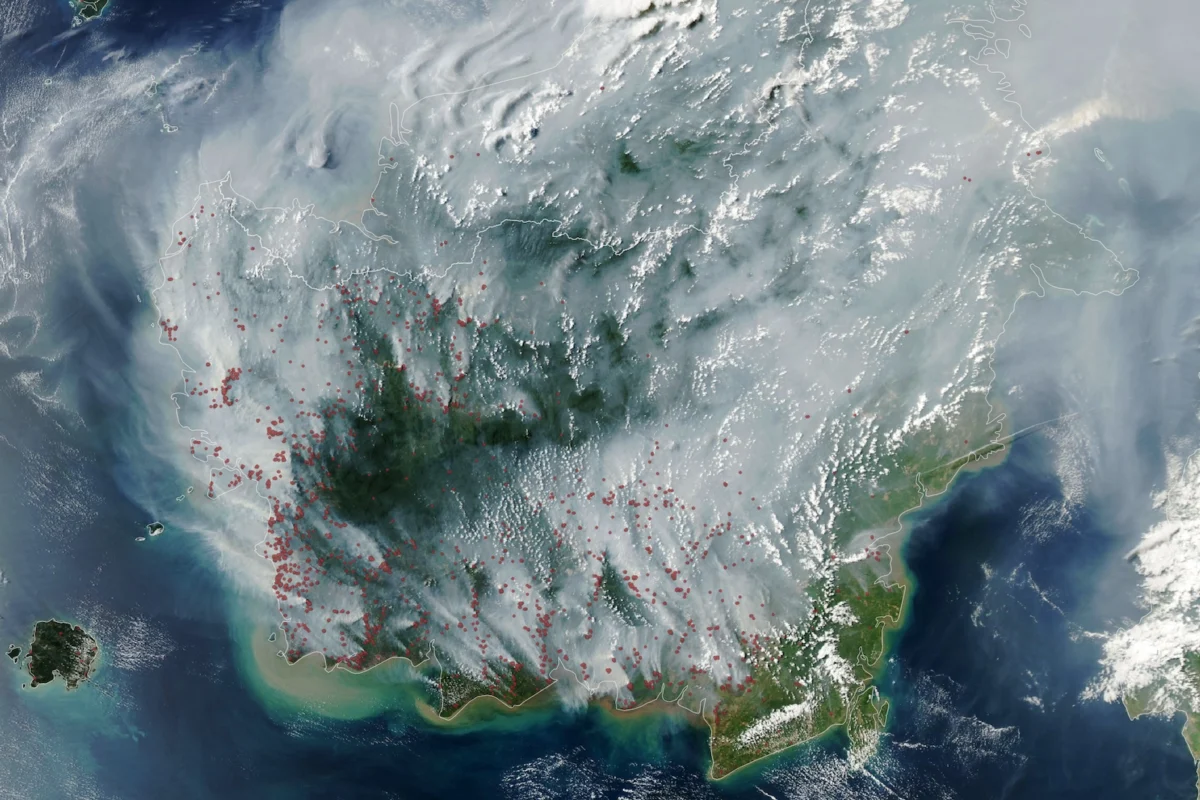
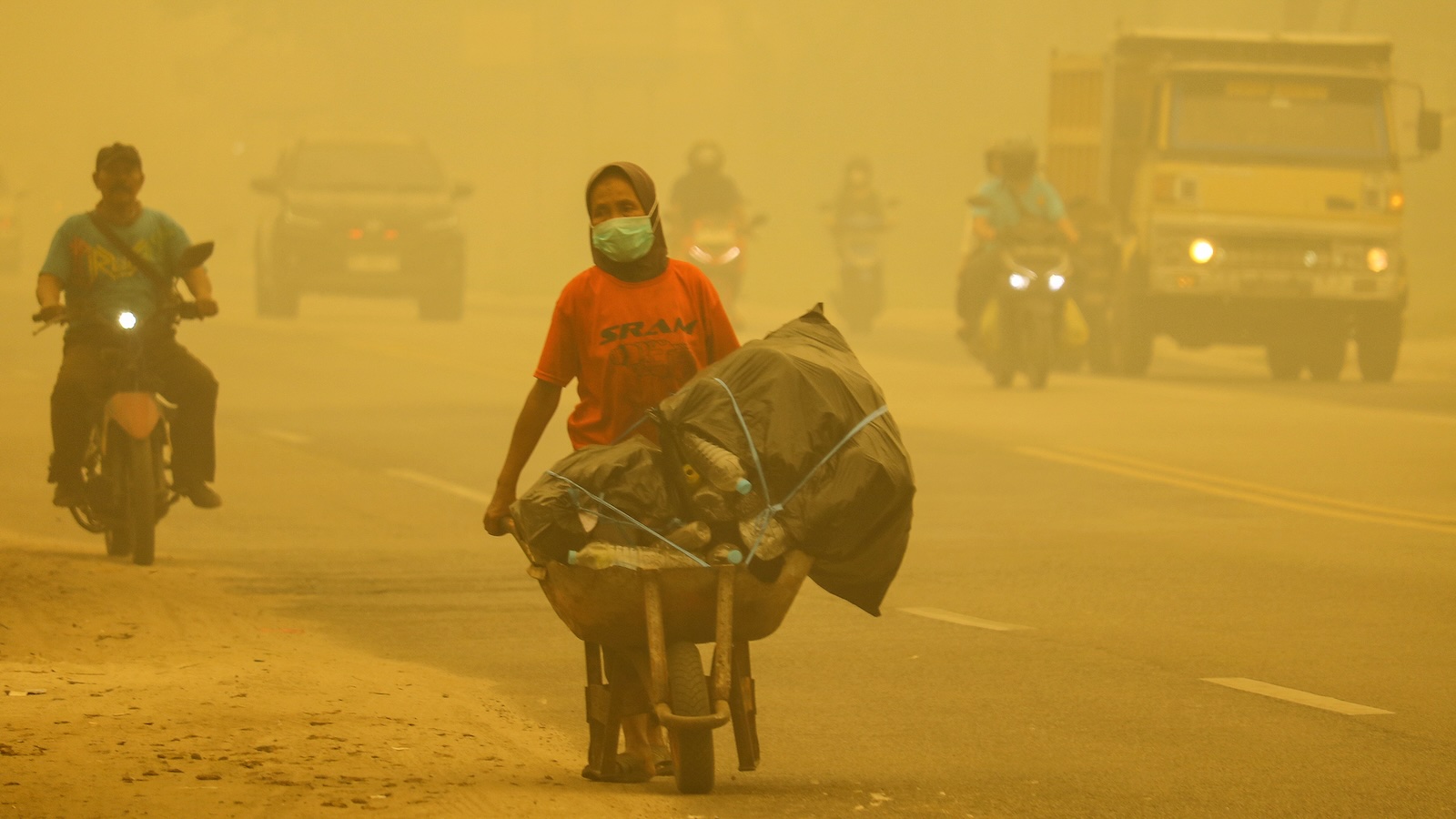
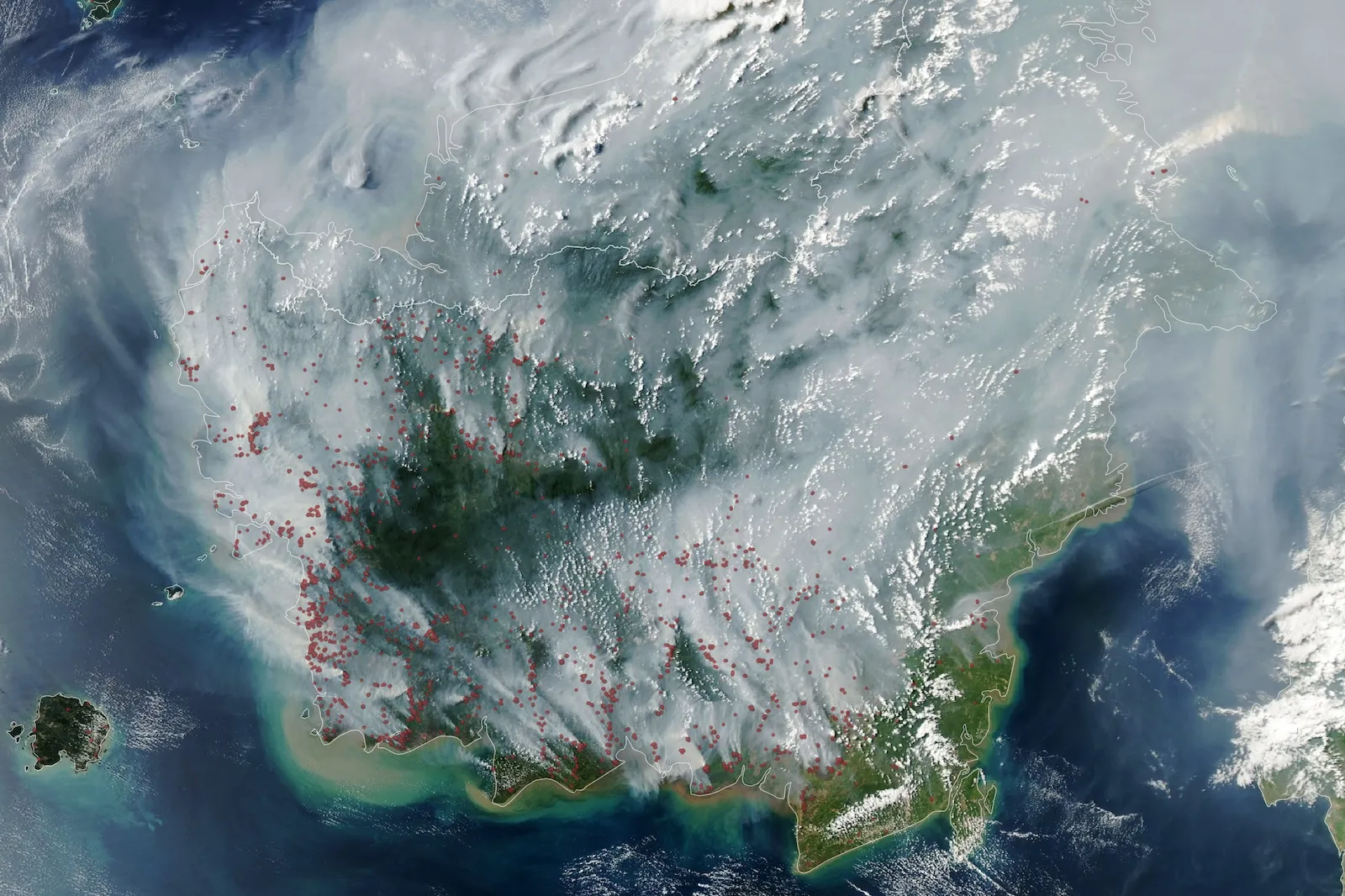
The sprawling landscapes of Indonesia are currently enduring their most catastrophic wildfire season in ten years, transforming vast swaths of the Southeast Asian archipelago into toxic zones of heavy haze, respiratory illness, and ecological devastation. Government-deployed buses outfitted with emergency oxygen tanks patrol urban centers, while exhausted firefighters collapse to the muddy ground in sheer relief at the first drops of seasonal rain. Across major islands like Kalimantan and Sumatra, more than 4.6 million acres of land have been reduced to ash since August. The resulting billowing smoke has not only choked domestic populations but has also crossed international borders, blanketing neighboring nations in a dense, yellowish fog.
This environmental catastrophe has forced millions of residents to breathe hazardous air, overwhelming local medical clinics and hospitals. Official government data indicates that more than 300,000 Indonesians have formally sought medical intervention for acute respiratory infections, severe asthma, and other smoke-related ailments. On the
worst days of the crisis, air quality index readings in heavily impacted regions have surged to levels more than 13 times higher than internationally recognized thresholds for safe human exposure.
The immediate public health emergency is severely exacerbated by local architectural traditions. Much like in other tropical countries, traditional residential and commercial buildings across Indonesia are constructed with open layouts designed to maximize natural airflow and combat high ambient humidity. Unfortunately, these architectural designs fail completely when it comes to filtering out microscopic particulate matter or sealing out ambient toxic smoke.
A Convergence of Environmental and Climate Pressures
The current wildfire outbreak represents just the latest in a relentless series of environmental crises confronting Indonesia. As one of the world’s most heavily populated nations, it is simultaneously ranked among the most disaster-prone countries globally. Just last year, devastating cyclone-induced flooding and massive landslides ripped through Sumatra, claiming the lives of approximately 1,200 residents. Meanwhile, the national capital of Jakarta is famously sinking into the Java Sea due to excessive groundwater extraction and rising sea levels driven by global climate change, prompting an ongoing, multi-billion-dollar government race to construct a brand-new capital city, Nusantara, on higher ground in East Kalimantan.
Scientists emphasize that these recurrent disasters stem from a volatile mixture of rapid human sprawl and a warming global climate. However, attributing the exact influence of climate change on these specific wildfires remains complex. Unlike regions that are warming at accelerated rates—such as recent catastrophic wildfire outbreaks in parts of Canada and Southern Europe, where climate attribution studies have clearly established a direct link—the Indonesian fires are primarily driven by a superstrong El Niño weather cycle.
This intense El Niño pattern has plunged Indonesia into an extended and severe drought, dramatically drying out the country’s vast, carbon-rich tropical peatlands. Peat soil is composed of tightly packed, partially decayed organic plant matter accumulated over thousands of years. When saturated with water, these subterranean wetlands act as vital carbon sinks and natural firebreaks. However, once severely dried out by prolonged drought, peat transforms into an exceptionally flammable fuel source.
Chronology of the Crisis and Historical Context
The trajectory of the current disaster has unfolded over several months, preceded by clear warnings from the scientific community.
- May: Anticipating the arrival of the powerful El Niño cycle, Indonesian government officials formally alerted international bodies. Raja Juli Antoni, Indonesia’s minister of forestry, addressed the United Nations, warning that the country faced an extended dry season demanding heightened vigilance from all sectors of society.
- August: The wildfire season officially ignites, rapidly expanding across Kalimantan on the island of Borneo and various districts of Sumatra. Driven by dry conditions and illicit land-clearing practices, the fires quickly consume millions of acres.
- September: The crisis peaks. Dense smog engulfs major cities, grounding local flights, closing schools, and driving hundreds of thousands of citizens to seek emergency medical treatment. Student-led protests erupt in urban centers, featuring demonstrators wearing gas masks and carrying banners with slogans such as, "If we burn, you burn with us."
- Late September: President Prabowo Subianto convenes an emergency Cabinet meeting, condemning the perpetrators of the fires and vowing strict punitive measures. Meanwhile, sporadic seasonal rains finally begin to offer marginal, highly localized relief to exhausted firefighting crews.
Despite national laws and institutional reforms implemented over the past three decades, illegal land clearance remains a persistent challenge. According to Robert Field, a fire researcher at Columbia University who collaborated with Indonesian authorities on fire prevention strategies during the 2000s, many of the current fires are concentrated on unmanaged plots of land adjacent to industrial agricultural concessions—particularly those dedicated to oil palm cultivation. Palm oil production has historically been a primary driver of high rates of deforestation and biodiversity loss in the region, and smallholders and agricultural firms frequently resort to cheap, illegal burning to clear vegetative debris.
Official Responses and Regulatory Challenges
Public outrage over the toxic haze, combined with broader economic frustrations regarding the high cost of living and government expenditures, has sparked widespread street protests across the archipelago. In response to the mounting public pressure, President Prabowo Subianto took a hardline stance during a Cabinet meeting, labeling the intentional lighting of forest and land fires as an act of "environmental terrorism."
"This is a crime against humanity, because what they have done endangers the health of millions of our people," President Prabowo stated in an official government press release, ordering law enforcement agencies to launch exhaustive criminal investigations and apply maximum legal penalties against corporate and individual perpetrators.
Indonesia is no stranger to this existential battle. The country has grappled with catastrophic peat fire outbreaks since the devastating El Niño events of the late 1990s. In the wake of previous disasters, Jakarta initiated significant policy overhauls. In 2014, the government enacted a landmark ban on the construction of drainage canals designed to dry out peatlands for agricultural conversion. Following another severe fire season in 2015, authorities sharply curbed industrial deforestation and initiated large-scale ecological restoration projects across degraded peat ecosystems.
These regulatory measures yielded positive results for years. The annual rate of deforestation steadily declined for five consecutive years, and although rates have crept upward slightly since 2022, they remain a fraction of historical peaks.
"I was optimistic that the drought was inevitable, but the fire was not," remarked researcher Robert Field, noting that Indonesia entered the current season significantly better prepared and equipped than in past decades. "I don’t think there was a lack of sincerity from officials not wanting this to happen, and the fact that it did just points to how hard it is to manage fire in such a large and complicated country."
The Persistent Threat of Underground Peat Fires
Managing peat fires presents unique, formidable technical challenges that distinguish them from standard forest fires. Israr Albar, Indonesia’s former deputy director of forest fire management, explained in an electronic statement that the dense, porous accumulation of organic material allows fires to burrow underground, where they can smolder invisibly for months.
"Just because we cannot see a fire does not mean it is not there," Albar noted. Because these subterranean fires produce minimal surface flames during their initial stages, they often evade detection by standard satellite monitoring systems. Furthermore, the massive volumes of dense smoke generated by peat combustion can completely obscure the surface from overhead imaging satellites.
Locating and extinguishing these subterranean blazes requires immense quantities of water—a resource that is severely depleted during drought-stricken dry seasons. Even when seasonal rains arrive, they often fail to penetrate deep enough into the soil to extinguish smoldering peat beds. As a result, fires can persist underground long after surface conditions appear normalized, frequently reigniting unexpectedly when dry weather returns.
Broader Implications for Global Climate and Policy
The ongoing catastrophe in Indonesia carries profound global ramifications. Peatlands cover only a tiny fraction of the Earth’s land surface, yet they store vast quantities of carbon absorbed over millennia. When these lands are drained and burned, they release centuries of accumulated greenhouse gases back into the atmosphere in a matter of days, significantly accelerating global climate warming.
Furthermore, the habitat destruction caused by the fires threatens critically endangered endemic species, most notably the Sumatran and Bornean orangutans, dozens of which have had to be rescued by wildlife conservation teams and transferred to temporary sanctuaries.
As Indonesia continues to grapple with the immediate health emergency, public demands for systemic accountability are reaching a fever pitch. Experts agree that resolving the recurring crisis will require not only strict law enforcement against illegal agricultural arson and enhanced inter-agency firefighting coordination, but also a fundamental reimagining of rural land-use economics to ensure that local communities and corporate entities can thrive without sacrificing the nation’s vital ecological buffers.