Boil Over in Farm Country as the USDA Unlocks Billions in Late-Stage Funding Ahead of Midterm Elections
The relationship between America’s agricultural heartland and Washington, D.C., has weathered a turbulent two-year stretch, defined by shifting federal priorities, sudden programmatic rollbacks, and mounting economic anxieties. Farmers and ranchers—long considered a foundational pillar of President Donald Trump’s political base—have increasingly voiced frustration over a series of policy decisions that they argue undermine their operational stability and financial livelihoods.
As the nation approaches critical midterm elections, the administration has moved swiftly to quell rising discontent. In a flurry of late-October announcements, the U.S. Department of Agriculture (USDA) unlocked billions of dollars in emergency financial support aimed at offsetting soaring production costs and addressing acute supply chain pressures. Yet, while these infusions of federal capital offer temporary relief, agricultural advocates, industry leaders, and producers themselves question whether financial bailouts can truly mend a fractured relationship defined by systemic uncertainty and a stagnant long-term policy vision.
A Timeline of Friction: Rollbacks, Lawsuits, and Climate Data
The roots of the current discontent trace back through a series of administrative actions and funding rollbacks that left agricultural producers feeling unsupported and isolated. For the past two years, successive cuts to Department of Agriculture programs diminished available funding streams and created an information vacuum for growers trying to navigate increasingly volatile weather patterns.
The tension boiled over legally last year when a coalition of prominent farm groups filed a lawsuit against the federal agency. The litigation was triggered by the sudden deletion of multiple webpages on the USDA website that referenced climate change—pages containing critical data essential for agricultural planning, drought mitigation, and extreme weather preparation. Although the agency ultimately agreed to settle the dispute early in the year, committing to restore the climate-risk data, the episode severely damaged trust between producers and federal administrators.
Further friction developed around renewable energy initiatives. Just weeks prior to the emergency bailout announcements, the USDA moved to strip solar energy components from the popular Rural Energy for America Program (REAP). For years, REAP had served as a vital vehicle for farmers seeking to install solar arrays on their land, lowering overhead utility expenses while generating supplementary income. Eliminating solar from the program dealt a tangible setback to producers striving for energy independence and long-term cost containment.
Ranchers Face Market Pressures and Trade Controversies
While crop farmers contended with shifting federal programs and disappearing data, cattle ranchers faced a distinct set of economic hardships. The average price of ground beef has climbed steadily since the onset of the COVID-19 pandemic, breaking historic records over the past two years. However, high consumer prices have not translated to windfall profits for primary producers. Instead, persistent, severe droughts across the American West and Midwest have severely depleted herd sizes to historic lows, driving up operational replacement costs and straining the supply chain.
Efforts by the Trump administration to address consumer meat prices through international trade adjustments only heightened tensions within the ranching community. Measures designed to lower beef costs—notably by increasing foreign beef imports—drew swift and fierce backlash. Independent ranchers argued that opening domestic markets to foreign competitors directly undercuts their domestic business models, forcing them to compete against subsidized international producers while absorbing local climate-related losses.
The Diesel Crisis and the Irony of the Harvest Fuel Relief Program
The most immediate catalyst for the administration’s recent financial intervention, however, stems from surging energy expenditures. Modern agriculture is profoundly dependent on diesel fuel. Heavy machinery integral to daily operations—including tractors, combines, irrigation pumps, and the semi-trucks required to haul crops and livestock to market—run almost exclusively on diesel.
Over the past year, geopolitical instability, most notably the ongoing conflict involving Iran, has triggered severe global supply chain disruptions and sent fuel prices soaring. A recent congressional report compiled by Democratic members of the Joint Economic Committee revealed that U.S. farmers are on track to spend an additional $2.4 billion on diesel fuel alone, directly attributable to the impacts of the Iran war.
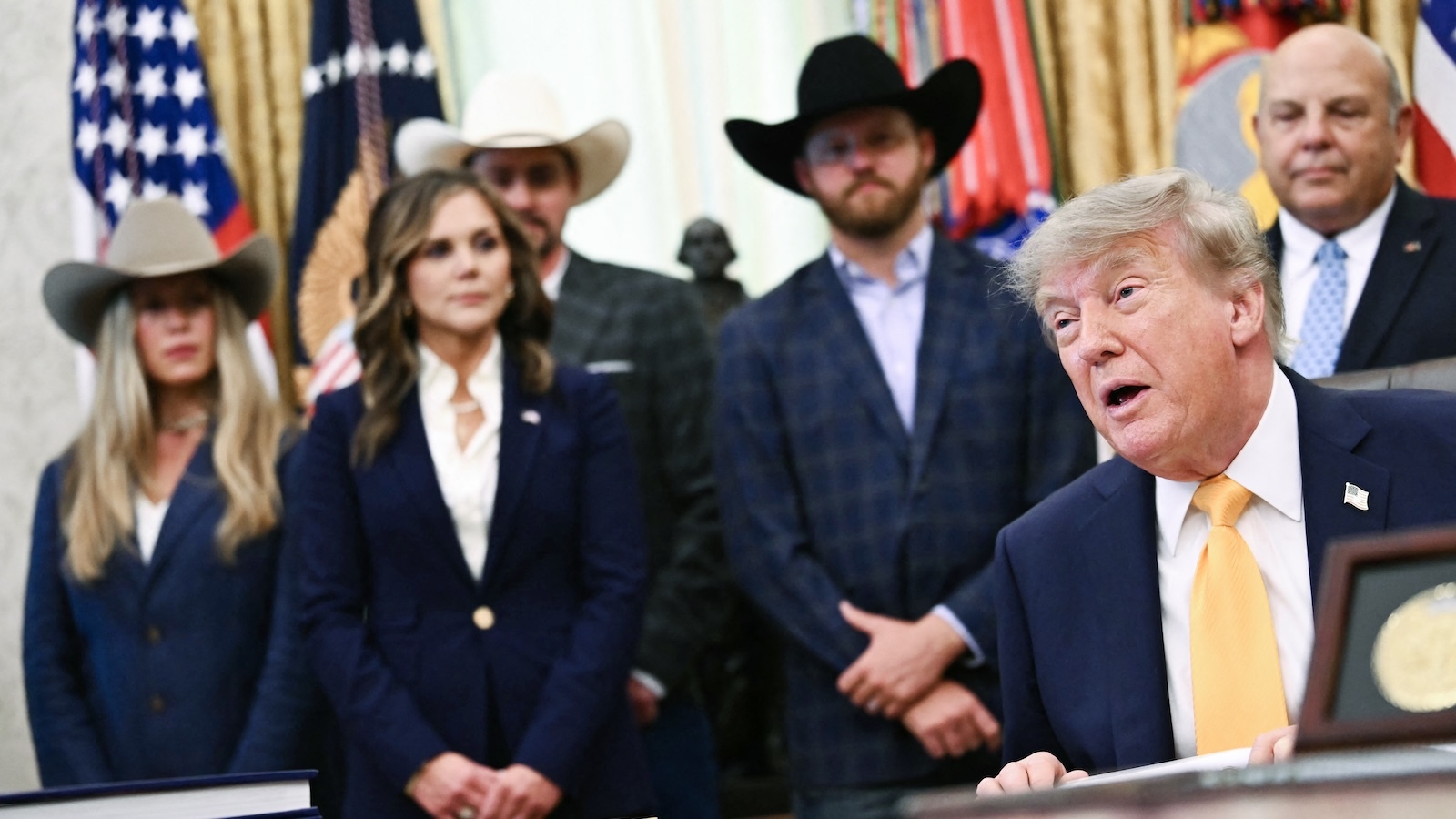
Recognizing the acute financial bleeding caused by fuel inflation, President Trump announced the establishment of the $8 billion Harvest Fuel Relief Program on October 19. Designed to offset unexpected losses incurred from high diesel prices during the 2026 crop year, the program aims to inject capital directly into the accounts of struggling growers.
Yet, the rollout of an $8 billion fossil fuel subsidy has drawn sharp criticism from environmental and sustainable agriculture advocates, who note the profound policy contradiction. Analysts point out the deep irony of the federal government disbursing billions to compensate for high diesel costs while simultaneously dismantling grants that would help farmers transition toward efficient, renewable alternatives like wind and solar power.
Official Responses and the Skepticism of Ag Leaders
The USDA has defended its sweeping financial packages as evidence of unwavering executive support. In a formal statement regarding the Harvest Fuel Relief Program, a department representative emphasized the administration’s record: "President Trump has been the most pro-farmer president in our nation’s history, and the Harvest Fuel Relief Program is the latest action to deliver for them. As USDA works to implement the program, we are actively reviewing all available data to determine payments which are expected to be finalized and processed soon."
Despite assurances of swift implementation, agricultural leaders remain distinctly unimpressed by the timing and scope of the federal response. Aaron Lehman, president of the Iowa Farmers Union, captured the prevailing sentiment among many producers, noting publicly that U.S. farmers "have needed help for months" and "never should have been put in this position."
Similarly, Mike Lavender, policy director for the National Sustainable Agriculture Coalition, dismissed the financial packages as a superficial fix. In a published statement, Lavender argued that the relief efforts represent "a failing solution," pointing out that countless family farms nationwide remain in deep financial jeopardy. Farm bankruptcies reached a six-year high during the spring, and producers continue to shoulder heavier debt loads while nursing profound pessimism regarding their long-term financial viability.
Broadening the Safety Net: Ranching Funds and Commodity Purchases
As election day drew closer, the administration expanded its financial outreach beyond the $8 billion diesel relief package. On October 26, the USDA announced an additional $57 million dedicated specifically to independent cattle ranchers. This funding is structured to help independent producers expand local meat-processing capacity, a direct nod to ongoing complaints regarding corporate consolidation in the meatpacking sector.
Furthermore, the agency announced a federal commitment to purchase nearly $500 million in domestic agricultural commodities directly from U.S. producers. By buying up surplus crops and livestock, the government hopes to artificially stabilize falling market prices and inject immediate cash flow into local agricultural economies.
The Farm Bill in Limbo and the Broader Political Stakes
Underpinning these piecemeal financial bailouts is a much larger systemic vacuum: the prolonged paralysis of federal agricultural legislation. The foundational blueprint for American agriculture—the multi-year Farm Bill, which historically governs everything from federal crop insurance and nutrition assistance to vital soil conservation programs—has remained unrenewed since its last passage in 2018.
Currently, competing legislative drafts sit stalled in the House of Representatives and the Senate, with agricultural policy experts agreeing that any meaningful legislative breakthrough hinges almost entirely on the outcome of the midterm elections. For millions of producers across rural America, the flurry of emergency executive bailouts serves as a glaring symptom of an administration attempting to bandage immediate political liabilities in the absence of a cohesive, forward-looking agricultural strategy.
Whether these late-stage financial injections will be sufficient to restore trust at the ballot box remains one of the defining questions of the midterm cycle. As farmers calculate thin profit margins against the rising costs of fossil fuels and the lingering uncertainties of federal policy, the traditional alliance between rural communities and Washington faces its most severe test in years.