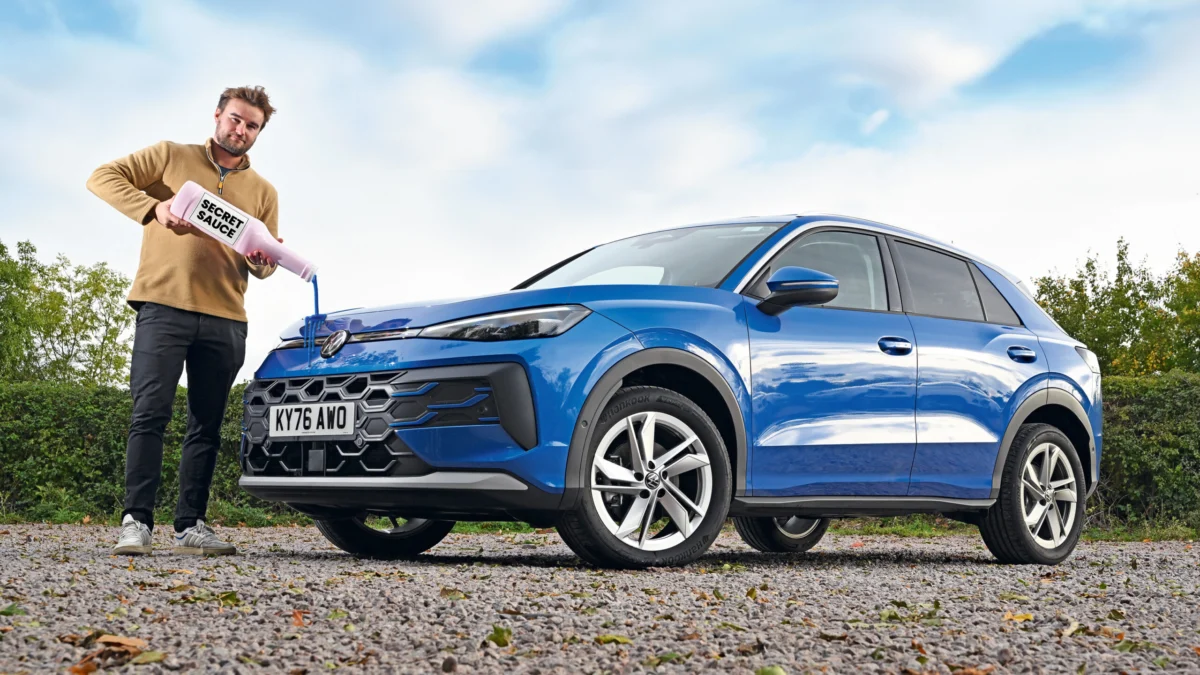
The arrival of the second-generation Volkswagen T-Roc marks a pivotal moment for the German manufacturer as it seeks to maintain its dominance in the hyper-competitive compact SUV segment. Having established itself as a cornerstone of the Volkswagen portfolio—amassing over two million global sales since its inception—the T-Roc is not merely a model update but a strategic recalibration. As we begin a six-month, comprehensive evaluation of the T-Roc eTSI 150 Style, the focus shifts from initial impressions to long-term reliability, daily usability, and the integration of what Volkswagen designers term their "Secret Sauce."
The Evolution of a Best-Seller: Chronology and Context
The T-Roc’s trajectory has been one of steady, calculated growth. Since its initial market launch, it has consistently outperformed many of its segment rivals, trailing only the Golf and the Tiguan in Volkswagen’s internal sales hierarchy. The development cycle for the second-generation model began in earnest in 2023, with a private preview event held in June 2025. This early unveiling provided industry analysts with a glimpse into Volkswagen’s shifting design philosophy—a transition from the experimental ergonomics of the early 2020s toward a more grounded, tactile, and user-centric approach.
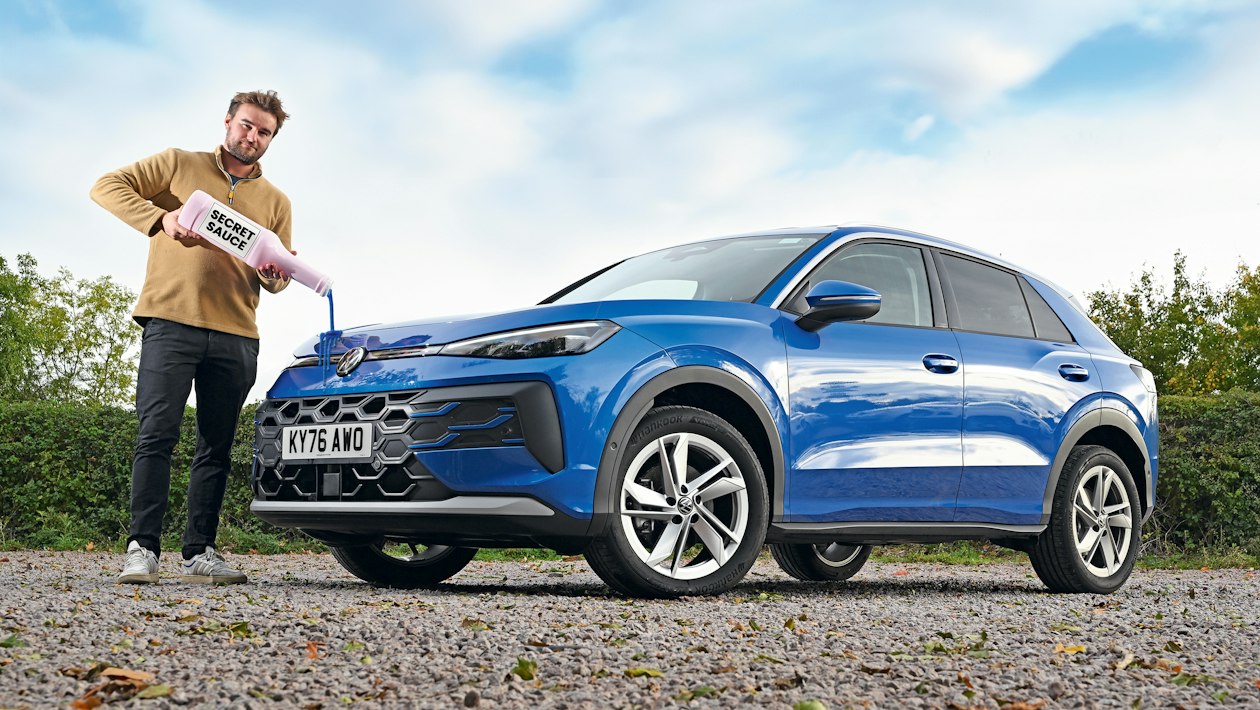
The vehicle reached UK shores earlier this year, and the subsequent months have seen the model undergo extensive testing across various trim levels, ranging from the entry-level Life to the performance-oriented R-Line. The model currently under our long-term assessment is the Style variant, equipped with the 1.5-litre eTSI mild-hybrid powertrain, which represents a critical mid-point in the range for both price and equipment density.
The "Secret Sauce" Philosophy: Engineering Character
Volkswagen’s design chief, Andy Mindt, has articulated a clear tripartite strategy for the brand’s new generation of vehicles. The framework relies on "Stability," "Likeability," and the aforementioned "Secret Sauce." While the first two pillars govern the exterior dimensions and the inoffensive, broadly appealing aesthetics, the "Secret Sauce" refers to the granular, often whimsical, and highly functional details that differentiate the T-Roc from a sea of generic crossovers.
These details are not merely cosmetic. Within the cabin, designers have introduced visual markers in the wireless charging pad—depicting swimmers in the charging "lanes"—and subtle icons at the base of the centre console, such as a pretzel, an ice cream cone, and a suitcase. While these elements might appear trivial to the casual observer, they represent a significant departure from the utilitarian, sterile interiors of previous iterations. Furthermore, the inclusion of weighted wheel caps on the R-Line trim, which ensure the Volkswagen logo remains upright while the vehicle is in motion, speaks to a renewed focus on premium branding details.

Beyond the aesthetics, the "Secret Sauce" extends to the tactile experience. Volkswagen has invested heavily in acoustic and mechanical refinement, resulting in a distinct, heavy "thunk" when closing the doors—a hallmark of traditional German build quality. The internal door handles, which feature a slightly unconventional reverse-hinged design, demonstrate an attempt to blend ergonomic utility with an unexpected design flourish.
Technical Specifications and Powertrain Dynamics
The 1.5-litre eTSI 150 powertrain is central to the T-Roc’s current market appeal. The mild-hybrid system (MHEV) is designed to optimize fuel efficiency during stop-start urban driving and provide a seamless transition between the combustion engine and the electrical assistance during cruising.
- Engine: 1.5-litre turbocharged 4-cylinder petrol MHEV
- Power Output: 148bhp
- Torque: 250Nm
- Transmission: Dual-clutch automatic
- Efficiency: Observed 44.5mpg over the initial 2,416-mile period
- Emissions: 129g/km CO2 (31% Benefit-in-Kind tax bracket)
The performance metrics confirm that the T-Roc is tuned for efficiency and comfort rather than raw athleticism. However, the integration of the mild-hybrid system provides a discernible improvement in torque delivery at low revolutions, effectively mitigating the common issue of turbo lag found in smaller displacement engines.

Technology and Interface: A Course Correction
Perhaps the most significant development in the new T-Roc is the reversal of the brand’s recent, controversial interior design trends. Following consumer feedback, Volkswagen has begun to pivot away from reliance on touch-sensitive sliders for secondary controls, which had been criticized for their lack of tactile feedback and susceptibility to accidental input.
While the touch-sliders persist beneath the central 12.9-inch touchscreen in the T-Roc, the introduction of a physical rotary control for volume and driving profile selection on the centre console represents a major functional improvement. This allows the driver to manage essential cabin functions without navigating complex software sub-menus. The steering wheel, meanwhile, retains traditional physical buttons, a decision that aligns with industry-wide feedback favoring tactile interfaces for safety-critical operations.
The standard technology suite is comprehensive. The Life trim, starting at £31,990, includes:

- Digital Cockpit: 8-inch driver’s display.
- Infotainment: 12.9-inch central touchscreen with wireless Apple CarPlay and Android Auto.
- Lighting: Full LED headlight clusters.
- Driver Assistance: Rear-view camera and adaptive cruise control.
For the Style model, priced at £36,660, the focus shifts to aesthetic and comfort upgrades, including enhanced upholstery and ambient lighting packages, which solidify its position as the "premium-mid" choice for the brand.
Broader Market Implications
The compact SUV sector is currently the most saturated segment in the automotive industry. Manufacturers are under immense pressure to deliver vehicles that satisfy the conflicting demands of electrification, digital connectivity, and traditional build quality. The Volkswagen T-Roc’s success is a litmus test for whether the traditional European "all-rounder" can survive the transition into the electric era.
Volkswagen’s decision to maintain a robust internal combustion engine (ICE) and mild-hybrid range while simultaneously developing its ID. series of dedicated EVs suggests a two-pronged strategy. The T-Roc serves as the bridge for customers who are not yet prepared to transition fully to battery-electric vehicles (BEVs) but demand the efficiency and tech-forward experience associated with the new generation of electric platforms.

The current market data shows that the T-Roc holds its value well in the pre-owned market, with 2024 and 2025 models consistently appearing in the £12,000 to £15,000 range, depending on mileage and condition. This strong residual value is a testament to the brand’s enduring reputation for durability—a key factor for private buyers in the current economic climate.
Preliminary Assessment and Future Outlook
After 2,416 miles, the T-Roc has displayed a high level of consistency. There have been no reported mechanical faults or software stability issues, a positive indicator for the reliability of the new electronic architecture. The suspension calibration strikes a balance between the firm, planted feel expected of a German car and the compliant ride quality necessary for urban infrastructure, which is often riddled with imperfections.
The next phase of our testing will focus on long-distance motorway driving to evaluate seat comfort and the efficacy of the driver assistance systems under varied traffic conditions. Additionally, we will continue to monitor the fuel efficiency as the engine undergoes its "break-in" period.

While the compact SUV market offers no shortage of options, the T-Roc succeeds by leaning into the strengths of the Volkswagen brand: a focus on solid, usable, and high-quality construction. By balancing the "Secret Sauce" of clever, human-centric design with the pragmatic requirements of daily driving, the T-Roc continues to make a compelling case for itself. Whether this recipe will remain as effective over the remaining months of our test remains to be seen, but the initial evidence suggests that Volkswagen has successfully refined its best-selling formula for a new generation of motorists.