In the contemporary real estate landscape, characterized by fluctuating interest rates and a more discerning buyer demographic, the presentation of a residential property has transitioned from a secondary consideration to a critical market imperative. Whether a seller is listing a high-end Victorian in San Francisco or a modern condominium in the burgeoning tech hubs of Austin, the execution of an open house serves as a pivotal moment in the transaction lifecycle. Real estate experts and market analysts agree that the preparation phase—encompassing everything from structural aesthetics to psychological staging—directly correlates with the duration a property remains on the market and the finality of the closing price. This comprehensive guide explores the multifaceted approach required to transform a lived-in residence into a high-value market commodity, ensuring that potential buyers see not just a structure, but a future home.
The Economic Impact of Presentation and Market Context
The current real estate market has shifted from the frantic, sight-unseen bidding wars of the early 2020s toward a more balanced environment where buyers demand tangible value. According to data from the National Association of Realtors (NAR), 82% of buyers’ agents reported that staging a home made it easier for a buyer to visualize the property as a future home. Furthermore, professional staging can increase the dollar value offered by between 1% and 5% compared to non-staged homes. In a market like San Francisco, where the median home price remains significantly above the national average, a 5% increase represents a substantial return on investment for the seller.
The preparation of an open house is essentially a branding exercise. It requires a departure from the "home" (a place of personal sentiment) to the "house" (a financial asset). This psychological shift is the foundation of a successful sale. Industry professionals emphasize that an open house is often the first and only opportunity to capture the emotional buy-in of a prospect. Therefore, the preparation must be meticulous, data-driven, and aesthetically universal.
The Chronology of Preparation: A Strategic Timeline
Successful open houses are rarely the result of last-minute efforts. A structured timeline is essential for managing the complexities of property preparation.
- Four Weeks Prior: Initial assessment and decluttering. This phase involves identifying necessary repairs and beginning the process of depersonalization.
- Two Weeks Prior: Executing cosmetic updates. This includes painting, replacing dated fixtures, and addressing landscaping needs.
- One Week Prior: Deep cleaning and professional staging. Furniture is rearranged or rented to optimize the flow of the home.
- 48 Hours Prior: Final detailing. This involves "polishing" the property—cleaning windows, refreshing mulch, and securing valuables.
- Day of Event: Atmosphere management. Ensuring optimal lighting, temperature control, and scent neutrality.
Strategic Decluttering and the Power of Depersonalization
The primary objective of an open house is to allow the buyer to mentally "move in." Personal artifacts—family photographs, niche collections, and idiosyncratic decor—act as psychological barriers to this process. Pierre Galant, a prominent real estate photographer, notes that visual "noise" is the most common deterrent in property photography and tours.
"Too much clutter on countertops can hurt your home’s presentation, even if it’s staged," Galant explains. "Less is more. Remove everything and add back one curated item at a time." This "minimalist-plus" approach ensures that the architectural features of the home, such as crown molding or high-end cabinetry, remain the focal point.
Sellers are encouraged to adopt the "50% Rule": removing half of the items from closets, shelves, and cabinets. This creates the illusion of abundant storage space, a high-priority feature for modern buyers. Professional staging takes this a step further by using furniture that is scaled correctly for the room, making small spaces feel larger and large spaces feel more functional.
High-ROI Cosmetic Updates and Material Enhancements
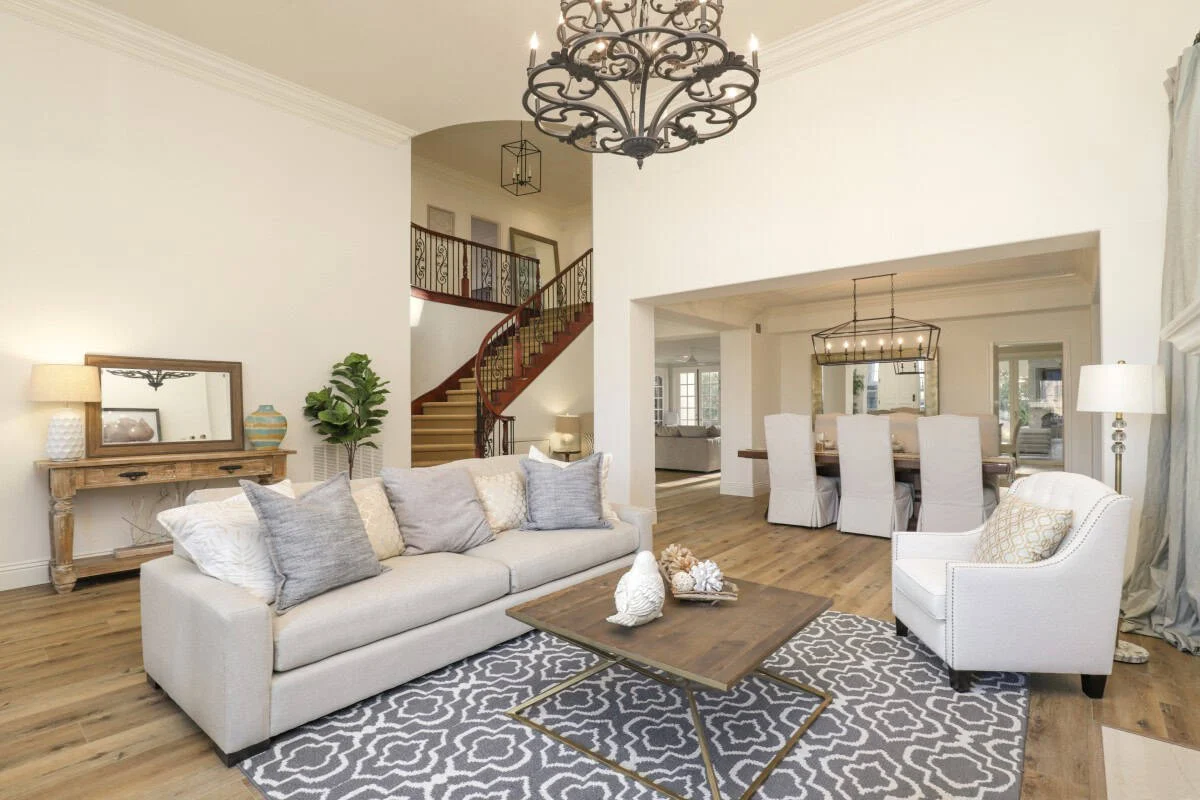
Not all home improvements are created equal. When preparing for an open house, sellers should focus on "high-impact, low-cost" updates. Andress Eichstadt, CEO of Staging Studio, advocates for the transformative power of paint. "We always say ‘paint is cash in a can’ because it can completely transform a space," Eichstadt states. However, the choice of palette is crucial. Neutral tones—such as soft greys, off-whites, and "greige"—are statistically proven to appeal to the widest audience because they provide a clean canvas for any furniture style.
Lighting is another critical area for modernization. Replacing "builder-grade" or dated brass fixtures with contemporary, matte black or brushed nickel options can instantly age-up a property. Analysts suggest that updated lighting is one of the most cost-effective ways to signal to a buyer that the home has been well-maintained and modernized.
The Psychological Weight of Cleanliness and Maintenance
A spotless home is a proxy for a well-maintained home. If a buyer notices dust on a baseboard or grime in a shower track, they may subconsciously wonder if the seller has also neglected the HVAC system or the roof. Deep cleaning should be exhaustive, covering areas often overlooked in daily life:

- Ceiling Fans and Vents: Removing dust prevents the perception of poor air quality.
- Window Tracks and Glass: Clean windows maximize natural light and improve the "transparency" of the home.
- Appliances: The interior of ovens and refrigerators must be pristine, as buyers will inevitably open them.
Minor repairs also play a significant role in the buyer’s risk assessment. A leaking faucet or a cracked floor tile may only cost $50 to fix, but to a buyer, it represents a "project." In a market where many buyers are looking for "move-in ready" properties, these small red flags can lead to lower offers or requests for significant repair credits during the escrow process.
Curb Appeal: The First Thirty Seconds
The "curb appeal" of a property dictates the buyer’s initial emotional state. Real estate data suggests that a buyer forms an opinion of a home within the first 30 seconds of arrival. If the exterior is unkempt, the buyer enters the home with a critical, rather than an aspirational, mindset.
Essential outdoor upgrades include:
- Manicured Landscaping: Fresh mulch, trimmed hedges, and vibrant seasonal flowers.
- Entryway Refinement: A freshly painted front door and a new welcome mat.
- Power Washing: Cleaning the driveway, sidewalks, and siding to remove years of environmental wear.
Staging for Functional Flow and Spatial Optimization
Staging is not merely about decoration; it is about the "choreography" of the buyer’s movement through the house. Flavia, a specialist at Upstaging Seattle, emphasizes the importance of intentional layout. "Furniture placement should be intentional so buyers can move easily through each room, open doors and drawers without obstruction, and fully experience the space," she explains.
Each room should have a singular, defined purpose. If a spare bedroom is currently used as a "catch-all" storage space, it should be staged as a dedicated home office or a guest suite. This eliminates ambiguity and helps the buyer justify the square footage. Furthermore, maximizing natural light by opening all blinds and curtains is essential. Light-filled spaces are perceived as larger, cleaner, and more "positive" environments.
Security and Risk Mitigation During Public Showings
While the goal of an open house is to invite the public in, sellers must remain cognizant of security. An open house involves multiple strangers traversing the private residence, often simultaneously. To mitigate risk, sellers should:
- Remove Prescription Medications: Medicine cabinets are a common point of vulnerability.
- Secure Financial Documents: Ensure that mail, bank statements, and passports are stored in a locked safe or off-site.
- Hide Small Valuables: Jewelry, small electronics, and heirlooms should be removed from the premises.
Professional real estate agents typically use sign-in sheets to track visitors, providing a layer of accountability and a source for follow-up leads.
Highlighting Value-Add Features and Infrastructure
Finally, sellers must ensure that the "invisible" value of the home is communicated. If the property has undergone significant upgrades that aren’t immediately visible—such as a new HVAC system, updated insulation, or a reinforced foundation—these should be highlighted.
Providing a "Feature Sheet" or a "Home Improvement Dossier" near the entrance allows buyers to take home tangible proof of the property’s quality. This document should include:
- Dates of major appliance replacements.
- Utility cost averages (to demonstrate energy efficiency).
- Information on local school districts and neighborhood amenities.
- Permit records for any structural renovations.
Conclusion: The Broader Implications of Preparation
The effort invested in preparing for an open house extends beyond the event itself. High-quality preparation results in high-quality photography, which is the primary driver of online traffic. In an era where the digital "first showing" happens on a smartphone screen, the aesthetic standards set during the open house preparation are what drive physical foot traffic.
Ultimately, a successful open house is the result of a strategic partnership between the homeowner, the real estate agent, and professional stagers or contractors. By viewing the property through the objective lens of a buyer and addressing the sensory, psychological, and structural elements of the home, sellers can significantly improve their market position. In a competitive real estate economy, those who master the art of the open house are those who secure the most favorable terms and the most efficient sales.