The transition from one rental home to another is universally characterized by a rigorous logistical checklist: packing boxes, scheduling professional deep cleans, returning keys, and finally, enduring the anxious waiting period to see how much of a security deposit is ultimately returned. For millions of tenants across the United States—whether renting a high-rise apartment in Tampa, Florida, or a suburban home in Anaheim, California—the security deposit represents a significant financial stake. It is a common source of anxiety, primarily driven by the fear of being unfairly penalized for the natural aging of a property. Fortunately, legal frameworks and property management standards establish clear boundaries between what constitutes acceptable residential depreciation and what qualifies as tenant-induced damage.
The Distinction Between Depreciation and Destruction
At the core of the landlord-tenant financial relationship is the security deposit, an upfront sum collected at the inception of a lease to safeguard property owners against unpaid rent and excessive property degradation. Legally, landlords are strictly prohibited from utilizing security deposits to remediate normal wear and tear. This fundamental principle acknowledges that a residential property depreciates simply through human habitation. Floors experience friction, paint degrades under UV exposure, and fixtures undergo mechanical fatigue.
Property managers and real estate economists view normal wear and tear as an inherent cost of doing business in the rental market. Michael D. Swing of Swing Property Management Services emphasizes that tenants frequently experience misplaced anxiety over minor, unavoidable physical traces of residency. "Basic wear and tear are simple dirt lines from the back of a couch or bedroom headboard that leave marks on the walls," Swing explains. "It also could be a color streak on the walls or molding from items rubbing against them when accidentally moved near the wall or baseboard."
These subtle artifacts of daily life fall squarely on the property owner’s financial ledger. Conversely, property damage encompasses alterations to the physical integrity of the dwelling that stem from negligence, recklessness, abuse, or unauthorized modifications. Understanding the divergence between these two categories requires evaluating whether an imperfection arose from standard, careful living or from an extraordinary event.
Comparative Analysis: Wear and Tear Versus Damage
To operationalize these definitions during move-out inspections, property management professionals utilize established standards to categorize physical defects. The differentiation becomes clear through direct comparison:
- Paint and Walls: Faded, chipped, or slightly discolored paint due to natural aging and sunlight exposure is classified as wear and tear. In contrast, drawings made with crayons or permanent markers, extensive water stains, or unauthorized repointing are treated as property damage.
- Flooring and Carpets: Minor carpet compression in high-traffic pathways is expected over a multi-year tenancy. However, large chemical stains, cigarette burns, localized pet destruction, or deep gouges in hardwood flooring require specialized remediation or full replacement, classifying them as damage.
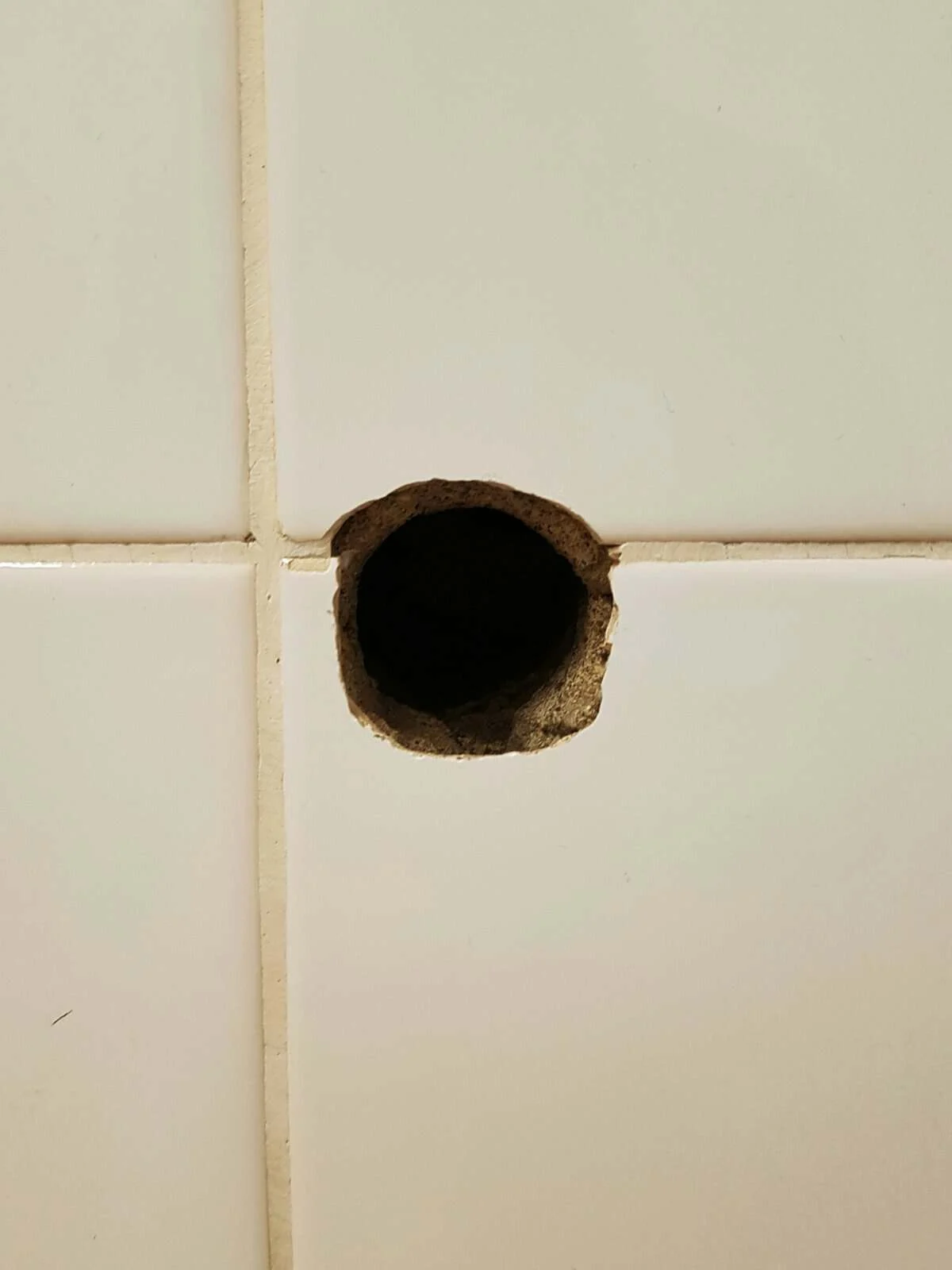
- Fasteners and Fixtures: Small, discrete nail holes left by picture hangers are standard across long-term leases. Conversely, large structural holes, heavy drywall gouges left by unanchored television mounting brackets, or cracked floor and wall tiles exceed ordinary use.
Industry experts stress that contextual variables—namely the chronological age of the material and the total duration of the tenancy—play a decisive role in these determinations. A residential carpet with a manufacturer-estimated lifespan of seven years, for instance, is legally and economically expected to show significant degradation if a tenant resides in the unit for an extended period. A landlord cannot reasonably bill an outgoing tenant for the full replacement cost of an asset that had already reached the end of its useful economic life.
The Complex Controversy of Wall Hangings and Structural Modifications
Among the myriad items contested during security deposit returns, wall penetrations generate the highest volume of disputes between tenants and property managers. Dave Goldberg of Goldberg Group Property Management highlights that the severity of a wall defect depends entirely on the mechanism of installation.
"When a tenant vacates, they should not attempt to patch and paint a hole in a wall, as most leases restrict tenants from doing this themselves," Goldberg advises. "If it’s a picture hanger and the nail hole is small, that’s not ‘excessive wear and tear.’ However, if the tenant hung a bracket to support a TV mounted on a wall, these holes are considered ‘excessive wear and tear,’ and the tenant will be charged a percentage of the cost to repair that wall."
Furthermore, unauthorized DIY repairs by tenants frequently exacerbate disputes. Attempting to fill drywall gaps with incorrect spackle formulations or mismatched paint colors often leaves a larger aesthetic blemish than the original nail hole, forcing property managers to hire professional painters to correct the amateur patchwork. Renters planning to mount heavy items, install shelving, or alter fixtures are consistently advised to secure written authorization from property management prior to initiating any modifications.
Chronology of the Security Deposit Lifecycle
To protect their financial interests, both tenants and landlords must adhere to a strict chronological framework throughout the duration of a lease agreement. Navigating this timeline effectively minimizes the risk of prolonged financial disputes:
- Pre-Signing Phase: Prior to executing a lease agreement, prospective tenants must thoroughly review the document’s explicit clauses regarding security deposits, cleaning fees, and property modifications. Additionally, renters should research municipal and state landlord-tenant statutes to understand statutory timelines for deposit returns.
- Move-In Phase: On the official day of key handover, the tenant must conduct a comprehensive physical walkthrough of the premises. This inspection should be meticulously documented using high-resolution, date-stamped photographs and video recordings of every room, appliance, and surface. Any preexisting defects must be recorded in writing and formally submitted to the landlord to establish a baseline condition record.
- Mid-Tenancy Phase: Throughout the lease term, tenants should promptly report maintenance issues—such as leaking pipes or roof structural issues—that could lead to compounding property damage if left unaddressed. Written permission should be obtained before undertaking any decorative alterations.
- Move-Out Phase: Prior to vacating, the tenant should execute a thorough cleaning regimen in accordance with lease specifications. A joint move-out walkthrough should be scheduled with the landlord or property manager to evaluate the physical state of the unit side-by-side with the move-in documentation.
- Post-Tenancy Phase: Following the tenant’s departure, the landlord must inspect the property and issue the remaining security deposit along with an itemized statement of deductions within the timeframe mandated by state law.
Documentation as the Ultimate Defense
The empirical value of comprehensive documentation cannot be overstated. Joshua Rabinovitz, president of King George Property Management, identifies the absence of verifiable baseline data as the primary catalyst for irreconcilable deposit disputes.
"My advice to renters is to thoroughly document the property’s condition with photos at move-in and move-out, as this is one of the simplest ways to avoid disagreements over security deposits," Rabinovitz notes.
When a tenant can present side-by-side photographic evidence proving that a specific floor scratch or wall scuff existed prior to their occupancy, property managers typically concede the deduction. Conversely, tenants who fail to photograph the apartment upon arrival lack the evidentiary tools required to contest unfounded claims made by unscrupulous or overly litigious landlords.
Legal Landscape and Jurisdictional Variance
Security deposit administration is heavily regulated by state and municipal laws, which vary widely across the United States. These statutes dictate critical operational parameters for property owners, including:
- Deposit Caps: Many jurisdictions limit the maximum amount a landlord can collect as a security deposit, typically ranging from one to two months’ rent, though some progressive municipalities have enacted stricter caps.
- Return Timelines: State laws specify the exact number of days—frequently between 14 and 60 days following lease termination—within which a landlord must return the remaining deposit funds.
- Itemization Mandates: Most states require landlords to provide a detailed, itemized accounting of all deductions, accompanied by contractor estimates or receipts for completed repairs. Failure to provide this documentation within the statutory window can forfeit the landlord’s right to withhold any portion of the funds, and in certain states, can subject the landlord to punitive financial penalties.
Renters are strongly encouraged to consult their local government’s housing authority portal or review state-published landlord-tenant handbooks to understand their exact statutory protections.
Actionable Protocol for Contested Deductions
If an outgoing tenant receives an itemized deduction statement that includes charges perceived as normal wear and tear or fraudulent damages, a structured escalation protocol should be initiated:
- Direct Communication: Contact the landlord or property management company in writing via certified mail or electronic mail. Reference the move-in and move-out photographic evidence and request a formal review of the disputed line items.
- Demand for Receipts: Request verifiable third-party invoices, contractor estimates, or material receipts proving the actual out-of-pocket costs incurred to execute the disputed repairs. Landlords cannot arbitrarily estimate repair costs without substantiation in many jurisdictions.
- Mediation and Small Claims Court: If informal negotiations stall, tenants can explore local tenant-landlord mediation services. If mediation fails to yield a resolution, filing a claim in local small claims court is often an effective, cost-efficient mechanism for recovering wrongfully withheld funds, particularly in states that award statutory damages for bad-faith withholding.
Broader Economic Implications for the Rental Market
The equitable administration of security deposits carries significant macro-level implications for residential housing stability. Transparent and fair deposit practices reduce financial friction during residential mobility, enabling workforce flexibility and easing the transition costs associated with relocation. When property management firms operate with transparency, trust is reinforced between tenants and housing providers, resulting in lower turnover friction and minimized litigation.
Ultimately, safeguarding a security deposit requires a proactive, highly organized approach. By thoroughly reviewing lease agreements, documenting property conditions at both arrival and departure, understanding state-specific statutory protections, and maintaining open lines of communication with property managers, tenants can successfully navigate the complexities of residential tenancies and secure the full return of their financial investments.