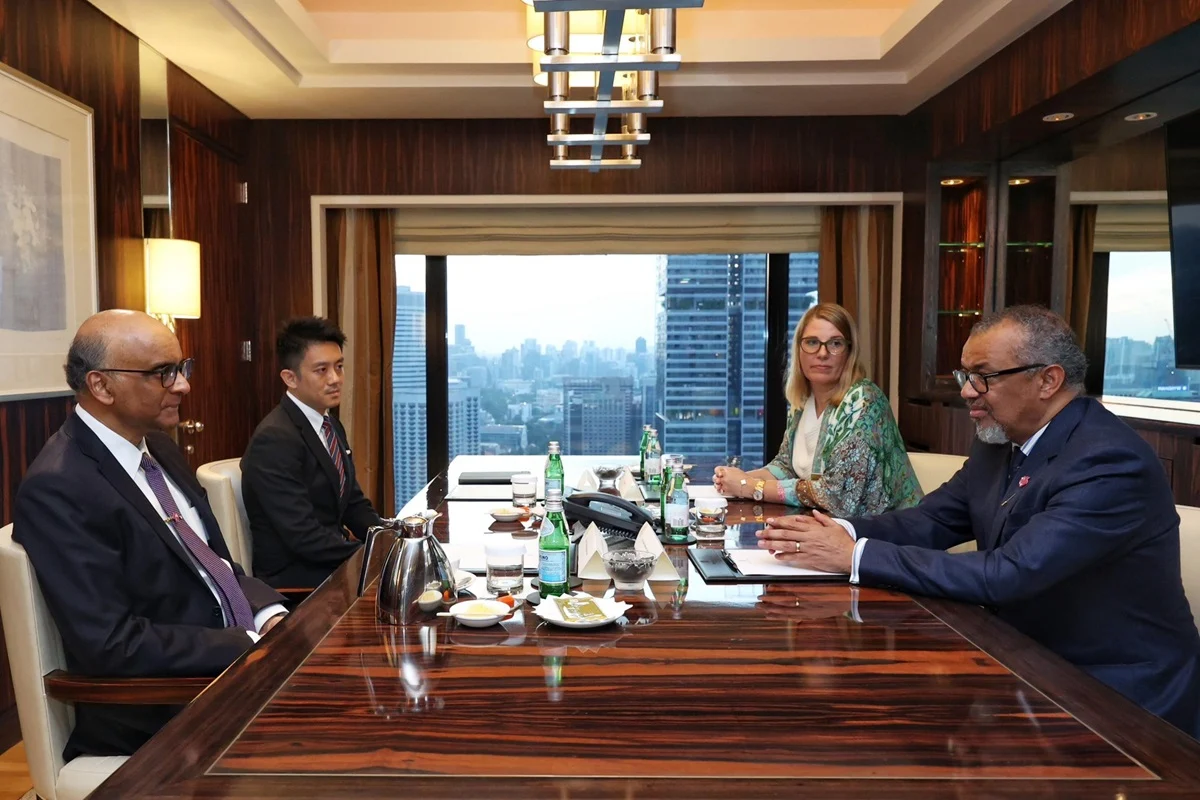
Philanthropic partnerships have increasingly become the bedrock upon which modern international public health initiatives are constructed, serving as a vital catalyst for nations striving to fortify domestic health architectures and bridge persistent healthcare disparities. This reality took center stage during the recent Philanthropy Asia Summit, convened in Singapore from May 5 to May 7, 2025. Addressing delegates, World Health Organization (WHO) Director-General Dr. Tedros Adhanom Ghebreyesus delivered a compelling address that underscored the indispensable contributions of private philanthropic foundations in advancing global health priorities. These priorities range from urgent pandemic preparedness and equitable vaccine distribution to the foundational reinforcement of primary healthcare systems worldwide.
The high-level gathering, organized jointly by the Temasek Foundation and the Philanthropy Asia Alliance, provided a strategic platform for international stakeholders, private sector leaders, and philanthropic pioneers to deliberate on the future of cooperative global health governance. Dr. Tedros used the platform to commend the organizers for their visionary leadership, expressing profound gratitude to Singaporean authorities—specifically highlighting the leadership of President Tharman—for the nation’s steadfast commitment to international public health and its enduring partnership with the WHO.
The Evolving Landscape of Global Health Financing
The dialogue in Singapore unfolded against a complex backdrop of intersecting global crises, including geopolitical instability, climate-induced health emergencies, and persistent post-pandemic economic strains that have stretched traditional multilateral financing mechanisms to their limits. In this turbulent global climate, the WHO has actively pursued innovative financing modalities to secure predictable, flexible funding. Central to this strategy is the WHO Investment Round, an ambitious resource-mobilization initiative designed to broaden the organization’s donor base by actively engaging philanthropic organizations, private sector entities, and non-traditional state donors.
During his address, Dr. Tedros acknowledged that Singapore and the Temasek Foundation were among the vanguard of global partners to pledge early and substantial support to the WHO Investment Round. This foundational backing, he noted, exemplifies the proactive stance required to tackle contemporary health challenges.
“We look forward to your continued leadership and partnership as we work together to realize WHO’s founding vision: the highest attainable standard of health—not as a luxury for some, but a right for all,” Dr. Tedros stated to the assembled delegates.
The strategic pivot toward philanthropic engagement is not merely a fundraising tactic, but a deliberate effort to align diverse financial ecosystems with sustainable development goals. As global health demands escalate, the gap between required resources and traditional official development assistance (ODA) continues to widen. Philanthropic capital, characterized by its agility and willingness to absorb calculated risks, offers a complementary force multiplier to the sovereign contributions traditionally relied upon by the United Nations system.
Chronology and Context of the 2025 Philanthropy Asia Summit
The Philanthropy Asia Summit has rapidly evolved into a premier regional and global forum for catalytic philanthropy, sustainable development, and cross-sectoral collaboration. The May 2025 iteration of the event was meticulously structured across three intensive days of plenaries, high-level dialogues, and interactive working sessions designed to move discourse into actionable partnerships.
- May 5, 2025 (Opening Day): The summit commenced with keynote addresses focusing on systemic resilience, climate health nexus, and the pressing need for innovative financing frameworks. Leaders from across Asia and international agencies framed the key challenges facing the post-2025 global health landscape.
- May 6, 2025 (Core Deliberations): Sessions zeroed in on operationalizing public-private-philanthropic partnerships (PPPPs). Discussions highlighted successful case studies in regional disease surveillance, maternal and child health interventions, and the deployment of advanced medical technologies in resource-constrained settings.
- May 7, 2025 (Strategic Commitments and Closing): The final day was marked by significant funding announcements, collaborative pacts, and high-level stakeholder interventions, including Dr. Tedros’s defining address on the imperative of universal health coverage (UHC) and the operationalization of the WHO Fourteenth General Programme of Work (GPW14).
This timeline reflects a deliberate effort by regional leaders in Singapore to position Asia not merely as a recipient of global health strategies, but as an active architect and financial powerhouse driving sustainable global solutions.
The Unique Value Proposition of Philanthropic Capital
In his analytical review of global health funding structures, the WHO Director-General emphasized the distinct qualitative advantages that philanthropic actors bring to the table. Unlike traditional bilateral aid, which is frequently bound by rigid budgetary cycles, geopolitical conditions, and bureaucratic constraints, philanthropic organizations possess the operational flexibility to deploy resources rapidly where they are most needed.
Catalyzing High-Risk, High-Reward Research
One of the most profound contributions of philanthropic funding lies in its capacity to underwrite exploratory research and development (R&D) initiatives. Traditional public funding bodies, accountable to domestic taxpayers or conservative legislative mandates, often struggle to justify investments in high-risk scientific endeavors that lack guaranteed outcomes. Philanthropies, conversely, routinely serve as incubator funds for pioneering biomedical research, neglected tropical disease interventions, and next-generation vaccine platforms. By absorbing the initial financial risk of innovation, philanthropic partners pave the way for broader public sector adoption and commercial scalability once proof of concept is established.
Bridging Resource Gaps and Amplifying Government Efforts
Furthermore, philanthropic investments rarely operate in a vacuum; rather, they are designed to complement, reinforce, and scale existing government-led initiatives. In many low- and middle-income countries (LMICs), domestic health budgets are insufficient to maintain comprehensive primary healthcare infrastructure. Strategic grants from philanthropic foundations help bridge these critical funding gaps, supporting capacity building, healthcare worker training, supply chain digitization, and health information system modernization. This holistic approach directly supports countries on their journey toward national self-reliance, ensuring that external aid transitions smoothly into sustainable, locally owned health systems.
Advocacy, Awareness, and Health Equity
Beyond direct financial injections, philanthropic institutions wield significant influence as advocates for systemic policy reform. Armed with evidence-based research and extensive networks across civil society, academia, and the private sector, philanthropic actors are uniquely positioned to elevate neglected health crises onto the global political agenda. Their advocacy efforts play a pivotal role in combating health disparities, championing marginalized populations, and operationalizing the principle of health equity—ensuring that life-saving interventions reach vulnerable and remote communities that might otherwise be overlooked by mainstream market dynamics.
Alignment with the Fourteenth General Programme of Work (GPW14)
Looking toward the horizon, the WHO has framed its strategic trajectory around the Fourteenth General Programme of Work (GPW14), which serves as the organization’s overarching blueprint for global public health promotion, disease prevention, and health system strengthening over the coming years. Achieving the ambitious targets delineated in GPW14 will require unprecedented levels of multi-stakeholder collaboration.
The WHO has explicitly recognized that no single entity—whether a national government, a specialized UN agency, or an international NGO—possesses the monopoly of resources, knowledge, or reach required to master modern health emergencies. Consequently, fostering robust, transparent, and mutually accountable partnerships with philanthropic actors is embedded as a core strategic pillar of GPW14.
By leveraging the unique strengths of global health players—ranging from grassroots community organizations to multi-billion-dollar private foundations—the WHO aims to maximize its public health impact, optimize resource allocation, and accelerate progress toward Universal Health Coverage (UHC) and the health-related Sustainable Development Goals (SDGs).
Implications for the Future of Global Health Governance
The growing prominence of philanthropy in international health governance does not come without scrutiny. Public health scholars and policy analysts frequently emphasize the necessity of transparent governance frameworks to ensure that private philanthropic priorities align harmoniously with nationally driven public health agendas. The WHO’s strategic engagement with philanthropic entities relies on rigorous due diligence, conflict-of-interest safeguards, and a steadfast commitment to normative public health integrity, ensuring that public goods remain prioritized above private interests.
Nevertheless, the outcomes of the Philanthropy Asia Summit 2025 signal a maturing ecosystem of global health diplomacy. The proactive leadership demonstrated by Singapore, the Temasek Foundation, and the Philanthropy Asia Alliance illustrates a growing recognition that safeguarding global health security is a shared collective responsibility.
As the international community grapples with the complexities of the post-2025 health landscape, the synergy between multilateral agencies like the WHO and dynamic philanthropic networks will remain a crucial determinant of success. By combining the global normative authority and technical expertise of the United Nations with the financial agility, innovative spirit, and strategic reach of private philanthropy, the global health community moves incrementally closer to realizing the enduring vision of health as a fundamental human right accessible to all humanity.