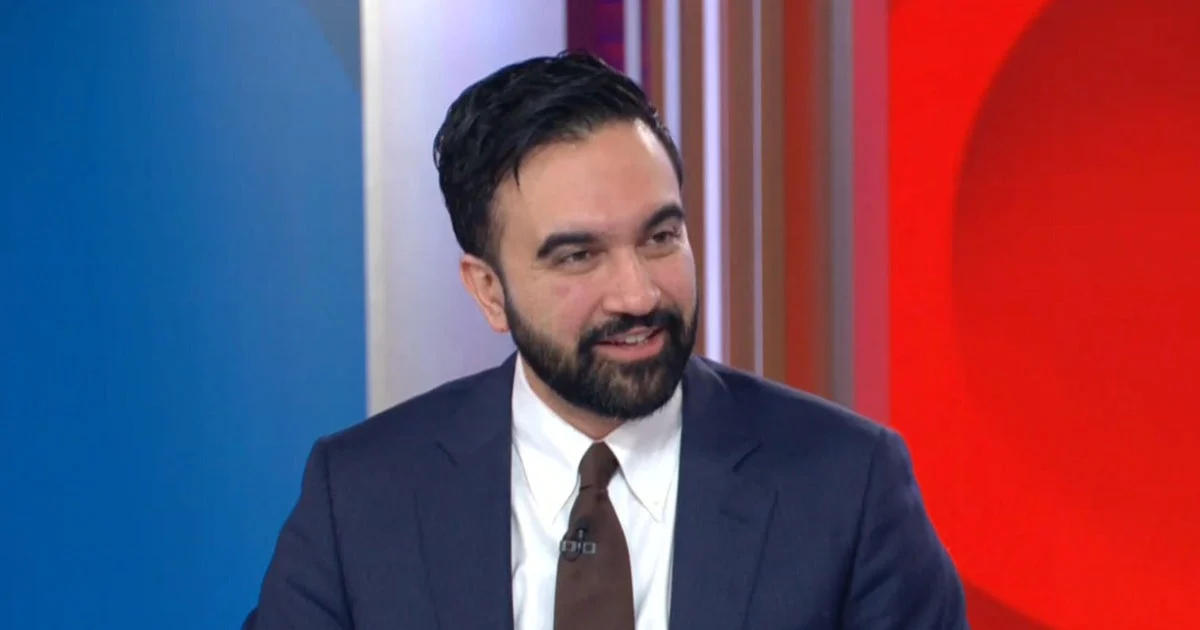
New York City Mayor Zohran Mamdani, reflecting on his pivotal first 100 days in office, asserted on Thursday, April 16, 2026, that he firmly believes democratic socialism "can flourish anywhere." Speaking in an interview on "CBS Mornings," Mayor Mamdani articulated a vision for a political framework that prioritizes the working class, challenging preconceived notions about the viability of such an ideology beyond specific progressive enclaves. His remarks come amidst a period of intense scrutiny and anticipation for his administration, which has seen both significant early victories and the formidable challenges inherent in governing one of the world’s largest and most complex cities.
A Bold Vision for a Progressive Future
Mayor Mamdani’s declaration is not merely a statement of personal belief but a strategic articulation of his political philosophy and ambitions. "I think that this is a politics that can flourish anywhere because, frankly, there is only one majority in this country — that’s the working class," Mamdani stated, emphasizing the demographic and economic imperative behind his approach. "And it’s time we have politics that puts them at the heart of what it is that we’re pursuing, and not as part of the appendix." This assertion directly confronts the historical narrative that has often confined democratic socialist ideals to fringe movements or hyper-liberal urban districts. Mamdani recounted the skepticism he faced prior to his mayoral victory, noting, "Before I became mayor of New York City, I was told that you could only be a democratic socialist in northwest Queens." His subsequent electoral success, particularly in a city as diverse and influential as New York, serves as a powerful counter-argument to this sentiment. Looking ahead, Mamdani expressed a clear trajectory for his movement: "Then I became the mayor, now the next question is the state, then it’ll be, the next question will be the country." This long-term vision positions his mayoral tenure as a potential proving ground for a broader political transformation.
Democratic socialism, in the American context, typically advocates for a mixed economy with significant social welfare programs, public ownership of essential services, and strong labor protections, while operating within a democratic political system. Proponents argue it offers a more equitable distribution of wealth and power, addressing systemic inequalities. Critics often raise concerns about economic efficiency, government overreach, and fiscal sustainability. Mamdani’s administration aims to demonstrate that these ideals can be translated into practical, effective governance for millions of residents.
The First 100 Days: Promises Kept and Hurdles Remaining
Mayor Mamdani was sworn into office on January 1, 2026, inheriting a city grappling with a myriad of post-pandemic challenges, including a persistent housing crisis, escalating cost of living, evolving public safety concerns, and the ongoing imperative of economic recovery. His inaugural 100 days, a traditional benchmark for assessing new administrations, have been characterized by a swift push to implement key campaign pledges.
Among his administration’s notable achievements, the expansion of free child care programs stands out. New York City, like many urban centers, faces a severe child care affordability crisis, with costs often rivaling or exceeding rent payments. Mamdani’s initiative aims to alleviate this burden on working families, enabling greater workforce participation and improving early childhood development outcomes. While specific data on the direct impact of these expanded programs is still nascent, studies consistently show that accessible, affordable child care can boost local economies and reduce childhood poverty rates. For instance, a 2023 report by the New York State Comptroller’s office highlighted that inadequate child care costs the state economy billions annually in lost productivity. Mamdani’s focus on this area signals a direct response to a critical need for hundreds of thousands of New York families.
Another significant move was the creation of an Office of Community Safety. This initiative reflects a broader national trend towards reimagining public safety beyond traditional policing models, particularly in response to mental health crises. The Office is tasked with developing and deploying alternative response teams for certain non-violent calls, aiming to de-escalate situations and connect individuals with appropriate social and health services rather than relying solely on law enforcement. This approach is often informed by data showing that a significant portion of police calls involve individuals experiencing mental health episodes or homelessness, for which specialized social workers and healthcare professionals may be better equipped. New York City saw over 170,000 mental health-related 911 calls in 2022, underscoring the potential scope for such an office.
Furthermore, Mayor Mamdani announced the site of New York City’s first city-run grocery store, a direct response to the pervasive issue of food deserts and food insecurity in underserved communities. Neighborhoods like the South Bronx, parts of Central Brooklyn, and Northern Manhattan have long struggled with limited access to affordable, fresh, and nutritious food options, leading to higher rates of diet-related illnesses. The city-run store aims to provide healthy groceries at accessible prices, potentially disrupting existing food distribution monopolies and offering a model for community-driven economic development. This move echoes similar initiatives in other cities and countries designed to ensure food equity.
Despite these early successes, some of Mamdani’s most ambitious campaign promises, particularly a universal rent freeze and making city buses entirely free, remain stalled. The proposed rent freeze faces significant legal and political hurdles, particularly from powerful real estate interests and landlord associations who argue it would disincentivize maintenance and new construction. New York City’s housing market, characterized by its vast stock of rent-stabilized units (over one million), is highly complex. The Rent Guidelines Board, which determines annual rent adjustments for these units, is a critical battleground. Mamdani’s administration has been actively working to fill vacancies on this influential board, with a decision on future rent adjustments anticipated this summer. This decision will be a crucial test of his administration’s ability to influence the city’s housing policy.
Regarding free city buses, while the ultimate goal remains elusive, the administration has reported progress in improving service efficiency. "We’re already speeding up buses for more than a million New Yorkers, putting six minutes back in their pockets," Mamdani noted. This interim measure, likely achieved through dedicated bus lanes, signal prioritization, and improved scheduling, demonstrates an incremental approach to enhancing public transit while negotiations with the state legislature in Albany continue for the substantial funding required to eliminate fares across the entire bus network. The Metropolitan Transportation Authority (MTA), which operates the city’s buses and subways, relies heavily on farebox revenue, and transitioning to a fare-free system would necessitate a significant and stable alternative funding source, a challenge requiring state-level approval and budgetary allocation. Advocates for free transit point to benefits like increased ridership, reduced traffic congestion, improved air quality, and enhanced equity for low-income commuters.
Crucially, Mamdani emphasized that his administration is pursuing these progressive reforms while simultaneously prioritizing public safety, stating, "We’re doing all of it while also accomplishing the same thing that we said we would do, before even affordability, which is public safety, and that is a key part of our agenda." This signals an understanding of the multifaceted demands on a modern urban mayor and an attempt to bridge the often-polarized discussions surrounding progressive social policies and traditional law and order concerns.
An Unlikely Alliance: Mamdani and Trump
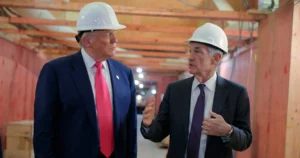
Perhaps one of the most surprising narratives of Mamdani’s early tenure has been his unexpectedly friendly relationship with former President Donald Trump. Despite their profound ideological differences—one a self-proclaimed democratic socialist, the other a populist Republican—the two have engaged in remarkably cordial interactions. Their first widely publicized meeting occurred in November, shortly after Mamdani’s election and before his inauguration, at the White House. At this "stunning" encounter, Mr. Trump reportedly praised the incoming mayor profusely, signaling a pragmatic willingness to work together. They met again in February to discuss crucial housing development initiatives in New York City.
Mamdani addressed this unusual alliance directly on "CBS Mornings," confirming ongoing contact with the former president. "We are honest, direct about the fact that we have many disagreements," Mamdani clarified, ensuring that the public understands the transactional nature of their relationship. However, he identified a critical point of convergence: "There is one place of agreement that we have, which is that we both love New York City. And that’s, I think, something that is at the heart of every conversation we have is, how can we make the city better? Because both of us have said publicly that the better the city does, the better we feel." This shared civic pride and commitment to New York City’s prosperity appear to have created an unexpected avenue for dialogue, potentially offering a rare example of bipartisan cooperation in an increasingly polarized political landscape. For Trump, engaging with the NYC mayor could be seen as a way to maintain influence in his home city, while for Mamdani, securing federal or private sector support for city projects, even from a politically divergent figure, could be a pragmatic pathway to achieving his goals.
Public Opinion and Future Outlook
As Mayor Mamdani rounded his first 100 days, a Marist poll released last week provided an initial snapshot of public sentiment. The poll indicated that 48% of New York City residents approved of his job performance, while 30% disapproved, and a significant 23% remained unsure. These figures suggest a mixed but cautiously optimistic reception. For a first-term mayor implementing ambitious, sometimes controversial, policies, a 48% approval rating is often considered a reasonable starting point, especially given the high expectations and diverse political leanings of New York City’s electorate. Historically, many NYC mayors have experienced fluctuating approval ratings in their initial months, often reflecting the immediate impact of their policies and the perceived effectiveness of their crisis management.
The 23% "unsure" demographic highlights that a substantial portion of the population is still forming an opinion, which could shift as more of Mamdani’s policies take root or face further scrutiny. Critics of his administration, including some business leaders and moderate political figures, have voiced concerns about the long-term fiscal implications of policies like free transit and expanded social programs, as well as the potential impact on property owners from a rent freeze. Conversely, progressive advocacy groups and labor unions have largely lauded his efforts, viewing them as essential steps toward addressing systemic inequalities.
The road ahead for Mayor Mamdani is fraught with both opportunity and significant challenges. His ability to navigate the complex interplay between city and state politics, secure necessary funding for his programs, and build broader consensus will be crucial. The outcome of the Rent Guidelines Board decisions this summer and progress on securing state support for free buses will be key indicators of his administration’s effectiveness.
Mamdani’s ambition to see democratic socialism flourish not just in New York City but across the state and nation signals a long-term strategic vision. His success or failure in implementing a progressive agenda in New York City will undoubtedly be closely watched by political movements across the United States, potentially serving as a blueprint or a cautionary tale for future progressive leaders. The "NYC experiment" under Mayor Zohran Mamdani is thus not merely a local story but a significant chapter in the ongoing national debate about the future direction of American governance and economic policy.